Posts Tagged ‘Children’

Schools Must Share the Blame With Parents

April 18, 2011

Teachers are great at blaming poor parenting for the bad habits of their students. Often it is completely justified. However, sometimes parents are not the only one that deserves the criticism. Sometimes when students present poorly at school, it is just as much the failure of the school to engage and enforce standards as it is the parents.

Take this case for example:

Teachers are warning that pupils are failing to pack their schoolbags with basic classroom equipment and instead are bringing mobile phones, iPods, hand-held computer game devices and even the latest iPads to school.

Some schools have even begun to introduce new agreements which require parents to ensure their children are equipped with textbooks and pens at the beginning of each day.

“They often don’t come to school with their books, or without their homework and sometimes they are lacking something so basic as a pencil to write with,” said Chris Keates, the general secretary of the NASUWT union.

“They come with all this electronic equipment, it would be nice if they just brought a pen.

“My message to parents is that you can send a very powerful message to your child about the importance of their schooling by making sure that they are ready to work when they get to class each morning.”

The problem will be discussed at the union’s annual conference later this week, which will also hear from schools which have drawn up “learning contracts” with parents to encourage them to take a keener interest in their child’s day-to-day progress.

Frustrated by pupils forgetting the basics but arriving with hundreds of pounds worth of electronics in their blazer pocket or schoolbag, one Sheffield teacher was instrumental in introducing a learning contract at his school.

The English and drama teacher, who declined to be named, said: “I teach children from some of the wealthiest backgrounds in the city but it was getting to be an absolute pain in terms of the day-to-day basics.

“It’s amazing how many devices kids carry around with them these days. Young people aspire to have these Macbooks and other expensive equipment but it seems to me that the priorities are skewed.

“They automatically reach for their MP3 players and so on, but not for the writing equipment.

“I believe they should be able to pick up a pen and construct a sentence, which is correct in terms of grammar and spelling, without resorting to an electronic spellchecking device which will probably give them an incorrect, American version.”

He added: “Our policy sees any forgotten equipment being marked in children’s daily log books for parents to see and I urge all parents in the country to check their child has the basic equipment for the school day.”

The Education Bill published in January proposed new powers for teachers to confiscate prohibited items, including electronic gadgets, and to also enable staff to examine data such as video clips for evidence of bullying or other bad behaviour.

A survey in 2006 found that 91 per cent of children owned a mobile telephone by the age of 12.

This article is a great example of teachers blaming parents for a problem they have a share in. The following points need to be made:

  1. If you have a child at your school for 5-15 years and they still haven’t grasped the concept of bringing pens and text books to class, you are not running a very good school. Where are your rules? Where are your expectations? Don’t blame parents for not overseeing their kids’ schoolbag – surely you can do more to enforce standards of organisation.
  2. What has mobile phones and i-Pods got to do with not bringing books and pens to school? If you have a problem with electronic gadgets, ban them or at least set some guidelines. Kids will always be drawn to modern gadgets. Don’t blame mobile phones for the lack of student organisation. There is no reason why kids can’t be taught the importance of balancing educational and extra-curricular activities.
  3. If you’ve got something to say to parents don’t do it through the media. Teachers and parents must work together. Articles that have teachers preaching to parents often create a divide which helps no one.
  4. Finally, and perhaps most importantly, a likely reason for our students being so disinterested in their studies as to come to class unprepared, is due to the lack of engagement on the part of teacher. One of the most important skills a teacher must have is the ability to stimulate and interest their class. If their class seems bored, it is probably because they have a boring teacher. It’s so easy to blame parents and i-Pods, when the real issue is there are too many teachers who offer little and expect a lot in return.

You might accuse me of being disloyal to my profession. The truth is, I am a parent as well as a teacher, and I empathise and relate to both sides of this debate. Sure there is far too many parents out there that don’t get involved with their child’s educational needs. I hear horror stories all the time. But let’s not forget that teachers choose to enter this profession because they want to make a difference to their students. To do this, they must be prepared to work through all obstacles and challenges.

Apportioning blame is fine – just as long as all parties accept some responsibility.

Poor Children Coming to School Tired and Hungry

April 15, 2011

This is a universal problem that requires a lot more attention.  Teachers are not given enough credit for their role in supporting kids that come to school with inadequate food or no lunch at all.  It is not widely known that teachers often spend out of their own pocket to ensure that their poorer students have what to eat.  But the problem still exists, and it must be addressed.

A concerted campaign from schools by working with charity groups to ensure that meals are provided for students of poor families should ensure that heartbreaking articles like this one will be a thing of the past:

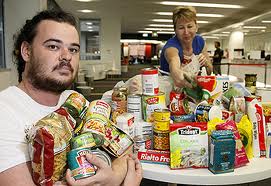
Teachers are reporting a rise in pupils entering the classroom feeling tired, hungry and dressed in worn-out clothes.

A study by the Association of Teachers and Lecturers found almost eight-in-10 staff had pupils living below the poverty line and a quarter believed numbers had increased since the start of the recession.

One teacher from Nottingham told of a sixth-former who had not eaten for three days as her “mother had no money at all until pay day”.

A teaching assistant from a West Midlands comprehensive told researchers that some pupils had “infected toes due to feet squashed into shoes way too small”, while another member from Halifax reported a boy who was ridiculed in the PE changing room because his family could not afford to buy him any underpants.

Some teachers told how pupils were consistently late for lessons as parents could not cover the bus fare to school. Other children from middle to lower income families have been forced to cut out school tips because money is so tight, it was claimed.

The disclosure follows the publication of figures showing a rise in the number of pupils eligible for free school meals as families struggle to stay above the breadline in the recession.

Almost 1.2 million five- to 16-year-olds claimed free lunches last year – a rise of more than 83,000 in just 12 months.

Mary Bousted, ATL general secretary, claimed that problems would escalate further because of Government funding cuts – putting the Coalition’s social mobility drive in jeopardy.

“It is appalling that in 2011 so many children in the UK are severely disadvantaged by their circumstances and fail to achieve their potential,” she said.

“What message does this government think it is sending young people when it is cutting funding for Sure Start centres, cutting the Education Maintenance Allowance, raising tuition fees and making it harder for local authorities to provide health and social services.

“The Government should forget empty rhetoric about social mobility and concentrate on tackling the causes of deprivation and barriers to attainment that lock so many young people into a cycle of poverty.”

It is time that we made the most crucial issues in education our first priority and main focus.  As important as debate over class size, ICT, male teacher numbers are for improved educational outcomes, such discussion often takes over.  We need to get back to basics.  The basic requirement for a school is to look after the welfare of its students.  That makes health and bullying among the most important priorities in my book.Here’s an opportunity for schools and charity groups to work together to tackle a problem that shouldn’t even exist in the forst place.

Are Kids Addicted to Technology?

April 11, 2011

Technology is a wonderful thing when it doesn’t take over your life.  In context, technological innovations such as mobile phones and the internet connect you to others and make day-to-day operations easier to carry out and more time effective.  But technology addiction, like all other addictions, is something to be concerned about.

Children need a range of different experiences and stimuli.  They need exercise, real human interaction and routine.  When an addiction, such as internet addiction occurs, it tends to become quite a negative and destructive situation.

But are kids really addicted to technology?

Researchers found nearly four in five students had significant mental and physical distress, panic, confusion and extreme isolation when forced to unplug from technology for an entire day.

They found college students at campuses across the globe admitted being “addicted” to modern technology such as mobile phones, laptops and television as well as social networking such as Facebook and Twitter.

A “clear majority” of almost 1,000 university students, interviewed at 12 campuses in 10 countries, including Britain, America and China, were unable to voluntarily avoid their gadgets for one full day, they concluded.

The University of Maryland research described students’ thoughts in vivid detail, in which they admit to cravings, anxiety attacks and depression when forced to abstain from using media.

One unnamed American college student told of their overwhelming cravings, which they confessed was similar to “itching like a crackhead (crack cocaine addict)”.

The study, published by the university’s International Centre for Media & the Public Agenda (ICMPA) and the Salzburg Academy on Media & Global Change, concluded that “most students… failed to go the full 24 hours without media”.

The research, titled The world Unplugged, also found students’ used “virtually the same words to describe their reactions”.

These included emotions such as fretful, confused, anxious, irritable, insecure, nervous, restless, crazy, addicted, panicked, jealous, angry, lonely, dependent, depressed, jittery and paranoid.

Prof Susan Moeller, who led the research, said technology had changed the students’ relationships.

“Students talked about how scary it was, how addicted they were,” she said.

“They expected the frustration. But they didn’t expect to have the psychological effects, to be lonely, to be panicked, the anxiety, literally heart palpitations.

“Technology provides the social network for young people today and they have spent their entire lives being ‘plugged in’.”

The study interviewed young people, aged between 17 and 23, including about 150 students from Bournemouth University, who were asked to keep a diary of their thoughts.

They were told to give up their mobile phones, the internet, social networking sites such as Facebook and Twitter, and they were not allowed to watch television.

They were, however, permitted to use landline telephones and read books.

The study found that one in five reported feelings of withdrawal akin to addiction while more than one in 10 admitted being left confused and feeling like a failure.

Just 21 per cent said they could feel the benefits of being unplugged.

One British participant reported: “I am an addict. I don’t need alcohol, cocaine or any other derailing form of social depravity… Media is my drug; without it I was lost.2

Another wrote: ‘I literally didn’t know what to do with myself. Going down to the kitchen to pointlessly look in the cupboards became regular routine, as did getting a drink.’

A third said: ‘I became bulimic with my media; I starved myself for a full 15 hours and then had a full-on binge.’

While a fourth student added: “I felt like a helpless man on a lonely deserted island in the big ocean”.

Prof Moeller added: “Some said they wanted to go without technology for a while but they could not as they could be ostracised by their friends.’

“When the students did not have their mobile phones and other gadgets, they did report that they did get into more in-depth conversations.

“Quite a number reported quite a difference in conversation in terms of quality and depth as a result.”

I realise that it is absolutely vital for teachers to embrace technology and ensure that they are well-trained and up to date with the latest in technological advances.  There is no doubt that introducing technology in the classroom has real benefits.  But in the primary level, I am careful to encourage a balanced approach where my students get a broad range of experiences and use different mediums.
As great as technology is, you can have too much of a good thing.

Valuable Advice for Bystanders of School Bullying

March 27, 2011

One of the underreported aspects of the Casey Heynes/Ritchard Gale bullying incident, was the role of the onlookers in inflaming the situation (or at least failing to intervene).  Not enough of the ensuing conversation focussed on the importance of intervening and diffusing a bullying situation.  Many media outlets omitted the fact that the child filming the incident was suspended, and few columnists even bothered to see it as an issue.

Whilst it is easy to blame bystanders of a bullying incident for their inaction, intervening in such a heated situation is quite a difficult assignment.  That’s why I was so thrilled to stumble on a wonderful article by Rosalind Wiseman, which detailes strategies that bystanders can employ:

Recently I’ve taken a hard look at the advice we give to kids who are being bullied and challenged all of us who work on this issue to do better. Now I want to question the common advice we give bystanders. This is critical for two reasons; we rarely admit the complex role bystanders play in bullying and I’ve never seen us publicly acknowledge that often the reason bystanders don’t come forward is because they don’t have confidence in the adults to do what’s right.

Being a bystander:

It’s not like any of us look forward to the opportunity of confronting a bully, as we saw in the recent Dateline special. Ironically, it can often be harder to confront a bully we’re close to than someone we don’t know or don’t like. And no matter how you feel about the bully or the target, it can be easy to stay silent because you don’t want the abuse directed at you.

But here are three inescapable facts:

  • Almost all of us will be in a situation at some point of our lives where we see someone bully someone else.
  • Bystanders often decide to get involved based on their feelings toward the bully and/or the target. If you like the bully then you are more likely to excuse the behavior. If you think the target is annoying, then you’ll more easily believe the target was asking for it. But a bystander’s decision to get involved should be based on the merits of the problem, not on their relationship to the people.
  • In that moment, we will have three choices. 1. Reinforce the abuse of power by supporting the bully; 2. Stay neutral — which looks like you’re either intimidated by the bully yourself or you support their actions; 3. Act in some way that confronts the bully’s abuse of power.

In the face of seeing someone bullied, here are some common reactions:

  • Deny it’s going on.
  • Distract yourself so it looks like you don’t know what’s going on. And if you don’t know then you have no obligation to do stop it.
  • Remove yourself from the situation.
  • Laugh to try to convince yourself that what’s going on isn’t serious.
  • Join in the bullying, because it’s safer to be on the side of the person with the most power.
  • Ignore it in the hope that it will go away.

What do you do if you are a bystander?

Even if you aren’t proud of how you handled the bullying when it occurred, it’s important to recognize how hard it is to know what to do in the moment. But that fact doesn’t mean it’s too late now to speak out. Especially if you are friends with the bully, reaching out to them is actually the ultimate sign of your friendship.

Supporting someone who’s been bullied.

Say, “I’m sorry that happened to you, do you want to tell me about it?”

Don’t tell them what they should have done or what you would have done. Listen and help them think through how to address the problem effectively. And if they ask you to back them up the next time it happens, ask them what that looks like to them. If it means upholding their right to be treated with dignity and not getting revenge on the bully, then do it.

Supporting someone who is being the bully.

In your own words say something like, “This is uncomfortable to talk about but yesterday when you sent that picture of Dave you know that really embarrassed him. And I know I laughed and I know he can be annoying but it’s still wrong. If you do it again I’m not going to back you up.”

Yes the bully is going to push back, make you uncomfortable, try to get you on their side but remember what happened and why you feel like the bully’s actions were wrong.

Why are bystanders so reluctant to come forward?

Let’s move away from the bystanders and focus on the adults. The prevailing explanation of why kids won’t come forward is because there’s a code of silence that forbids them. No one wants to be a snitch. While there’s some truth in that — I think just as powerful a reason for kids’ silence is because the adults haven’t created an environment where kids think reporting will make the problem better instead of worse. Yet, the most common advice we give to bystanders is to is tell an adult. Like it or not, the truth is it’s not good enough to tell kids to tell an adult.

Telling an adult won’t magically solve the problem. What far too many kids know and experience on a daily basis but we deny is that far too many adults are ill-equipped to respond effectively and often only cause the child to give up on adults entirely. Furthermore, the very way a lot of adults treat young people — in a condescending or dominant (i.e. “bullying”) manner — makes it impossible for children to have any confidence in our ability to be effective advocates.

While there are many effective counselors, even the suggestion to “talk to your counselor” may not be realistic. The child may have no idea who the counselor is — let alone a strong enough relationship with them to take this leap of faith. Recent budget cuts have led many school districts to cut back on their counselors or eliminate them completely. And it has always been the case that kids tend to form strong relationships with their teachers and coaches. It’s these people who bystanders will more likely tell what’s going on. Especially for a bystander that could easily think that since the bullying isn’t technically happening to them, reporting to a counselor is too extreme.

That’s why teachers need to know what to do. Instead of, “That person just needs to get a tougher skin”, “It can’t be that bad, can it?” they need to respond with “I’m really sorry this is happening. Thanks for telling me. I know it can be hard to come forward about things like this and I really respect the fact that you did. Let’s think about what we can do about it.”

Let’s be clear: beyond the peer pressure not to snitch and adolescent cynicism, adults matter. If our kids see us treat people with dignity, if we are outspoken about our respect for people who come forward, if we are honest with how scary reporting can be but assure them that we will be with them throughout the process, I guarantee our kids will find the courage to speak out.

Ms. Wiseman can be contacted through her Twitter account on: www.twitter.com/rosalindwiseman

50 Books Every Child Should Read

March 24, 2011

I stumbled on a wonderful piece by the Independent entitled The 50 Books Every Child Should Read. It was written in response to Michael Gove’s recommendation that children read 50 books a year.  They asked three of Britain’s leading children’s authors and two of their in-house book experts to each pick 10 books, suitable for Year 7 students.”

Below is the list:

Philip Pullman

* Alice’s Adventures in Wonderland and Through the Looking Glass by Lewis Carroll. Indispensable. The great classic beginning of English children’s literature.

* Pinocchio by Carlo Collodi. What effortless invention looks like.

* Emil and the Detectives by Erich Kastner. A great political story: democracy in action.

* Swallows and Amazons by Arthur Ransome. As clear and pure as Mozart.

* Black Hearts in Battersea by Joan Aiken. If Ransome was Mozart, Aiken was Rossini. Unforced effervescence.

* The Owl Service by Alan Garner. Showed how children’s literature could sound dark and troubling chords.

* The Phantom Tollbooth by Norton Juster. Superb wit and vigorous invention.

* Moominsummer Madness by Tove Jansson. Any of the Moomin books would supply the same strange light Nordic magic.

* A Hundred Million Francs by Paul Berna. A particular favourite of mine, as much for Richard Kennedy’s delicate illustrations (in the English edition) as for the story.

* The Castafiore Emerald by Hergé. Three generations of this family have loved Tintin. Perfect timing, perfect narrative tact and command, blissfully funny.

Michael Morpurgo

* The Star of Kazan by Eva Ibbotson.

The heroine is blessed with such wonderful friends who help her through the twists and turns of this incredible journey.

* A Christmas Carol by Charles Dickens. The first few pages were so engaging, Marley’s ghostly face on the knocker of Scrooge’s door still gives me the shivers.

* Just William books by Richmal Crompton. These are a must for every child.

* The Happy Prince by Oscar Wilde. This was the first story, I think, that ever made me cry and it still has the power to make me cry.

* The Elephant’s Child From The Just So Stories by Rudyard Kipling. The story my mother used to read me most often, because I asked for it again and again. I loved the sheer fun of it, the music and the rhythm of the words. It was subversive too. Still my favourite story.

* Treasure Island by R.L. Stevenson This was the first real book I read for myself. I lived this book as I read it.

* The Old Man and the Sea by Ernest Hemingway. A classic tale of man versus nature. I wish I’d written this.

* The Man Who Planted Trees by Jean Giono. A book for children from 8 to 80. I love the humanity of this story and how one man’s efforts can change the future for so many.

* The Singing Tree by Kate Seredy The story of two children who go to find their father who has been listed missing in the trenches of the First World War.

* The Secret Garden by Frances Hodgson-Burnett. I love this story of a girl’s life being changed by nature.

Katy Guest, literary editor for The Independent on Sunday

* Refugee Boy by Benjamin Zephaniah. Story of a young Ethiopian boy, whose parents abandon him in London to save his life.

* Finn Family Moomintroll (and the other Moomin books) by Tove Jansson.

A fantasy series for small children that introduces bigger ones to ideas of adventure, dealing with fear, understanding character and tolerating difference.

* Diary of a Wimpy Kid by Jeff Kinney. It’s rude, it’s funny and it will chime with every 11-year-old who’s ever started a new school.

* I Capture the Castle by Dodie Smith. Written for a teenage audience but fun at any age.

* The Hobbit and The Lord of the Rings by JRR Tolkein. Be warned, these tales of hobbits, elves and Middle Earth are dangerously addictive.

* The Tygrine Cat (and The Tygrine Cat on the Run) by Inbali Iserles. If your parents keep going on at you to read Tarka the Otter, The Sheep-Pig and other animal fantasies, do – they’re great books – also try Iserles’ stories about a cat seeking his destiny.

* Carry On, Jeeves by PG Wodehouse. A grown-up book – but not that grown-up.

* When Hitler Stole Pink Rabbit by Judith Kerr. Judith Kerr’s semi-autobiographical story of a family fleeing the Nazis in 1933.

* Moving Pictures by Terry Pratchett. Elaborate mythological imagery and a background based in real science. If you like this, the Discworld series offers plenty more.

* The Story of Tracy Beaker by Jacqueline Wilson. The pinnacle of the wonderful Jacqueline Wilson’s brilliant and enormous output.

John Walsh, author and Independent columnist

* The Adventures of Sherlock Holmes by Sir Arthur Conan Doyle. Irresistible puzzle-solving tales of the chilly Victorian master-sleuth and his dim medical sidekick.

* The Curious Incident of the Dog in the Night-Time by Mark Haddon. Age-transcending tale, both funny and sad.

* Mistress Masham’s Repose by TH White. Magical story of 10-year-old Maria, living in a derelict stately home, shy, lonely and under threat from both her governess and her rascally guardian.

* Little Women by Louisa May Alcott. Inexplicably evergreen, trend and taste-defying 1868 classic.

* How to be Topp by Geoffrey Willams and Ronald Searle. Side-splitting satire on skool, oiks, teechers, fules, bulies, swots.

* Stormbreaker by Anthony Horowitz. First of the action-packed adventures with 14-year-old Alex Rider.

* Private Peaceful by Michael Morpurgo. “Dulce et Decorum Est” for pre-teens.

* Artemis Fowl by Eoin Colfer. Lively, amoral, wildly imaginative debut (six more followed) about the money-grabbing master-criminal Artemis, 12. The author called it “Die Hard with fairies”.

* The Silver Sword by Ian Serraillier. Inspiring wartime story of the Balicki family in Warsaw.

* Animal Farm by George Orwell. Smart 11-year-olds won’t need any pre-knowledge of Marx, Lenin, Trotsky and 1917 to appreciate this brilliantly-told fable.

Michael Rosen

* Skellig by David Almond. Brings magical realism to working-class North-east England.

* Red Cherry Red by Jackie Kay. A book of poems that reaches deep into our hidden thoughts but also talks in a joyous voice exploring the everyday.

* Talkin Turkeys by Benjamin Zephaniah. A book of poems that demands to be read aloud, performed and thought about.

* Greek myths by Geraldine McCaughrean. Superheroes battle with demons, gods intervene in our pleasures and fears – a bit like the spectres in our minds going through daily life, really – beautifully retold here.

* People Might Hear You by Robin Klein. A profound, suspenseful story about sects, freedom and the rights of all young people – especially girls.

* Noughts and Crosses by Malory Blackman. A book that dared to go where no one thought you could with young audiences because it raises tough stuff to do with race.

* Einstein’s Underpants and How They Saved the World by Anthony McGowan. A crazy adventure set amongst the kids you don’t want to know but who this book makes you really, really care about.

* After the First Death by Robert Cormier. Cormier is never afraid of handling how the personal meets the political all within the framework of a thriller.

* The London Eye Mystery by Siobhan Dowd. A book that allows difference to be part of the plot and not a point in itself.

* Beano Annual. A cornucopia of nutty, bad, silly ideas, tricks, situations and plots.

Top Ten Lists are fun.  What books would you recommend for a Year 7 child?

Facebook Banning Children For Lying About Age

March 23, 2011

Congratulations to Facebook for actively banning kids who are lying about their age. Age requirements are important, because young students are often prone to making bad choices with social media and fail to use the recommended privacy settings:

Social networking giant Facebook is banning 20,000 children every day because they have lied about their age to join the site.

The company admitted it had to do more to stop young people using Facebook, as it revealed about a third of Australia’s population uses the site every day, the Herald Sun reported.

At a parliamentary inquiry into cyber-bullying, other social networking and online companies called for campaigns to highlight the dangers of the internet.

And there have been calls for an overhaul of the Australian school curriculum to include more effective cyber-danger classes.

The chief privacy adviser of Facebook, Mozelle Thompson, said many Australian children under the age of 13 were trying to access the site by lying about their age.

“It’s something that happens on a regular basis,” Mr Thompson said.

Globally, about seven million children who lie about their age are blocked from the site each year.

For those parents/teachers unaware of the problem of cyber-saftey or if you have children or students that don’t use the privacy settings option, I urge you to watch this clip with them.

Our Children Must be Taught About Society’s Lie

March 18, 2011

It’s time to correct the mistakes of my generation by ensuring that our children aren’t given the same misleading message.  For too long society has fed our young a big, destructive lie.  For too long that lie has been allowed to take over our lives, muddy our relationships and bring out the worst in people.

It’s time to revisit the following question and change the answer:

What is success?

  • Success in Not Dependant on Money – For too long we have been programmed to look at wealthy people as successful.  This is simply unfair.  No matter how you structure a democratic society, there will always be a very small percentage of wealthy people.  Are we saying that only 5% of our population are going to be successful?  Surely success is something obtainable to a broader group of people?  We have seen how easily wealthy people lose their wealth.  We have also seen how dishonestly some wealthy people obtain their wealth.  Is this the trademark of success?  Surely not.  We must tell our young that a wealthy person is someone who can feed and clothe their family.  Not someone with cars they don’t drive and a holiday home only lived in for a few weeks during the summer.


  • Success is Not Dependant on Appearance – This one really upsets me.  It is a sentiment which allows the advertising agency to take control of our self-esteem, flog us products that don’t work and make perfectly “normal” and healthy people feel ugly.  By setting up a model of beauty that is impossible for 95% of society to ever achieve is tragic!  The current model of how we should look goes against the natural aging and metabolic process of the body.  It says that if you have wrinkles, freckles, dimples, big ears, a bent nose, cellulite, small breast or a certain complexion you are not beautiful.  Gone are the days where we can even say “Beauty is in the Eyes of the Beholder”, because this model of beauty has infiltrated and brainwashed the beholder.  Is it alright to look your best?  Sure.  Is it beneficial to look after yourself? Absolutely!  But an obsession with looks, like every other obsession is destructive.  Even those that are blessed with such looks soon find out that it doesn’t last forever, and when it goes, they often haven’t developed other parts to their character to fall back on.  I personally, don’t believe in forcing the media and advertisers to change their policy.  I believe in advocating a change of perspective starting from parents and supported by teachers.  We must redefine beauty and then show our children that our appearance has nothing at all to do with success.


  • Success is Not Dependant on a Title – Not everyone can win an Oscar or become a President, and nor should they to feel successful.  For too long society has peddled the belief that doctors and lawyers are successful while taxi drivers and house painters are not.  A taxi cab driver might not sound like a successful profession on face value.  But that same taxi driver has a crucial role to play.  They help the disabled and the aged, are crucial in keeping intoxicated people off the roads and protect vulnerable people from walking the streets and taking the trains late at night.  A house painter may seem like an ordinary profession, but have you ever looked at the difference a bright, well-painted room makes to a persons mood and outlook?  All jobs have a critical role to play in making life more enjoyable regardless of the pay involved.  We must tell our children and students that it’s not what you do that determines your success it’s how you do it.

So what is the measure of success?  If it has nothing to do with a person’s level of wealth, appearance or job description, what does success look like?  I prescribe to the following checklist:

Are you a good person?  Do you treat others with respect and show empathy and concern? Do you avoid speaking disparagingly about others (particularly behind people s backs)?  Do you refrain from spreading rumours about others?

Are you patient?  Do you allow others to have different views and opinions?

Do you follow the law? Are you truthful?  Are you fair in business?

Are you a good parent? Do you put your children first?  Do you spend enough time with them and take an interest in their passions?

Are you a good husband/wife/partner?  Do you accept your spouse for who they are?  Do you avoid putting down or heaping guilty on your partner?

My checklist isn’t dependant on characteristics that are only obtainable by a miniscule proportion of society.  Instead it reinforces my belief that all of society can be successful regardless of background or job description.  That’s why I think that an educator has an even more important job than simply covering the curriculum.  We get the chance to instill in our students a sense of self, what they can achieve, and how they can use their unique qualities and skills to positively affect the world.

I usually don’t impart my personal beliefs on my students.  I believe that teachers should allow their students the opportunity to form their own beliefs.  But on this subject, I gladly make an exception.

I will not hear it that only some of my students can achieve success. While I have them, I will continue to fight for their right to a self-esteem, an opportunity to claim “real success” and a an awareness of society’s lie about what success is.


Wake Up Schools: You’ve Got a Bullying Problem

March 17, 2011

Whilst anti-bullying programs and policies have their place, the epidemic known as schoolyard bullying is on the rise, and the measures for counteracting it is pathetic at best.  Schools must take responsibility for their culture and must ensure that the safety of their students is paramount.  I can’t believe that incidents like the infamous NSW “body slam” incident, which has now become an internet sensation is allowed to take place at our schools.

THERE are only so many times you can try to turn the other cheek.

A Sydney schoolboy has become an internet sensation after video emerged of him body-slamming another student during a verbal and physical attack.

The year 10 boy – who pleaded with his tormenter to leave him alone – picked up his attacker and slammed him to the ground.

The teenager, said to have been bullied all his school life, was taunted and punched by a younger, smaller boy.

The victim took a hit to the face and then more blows as the year 7 boy goaded him to fight.

Suddenly the boy had had enough. He launched himself at his attacker, picked him up and threw him to the ground.

The younger boy staggered away, stunned and hurt.

Both students were suspended for four days after the incident which took place on Monday.

How can you justify punishing the victim with the very same punishment as the bully?

How can you let the kids filming and commentating from the sidelines go unpunished?  Talk about enablers!

How can the school not accept some of the blame for the lack of adequate supervision and providing an environment where such bullying exists.  If the film hadn’t been shot, there probably wouldn’t have been any punishments.  How can this happen in an age where there is a higher level of bullying awareness?

Below is the link to the video.  I must warn you it is not for the squeamish.

http://video.heraldsun.com.au/1841676941/Shocking-school-fight-video

Suspended for 4 days?  Seriously?  The school should have closed down for 4 days, and made to use that time to reflect on its core values.

Helping Our Children Make Sense of Natural Disasters

March 16, 2011

Below is an article from Michael Grose’s Insight on how we can help our children cope with Natural disasters. After last week’s catastrophe in Japan, the earthquake in Christchurch and the floods in Australia, I thought it was timely to make educators aware of it.

Help your children make sense of natural disasters

By Michael Grose

The Queensland floods and the Victorian bushfires continue to wreak incredible havoc on so many people’s lives and will no doubt leave an indelible imprint on our collective psyches. These two natural disasters will be brought into our living rooms via the media over the coming days and weeks.

As adults we all want our children to live carefree lives and keep them from the pain and even horror of tragedies such as natural disasters. In reality we can’t do this.

So what is a parent, teacher, or other caring adult to do when the natural disasters fills the airwaves and the consciousness of society? Here are some ideas:

  1. Reassure children that they are safe. The consistency of the images can be frightening for young children who don’t understand the notion of distance and have difficulty distinguishing between reality and fiction. Let them know that while this event is indeed happening it will not affect them directly.
  2. Be available and ‘askable’. Let kids know that it is okay to talk about the unpleasant events. Listen to what they think and feel. By listening, you can find out if they have misunderstandings, and you can learn more about the support that they need. You do not need to explain more than they are ready to hear, but be willing to answer their questions.
  3. Help children process what they see and hear, particularly through television. Children are good observers but can be poor interpreters of events that are out of their level of understanding. Sit with them. Ask them questions to ascertain their understanding.
  4. Support children’s concerns for others. They may have genuine concerns for the suffering that will occur and they may need an outlet for those concerns. It is heart-warming to see this empathy in children for the concerns of others.
  5. Let them explore feelings beyond fear. Many children may feel sad or even angry with these events so let them express the full range of emotions. They may feel sadder for the loss of wildlife, than for loss of human life, which is impersonal for them.
  6. Help children and young people find a legitimate course of action if they wish. Action is a great antidote to stress and anxiety so finding simple ways to help, including donating some pocket money can assist kids to cope and teaches them to contribute.
  7. Avoid keeping the television on all the time. The visual nature of the media means that images are repeated over and over, which can be both distressing to some and desensitizing to others.
  8. Be aware of your own actions. Children will take their cues from you and if they see you focusing on it in an unhealthy way then they will focus on it too. Let them know that it is happening but it should not dominate their lives.
  9. Take action yourself. Children who know their parents, teachers, or other significant caregivers are working to make a difference feel hope. They feel safer and more positive about the future. So do something. It will make you feel more hopeful, too. And hope is one of the most valuable gifts we can give children and ourselves.

Children’s worlds can be affected in ways that we can’t even conceive of so adults need to be both sensitive to children’s needs and mindful of what they say and how they act in front of children.

In difficult times, it is worth remembering what adults and children need most are each other.

There’s Only One Thing Worse Than Leaving Your Kids

March 15, 2011

There’s only one thing worse than leaving your kids, and that’ s writing a book that encourages others to do the same.  Rahna Reiko Rizzuto may be a good writer, but her words, as eloquent as they may be, are bound to do far more harm than good.

Rahna Reiko Rizzuto left her home in New York and traveled to Hiroshima, Japan, in search of her war-torn heritage in June 2001. Rizzuto had received a fellowship to spend six months interviewing the few survivors of the atomic bomb.

Four months into her fellowship, Rizzuto received a visit from her husband and children, and she had a revelation: She didn’t want to be a mother.

In an essay for Salon, Rizzuto writes:

Without a strong marriage to support me, after four months alone and in a new country I had grown to love but was only just beginning to understand how to navigate, I had no idea what to do with these bouncing balls of energy. Even feeding them, finding them a bathroom, was a challenge.

Rizzuto realized that motherhood was an all-encompassing responsibility and she didn’t want to be swallowed up by it.

When Rizzuto returned to New York, she ended her marriage with her high school sweetheart and handed him the reins to the children. She gave him primary custody.

Her choice is out-of-the-ordinary; less than 4 percent of children live with their father only and in most cases its because a mother has passed away.

Rizzuto lost many friends who viewed her decision as selfish.

Her children were 3 and 5 years-old at the time.  Of course she was selfish!  But that isn’t what makes me so upset.  It’s the fact she feels this decision is so positive, that she wants to reach out to other mothers who are struggling with the same feeling of entrapment.

People are entitled to make bad decisions, and in my opinion Rizzuto has made a shocking decision.  But what disturbs me more is that she wants to encourage others to do the same.  When a man or woman decides to make a family they must choose to make their family their number one priority.  Is it selfish to leave your kids for no other reason than you are not enjoying the role of parent.

I heard her interviewed on The View this afternoon.  One of the panelists made the point that if Rizzuto was a man, this story wouldn’t have received so much publicity.  To that assertion I make the following points:

  1. Does that make it right.  No father should ever put the children they helped bring into this world second.  No father should ever tell their kids they don’t love being a father so they’ve decided to live down the street.  That is unacceptable and downright selfish!
  2. Rizzuto wants publicity.  She seems to be having the time of her life appearing on all kids of media and flogging her book.
  3. What if a man wrote a book encouraging other men to leave their children in favour of a more free lifestyle?  How do you think that will go down?


The following quotes from an article about her really upset me:

Today, Rizzuto is an author and faculty member at Goddard College in Vermont, and she’s creating her own sort of motherhood that challenges our culture’s definition of what a mother should be. She lives down the street from her ex-husband and her children. The boys are teenagers and come to her house for dinner but they always return to Dad’s house to sleep.

I don’t think it is “motherhood” she is creating.  Let’s not let a selfish decision gets confused with a new style of parenting.  And why can’t she have them over for the night?  Is it going to remind her for a fleeting moment that she is their mother?

She says that leaving her children improved rather than hurt her relationship with them. “I had to leave my children to find them,” she writes on Salon.

How can she assess that?  They were 5 and 3 when she left them!  Surely they were too young for a before and after comparison!  And this isn’t about how good her relationship is with them, it’s about the quality of care they get from their mother.  The fact that her kids have a good relationship is more of an indication of her children’s strength of character than it is a validation of her decision to leave them.
And that line,  “I had to leave my children to find them”, is just appalling.  This isn’t about you.  This is about your two kids under five that didn’t ask to be born and then left with their father because their mother didn’t want to look after them.
People make decisions.  Some of them are right and some wrong.  What I don’t approve of is turning a decision which affects children in a negative manner into a new movement claiming to be about choice and freedom.
I’d love to read her kids’ book one day.  Perhaps they wouldn’t endorse the “new style of parenting” as much as their mother does.