Posts Tagged ‘Children’

Teachers Are Not Their Students’ Parents

July 3, 2011

A teacher defends kissing, cuddling and touching the behind of a female student by claiming that is the way he treats his own children.  And how did the authorities respond to this pathetic defense of an indefensible action?  They bought it hook, line and sinker.

A TEACHER who kissed and cuddled a schoolgirl defended himself by saying that was how he treated his own children. Jeffrey Cave, who taught at Willows Primary School, in Basildon, also pulled a boy’s hair and then told him that was how “teachers used to handle misbehaving pupils”.

He was found guilty of unacceptable professional conduct and has been reprimanded by the General Teaching Council.

Mr Cave touched a girl pupil on her bottom over her clothing, allowed her to sit on his lap, kissed her head and cuddled her.

Mr Cave admitted in his witness statement kissing her head and cuddling her, but said that was the same way he showed affection to his own children.

He said during police interview he stroked the pupil’s bottom over clothing in a downwards motion to test if her trousers were dry.

The hearing heard Cave. who has had a clean professional history for 26 years. was going through a period of personal stress at the time of the incidents, and his actions were not sexually motivated.

I have no doubt that the soft “reprimand” response came about from his defense.  Their soft ruling sends a very bad message.  The public must be reasuured that teachers can not in any way show affection to students in the same way as parents do.  I am a parent too, but I have no right to treat my students like my children.

My message to all male teachers is to avoid being in a room alone with a student, act with professionalism and integrity at all times and keep your hands to yourself.

They are not your children, they are someone elses.
 

Introducing the Candy Diet!

June 30, 2011

Feeling guilty about the amount of candy you allow your children to eat?  Not anymore.  If anything, you aren’t feeding them enough!

Or, at least that’s what the research seems to suggest ….

Indulging a sweet tooth might not be anyone’s idea of a good weight-loss strategy. But in jaw-dropping new research, scientists say they’ve found something even more likely to be associated with unwanted weight gain in children and adolescents than eating candy:

Not eating candy.

For the study, published in Food & Nutrition Research, researchers at Louisiana State University tracked the health of more than 11,000 youngsters between the ages of two and 18 from 1999 to 2004. They found that children who ate sweets were 22 percent less likely to be overweight or obese than kids who shunned sweets. Adolescents? Those who ate candy were 26 percent less likely to be overweight or obese than their non-candy-eating counterparts.

And that wasn’t the only surprising finding. Researchers also found that the blood of candy-eating kids had lower levels of C-reactive protein. That’s a marker of inflammation in the body and a risk factor for cardiovascular disease and other chronic illnesses.

Who funds this research?  Could somebody please do a study that links the watching of televised sport to greater physical health?  I could do with some scientific evidence to persuade my wife that I’m not wasting my time

Our Kids Are the Digital Revolution!

June 29, 2011

It’s a very different childhood to the one we experienced.

SEVEN in 10 Australian households have access to the internet at home, one in five of us want to work less and the most popular physical activity is walking, the latest data on social trends shows.

Four out of every five children aged 5-14 use the internet, making them the digital generation, and 86 per cent of households with children aged under 15 have access to the internet at home, the latest Australian social trends study from the Australian Bureau of Statistics shows.

Eighty five per cent of children used the internet for educational activities, 69 per cent played online games, 47 per cent used the internet to download music and 22 per cent used it for social networking.

Only two out of three households without children had access to the internet at home, the study found.

The Expectation of Teaching Cyber-Safety to Pre-schoolers

June 21, 2011

I am all for addressing cyber-saftey and cyber-bullying in schools.  I have written many posts that attest to how important those topics are to me.  But a report that calls on the Government to make educators teach cyber-safety to 3 and 4-year-old children is crazy.  They are simply too young.  At that age, the responsibility of introducing the potential hazards of the web should be left squarely to parents.

Cyber education for children should start in preschool, a major investigation of online safety has found.

More than a year in the making, the High-Wire Act report makes dozens of recommendations to parliament on how to educate children and teenagers on remaining safe in the increasingly complex online environment.

The first recommendation calls on Early Childhood Minister Peter Garrett to consider providing “cyber-safety” lessons in pre-schools and kindergartens.

“It seems sensible that schools introduce cyber-safety when they introduce computers and online access,” the report, released on Monday, says.

“Unfortunately, it is just too late, because children have already developed a set of habits and practices.”

When I read this new Government report, I reflected on an apt comment from reader Anthony Purcell, who wrote:

I am a little frustrated that teachers are being the ones that are to teach children how to be good digital citizens. Where are the parents? They should be helping out as well. Unfortunately, I know that many parents don’t know how to be a good digital citizen. There are sites out there that teachers can build to help students out with this. Should they be on Twitter and Facebook in primary school? No, but we can set up ways to help them begin their good digital citizenship roles.

I find it ironic, that of all the important skills that teachers could be imparting to pre-schoolers, the Government has focussed on an issue that not only doesn’t affect them but also is too complex for them to fully understand.  Surely a program championed by the esteemed veterinarian and author, Vadim Chelom, on dog safety is a much better fit.

“… In fact there isn’t even an Education Department approved set of lesson plans to teach this subject.  This is a catastrophic omission as for the under-7 age group dog attacks account of more injuries than road traffic accidents.”

Teaching cyber-safety to preschoolers poses an unfair challenge on teachers.  It is a program best taught in primary school.


Ten Rules for Getting Kids Fit

June 20, 2011

I found a useful article that gives ten rules for keeping your kid active.  The ten rules are as follows:

Rule #1: Don’t Rely on Organized Sports

Rule #2: Keep Play Fun

Rule #3: Turn off the TV…

Rule #4: …Unless You’re Playing Wii

Rule #5: Never Reward Kids with Food

Rule #6: Instruct by Showing, Not Telling

Rule #7: Know When to Praise

Rule #8: Make a Play Date with Friends

Rule #9: But Don’t Compare Your Kids with Others

Rule #10: Give Them Your Blessing

For an explanation of what each rule means, click on the link at the top of the post.


Kids Fined $500 for Lemonade Stand

June 19, 2011

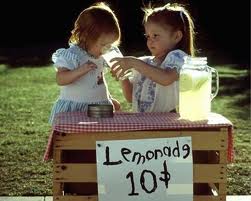
Kids get criticised so much nowadays for not showing enough initiative, taking their luxuries for granted and being selfish.  You’d think that when kids show some drive and vision they’d be applauded for it.

Well, that’s not always the case I’m afraid.

When a group of children get together to raise money for pediatric cancer research, only to have their lemonade stand shut-down and  slapped with a $500 fine, you know that there is something very wrong with the message we send kids.

After life dealt these kids a $500 fine, they kept making lemonade.

Four 10-year-olds who set up a lemonade stand a front yard near Congressional Country Club golf course, site of this year’s U.S. Open, were warned by Montgomery County officials to shut down their lemonade stand on Thursday.

On Friday, in a compromise, parents say the county agreed to let the stand stay open, just a few feet away from its original location.

Neighborhood kids set up a pop-up tent at the corner of Country Club Drive and Persimmon Tree Road.  Thirsty golf fans had a chance to buy lemonade or other cold drinks for $2 a pop.  The kids and their parents said that half the proceeds would go to a children’s charity.

The Montgomery County Department of Permitting said they were obstructing pedestrian and vehicle traffic, and wrote up the lemonade stand for operating without a license.  The offense carries a $500 fine.

“What happened to the entrepreneurial spirit of this country,” one angry parent told NBC4’s John Schriffen on Thursday, “this is the American dream.”

Parents resolved not to move the stand, and to donate 100 percent of the sales to charity.

On Friday, parents said the county government relented, and allowed the stand to stay open. In a compromise, the tent got moved 100 feet down the road, away from the intersection.

“We’re really happy today because the kids are thrilled to be back in business,” said one of the mothers, “and the county said last night that they would not in their words ‘hassle the kids’ this weekend if they would just move their lemonade stand 100 feet down still on private property.”

The kids and their parents planned on giving the money to a race to benefit pediatric cancer research.

Suer a media backlash caused the fine to be waived and a compromise to be hatched up, but there shouldn’t have been a fine or a compromise.  Adults must encourage kids to do things for others and get them to think beyond their own metrialistic vices.  But when children do something that is selfless and sincere, it sends such a terrible message to try and undermine or interfere with their passion for wanting to make a real difference.

Why be content with the next generation simply following in our footsteps, when they are capable of so much more?  Let’s support and encourage them to lean and improve upon both our strengths and weaknesses.

Report Writing Can Be So Dispiriting

June 14, 2011

Remember the day when teachers actually got to speak their mind?  When they were able to put an evaluation of a child in writing without fear of a lawsuit?  I’m afraid those days are long gone.

Report writing is as bigger chore now as it has ever been.  Required to complete at least 2 a year, I stay up nights on end in the lead up to my report writing deadline, typing away, without any idea why reports need to be so long and arduous.

The following are 5 frustrating features of a modern-day school report:

1.  It is often written in technical language that makes no sense at all to parents.  This is a ploy by the teacher to use up as much space as possible, make themselves look extra professional and write in such a way that parents have no idea what they are talking about (so they wont have what to complain about).  I feel sorry for parents that genuinely try to read their child’s report, only to be left totally confused by the experience.

2.  The Government is scared that put in the hands of teachers, reports would be too short and wouldn’t include enough detail.  That is why they have directed teachers to write about every detail about the child, down to how neat his/her desk is and how clearly he/she speaks in public.  That means Primary school teachers must write over 1000 characters each in four sections (General Comment, Maths, English and Unit of Inquiry).  Added to that the teachers need to isolate skills yet learnt and pinpoint how they are going to help the students catch up in these areas.  It’s just too long!

3. Similarly, the Government wanted students to be graded according to an insane scale.  The letter grade “B” means the child is a semester ahead, “C” refers to where the child should be, and “D” means the child is a semester behind.  There is “A” and “E”, but teachers are advised not to go there because it makes the school look bad.  In other words, if your student is going well, you give them a “C” – go figure!

4.  The report tell you nothing of real substance!  The threat of lawsuit is too great.  It’s designed to say a lot without saying anything at all!

5.  Teachers are so exhausted from writing these blasted reports that they come to school tired and emotionally drained.  Their planning time has been compromised, so often their lessons are less engaging.

I am as happy with my reports as the constraints lets me be.  I feel as though I’ve written in “plain speak”, demonstrated that I know my students and have shown an understanding of where they are at academically and socially.

But I am so drained!

Why does it have to be like this?

The Cheapening of Children’s Literature

June 12, 2011

Young children are not reading, and if that’s not sad enough, the methods used to get them back into books don’t make the grade.  I wish a more concerted effort could be made to reinvigorate and re-engage young readers through authentic and well written books.

Unfortunately, fecal matter and toilet humour is the order of the day. Take this book featuring expletives on every page:

A book full of foul language is tonight generating debate over whether it should be sold in New Zealand.

Anti-family violence campaigners are up-in-arms over the imminent release of the offensive parody of a children’s bedtime book.

The book, entitled Go the F*** to Sleep, looks and sounds like an ordinary kids’ book, but has swear words on every page.

“The book features a father trying to get his young child to sleep – a common experience of parents. It is littered with offensive language, but most disturbingly, looks and sounds just like a children’s book,” said Family First director Bob McCoskrie.

Go the F*** to Sleep by Adam Mansbach was written as a spoof, based on the author’s experience as a Dad.

“It started with some sleepless nights and a Facebook post where I jokingly said I was going to write, I said ‘look out for my forthcoming children’s book, go the F*** to sleep’. And a couple of weeks later actually sat down and wrote it,” Mansbach told the Today Show.

The book is due for release in the US next week, after being available online for months, and a leaked PDF has gone viral via websites like Facebook.

Now, it is Amazon’s bestseller on pre-orders alone, and turned the American author into an overnight sensation.

McCoskrie understands the book is now about to hit shelves in New Zealand.

“I think it sends all the wrong messages,” he told ONE News.

The advocacy group are worried about the effects it may have on dysfunctional parents, and are now calling on bookstores to ban its sale.

“While in an adult context, the book may be harmless and even amusing, we have grave concerns about its effect on aggressive and dysfunctional parents, and also on children who are attracted to the book,” said McCoskrie.

McCoskrie said it trivialises verbal abuse and intolerance of children at a time when New Zealand is battling family violence.

“We’d rather parents spent their hard earned money on a book on quality parenting, or a book that they can enjoy reading to their child.”

He said he is already written to two book distributors, Booksellers Association and Paper Plus New Zealand, urging them not to stock it.

But book sellers say it will be on shelves in a month.

Wellington’s Unity Books has already ordered ten copies for its parenting section.

“It’s a de-stress, at the end of the day, or at the end of the night – have a laugh, sit down together. The idea that someone would take all of it to heart, and abuse their children because of it is a bit hard to imagine really,” said Unity’s Cameron Hyland.

As for the book ending up in the wrong hands – the kids.

“We trust the parents will know, this goes on a high shelf!” said Mansbach.

McCoskrie said Family First is now considering a complaint to the Censor’s Office.

I am certainly not in favour of banning books and I believe that much of this story is driven from conservative alarmist, but I do lament the lack of interest kids have in reading and the methods used to re-engage them.  Young people will read this book and fall instantly in love with iot whether it was intended for them or not.  Just when we needed more imaginative and well written alternatives …

Are We Setting Up Our Children?

June 10, 2011

I personally don’t agree with closing down establishments that offer facials to kids under 13, as I feel that while it may be in poor taste, it is hardly outrageous.

What I do believe is that there far too much focus put on appearance. We are setting up our kids for failure if we continue to peddle the lie that:

a. You are happy if you look a certain way

b. You are ugly if you don’t look a certain way

c. That appearance is more important than character and integrity.

Still, as long as we allow our kids to stop acting their age and instead obsess about their appearance, cases like this will emerge:

Do children need a facial?

That question is actually being considered by some parents in Britain, where a salon that caters exclusively to children recently opened.

The salon, which opened earlier this week in the county of Essex, Britain’s answer to Jersey Shore, offers services such as manicures, pedicures, facials and hair styling to children under 13. The salon, called Trendy Monkeys also offers “princess parties” for groups of children, which comes with pink limousine service to and from the salon.

News of the salon has created an uproar in Britain, where child psychologists and advocates say that type of business promotes the sexualization of young girls and robs them of their childhood.

Owner Michelle Devine has defended her business, saying that daughters want to be like their mothers and that she is simply offering a service that many want.

“This shop will be specifically aimed at children and will cater to their need to feel good about themselves and take pride in their appearance in a fun-filled environment,” Ms. Devine told The Independent.

Critics disagree. A child protection consultant named Shy Keenan told the Daily Mail, “This is outrageous – it is giving children a complex about the way they look from the age of one.”

She might be onto something. Cosmetics companies and beauty businesses looking to widen their customer base have been increasingly courting the I-still-have-baby-teeth group in recent years.

A 2008 New York Times article detailed how a growing number of salons aimed at children as young as five were popping up, while retail giant Walmart came under fire earlier this year after news emerged it planned to sell anti-aging skin care products aimed at children 8 to 12, according to CBS local news in Pittsburgh.

While many parents may see nothing wrong with letting their child play dress-up or try on lipstick at home, a growing number of critics argue that marketing salon services and cosmetics to children is just plain wrong.

Whether that has any impact on business is another story. The business’ Facebook page (where, incidentally, photos of children who have visited the salon are accessible to anyone with an Internet connection) posted a message on Thursday expressing thanks for all of the attention it has received, apparently in belief that any publicity is good publicity.

You hear adults defend this practice by saying, “I spend a great deal of time focussing on my appearance, it’s natural.”

My response is, “How is that working for you?”

Do we want our kids to be spending inordinate amounts of time at salons, in front of the mirror and on the scales?  Do we want their appearance to guide their self-worth?  Do we want them to spend more time working out what to wear than how they can help others?

Is it not possible that we are setting up our children to take on the mindless anxieties that have so deeply tarnished our self-worth and affected our capacity to feel good about who we are and what we have achieved?

How Can Handcuffing Students Ever Be Legal?

June 9, 2011

In Australia, if a school Prinicipal was seen to be authorising the handcuffing of students to polls, all hell would break loose!  The Principal would be sacked immediately, and the school would be faced with closure.  In America, it seems that it’s more complicated than that.

A recent school alleged to have shackled its students for hours at a time needs to have been proven contravene a rule that allows handcuffing of kids in certain instances, before legal action  can be imposed.

US civil rights activists have filed a lawsuit against a school they claim shackled children to railings and poles to punish misbehaviour.

Five pupils at Capital City Alternative School in Jackson, Mississippi, claim staff there handcuffed by their wrists, and sometimes the ankles too, for up to six hours at a time.

Some say they were forced to eat lunch while handcuffed, and had to shout to be released to use the bathroom, sometimes unsuccessfully.

They allege school principals often ordered the shackling, WLBT reported.

The Southern Poverty Law Centre filed a lawsuit naming Jackson Public Schools and Capital City Alternative School officials and seeking class-action status on behalf of all the school’s students.

The complaint says the alleged punishments violate the US Constitution and school board policy.

The centre’s director, attorney Jody Evans, said that the policy states students can only be handcuffed if they present a danger to themselves or others, or if they are destroying property.

‘In these instances, none of these occurred. Students were simply (saying) I forgot my belt today, have the wrong shoes on. They were handcuffed,’ he said, according to WLBT.

Critics of the Capital City Alternative School in Jackson say the allegedly excessive punishment makes students more likely to drop out of school – and commit crimes later in life.

The school admits pupils in grades 4-12 who have been suspended or expelled from Jackson Public Schools for 10 days or longer.

School district officials said the agency takes the allegations seriously and will respond through legal channels.

It deeply upsets me that schools should ever have the authority to handcuff students.  That’s the job of the police.  Misissippi needs to change their education policy quickly.  It is not acceptable for this practice to be allowed in any form.