Posts Tagged ‘Books’

Teacher Blunder Causes Nightmare for Students

November 16, 2011

Can you imagine the distress that the students must have felt when they discovered the novel they prepared for wasn’t actually covered in the exam?  What do they do?  Try and write about novels they haven’t read?  Can you imagine the teacher’s embarrassment when he/she was informed of the huge error?

SHOCKED students from a private school in Melbourne’s southeast were unable to complete a VCE exam because they had been taught the wrong text.

Authorities have launched an investigation after eight pupils from Lighthouse Christian College in Keysborough spent a year studying a novel not on the prescribed reading list.

The error was discovered last Thursday afternoon – when the year 12 students could not find Julia Leigh’s The Hunter on their literature exam paper.

The VCE English exam is a 3-hr exam.  Unlike all other subjects, it is not an elective. Every Year 12 student in the State sits for it. To study a text, night and day, only to find out during the exam that it wasn’t on the prescribed reading list would have been an earth shattering revelation for the students involved.  If it was me, I would have panicked.  It would have ruined the whole exam for me.

Mistakes happen, but this was a big one!

Education vs Self-Expression

September 21, 2011

Last week, my colleague and I taught the most wonderful creative writing lesson.  My colleague wrote the beggining of a sentence on the board  – “As the ball bounced higher and higher …” and we told the students that they had 10 minutes to write a story of their choosing starting with the words on the board.  We told them that we weren’t going to correct spelling, grammar, paragraphing etc.  We just wanted them to have a go and let their imaginations steer them in the right direction.

Everly child bar none wrote frantically.  Those that lack certainty, didn’t.  Those that struggle with composing letters and information reports lapped up the lack of protocols and structure that this activity offered.  Why was this simple lesson such a success?  Because it allowed the students to express themselves.

Curriculums and educational trends have made it harder for teachers to help students find themselves.  It has continued to downplay the importance of The Arts in favour of skills and concepts that many of our children will never use.  The Fibonacci Sequence might be fascinating, but who decides that this is more important than a clay modelling session?  Since when did single-celled organisms have a greater importance in a child’s life than the chance to perform to an audience?

Nowadays the emphasis is on memorising facts, studying for standardised tests and rote learning.  Even when the system purports to be encouraging self-expression it’s often a sham.  The system dictates what literature the students study, how they should think and what they should be feeling.

I remember telling my teacher when I was a student that I was bored by Robinson Crusoe.  You should have seen the look on his face!  He asked me how I could be bored with such a classic.  I told him that I wasn’t interested in reading page after page about details.  I wanted tangible feelings I could connect with.  My teacher was astounded.  He reminded me that Robinson Crusoe was one of the most popular books of all time.  I wanted to reply that Jurassic Park was one of the most popular films of all time, but thought better of it.

There are a multitude of kids who are simply not adjusting to the style of education offered.  So what do we do?  We tell them to smarten up and pull their finger out.  We remind them that if they don’t adjust their potential will be wasted and their career prospects will be hampered.  What if it isn’t the “spoilt” children’s fault they are not thriving at school?  What if it’s actually the narrow-mindedness of the system?

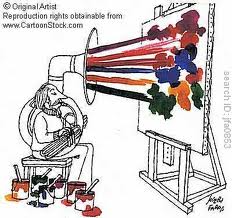
The fact that the writing session was 10 minutes and no longer was key to the success of the lesson.  According to my colleague when they are given more time their work suffers.  It reminded me of a great scene from the film Six Degrees of Separation.  Donald Sutherland recounts how whilst the Grade 1 and Grade 3 teachers at his childs’ school weren’t able to extract great artwork from the students, the Grade 2 teacher was responsible for a classroom of art geniuses.  He confronted the teacher to ask her what her secret is, and she replied that she knows when to take the brushes out of their hands.

The reason why we need to take the pencils out of their hands after only 10 minutes, is that up until that point they haven’t had the time to think beyond their natural instincts.  If we let them continue they would slowly stop writing out of instinct and start writing to please their teacher.  They would consider the structure that teachers have been duty bound to impart to their students (such as containing a problem, resolution and foci).  This very structure leads to boring, formulaic writing.

Our students are crying out for some structure and routine in their lives, but by the same token, they are also crying out for an opportunity to express themselves.  We are all different and sometimes society doesn’t give us the freedom to express it.

It’s time to take the brushes out of our students’ hands and let them show us what they’re really about!

Diet Book Targets 6-12 Year-Olds!

August 18, 2011


You don’t need me to tell you that it is unhealthy for preteens to target.  I would go even further than that and say that it’s unhealthy for preteens to be fixated on their weight to begin with.

Writing a book advocating child dieting is irresponsible and potentially destructive:

A book aimed at helping young children lose weight has outraged an eating disorder help group.

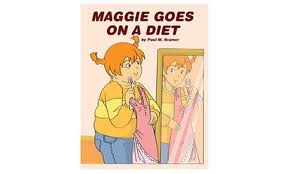
Maggie Goes on a Diet, aimed at 6 to 12 year olds, tells the story of an overweight girl who goes on a diet and goes on to become the school soccer star.

Its Hawaiian publishers pitch the book on their website as an inspirational tale for kids.

“Maggie has so much potential that has been hiding under her extra weight,” the website says.

Deb Schwarz, manager of Eating Difficulties Education Network (EDEN), a New Zealand not-for-profit organisation, says the book could have the opposite effect, and encourage eating disorders among children.

“Research shows poor body image is associated with depression, bullying, eating disorders, risk taking behaviours, and reduced physical activity. Messages like those in the book promote body dissatisfaction.”

She says there are concerns that dieting messages increase disordered eating in children.

This is another sad situation of literature published for the purpose of stirring controversy and making money at the expense of the vulnerable.

Not good enough!

Captain Phonics to the Rescue!

July 7, 2011

It’s like the pest that wont go away.  Phonics sneaks up on us all the time, with it’s many proponents insisting it is the missing key in getting literacy levels up to standard.  I doubt that is the case.  In fact, while I think phonics has a minor secondary role to play, if you make phonics the key method for teaching reading, you will almost certainly turn your students off literature.

It seems some British MP’s agree with me:

MPs have criticised government plans to test pupils on their reading ability at the age of six, warning that it will put children off reading for pleasure.

The report criticises the government’s focus on phonics – in which children learn individual sounds and then blend them to read words – as a “mechanical” approach and warns that it will contribute to a decline in literacy.

Fabian Hamilton, who chairs the MPs’ group, said: “If there is a central theme to this, that is, reading must be a pleasure. Of course children need the tools to understand what sounds the symbols make, and what those sounds mean. Phonics is only one way of doing it, there are others.”

The MPs’ report says: “The phonics test is likely to demotivate children rather than ensure that they become eager and fluent readers.”The government is facing a backlash over phonics. Critics, including the United Kingdom Literacy Association, have written to education secretary Michael Gove lobbying him to abandon the test.

The schools minister, Nick Gibb, said: “High-quality evidence from across the world – from Scotland and Australia to the National Reading Panel in the US – shows that the systematic teaching of synthetic phonics is the best way to teach basic reading skills, and especially those aged five to seven.

“It is vital that we focus on the reading skills of children early on in their lives, and give those who are struggling the extra help they need to enable them to go on to enjoy a lifetime’s love of reading rather than a lifelong struggle.”

Surely the greatest contribution a teacher of reading can make is helping to nurture an appreciation and fondness of reading.  Phonics is for most students a giant slog.  Even the expression “systematic teaching of synthetic phonics” is a turnoff.

Phonics has its place, but enjoyment of reading is tantamount.  I want my students to enjoy reading about different people and places, connect with well drawn characters and gain insights. I want them to experinece how reading can trigger emotions, form opinions and nurture their imaginations.

I didn’t become a teacher to turn my students off reading.

Another Day, Another Standardised Test

July 5, 2011

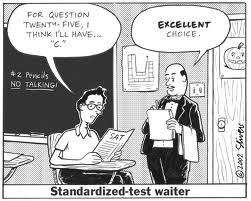
UK teachers are told to add mandatory phonics tests to the ever-expanding list.  Remember when teaching was about engaging the students not test practise?

This time next year, every year 1 pupil in England is likely to encounter a new national test assessing a central aspect of their ability to read.

The children, aged five and six, will be presented with 40 individual words on paper, and asked to sound them out to their teachers or to another adult. Some words will be familiar to most, while others will be made-up or “non” words such as “mip” or “glimp”, designed only to assess the child’s ability to follow the pronunciation rules, such as they exist, of written English.

The results of this test, or “screening check”, will then be collected, given to the child’s parents and also used to produce statistics on national and local performance and to inform Ofsted inspection judgments on schools.

One leading literacy figure has described the new test as potentially “disastrous”, while another told this newspaper it was an “abomination” and likely to be a major waste of taxpayers’ money. A petition with more than 1,000 signatures against it has been collected.

The debate surrounds the principle of teaching phonics, another boring, routine and old-fashioned way of teaching content that could be conveyed in a far more exciting and engaging way.

Beyond this debate, I feel there is another issue at stake.  The rise of obsessive testing inevitably leads to the curriculum being hijacked by test practise as well as pressure needlessly put on Primary aged students.  These students deserve to have their crucial first years of schooling without the stresses they will confront later on down the track.


The Cheapening of Children’s Literature

June 12, 2011

Young children are not reading, and if that’s not sad enough, the methods used to get them back into books don’t make the grade.  I wish a more concerted effort could be made to reinvigorate and re-engage young readers through authentic and well written books.

Unfortunately, fecal matter and toilet humour is the order of the day. Take this book featuring expletives on every page:

A book full of foul language is tonight generating debate over whether it should be sold in New Zealand.

Anti-family violence campaigners are up-in-arms over the imminent release of the offensive parody of a children’s bedtime book.

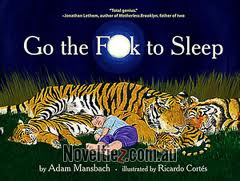
The book, entitled Go the F*** to Sleep, looks and sounds like an ordinary kids’ book, but has swear words on every page.

“The book features a father trying to get his young child to sleep – a common experience of parents. It is littered with offensive language, but most disturbingly, looks and sounds just like a children’s book,” said Family First director Bob McCoskrie.

Go the F*** to Sleep by Adam Mansbach was written as a spoof, based on the author’s experience as a Dad.

“It started with some sleepless nights and a Facebook post where I jokingly said I was going to write, I said ‘look out for my forthcoming children’s book, go the F*** to sleep’. And a couple of weeks later actually sat down and wrote it,” Mansbach told the Today Show.

The book is due for release in the US next week, after being available online for months, and a leaked PDF has gone viral via websites like Facebook.

Now, it is Amazon’s bestseller on pre-orders alone, and turned the American author into an overnight sensation.

McCoskrie understands the book is now about to hit shelves in New Zealand.

“I think it sends all the wrong messages,” he told ONE News.

The advocacy group are worried about the effects it may have on dysfunctional parents, and are now calling on bookstores to ban its sale.

“While in an adult context, the book may be harmless and even amusing, we have grave concerns about its effect on aggressive and dysfunctional parents, and also on children who are attracted to the book,” said McCoskrie.

McCoskrie said it trivialises verbal abuse and intolerance of children at a time when New Zealand is battling family violence.

“We’d rather parents spent their hard earned money on a book on quality parenting, or a book that they can enjoy reading to their child.”

He said he is already written to two book distributors, Booksellers Association and Paper Plus New Zealand, urging them not to stock it.

But book sellers say it will be on shelves in a month.

Wellington’s Unity Books has already ordered ten copies for its parenting section.

“It’s a de-stress, at the end of the day, or at the end of the night – have a laugh, sit down together. The idea that someone would take all of it to heart, and abuse their children because of it is a bit hard to imagine really,” said Unity’s Cameron Hyland.

As for the book ending up in the wrong hands – the kids.

“We trust the parents will know, this goes on a high shelf!” said Mansbach.

McCoskrie said Family First is now considering a complaint to the Censor’s Office.

I am certainly not in favour of banning books and I believe that much of this story is driven from conservative alarmist, but I do lament the lack of interest kids have in reading and the methods used to re-engage them.  Young people will read this book and fall instantly in love with iot whether it was intended for them or not.  Just when we needed more imaginative and well written alternatives …

Boys and Reading: The Constant Struggle

May 18, 2011

The results of a recent survey found that boys don’t enjoy reading and fail to get past 100 pages of a classroom text.  Should we be surprised?  Boys have been disconnected from reading for years, and the question has to be asked – what have we done about it.

The findings are an indictment on how inflexible we are at altering the way we teach:

Many secondary school boys do not have the stamina to read beyond the 100th page of a book, research suggests.

Teachers also revealed that classics of English literature, such as those by Jane Austen, are putting boys off reading.

Some 70% of the 500 teachers surveyed for publishers Pearson said boys had switched off by the 100 page mark.

This is leading many teachers to ditch longer novels in favour of shorter books, it adds.

Teachers were asked to identify points where boys would switch off in class when novels were being read.

A quarter said that the interest cut-off point happened within the first few pages of a book.

A further 22% said interest waned within the first 50 pages, while a further quarter identified the 100 page mark.

Nearly a third of the teachers questioned said boys were put off before the book had even been opened, if they saw it had more than 200 pages.

According to the research, Shakespeare plays including The Tempest, Macbeth and A Midsummer’s Night Dream were particularly unpopular, as was Steinbeck’s 1930s classic, Of Mice and Men.

The reluctance to read could partly explain the achievement gap between boys and girls.

Last year 85% of 11-year-old girls reached the expected level in English for their age compared to 76% of boys. In reading, the gender gap was even more stark at 79% for girls and 64% for boys.

According to children’s organisation Unesco, the biggest single indicator of a child’s future success at school is whether they read for pleasure.

The research is timed to coincide with the launch of a new series of books called Heroes aimed at secondary school pupils which aims to switch boys back on to reading and get them past the crucial 100-page mark.

Best-selling author Frank Cottrell Boyce, consultant editor on the series, said: “Pleasure can’t be taught. Pleasure can only be shared.”

He added that boys should be started on shorter books.

Jonathan Douglas, director of the National Literacy Trust, said its research showed that boys lag behind girls not just in literacy skills, but in the amount they read and in the extent to which they enjoy reading.

“This gets worse as children get older. This is a vital issue and one the National Literacy Trust is working hard to address. More needs to be done to engage boys’ and building on their own interests.”

He added that publishers had a crucial role to play in this.

On the subject of publishers, an author who recently read my yet to be published manuscript, commented that had I made my main character a girl instead of a boy, I would have an easier time convincing publishers to publish the book.  She said that since boys don’t read, a girl would have been a more appropriate choice. The comment shocked me.  At no stage did I ever envisage the book to be strictly a book for boys.  I always thought it would be of universal appeal.  But apparently publishing companies don’t see it that way.

Shakespeare and Steinbeck are wonderful, but were never intended to be ones first foray into literature.  Is it so wrong to choose something of lesser literary acclaim for something more contemporary?  The sad reality is, teachers tend not to gravitate to Steinbeck and Shakespeare for their own leisure reading and don’t have strong connection to the texts the curriculum requires them to teach.  For a teacher to effectively inspire their students to love reading, they must love reading.  For students to read beyond page 100, the teacher needs to do more than set reading homework – they need to show the class how enjoyable and meaningful the book is to them.

When I read my manuscript to kids, I am overwhelmed by how much they enjoy the characters and situations.  I love how they connect with the main character and his issues and are able to relate to what he is going through.  Somebody once asked whether the kids enjoy it, not so much for the quality of the writing, but because the author, who has such a deep connection to the material, reads it out with such enthusiasm and joy.

Maybe so.  But isn’t that the key?  For boys to enjoy reading, they must see that their teacher enjoying it too.  If that means dispense with the classics and let the teacher decide what texts to introduce to the classroom – so be it.

Children’s Books Deemed Sexist

May 6, 2011

It turn out the classic children’s books I have grown up reading have “enforced gender equality.”  Books I appreciated as a child have been among those labeled sexist for featuring a male hero instead of a female one, according to a recent study:

A large-scale study of children’s books published between 1900 and 2000 revealed that they were almost twice as likely to feature a male central character than a female one.

The gender bias was even worse when it came to books with animal characters – often favoured by publishers as ‘gender neutral’ with male animal heroes featuring in three times more books than female animal heroines.

And female characters were even overlooked when it came to star billing – kids’ books were twice as likely to include a male character’s name in their title as a female name.

Researchers from Florida State University, USA, also discovered that while books printed during the 1990s came close to equal representation of male and female human characters, animal characters were twice as likely to be male as female.

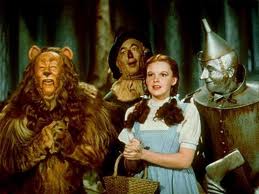
In a conclusion that will baffle fans of Alice’s Adventures in Wonderland, Anne of Green Gables and The Wonderful Wizard of Oz, researchers said their findings indicated a ‘symbolic annihilation of women’.

They warned that the role of kids’ fiction as a ‘dominant blueprint of shared cultural values, meanings and expectations’ could send a message that ‘women and girls occupy a less important role in society than men or boys.’

Evidence of this inequality was noted in how readers ‘interpret even gender neutral characters as male’ and in the way mums ‘frequently label gender-neutral animal characters as male when reading with their children.’

And in books where the characters are animals – such as The Tale of Peter Rabbit, Fantastic Mr Fox and Winnie-the-Pooh – leading and positive female roles are scarcer.

The likes of Jemima Puddle-Duck and Mrs Tiggy-Winkle had key roles in just 7.5 per cent of children’s books. Male rabbits, bears, owls, dogs, foxes and toads were more prevalent – they were the lead characters in 23 per cent of books.

The study, results of which are published in Gender and Society journal, looked at almost 6,000 children’s books published between 1900 and 2000.

Books were chosen from three different sources, including those which had won the prestigious Caldecott Medal, awarded annually to American kids’ fiction.

Study author Professor Janice McCabe, professor of sociology at Florida State University said: “We looked at a full century of books.

“One thing that surprised us is that females’ representations did not consistently improve from 1900 to 2000; in the mid part of the century it was actually more unequal. Books became more male dominated.”

And on the problem of animal characters, Prof McCabe added: “Together with research on reader interpretations, our findings regarding imbalanced representations among animal characters suggests that these characters could be particularly powerful, and potentially overlooked, conduits for gendered messages.

“The persistent pattern of disparity among animal characters may even reveal a subtle kind of symbolic annihilation of women disguised through animal imagery.”

The study found that the imbalance has worsened since the turn of the 20th century, when the split was even.

In the early 1900s there was a move away from books about fairytales based on heroines such as Cinderella. But there were numerous strong female characters. Nancy was the captain of the Amazon in Swallows and Amazons, and What Katy Did was a major series. Male characters such as Harry Potter and Alex Rider now dominate.

I have no issue with the general findings, and I fon;t think too many would be suprised that there is a disparity between central male and female characters in children’s story.  What I do have a problem is with two statements:
As a huge fan of The Wizard of Oz in all forms, I find it absolutely mind-boggling that the researchers have called it a ‘symbolic annihilation of women’.  Talk about over analysis!  I find this label deeply offensive.

And then there’s this bold statement“The persistent pattern of disparity among animal characters may even reveal a subtle kind of symbolic annihilation of women disguised through animal imagery.”

Annihilation?  Is that the best word they could come up with for books that didn’t pass the gender test, but surely passed the good intentions test?  Is it not possible that while these classic books are a sign of the times when it comes to gender disparity, they are also largely brilliantly written and conceived stories that were written to entertain and engross children rather than to symbolically annihilate women?

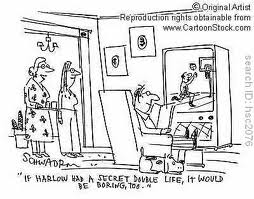
Should Teachers be Dismissed for Leading Double Lives?

April 29, 2011

Whilst I don’t think it’s ideal for a teacher to be involved in the racy novel-writing industry, I’m not sure that the crime befits anything more than a ban on writing future novels.  A teacher caught involved in such activities hasn’t broken laws but they have somewhat tarnished their reputation.  Still, is it really worth more than a slap on the wrist?

Parental complaints have led Midd-West School District officials to investigate a veteran high school teacher who writes erotic romance novels under a pen name.

The teacher, Judy Buranich, of Selinsgrove, has taught at Midd-West for 33 years. Under the pen name Judy Mays, she has been writing novels for a number of those years. Her books include liaisons involving werewolves, aliens and vampires and can be found in the Romance section at Waldenbooks.

Buranich declined to comment about the controversy Wednesday.

On her website, she refers to herself as “a mild-mannered tenth grade English teacher in a small public high school.”

Wesley Knapp, superintendent of the Midd-West School District, said he has received a few complaints, but it was after The Daily Item approached him on April 18 to ask about the connection. Until then, he said, “I didn’t know anything about it.”

Knapp said he has told those making complaints “that we’d look into it.”

He declined to discuss the matter further.

“When it’s a personnel matter, I can’t comment,” he said.

Deanna Stepp, mother of a district student, said: “We are not questioning Mrs. Buranich’s teaching credentials. We are not even questioning her ability as a writer … . What we’re questioning is that the two jobs are not compatible with one another.”

Another parent, Wendy Apple, said she had Buranich as an English teacher in high school.

“I thought she was a top-of-the-line teacher,” Apple said.

But the erotica, she said, “is unethical, totally unacceptable. Period. It just sort of sickens and saddens me to know everybody’s sort of looking at this like, hey, this is OK.”

Apple has received comments and messages on her Facebook page, she said, from people who are attacking her for speaking out.

Apple said she heard the rumor from several students, and started during her own research. Although most of Buranich’s defenders are saying it’s not an issue because she does the writing on her own time, Apple said, “then how did these kids find out? These kids knew what kind of writer she was.”

As a result of her speaking out, which she had contemplated for about a month, Apple said her son, who has Buranich as a teacher, has received backlash at school as well.

“I wholeheartedly believe that more parents are looking at things the same way we are,” Apple said.

Writing as Mays on Facebook on April 22, Buranich said, “The world is full of idiots.”

She also referred to support she has gotten.

“I have a lot of people supporting me, including students and ex-students,” she wrote.

She wrote that she hopes the expose will make the sales of her books go up, and already has.

Meanwhile, a Facebook page titled “Support Judy Mays (Mrs. Buranich)” hit 88 likes by Wednesday afternoon.

Cindy Wagner, manager, at Waldenbooks, said the novels are under the category of “Romance,” not “Erotica” at the bookstore. She said the books are already tagged when they arrive, and she simply places them on the shelves according to those tags.

So should teachers be allowed to lead a double life?  At what point would they be taking it too far?  Do you think that the parents of Ms. Buranich have what to complain about?  Do you agree that she should be advised to quit writing these novels while she is still teaching?

Inspiring Words For All Teachers

April 24, 2011

I came across this brilliant article by Priscilla Wilson, a retired school teacher and educator.  In her wonderful piece, she calls on new teachers to put children first, and to look past bureaucratic stumbling blocks and instead, fight for the child.  It is so refreshing to come across a teacher that puts this critical message in such eloquent terms.

Teachers from all around the globe would be well advised to read this:

This week is somewhat of a milestone for me.

Forty years ago this week I started my first teaching job. In reflecting on what a great time that was for me, I am saddened as to how much things have changed. It was an exciting time when people who felt that they wanted to teach could easily do so.

It was actually a very care-free and nurturing time which I must say we simply took for granted. It only made sense that if you had studied to be a teacher, you would have the opportunity to do so. The big discussion was not if you could get a job but simply where you thought you wanted to live and work! People were excited to do both and there was a great buzz about the profession and about getting to it!

April may seem like a strange time to begin teaching but I simply finished my university year one week and went to work the following week. I was in Fredericton and there was a separate Special Education school. I had the pleasure of volunteering there during my time at Teachers College and St. Thomas University and knew that this was exactly what I wanted to do. Following this opportunity, I was fortunate to be able to work in a segregated Special Education school for 10 years prior to Integration in the early 1980s. It was indeed an exceptional time that was especially meaningful, productive and memorable, a time of my life filled with fond memories that I will have forever.

With the introduction of Integration, many of us who had taught in the separate Special Education system became resource teachers. In addition to working as a resource teacher I was fortunate to teach most grades from 1 to 9.

I know now that I was always drawn to the child who was struggling, for whatever reason. I was very drawn to this particular student and was always intrigued as to what I could do that would be different; teach it again or another way. What was it going to take in order for the student/students to be successful?

I consider myself so fortunate because teaching has been such a positive career choice for me. What about those who are ready now to dedicate their time and energies to teaching? Why does employment have to be such a struggle for them? Why, too, are so many who are teaching so dissatisfied with their career? What changes could be made to the system to make things better for everyone?

What is more important than our young people; both our students and our young teachers? At a time when so many so-called topics of importance are being discussed, why aren’t we hearing more about the importance of an education? Why aren’t we talking more about how to make it better?

Many children are unhappy with their school experience which is extremely sad and quite unbelievable! Parents are dissatisfied and teachers can only dream of better teaching experiences, and thousands of enthusiastic young teachers feel they may never teach. How can things be so desperate in what should be such a progressive time?

In addition, the needs of so many children are not being met because the system is not set up to handle them. Amazing young people are losing out every day and we get to help them and, in fact, turn their lives around because at Wilson Reading Centre we’ve created a learning environment that is working for them.

Getting back to my 40-year anniversary, I think that it’s interesting that I have the energy and stamina that I’ve always have. Well, it seems that way to me. No doubt, I have slowed down somewhat but I’m having too much fun to notice. There’s nothing extra special about me, except that I truly love what I am doing. That in itself is a gift and one that I wish for the many young people trying to fulfill their dream of being a teacher. Just think of what they could accomplish!

I feel strongly that as a society we should be fighting back. Our students need so much more and our young people need work.

I personally know very capable young people who have left the area in order to teach. Can you imagine the time, effort and expenses that they have endured in order to achieve the necessary qualifications, only to be unemployed? If this isn’t enough, they are then forced to move away in order to find work.

I know that this isn’t just happening within education but my soap-box is education. A good education can have the most meaningful effect on the lives of our young people and we are letting them down.

We always say how important our children are to us as parents and as a society. Parents do their best to provide for their children but they aren’t the ones assigned the task of teaching their children to read.

Being a successful reader carries over into every aspect of life. Without it, the child feels helpless, defenceless, frustrated, discouraged but most importantly defeated and unsuccessful.

So my challenge to the education system is to look at each individual and ask what we as a society could be doing differently.

Perhaps the key to my happiness as a teacher was the fact that I was drawn to the child who was struggling and set about to make a difference. It seems like a reasonable solution to a successful career because it would mean the difference between doing the best job possible and one that produced mediocrity.

Teachers feel overwhelmed because too many children are coming to them with too many struggles. One solution would be to address some of these struggles before they become insurmountable.

I am not talking about a hypothetical situation. I am, in fact, talking about one that I decided to tackle as an individual. I did so by creating a learn-to-read program that I felt would make a difference. Then I set about to prove that it would work.

Having accomplished this has allowed me the opportunity to prove my philosophy on many levels. One is that by simply taking a different approach to learning to read, people who have struggled, sometimes for years, can be successful. Another is the proof of the overwhelming power that learning to read plays in each individual’s life.

Finally, the clincher, which I think is the fact that being able to give back is the key to a successful career whatever you do. So, as this week represents forty years of tons of fun and loads of opportunities to give back, my plea is that we try harder as a society and look for ways to help more children be more successful, for certain more successful and more confident as readers and therefore, as individuals!