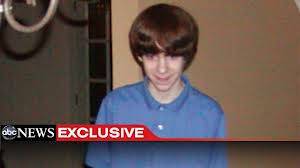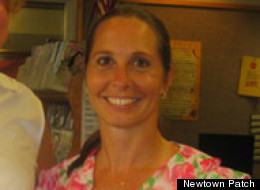
Who Needs Real Friends When You Have Facebook Friends?

December 18, 2012

friends

It is a shame that many youngsters would prefer collecting Facebook friends rather than taking the time and energy to cultivate real ones:

Some people like to have a few close friends on Facebook, while others have hundreds who they barely know.

Researchers now believe that the number of friends you have can depend on how successful you are, and even how often you move.

Researchers from the University of Virginia and the London Business school say the ‘perfect’ number of friends actually depends on several socioeconomic factors, and varies from country to country.

Shigehiro Oishi, a psychology professor in the University of Virginia’s College of Arts & Sciences, and Selin Kesebir of the London Business School explored the benefits of social networking strategies in two studies currently published in the journal Psychological Science, a journal of the Association for Psychological Science.

‘In the age of Facebook, many Americans seem to opt for a broad, shallow networking strategy,’ they say.

‘Yet cross-cultural research has shown that having many friends is not always viewed positively outside the United States.’

One reason that Americans may prefer a large social network, the researchers claim, is because Americans move around a lot.

Another important factor may be the economic conditions at a given time.

‘When times are prosperous, your friends are less likely to need much help, whether it’s covering a hospital bill or providing babysitting, and so a broad network of friends is easy to maintain,’ they claim.

‘But when times aren’t as flush, having more friends might incur huge costs in terms of both time and resources.’

Click on the link to read Parents and Teachers Should Not Be Facebook Friends

Click on the link to read Introducing the App that will Give Parents Nightmares

Click on the link to read Facebook’s Ugly Little Secret

Click on the link to read Facebook and Child Exploitation

Living With Adam Lanza

December 17, 2012

mike

Whilst I am not a fan of profiling a gunman, the following article entitled ‘I am Adam Lanza’s Mother’: A Mom’s Perspective On The Mental Illness Conversation In America, gives us a great insight into the difficulties of raising children with mental disorders:

Friday’s horrific national tragedy — the murder of 20 children and six adults at Sandy Hook Elementary School in Newtown, Connecticut — has ignited a new discussion on violence in America. In kitchens and coffee shops across the country, we tearfully debate the many faces of violence in America: gun culture, media violence, lack of mental health services, overt and covert wars abroad, religion, politics and the way we raise our children. Liza Long, a writer based in Boise, says it’s easy to talk about guns. But it’s time to talk about mental illness.

While every family’s story of mental illness is different, and we may never know the whole of the Lanza’s story, tales like this one need to be heard — and families who live them deserve our help.

Three days before 20 year-old Adam Lanza killed his mother, then opened fire on a classroom full of Connecticut kindergartners, my 13-year old son Michael (name changed) missed his bus because he was wearing the wrong color pants.

“I can wear these pants,” he said, his tone increasingly belligerent, the black-hole pupils of his eyes swallowing the blue irises.

“They are navy blue,” I told him. “Your school’s dress code says black or khaki pants only.”

“They told me I could wear these,” he insisted. “You’re a stupid bitch. I can wear whatever pants I want to. This is America. I have rights!”

“You can’t wear whatever pants you want to,” I said, my tone affable, reasonable. “And you definitely cannot call me a stupid bitch. You’re grounded from electronics for the rest of the day. Now get in the car, and I will take you to school.”

I live with a son who is mentally ill. I love my son. But he terrifies me.

A few weeks ago, Michael pulled a knife and threatened to kill me and then himself after I asked him to return his overdue library books. His 7 and 9 year old siblings knew the safety plan — they ran to the car and locked the doors before I even asked them to. I managed to get the knife from Michael, then methodically collected all the sharp objects in the house into a single Tupperware container that now travels with me. Through it all, he continued to scream insults at me and threaten to kill or hurt me.

That conflict ended with three burly police officers and a paramedic wrestling my son onto a gurney for an expensive ambulance ride to the local emergency room. The mental hospital didn’t have any beds that day, and Michael calmed down nicely in the ER, so they sent us home with a prescription for Zyprexa and a follow-up visit with a local pediatric psychiatrist.

We still don’t know what’s wrong with Michael. Autism spectrum, ADHD, Oppositional Defiant or Intermittent Explosive Disorder have all been tossed around at various meetings with probation officers and social workers and counselors and teachers and school administrators. He’s been on a slew of antipsychotic and mood altering pharmaceuticals, a Russian novel of behavioral plans. Nothing seems to work.

At the start of seventh grade, Michael was accepted to an accelerated program for highly gifted math and science students. His IQ is off the charts. When he’s in a good mood, he will gladly bend your ear on subjects ranging from Greek mythology to the differences between Einsteinian and Newtonian physics to Doctor Who. He’s in a good mood most of the time. But when he’s not, watch out. And it’s impossible to predict what will set him off.

Several weeks into his new junior high school, Michael began exhibiting increasingly odd and threatening behaviors at school. We decided to transfer him to the district’s most restrictive behavioral program, a contained school environment where children who can’t function in normal classrooms can access their right to free public babysitting from 7:30-1:50 Monday through Friday until they turn 18.

The morning of the pants incident, Michael continued to argue with me on the drive. He would occasionally apologize and seem remorseful. Right before we turned into his school parking lot, he said, “Look, Mom, I’m really sorry. Can I have video games back today?”

“No way,” I told him. “You cannot act the way you acted this morning and think you can get your electronic privileges back that quickly.”

His face turned cold, and his eyes were full of calculated rage. “Then I’m going to kill myself,” he said. “I’m going to jump out of this car right now and kill myself.”

That was it. After the knife incident, I told him that if he ever said those words again, I would take him straight to the mental hospital, no ifs, ands, or buts. I did not respond, except to pull the car into the opposite lane, turning left instead of right.
“Where are you taking me?” he said, suddenly worried. “Where are we going?”

“You know where we are going,” I replied.

“No! You can’t do that to me! You’re sending me to hell! You’re sending me straight to hell!”

I pulled up in front of the hospital, frantically waiving for one of the clinicians who happened to be standing outside. “Call the police,” I said. “Hurry.”

Michael was in a full-blown fit by then, screaming and hitting. I hugged him close so he couldn’t escape from the car. He bit me several times and repeatedly jabbed his elbows into my rib cage. I’m still stronger than he is, but I won’t be for much longer.
The police came quickly and carried my son screaming and kicking into the bowels of the hospital. I started to shake, and tears filled my eyes as I filled out the paperwork — “Were there any difficulties with… at what age did your child… were there any problems with.. has your child ever experienced.. does your child have…”

At least we have health insurance now. I recently accepted a position with a local college, giving up my freelance career because when you have a kid like this, you need benefits. You’ll do anything for benefits. No individual insurance plan will cover this kind of thing.

For days, my son insisted that I was lying — that I made the whole thing up so that I could get rid of him. The first day, when I called to check up on him, he said, “I hate you. And I’m going to get my revenge as soon as I get out of here.”

By day three, he was my calm, sweet boy again, all apologies and promises to get better. I’ve heard those promises for years. I don’t believe them anymore.

On the intake form, under the question, “What are your expectations for treatment?” I wrote, “I need help.”

And I do. This problem is too big for me to handle on my own. Sometimes there are no good options. So you just pray for grace and trust that in hindsight, it will all make sense.

I am sharing this story because I am Adam Lanza’s mother. I am Dylan Klebold’s and Eric Harris’s mother. I am James Holmes’s mother. I am Jared Loughner’s mother. I am Seung-Hui Cho’s mother. And these boys—and their mothers—need help. In the wake of another horrific national tragedy, it’s easy to talk about guns. But it’s time to talk about mental illness.

According to Mother Jones, since 1982, 61 mass murders involving firearms have occurred throughout the country. Of these, 43 of the killers were white males, and only one was a woman. Mother Jones focused on whether the killers obtained their guns legally (most did). But this highly visible sign of mental illness should lead us to consider how many people in the U.S. live in fear, like I do.

When I asked my son’s social worker about my options, he said that the only thing I could do was to get Michael charged with a crime. “If he’s back in the system, they’ll create a paper trail,” he said. “That’s the only way you’re ever going to get anything done. No one will pay attention to you unless you’ve got charges.”

I don’t believe my son belongs in jail. The chaotic environment exacerbates Michael’s sensitivity to sensory stimuli and doesn’t deal with the underlying pathology. But it seems like the United States is using prison as the solution of choice for mentally ill people. According to Human Rights Watch, the number of mentally ill inmates in U.S. prisons quadrupled from 2000 to 2006, and it continues to rise — in fact, the rate of inmate mental illness is five times greater (56 percent) than in the non-incarcerated population.

With state-run treatment centers and hospitals shuttered, prison is now the last resort for the mentally ill — Rikers Island, the LA County Jail and Cook County Jail in Illinois housed the nation’s largest treatment centers in 2011.

No one wants to send a 13-year old genius who loves Harry Potter and his snuggle animal collection to jail. But our society, with its stigma on mental illness and its broken healthcare system, does not provide us with other options. Then another tortured soul shoots up a fast food restaurant. A mall. A kindergarten classroom. And we wring our hands and say, “Something must be done.”

I agree that something must be done. It’s time for a meaningful, nation-wide conversation about mental health. That’s the only way our nation can ever truly heal.

God help me. God help Michael. God help us all.

Click on the link to read School Shooting Showcases the Heroic Nature of Brilliant Teachers

Click on the link to read Let’s Make Sure that this School Shooting is the Last

Click on the link to read Get Rid of Your Guns!

Click on the link to read Explaining the Sandy Hook Elementary School Shooting to Children

School Shooting Showcases the Heroic Nature of Brilliant Teachers

December 16, 2012

Connecticut School Shooting

Next time you consider tearing strips of your child’s classroom teacher for failing to live up to your lofty standards, consider that perhaps, given the opportunity, that same teacher would take a bullet for your child:

An 8-year-old student and his mother are thanking a teacher for saving the boy from bullets fired at Sandy Hook Elementary School, where a mass shooting at the Newtown, Conn., school Friday left at least 27 dead and others wounded.

“I’m just so grateful to the teacher who saved him, she definitely [saved his life],” the mother told WCBS-TV’s Lou Young of the unidentified Sandy Hook Elementary School teacher. “He had bullets going by him and another child, and pulled them into a classroom.”

The one known shooter, reported to be the father of a student, is dead following the shooting. Police are investigating whether a second shooter was involved.

The alleged shooter entered the school at around 9:40 a.m., about 30 minutes after the school day began. At least eighteen children are among the the casualties.


Click on the link to read Let’s Make Sure that this School Shooting is the Last

Click on the link to read Get Rid of Your Guns!

Click on the link to read Explaining the Sandy Hook Elementary School Shooting to Children



Let’s Make Sure that this School Shooting is the Last

December 16, 2012

adama

I’ve had enough of reading about more innocent lives lost to violent outbursts. I’m also tired of our obsession with profiling gunmen. Why did he do it? Was he quiet? Was he clever? Was he a recluse?

The papers will point to his mental disorder or parents breakup as the reason. But surely living through a divorce and struggling with a mental disorder does not in itself lead to crimes of this magnitude being committed:

Three years previously, in 2009, Nancy and Peter Lanza had divorced after 28 years of marriage. The break up was traumatic, leaving the couple’s sons devastated. Ryan Lanza was living away at university, meaning that his brother Adam, four years younger, was left at home alone with their mother at their £350,000 house.

He was not well known to neighbours, who describe him as being reclusive and troubled.

And when the news broke on Friday of the murder of 26 people at a primary school in the town, and Ryan Lanza was hastily identified as the killer, people who knew the family knew they had named the wrong brother.

“Adam Lanza has been a weird kid since we were five years old,” said Tim Dalton, a neighbour and former classmate, on Twitter. “As horrible as this was, I can’t say I am surprised.”

“This was a deeply disturbed kid,” a family insider said. “He certainly had major issues. He was subject to outbursts from what I recall.”

A further family friend said he had acted as though he was immune to pain.

“A few years ago when he was on the baseball team, everyone had to be careful that he didn’t fall because he could get hurt and not feel it,” said the friend. “Adam had a lot of mental problems.”

What we should really be focusing on is strategies to help ensure that we don’t have to read about another school shooting again.

Click on the link to read Get Rid of Your Guns!

Click on the link to read Explaining the Sandy Hook Elementary School Shooting to Children
Click on the link to read Helping Kids Cope in the Aftermath of Sandy

Click here to read ‘Helping Our Children Make Sense of Natural Disasters’.

Explaining the Sandy Hook Elementary School Shooting to Children

December 16, 2012

Connecticut School Shooting

An awful tragedy that is going to unsettle children.

Below are some tips by experts in the field I used for the Colorado shooting, but they are just as apt in this instance:

Watch for Trauma: “Young children may have difficulties identifying and expressing feelings. Parents should pay attention to the children’s play (for instance, preoccupation with certain aggressive electronic games, drawings, repetitive play that imitates the traumatic event or events). Another sign of trauma is avoidance of reminders.” — Dr. Aurelia Bizamcer, Medical Director, Outpatient Psychiatry at Temple University Hospital

Keep Answers Truthful but Simple: “We’re not holding back, but we’re not giving more because the giving more could have the risk of alarming the child. … As a parent you have an obligation to protect a young child from being overwhelmed.” –Alan Kazdin, Professor of Psychology and Child Psychiatry at Yale University; Director of the Yale Parenting Center.

Reassure Them: “We need to appreciate that kids have different fears. Many will worry about the movies, but others will worry about such events spilling over to other areas, such as the mall, school, the neighborhood. For kids of all ages, it is really important to let them know that these kinds of events are incredibly rare. ” –Dr. Gene Beresin, Director of Child and Adolescent Psychiatry Residency Training, Massachusetts General Hospital and McLean Hospital

Keep Answers Age-Appropriate: “Parents should be sure to pitch the discussion to their kids’ developmental level. For a 6-year-old, it’s completely appropriate to reassure them of their safety, with some emphasis on the fact that this person is no longer at large. For kids over the age of 8, more concrete details are appropriate, along with, perhaps, a general discussion of how to be safe in public — locating exit doors for instance, and getting to safety in the event of any dangerous occurrence.” –Jay Reeve,President and Chief Executive Officer, Apalachee Center

Don’t Make Assumptions: “Don’t project your own feelings, fears and anxiety on kids because you know you don’t really know exactly what your kids are feeling until you talk to them.” –Dr. Jane Taylor, psychiatrist

lanza

Click on the link to read Get Rid of Your Guns!

Click on the link to read Helping Kids Cope in the Aftermath of Sandy

Click here to read ‘Helping Our Children Make Sense of Natural Disasters’.

Get Rid of Your Guns!

December 15, 2012

dawn

One of the best policies that Australia has ever implemented was a gun buy-back scheme. Although illegal from owning a firearm, the Government recognised after a tragic massacre at Port Arthur that guns were available and something had to be done about it. So they bought people’s guns and incinerated them. You would think that the people who owned these guns would have happily kept quiet about it, and I’m sure many did, but the hand-in rate was overwhelming.

Whilst I realise that the United States has a very different outlook on guns than we do, I must say that if there is an amendment in their constitution that I’m unhappy with it’s the “right to bear arms” one. Whilst I wish this amendment could be tossed away for good, I realise that the US population would never accept such a drastic change.

But that doesn’t mean you have to own a gun. That doesn’t mean that you have to expose your children to guns. I know that guns don’t kill people but no angry, potential gunmen is going to take siege of a school with a baseball bat.

Whilst guns are readily accessible, I’m afraid security measures are unlikely to be sufficient in warding off gunmen:

Dawn Hochsprung, the principal of Sandy Hook Elementary who died in the shootings at the Newtown, Conn., school Dec. 14, had recently implemented new security measures, CNN reports.

In a letter to parents this fall, Hochsprung outlined new security procedures, which included checking identification for visitors if they were not recognized by staff.

“Please understand that with nearly 700 students and over 1,000 parents representing 500… families, most parents will be asked to show identification,” Hochsprung wrote in the letter, which was addressed to “Members of our Sandy Hook Family.”

The letter also stated that all visitors arriving at the school after 9:30 a.m., when the front gates were locked, would have to ring a bell for entry and would immediately have to report to the main office to sign in.

The Associated Press reported that the shooter’s mother was a teacher at the school.

Twenty-six victims died in the shooting, including 20 children and six staff members. The gunman appears to have taken his own life.

Hochsprung, a veteran administrator with 12 years of experience, kept an active Twitter account and was a respected member of the education community.

“Dawn Hochsprung… touched many of our hearts with her professionalism and love for her students,” Bethlehem, Conn., first selectman Jeff Hamel said in a statement Friday afternoon, according to the Litchfield County Times. “Our hearts and prayers go out to all the victims from this selfish, senseless act.”

WNYT reported that Hochsprung was a doctoral student at the Sage Colleges, having started a education leadership program over the summer.

Lori Quigley, dean of the college, told the station that Hochsprung was “vibrant, full of life and loved her school community” and called her a “truly… caring administrator.”

A candlelight vigil for the victims of the shooting was scheduled in Woodbury, Conn., Friday night.

Click on the link to read Helping Kids Cope in the Aftermath of Sandy

Click here to read ‘Helping Our Children Make Sense of Natural Disasters’.

Instead of Teaching a Baby to Read, Teach it to Smile

December 13, 2012

read

What is the rush? So your child reads when he/she is developmentally ready instead of when they’re a baby? So what?

Reading is not the greatest gift you can give a young baby. Love, optimism, hope and friendship are much more important to a baby’s development that the ability to read:

John Wilkey was just four days old when his mother Dana set about teaching him how to read. The fact that newborns can’t focus on anything more than a few inches away — let alone understand words in any form — did not deter her.

Dana, 39, an events organiser who lives in Chelsea, West London, is so passionate in her view that it’s never too early to make your child brilliant, she used to run through a set of ten flashcards with her son twice a day. ‘I would show John words like “milk”, give him my breast, and then show him the baby sign language for milk,’ she says. ‘I did it morning and evening.’

Baby sign language, for those not familiar with modern  parenting, is something ‘Tiger parents’ like Dana are well versed in. It works on the theory that children want to communicate long before they develop speech and can be taught little hand signals to communicate their needs and thoughts.

When he was nine months, Dana says John — her only child — was pointing and using basic baby sign language to show he could recognise up to 20 words and phrases, including ‘I love you’, ‘nose’, ‘ear’ and ‘arms-up’.

From there, Dana says his vocabulary grew at break-neck speed. A video of John at 20 months shows him sitting in his high-chair using a chubby finger to trace underneath the words ‘eyes’, ‘clap’ and ‘book’ from left to right.

Dana, who lived in the U.S. with John’s father before they separated, now lives with her fiance, Philip, in an £3.5 million London townhouse, once owned by a well-known footballer.

She is now one of a growing number of mothers convinced that getting children reading before they are potty-trained will help them get ahead in later life.

Great Collection of Critical Thinking Videos

December 12, 2012

crit

Courtesy of educatorstechnology.com:


1- Critical Thinking Part 1:  A Valuable Argument


2- Critical Thinking Part 2 : Broken Logic


3- Critical Thinking Part 3 : The Man who was Made of Straw


4- Critical Thinking Part 4 : Getting Personal


5- Critical Thinking Part 5 : The Gambler’s Fallacy


6- Critical Thinking Part 6 : A Precautionary Tale


Click on the link to read Kid’s Cute Note to the Tooth Fairy

Click on the link to read ‘Love’ as Defined by a 5-Year Old

Click on the link to read The Innocence of Youth

Click on the link to read Letting Kids Take Risks is Healthy for Them

Click on the link to read Study Reveals Children Aren’t Selfish After All


Teachers Can’t Afford to Make Light of Suicide

December 11, 2012

teens

I am sure many will fiercely oppose my view that a teacher who asked her students to write an essay from the perspective of someone about to commit suicide, should not be suspended.

Whilst I am of the belief that suicide should not be taken lightly in the classroom, I can understand the intention of the teacher and can see the benefit of exploring themes of self-esteem, frustration, self-loathing and loneliness, all of which can be conjured up through this essay topic.

A teacher has been suspended after asking a class full of teenagers to write suicide notes.

The man, who has not been named, is a French teacher at the Antoine-Delafont school in Montmoreau-Saint-Cybard, near Angouleme, France.

He told the 13 to 14 year olds to imagine what they would say to themselves if they were about to end their lives out of ‘disgust’ for their lives.

The assignment, set in October, read : ‘You’ve just turned 18. You’ve decided to end your life. Your decision is definitive.

‘In a final surge you decide to put in words the reason behind your decision. In the style of a self-portrait, you describe the disgust you have for yourself. Your text will retrace certain events in your life at the origin of these feelings.’

Teen suicides are becoming a growing problem, made worse by the proliferation of social media and mobile technology, experts say.

A recent study by The Centers for Disease Control and Prevention in America, found that one in 12 US teens have tried to kill themselves at least once.

On a larger scale, suicides made up 13 per cent of all deaths among US youths ages 10 to 24 last year, according to the study.

Neuropsychologist Hector Adames said the rise of communication through technology is a major reason why suicide rates are on the rise.

‘What happens with an increase in communication among students is that there’s more pressure. There’s more bullying.’

‘When adolescents and children feel embarrassed, it’s kind of like the end of the world for them.’

Jean-Marie Renault, the school head, confirmed that the teacher had now been ‘officially notified’ of his suspension, following complaints from parents.

‘It was suggested that a student was on the point of putting an end to his life and describing it,’ said Mr Renault. ‘This appears quite disturbing’.

He said the teacher had confessed to feeling ‘confused’ when he set the writing exercise, and later regretted it.

As bad as this story can be made out to sound, let’s not overreact!

20 Questions Teachers Should Be Asking Themselves

December 10, 2012

teaching

Courtesy of minds-in-bloom.com:

    1. What are some things you accomplished this year that you are proud of?
    2. What is something you tried in your classroom this year for the first time? How did it go?
    3. What is something you found particularly frustrating this year?
    4. Which student in your class do you think showed the most improvement? Why do you think this student did so well?
    5. What is something you would change about this year if you could?
    6. What is one way that you grew professionally this year?
    7. Who amongst your colleagues was the most helpful to you?
    8. What has caused you the most stress this year?
    9. When was a time this year when you felt joyful and/or inspired about the work that you do?
    10. What do you hope your students remember most about you as a teacher?
    11. In what ways were you helpful to your colleagues this year?
    12. What was the most valuable thing you learned this year?
    13. What was the biggest mistake you made this year? How can you avoid making the same mistake in the future?
    14. What is something you did this year that went better than you thought it would?
    15. What part of the school day is your favorite? Why?
    16. What were your biggest organizational challenges this year?
    17. Who was your most challenging student? Why?
    18. In what ways did you change the lives of your students this year?
    19. Pretend that you get to set your own salary for this past year based on the job that you did. How much do you feel that you earned (the number you come up with should be in no way based on your current salary – rather, come up with a number that truly reflects how you should be compensated for your work this year)?
    20. Knowing what you know now, would you still choose to be a teacher if you could go back in time and make the choice again? If the answer is “no,”  is there a way for you to choose a different path now?

Click on the link to read School Official Allegedly told a Teacher to Train her Breasts to not Make Milk at Work

Click on the link to read 12 Tips for Managing Time in the Classroom

Click on the link to read If Teachers Were Paid More I Wouldn’t Have Become One

Click on the link to read Different Professions, Same Experiences

Click on the link to read Our Pay Isn’t the Problem