Proof that Maths Can be Cool (Video)

December 2, 2014


What do you get when you add a proud father who happens to be a sports star and a child who can calculate difficult equations in his head? A great endorsement for mathematics!


Click on the link to read How Kids Learn Maths

Click on the link to read A Father’s Priceless Reaction to his Son’s Report Card (Video)

Click on the link to read Maths is a Very Poorly Taught Subject

Click on the link to read The Obstacle Course that is Teaching Maths

Click on the link to read Top 10 Math Apps for Children


Tips for Surviving a Teacher Observation

December 1, 2014

observe


Nobody loves being “observed” whilst they are going about their job. Here are some helpful tips courtesy of theguardian.com:


As you stand in front of your appraising tutor at your first PGCE observation, you’ll no doubt be feeling anxious. But remember; they’ll have seen hundreds of these lessons and witnessed every type of disaster – which means they’ll rarely be surprised or shocked.

Unlike Ofsted, which makes summative judgements, your tutor is looking for good work to build on.

Graham Birrell, senior education lecturer at Canterbury Christ Church University, and co-author of Succeeding on your Primary PGCE, says the assessments made by your tutors, mentors and class teachers are formative. “The most important thing to go in with is a positive mindset.”

Joanna Sarri, a newly-qualified teacher, agrees: “Tutors are there to help – not criticise. Everything, including making a mistake, is just a learning point.”

The next thing to consider is the content of the lesson. “Avoid an all-singing, all-dancing lesson – this isn’t a reflection of where you really are as a teacher,” advises Sarri. The technology is bound to fail on the day anyway.

Birrell’s advice is to “think of a small thing to do, and then make it a bit smaller”. Don’t avoid risk altogether – just confine that ambition to choosing an edgy or original lesson topic.

Some basic rules also apply. Don’t start an entirely new subject, and have resources and spare copies of your lesson plan ready – which you should also share with your support staff.

Birrell advises against setting lesson objectives that are too vast; students won’t be able to understand the causes of the second world war in 45 minutes.

A common mistake made by new teachers, according to Birrell, is to plan a lesson aimed at keeping the kids busy. They might all be engaged, but if you can’t identify the learning taking place, the tutor will notice.

Rhiannon Rees, also a newly-qualified teacher, recalls a maths lesson in which physical activities and a hot classroom threw her plans into disarray.

“Although I’d sought advice from colleagues and double checked everything, my timing was hopeless and there wasn’t an easy way to pull things back,” she says. “The children were having a great time – if only we’d had another hour.”

Of course, the occasional sweaty disaster will occur. “Be prepared to abandon your plan if necessary,” advises Sarri. “You’ll impress more by being flexible and spontaneous than by sticking to it.”

Then you’ll be able to show that you know what went wrong – demonstrating that you’re on the road to becoming a self-reflective professional.

We can’t pretend that receiving feedback is always fun. Sometimes class teachers lack the ability to make supportive and productive comments to fellow adults. “They can speak to trainees in a way they’d never dare to talk to children,” says Sarri.

Birrell suggests one reason for this potential source of conflict with class teachers. As part of a target-driven system, they’re often anxious about handing over their responsibilities to a trainee, fearful that children will fall behind academically in the hands of a novice.

Be honest and non-defensive when you hear something tough from an observer. “There’s probably a reason, and in your next observation, you get a chance to prove you can change,” says Birrell.

Rees recommends a gracious smile and taking on board the advice you get.

Observations also remind you of what you’re doing well, says Sarri. Training provides an opportunity to explore your personal teaching style – before you’re subsumed into a school with its own version of “what works”.

Remember that, ultimately, it’s the children who count. You may think you’ve aced an observation or crashed out in the first five minutes. But going forward you’ll be learning from the children – the sharpest tools in the box.


Click on the link to read The Call to Have Students Rate Their Teachers is Better than it Sounds

Click on the link to read First Work Out What a Quality Teacher is, Then Evaluate

Click on the link to read 7 Tips for Building a Better School Day

Click on the link to read Tips for Catering for the Visual Learner

Suicide is a Problem Schools Shouldn’t Walk Away From

November 30, 2014

jayden arnold

Since a child spends a majority of his or her waking hours at school, it bothers me that many schools are so reactive when it comes to helping a child at risk. To wait for obvious signs of distress is a policy that flirts with disaster. I have long called for schools to help students who have difficulties making friends or who are undergoing challenges such as radical change, seperation of their parents or those going through a breakup of a friendship or relationship. Instead of waiting for the students to ask for help, is there anything wrong with offering it?

Suicide often occurs when the victim feels that nobody cares or understands. What  better way to show you “get it” than to initiate contact with a student that might need it?

Suicide is not a problem that schools can afford to blame on home issues. It is very much an issue that needs to be tackled through a partnership between school and home:


A SUICIDE prevention policy should be developed in every school in Australia to counter the scourge that affects so many young people, the Black Dog Institute says.

The policy should include plans to execute prevention programs, goals for positive mental health and guidelines for managing suicidal behaviour in schools.

Institute director Professor Helen Christensen said the action plan should be distributed to all school staff.

Teachers and parents also could be trained as “gatekeepers” to improve the identification of suicidal youth by better recognising warning signs and referring students on to further care.

“Gatekeeper training can be delivered universally such as to all school staff or selectively to parents of at risk students,” Prof Christensen said.

Under peer helper programs young people, too, could be equipped with knowledge and skills to help fellow students they believe to be at risk.

Experts believe young people are more likely to confide in one of their peers than in an adult when they are having serious problems.

Prof Christensen has made a series of recommendations on suicide prevention in the specialist publication of the Australian Council for Educational Research, Teacher.

“There is increasing recognition that a coordinated approach to suicide prevention must involve the participation of key community organisations,” she said.

“Among them schools are particularly well placed to deliver interventions that will enhance resilience, improve mental health and reduce risk of suicide.”

Schools at the centre of a mental health crisis among young people report that students are self-harming or threatening to injure themselves at a rate of more than two per week.

Child psychologists also say increasing numbers of children are presenting with mental disorders such as severe anxiety and, in the most extreme cases, have suicided.

Principals campaigning for more counsellors to handle disturbed children in schools report more problems are emerging in younger students — some exhibiting violent and challenging behaviours and a lack of remorse.

Cyber bullying, increasingly linked to incidents of self harm and suicide, now affects an estimated 463,000 a year with around 365,000 of them in the 10-15 age group.

Research by the UNSW’s social policy research centre has found increasing evidence of the lasting effects of cyber-bullying with links to low self-esteem, mental health issues, depression and anxiety.

A number of schools have responded to the Sunday Telegraph’s coverage of the suicide issue affecting young Australians.

Figures show suicide is the leading non-medical cause of death in children aged 10 to 14.

Writing in the newsletter of Rosebank College in Sydney’s inner west, acting assistant principal Paul Hardwick told the school community: “It was with great sadness reading the Sunday papers that the fragility of life hit me.

“Over the last couple of months families, friends and school communities have been left to ponder ‘why?’ and ‘what should I have done differently?’

“The College’s deepest sympathies go out to the families and schools trying to work through the heartache and sadness as they come together to grieve the loss of those so young.

“While adolescent mental health issues are on the rise, we as a community need to be able to arm our children with the tools to seek assistance when they need it and certainly when they are vulnerable.

“Just asking if someone is OK is not always enough.”

Rosebank College republished in its newsletter points of advice given by the headmaster of The King’s School, Parramatta Dr Tim Hawkes, which ran in The Sunday Telegraph.

Southern Cross School at Ballina on the state’s north coast said it, too, was touched by the tragic stories published in The Sunday Telegraph.

The school this week held a Wellbeing Expo “to bring the subject of youth mental health into the public arena and open channels for young people to know where and how to contact the right people” for help.


Click on the link to read Teacher Runs Suicide Note Writing Workshop

Click on the link to read Don’t Wait For Signs a Child is Contemplating Suicide

Click on the link to read Teachers Can’t Afford to Make Light of Suicide

Click on the link to read Schools Have an Even Bigger Responsibility than Educating

A Lack of Proper Sleep Does a World of Damage to a Child’s Attention Span

November 29, 2014

sleeping

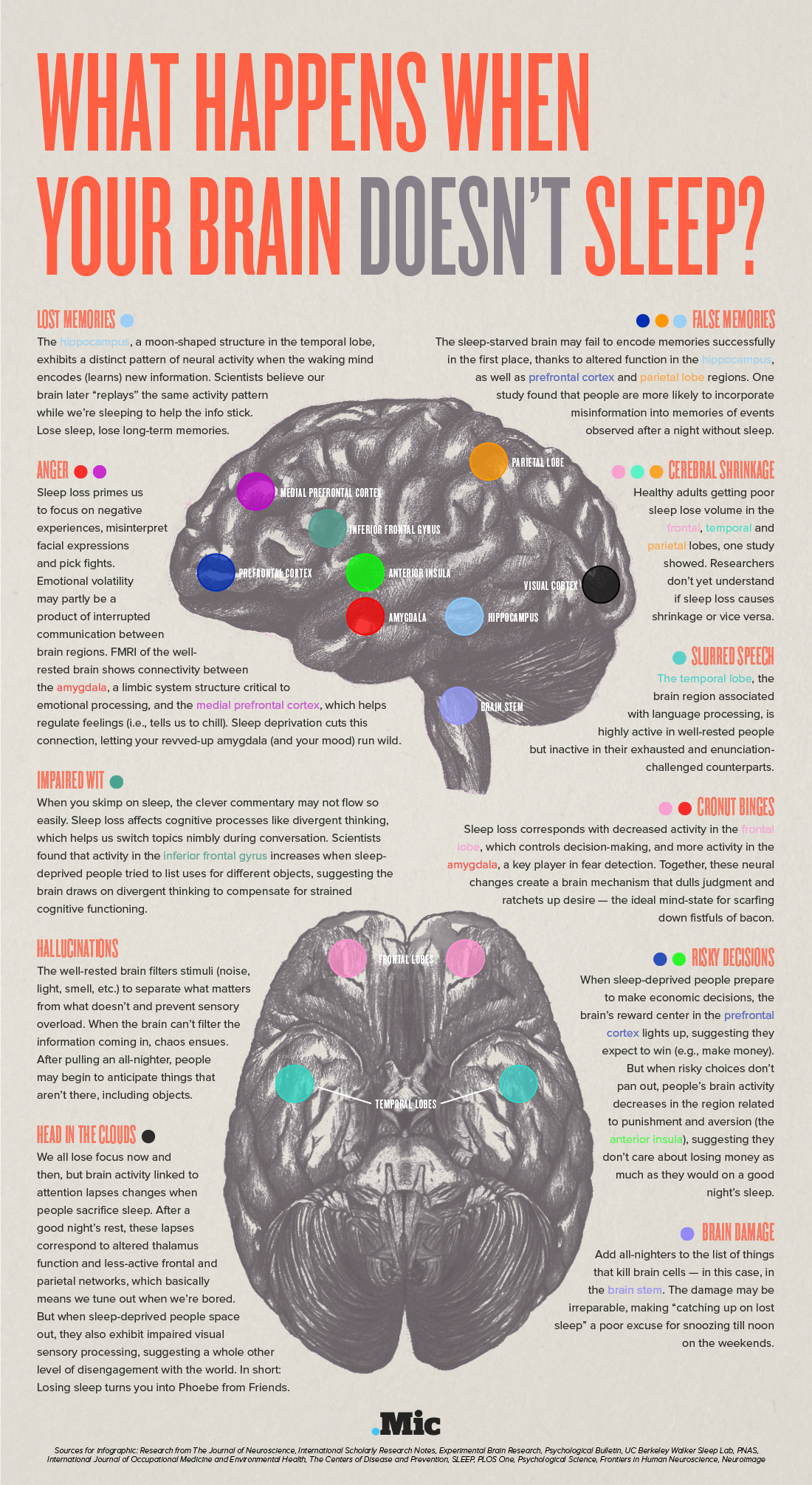
As schools push for earlier starting times to align with the need for working parents to get to the office on time and getting through an overcrowded curriculum, sufficient sleep and a proper breakfast are even bigger concerns.


Click on the link to read What an ISIS School Looks Like

Click on the link to read Using Children as Bait is Abhorrent

Click on the link to read The Outrageous Pro-Gun Picture Book for Kids

Click on the link to read Sousa’s Techniques to Build Self-Esteem

Click on the link to read Why I Believe Classrooms Should Be Fitted With Video Cameras

5 Ways to Change the Face of Education

November 26, 2014

game changer

Courtesy of the brilliant Mark Barnes:


1-Stop worrying about losing your job

For tenured teachers, this isn’t much of a problem, although there is a growing movement against tenure. Whether you have tenure or not, if you want to be a game changer, you must stop thinking about losing your job. I’ve never heard of a teacher being fired for doing what’s best for kids. Susan B. Anthony risked her life to vote. The least teachers can do is risk temporary unemployment to change children’s lives.

2-Break free from the norm

When the world hears you saying over and over again that you are going to do what is best for children, your voice becomes remarkably powerful.

Steve Jobs never said, “We have to do what everyone else is doing.” Jobs believed in being first, in creating what others couldn’t see. When people said something couldn’t be done, it was usually because no one else was doing it. Jobs saw what established techies didn’t see, and he created it. When people say, “We can’t do that,” jump to a new fishbowl. Those who aspire to greatness will follow.

3-Start all thoughts with “What if. . .”

Hundreds of years ago when teachers were writing directions and examples on individual student slates, James Pillans wondered, What if we built one large slate board, big enough for all students in the room to see? The blackboard was born and classroom instruction worldwide changed. What if you stopped assigning traditional homework? What if you used mobile devices in class? What if you never grade another activity, project or test? Would you be a game changer? Would your students change?

4-Say “No!”

Teachers constantly tell me that their principal says they have to give weekly tests or they have to assign nightly homework or they have to log a grade into an online grade book. How should this be handled, they ask. Simple. Say No! Tell education stakeholders that you intend to do what is in the best interest of every student in your classroom. If they push back, stand your ground. Be persistent and be loud. When the world hears you saying over and over again that you are going to do what is best for children, your voice becomes remarkably powerful. You become a game changer.

5-Never stop fighting

It’s possible that you won’t live to see victory. Susan B. Anthony died decades before women won the right to vote. Without her, though, woman might still be relegated to ankle-length dresses and a life in the kitchen. Someone recently said that a no grades classroom is unrealistic; when I brought up the suffragettes, he said, “look how long that took.” Game changers never think about winning the battle; they fight until it’s won or until they die, knowing someone else will carry the torch when they’re gone.


Click on the link to read Some Teachers Never Change … Literally!

Click on the link to read The Ultimate Bad Teaching Checklist

Click here to read my opinion of ‘child centered learning’ vs ‘teacher centered learning’.

Click here to read my opinion on the problem with IT in the classroom.

Click here to read my opinion on the standard of teacher training.

What’s in a Name?

November 25, 2014

james


I wonder if kids with the name Michael are more likely to stare out the window and think about their lunch:

It has long been claimed that names can influence your chances of doing well in life and now it seems that monikers can impact on behaviour at school as well.

According to a new study, children named Jacob, Daniel, Amy and Emma are the most likely to display impeccable behaviour while those named Ella, William, Olivia and Joshua are most often to be found on the naughty step.

The findings come from a survey that looked at the names of more than 63,000 school children who logged good behaviour or achievement awards in online sticker books.

Those with the most good behaviour awards were named Jacob and Amy, closely followed by Georgia and Daniel.

By contrast, girls named Ella and Bethany and boys named Joseph and Cameron proved to be the naughtiest.

Other naughty names for boys included William, Jake, Joshua and Jamie while recalcitrant girls were also called Eleanor, Olivia, Laura and Holly.

Well-behaved names included Emma, Grace, Charlotte and Sophie for girls and Thomas, James, Adam and Harry for boys.  

Baby names – and their impact on life chances – have been studied for more than 70 years, with the earliest studies finding that men with unusual first names were more likely to drop out of school.

More recent studies have found more correlation between names and social backgrounds, with the parenting skills of mothers and fathers having a more critical impact on future development.

Gregory Clark, the economist behind The Son Also Rises: Surnames and the History of Social Mobility, found that girls named Eleanor were 100 times more likely to go to Oxford University than girls named Jade.

Although there are proportionally more Jades in the general population than Eleanors, the former was rarely seen at top universities, while the latter was relatively common.

Other common names for Oxford students included Peter, Anna, Elizabeth, Richard and John, while among rarely seen monikers were Stacey, Connor, Bradley, Kayleigh, Shannon and Shane.

The latest round of research into names was commissioned by School Stickers, which creates online stickers for teachers to award to pupils. 

Click on the link to read 10 Ways to Move Forward in Teaching as Well as Life in General

Click on the link to read 5 Ways the System Could Better Recognise Teachers

Click on the link to read Teachers, Lay Down Your Guns

Click on the link to read 4 Ways to Identify a Great Teacher

Is There Enough School Support for Children of Divorced Parents?

November 24, 2014

divorce

I can’t help thinking that because divorce is becoming increasingly common that society foolishly assumes children are more than ever capable of overcoming the split of their parents. This is just not true. Children find it as hard as ever to reconcile the breakdown of their parents’ marriage.

The research strongly backs my position and signals a need for greater school support. Perhaps we shouldn’t wait to see signs of distress, and instead offer support as soon as the breakup occurs:

Children of divorced parents are more likely to get bad exam results, drink, take drugs and develop eating disorders, a survey has shown.

Nearly two thirds of children who saw the break-up of their families claimed it had a negative effect on their GCSEs.

One in eight said they had used drugs or alcohol and almost a third said they ate more or less as a result.

The survey – commissioned by Resolution, a group that represents 6,500 family lawyers in England and Wales – looked at the experiences of 500 young people aged 14 to 22.

Resolution chairman Jo Edwards told the Times that the study had revealed just how far-reaching the impact of divorce can be.

She said: ‘The findings underline just how important it is that parents going through a split manage their separation in a way that minimises the stress and impact on the entire family.’ Each year, around 100,000 under-16s see their parents break-up. Many suffer long-term effects associated with the pressure the divorce process puts on them.

Of those surveyed, a third said that one parent had tried to turn them against the other parent and more than 25 per cent said they had been dragged into their parents’ arguments. Schooling is also adversely affected as children struggle to complete their homework.

Around 12 per cent admitted skipping lessons and 11 per cent found themselves increasingly in trouble with teachers as a result of a change in family circumstances.

Siôn Humphreys, a senior policy adviser at the National Association of Head Teachers, said that education was suffering because teachers are not trained to deal with the problem. She told the Times: ‘Teachers see day in, day out, the impact separation can have.

‘It would not be unusual for the school to be the first port of call to support the parent left holding the baby, but it is not necessarily something teachers are specially trained for.’

Last month, EU statistics for 2012 revealed that British children are more likely to be from single-parent families than anywhere else in Western Europe.

One in four now live with a lone mother or father, compared with around one in six across the EU.

The only EU country with a higher figure than Britain was the eastern state of Latvia. We are now ahead of Belgium, Denmark, Ireland and France, where the number of youngsters living with just one parent is dropping – or rising more slowly.

Harry Benson, of the Marriage Foundation, has urged policy-makers to take ‘essential’ steps in limiting the ‘host of negative social and economic implications’ of divorce.

What an ISIS School Looks Like

November 23, 2014


isis

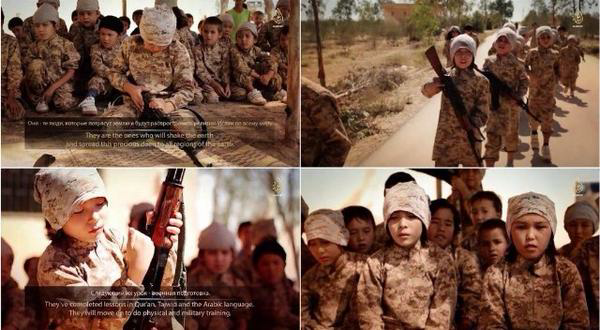
Does the indoctrination of young children get any more brutal than this?

In some ways, class at an Islamic State school doesn’t seem all that unusual: an instructor stands at the head of the classroom teaching children to read and write. But when it’s time for physical education, instead of running track or playing dodgeball, the kids learn to handle assault rifles and kill anyone who opposes the Islamic State.

A video released Friday by the militant group shows how foreigners are assimilated into the Islamic State. In this case, it’s a group of Kazakh men, women, and children.

The video — which appeared briefly on YouTube before it was removed by the site — starts by showing a group of Kazakh men training for combat. But the majority of the footage focuses on the kids, some younger than three years old.

One scene shows an instructor teaching students how to write their names in Arabic. Later in the video, some of the children appear to be quite comfortable speaking the language, fluent enough to easily transition between Arabic and their native tongue.

According to the video, the goal is to get the children comfortable with reading and writing Arabic so they can study the Quran. Their Islamic education is supplemented with training in jihad.

“We’re going to kill you, O kuffar,” one boy says in the video, referring to nonbelievers of the Islamic State’s brand of Islam. “Insha’allah (God willing), we’ll slaughter you.”

According to the Kazakh National Security Committee, more than 300 Kazakhs have joined IS as of November 18, including 150 women. No count was given on the number of children who have joined the group with their parents. The 300 figure is likely on the conservative side, and could come from a video released around this time last year that featured about 150 Kazakh militants who said they had come to Syria with their families.


Click on the link to read Using Children as Bait is Abhorrent

Click on the link to read The Outrageous Pro-Gun Picture Book for Kids

Click on the link to read Sousa’s Techniques to Build Self-Esteem

Click on the link to read Why I Believe Classrooms Should Be Fitted With Video Cameras

Click on the link to read Are We Doing Enough to Make Our Children Happy?

PE Teacher Caught on Camera (Video)

November 22, 2014

Whilst some teachers are getting fed up with the growing trend of being secretly filmed in class, such a practice has uncovered incidents of abject cruelty and criminality.

Take this horrible story for example:


A high school gym teacher in California is facing charges after being caught on camera dragging a 14-year-old girl into a swimming pool.

Students took out their cell phones and filmed as Stockton, California, physical education teacher Danny Paterson grabbed the teen girl by the arm and dragged her from the ground into the pool. The girl had reportedly refused to go into the pool because she had plans that night and didn’t want to mess up her hair, but Paterson didn’t seem to care and decided to force her to swim.

In the shocking 95-second clip, the girl can be seen flailing and kicking her legs in the air as the teacher grabs her and begins to drag her into the pool. As she screams to try and get him to stop, she can, at one point, be heard yelling to the educator that her bathing suit top was coming off.


Click on the link to read Sometimes You Need to Expect Rudeness

Click on the link to read Do We Learn Enough From Children?

Click on the link to read Kids as Young as 7 Diagnosed with Anorexia

Click on the link to read The Destructive Impact of the “Fashion Police” Brigade

Click on the link to read The Plus Sized Barbie Debate Misses the Point

Sometimes You Need to Expect Rudeness

November 20, 2014


ireland hobert hoch

Weighing students, especially around their classmates is invasive and a breach of privacy. If there was nothing wrong with it then principals and teachers would have no problem sharing their measurements with the students. Can you imagine the fuss if principals demanded that all teachers should be weighed and measured during a staff room meeting?

So when such an unfair and insensitive rule is opposed by a student, especially a student with an impeccable reputation for good behavior, teachers should be expected to give the student some latitude. Sending her to the Principal indicates a teacher completely out of touch,

Ireland Hobert-Hoch may seem an unlikely student protester. She’s a straight-A student, “not one to cause problems in school,” her mom, Heather Hobert-Hoch, told The Huffington Post.

But when physical education students at Southeast Polk Junior High in Pleasant Hill, Iowa, were having their height and weight recorded about three weeks ago, Ireland refused. She was sent to the principal’s office.

“I don’t feel like it’s [the school’s] busines,”Ireland told the Des Moines Register. “I feel like it’s my doctor and my mom and my own business — or maybe not even my own, because I don’t need to know that right now.”

School principal Mike Daily said Ireland didn’t land in his office because she refused to be weighed, but because of how her refusal “was presented to the teacher.”

“The issue anytime a student is sent to the office refers more to the situation and how it has escalated — not necessarily the event at hand,” Daily told HuffPost. “I know saying, ‘Hey, we’ve always done this’ is not a good explanation,” he said, but the measurements are part of a bigger assessment program. “If it gives kids feedback, that helps,” he said.

Ireland’s class was having height and weight measured to calculate their body mass index as part of the FitnessGram program, according to the Des Moines Register. Daily said the school was doing these measurements when he arrived four years ago.

Daily said the school board will discuss the matter at upcoming meetings, and will decide whether to continue weighing children.

Ireland said her refusal to be weighed in front of the class encouraged other girls to take the same position.

School officials asked Ireland and her mom if they would be more comfortable if Ireland were weighed in a private space. Both said no.

“She doesn’t want her weight taken anywhere,” Heather Hobert-Hoch said. The family stopped using a scale years ago and Ireland has “been very happy since then,” her mom said.

“It’s very common among young girls, and even women, to become obsessed with the number on the scale,” Heather Hobert-Hoch said. She said she didn’t want her daughter to go down that path, especially since she’s a healthy, lean girl.

Earlier this year, the FitnessGram program was criticized when one third grader in New York City was given a letter from her school calling her “overweight,” because she weighed one pound more than the average for her height and age. The child’s mother said the information should have been mailed directly home, instead of being given to students.

“My daughter is thin. She knows she doesn’t have a weight problem. But that night, I caught her grabbing the skin near her waist, and she asked me, ‘Is this what they were talking about?”‘ mother Laura Williams told Fox. “It was awful to see.”


Click on the link to read Do We Learn Enough From Children?

Click on the link to read Kids as Young as 7 Diagnosed with Anorexia

Click on the link to read The Destructive Impact of the “Fashion Police” Brigade

Click on the link to read The Plus Sized Barbie Debate Misses the Point

Click on the link to read Study Claims that Being Attractive can give you Better Grades