Homework: Is it a Good Thing?

December 12, 2010

I used to be a non-believer when it came to homework.  I used to think that my students work long and hard enough during the day, and that their evenings should be as comfortable and stress-free as possible.  I believed that beyond reading practice, the only work Primary kids should do after school is help their parents with chores such as setting the table and maintaining a clean room.

Homework can be nothing more than a device in keeping kids busy.  It can, if administered improperly, do precious little to extend the child and develop their skills.  But what I’ve found is, homework, when properly considered and developed, can help students revise and build on concepts covered in class.  For example, worded questions featuring relevant, everyday situations, can be a great homework activity to complement maths skills taught in class.

Whilst I still think that the best work a child can do at home is contribute to the running of the house, that really isn’t any of my business.  Realistically speaking, kids tend to waste a lot of time watching television and surfing the internet.  A few follow-up questions on concepts learnt in class seem both fair and beneficial to the child.

Worst Examples of Teacher Discipline

December 10, 2010

After reading about two recent cases of discipline gone wrong, I couldn’t help but reflect on some terrible instances of terrible disciplinary methods inflicted on me by my teachers.

A few weeks ago I wrote a post about an Australian teacher who was accused of sticky-taping some of her students lips together as a response to their unruly behaviour.

Unfortunately, it gets worse.

Today I read about the British teacher given a 3-year suspension for forcing autistic pupils to run on a high-speed treadmill as a punishment.

Glenda Partridge, 35, was also alleged to have taken food away from youngsters if they misbehaved and dragged them across the floor by their collars.

Whilst I never experienced anything as horrific as that, it did bring back some memories from my youth – three incidents in particular:
1.  I was caught chewing gum and was forced to sit in front of the class  with my hands in the payer position, chewing gum firmly entrenched between my palms.  It took hours for the chewing gum to wash off.
2.  After being caught speaking out of turn, the teacher coloured in a circle on the board and made me stand at the chalkboard, with my nose placed on the circle.
3.  I got caught writing lines in class for another teacher.  My teacher spotted me and approached me angrily.  I went to put the lines away, and in doing so dropped them on the floor.  As I attempted to pick it up my teacher slapped me on the back of the head.
I was wrong on all three occasions, but the punishments were a bit too excessive.  I was actually a very well-behaved child, so these incidents really stood out in my memory.
What was the worst examples of student discipline handed out to you?

Is Competition in the Classroom a Good Thing?

December 10, 2010

I have the least competitive class on the planet.  My class clearly struggle when pitted against each other.  They are a naturally tight class, with no discernible popular figure and no outcast.  It is a credit to them that they are so close.  Similarly, they deserve kudos for being committed to continuous improvement, not out of a desire to be better than their classmates, but simply because they want to achieve to their maximum.

But then comes the annual Sports Carnival, and all of a sudden, things change.  The kids just couldn’t cope with coming third, fourth and especially last.  They felt they let themselves down as well as their team.  Some of them were justifiably upset that they were put in the same heat as much faster runners and were therefore not even given a chance to win.

Part of me feels responsible.  I noticed at the beginning of the year that this group hated competition, and I tried to ensure that I steered clear from competitive activities and tests.  When testing the kids, I don’t give them a letter or number grade, instead I chose to give them clear feedback on skills they performed well in and found challenging.  This not only prevents students from comparing themselves to others, but also provides clear feedback on what they can do and what skills require further practise.

Some say that competition is good.  It is character building, it prepares the child for the competitiveness of the real world and motivates the child.  I am skeptical when it comes to competition in the classroom.  My experience tells me that many teachers resort to grades and levels in elementary level when the content of what they are teaching isn’t particularly interesting and requires a bit of superficial stimulus.

Am I doing more damage than good, by protecting my students from competing against each other?  Even though my students are motivated and have a natural enjoyment of learning in the current setup, am I doing a disservice by not preparing them for the realities of not winning, getting beaten and dealing with the joy of doing better than others?

Is it Really a Crisis when so Few Teachers are Male?

December 8, 2010

Two recent articles written in the last month discuss the scarcity of male teachers at Elementary school level.  On the 15th of November an article appearing in the Vancouver Sun, called the shortfall a “crisis.”

Where are the models for young boys? A new Canadian study reveals that only one out of 20 elementary school teachers are male — and the main reason men avoid these young grades is they don’t want to be accused of being pedophiles.

Just today, The Global Times, discussed the same issue – this time in Beijing.

Elementary schools in Beijing are hoping to recruit more male teachers, as there are not many men teaching these grades, and some primary schools do not have any male teachers on their staff …

Same problem as Canada, but a different reason is given:

One survey shows that university graduates who are qualified teachers are more interested in working in secondary schools, which is one reason for the imbalance. Another reason is that male teachers apparently often change jobs.

As a male 4th Grade teacher, I know from experience how outnumbered we are in Australia as well.  I was one of very few males at University and our school currently has only one other male teacher (a part-time sport teacher).  In fact, since it’s just the two of us, there is no male staff toilets at our school.  Instead, we have to use the disabled toilets!  To make matters worse, our Principal invites the school accountant and bus driver to take part in the staff photo to make it look like there is more male staff members.

I never wanted to teach secondary school because I wanted to spend a large block of time with the one group instead of having multiple classes.  I feel it’s more effective in helping make a difference.  Similarly, I enjoy being able to teach a host of different subjects, rather than just one or two subject areas.

Whilst I wish I could say I’m not concerned about being accused of  … (I can’t even finish the sentence it’s so repulsive), I’d be lying to you if I said I wasn’t.  Our school features tactile female teachers who regularly hug, kiss and have students on their laps.  As kids don’t see any difference with me, they naturally, at first, try to hug me too.  But I don’t let them of course.  I explain that I don’t do hugs.  They don’t understand.  I don’t really know how to explain.

I’ve never wanted to be seen a male teacher.  Just a teacher that happens to be male.  I’ve always thought that boys don’t need ‘male’ teachers, they need ‘good’ teachers.  But just recently, I’ve noticed how much easier I cope with the troubled male students than most of the female teachers.  Maybe it’s true.  Maybe we really do desperately need more male teachers.

But is it a crisis?  Perhaps it’s for the best that there are so few male teachers.  The men I speak to about my profession show absolutely no interest in teaching.  In fact, they would probably rather undergo root canal than teach a class.  If males tend not to show an interest in teaching, could it not be a good thing that they have chosen a different path in life?

What do you think?  If you are a male elementary teacher, why did you choose to be one?

My Students Write Like Doctors

December 7, 2010


And it’s all my fault!  I wouldn’t know the first thing about teaching handwriting.  Whatever I learnt as a kid, I have over time replaced with a legible but decidedly mediocre blend of joined and block writing.  I wasn’t trained how to teach handwriting because my University didn’t think it was important.  The new Australian Curriculum has decided to make handwriting a priority (but cannot decide on what style of script to adopt).  I wouldn’t know where to start teaching handwriting.  Heck, I’ll need to learn it myself.

As a result, my students’ handwriting is shabby.  I’m supposed to be giving out pen licenses next year, but at this rate, my ten-year old students are more likely to get their drivers licenses first.

I recently read and article with a quote condemning the lack of formal handwriting teaching in classrooms.

Have you noticed the decline in handwriting? I recently gave a birthday gift to a 13-year-old boy, and got back a thank-you note written in chicken scratches. He had attended the public schools of an affluent suburban community.

I’ve seen handwriting books around the school which basically get kids to copy a given letter multiple time all the way down the page.  It looks so boring.  How do I go about teaching a skill which seems so mundane when I am trying to engage the students and make them excited by learning?

I’m interested in your experiences in teaching handwriting?  Do you teach handwriting?  How do the students respond?

Sometimes Reports Into Education = Good Toilet Paper

December 5, 2010

I am sick of these “doom and gloom” reports into education that pretend to represent children from disadvantaged backgrounds, but instead put them down with cold disregard.

There is no better recent example of this than a  report, entitled “The Foundation Years: Preventing Poor Children Becoming Poor Adults,” by Labour MP and new “Poverty Czar” Frank Field.  According to the report, success in life is determined by the age of 5.  Beyond the age of 5, kids don’t have much say in whether or not they will make a success out of life.

By the age of five, a huge gulf already exists between the abilities of pupils from comfortable and disadvantaged backgrounds.

Research shows “we can predict at three and at five who will be unemployed, who will struggle to get a low paid job,” Mr Field said to the BBC.

Sally Copley, UK head of policy for Save the Children, said it should not have to be a choice between improving services and boosting the income of the worst-off families.  “By the time many children walk through the school gates for the first time, it’s too late for them.”

I don’t know where to start.  Perhaps by making some points on the term “success”.

1.  Mr Field defines success by how much a person earns (as well as whether or not they have employments at all).  In my view, a persons earnings, whilst not irrelevant, is not a complete reflection of a persons success.  Are they good people?  Do they follow the laws of society?  Are they good parents?  Do they treat others fairly?  Do they have integrity?  Using this criteria, lowly paid people can be far more ‘successful” than wealthy people.

2.  This leads me to an important gripe I have with the messages society seems to proliferate.  What job we do has no bearing on a persons success.  A taxi cab driver might not sound like a successful profession on face value.  But that same taxi driver has a crucial role to play.  They help the disabled and the aged, are crucial in keeping intoxicated people off the roads and protect vulnerable people from walking the streets and taking the trains late at night.  A house painter may seem like an ordinary profession, but have you ever looked at the difference a bright, well-painted room makes to a persons mood and outlook?  All jobs have a critical role to play in making life more enjoyable regardless of the pay involved.

3.  As a teacher, I don’t spend any time looking into the socio-economic background of my students.  I also don’t tend to get obsessed over rating the parents.  I feel very confident in my ability to assist all types of students from all types of backgrounds in becoming successful citizens and productive members of society.  I feel that my students have the potential to become every bit as successful as Mr. Field himself!  Mr. Field should not confuse, as he seems to be doing, the quality of a childs academic achievements with the quality of parenting that child is receiving.  There are many parents who aren’t able to spend sufficient time helping their kids with their schoolwork because they are working long hours to simply put food on the table.  In today’s world, we have to appreciate that all too many parents sacrifice what others take for granted for nothing more than to provide for their families.

What Mr. Field has done, for all his good intentions, is needlessly narrow the definition of success, outrage taxpayers for funding students when “it’s too late for them” anyway and provide an extraordinarily negative message to people from low socio-economic backgrounds.

Mr. Field, thank you.  This world can never have enough toilet paper!

Cyber Culture and Our Kids

December 3, 2010

I recently attended a Professional Development session on cyber culture.  The survey conducted by AISV interviewed thousands of kids from Grade 4 to Year 8 and collected information about their internet habits.  Some of the interesting findings included:

  • 1 in 5 year 5/6’s don’t consult parents about their internet activity.
  • 15% of year 5’s and 20% of year 6’s have internet access in their bedrooms.
  • Half the respondents claim they don’t have parent imposed internet rules.
  • 30% of respondents know ways in which to circumvent parental controls such as bypassing net filters and minimising pages when parents approach.
  • 40% of respondents name their school or city on social media sites such as Facebook.
  • 84% use chat rooms on a daily basis.
  • Approx. 3/4 don’t use privacy function on their social media pages.

I found some of these stats quite confronting.  Internet safety along with cyber bullying are big issues that educators must take extremely seriously.

I’d love to hear from teachers who have addressed issues of cybersafety in class.  What resources did you use?  How did the class respond?

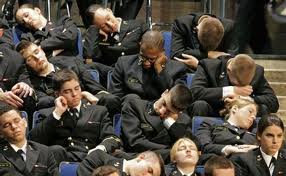
The Desperate Need to Keep Students Awake

December 3, 2010

Oh, the things educators do to keep their students awake!  Engaging students are a critical part of teaching.  What we teach shouldn’t just be comprehensive and relevant, but also interesting to the children.  However, there are some terrible methods out there for attempting to bring students out of their slumber.

Take this scatter-brained idea from Germany for example:

Few things rile a teacher more than seeing a pupil chewing gum in class, but a primary school in southern Germany is now actively encouraging them to do so — in order to improve their grades.

Not allowing students to chew, but encouraging!

“Chewing gum is good for the children’s health and improves their cognitive performance,” said Wolfgang Ellegast from the education ministry in Bavaria, home to the Volkenschwand school where the new pilot project is being run.

School headmaster Siegfried Lehr agrees: “The prerequisite for learning with fun is that kids come to school without fear and that they feel happy… Therefore we are encouraging them to chew gum in break and in lessons.”

Does anyone else think that this idea is just plain loopy?  Do they honestly think that by encouraging their students to chew in class they will suddenly get happy and engaged learners?

I am not in favour of restrictive rules in the classroom, yet my school doesn’t allow chewing gum in the classroom, and I stand by that rule.  Chewing gum is messy, distracting and not at all likely to bring about positive outcomes in the classroom.

There are so many bad ideas out there in a bid to get students onside.  For example, the teacher that gives her students a 5-minute break so they can make text messages.

What’s next?  Allowing kids to kick their feet up on the desk for comfort?

Here’s an idea.  How about engaging students with interesting and exciting lessons instead of gimmicks like text breaks and chewing gum?


Educating Teens About Money

December 2, 2010

At a time when the importance of saving money has arguably never been greater, I am pleased to see a new program with the aim of getting teenagers to becoming more financially savvy. It’s high time that teenagers were prepared for the realities of financial responsibility, were informed of the risks of charging on credit and instructed to spend less than one earns.

FoolProof, a consumer education agency dedicated to increasing financial literacy through the use of multi-media learning modules, has released a new video series Burning Money.

While the free program is designed for use in classrooms, the series strives to tackle teenage financial issues like the twin forces of pointed advertising and peer pressure. This video addresses how much a teenager actually needs to buy designer jeans.

Burning Money tries to introduce students to the potential bad decisions that they make which may hurt their financial health further down the line. The films explain how a late payment now can adversely affect jobs, apartments, and loans in the future. The videos emphasize that it doesn’t take a millionaire to save, just someone who knows how to spend and how to save.

I remember standing behind a woman in a fish shop, eavesdropping on her conversation with the lady at the checkout.  She explained that she teaches adults how to keep control of their finances.  She went on to say that she is currently lobbying for the “savings” account option on eftpos and atm machines to be changed to “spending” account.  Because after all she said, “It isn’t a true savings account if you are constantly taking money out of it.”

As a teacher of nine and ten year olds, this program is too advanced for them.  Instead, I teach them a unit on being aware of the manipulation involved in the advertisements they watch, and helping them to identify when and how they are being used as a tool of the marketing industry.

No More Asbestos Riddled Classrooms!

November 30, 2010


Enough is enough!  How long does it take for those in charge to take notice and become proactive?  This isn’t the 60’s!  More has to be done to ensure that teachers and students aren’t subjected to asbestos exposure.

Reading about Queensland’s problems with asbestos debris in their classrooms makes me very upset.

Education Queensland has been unable to give a statewide figure for the number of children who have their names on asbestos-related school registers, stating the information is not kept centrally.”

The department has also revealed 98 temporary closures of classrooms, playgrounds and other state school sites were recorded in about six weeks recently  comparable to the rate of closures for all of last year.

If you’re concerned like me, have no fear because Education Queensland’s acting deputy director-general Graham Atkins has come up with the worst attempt at spin one could ever imagine.

“Principals and staff have a heightened awareness about managing asbestos-containing materials,” Mr Atkins said.

“This (awareness) can account for the high number of incident alerts recently, which is always a good thing, as our staff are trained to be extra-cautious,” Mr Atkins said.

Doesn’t that make you feel better?

Whilst you and I might have been indifferent to Mr. Atkins’ s spin, the Queensland Association of State School Principals president Norm Hart obviously thought it was gold.

“… Norm Hart said managing asbestos risk had become a growing part of a principal’s role and recent training would be behind the incident spike.

“It is obviously frustrating that we have buildings that have asbestos in them and that we have to manage it, but we are not prepared to put safety second,” he said.

So if you are a concerned parent, rest assured, your child’s teacher and principal are experts at spotting asbestos.  Forget about teaching literacy or numeracy.  No, our teachers are trained to spot potential carcinogens in the classroom.  Feel better now?

The Courier-Mail earlier revealed Department of Education and Training staff had made more than 400 workers compensation notification claims since 2005 after potentially being exposed to asbestos.

EQ figures show 18 DET staff have had WorkCover asbestos-related claims accepted since 2002. Seven were for asbestos-related illnesses, seven were for psychological injury related to exposure and four were for possible exposure.

But it’s alright.  We have it under control.  We’ve trained our principal’s ….