I think in certain circumstances it would be a most valuable experience for teachers to visit the homes of their students. By doing this they will get a clearer picture about the environment in which that child lives in and unique aspects of their lifestyle.
The new chief of the Chicago public schools, Jean-Claude Brizard, suggested recently that teachers visit the homes of their students. Many people reacted to that badly, as math teacher Jason Kamras’s principal did when Kamras dropped in on his students’ apartments near Sousa Middle School in Southeast Washington.
The Sousa principal feared for his young teacher’s safety in a high-crime area. Kamras, however, found the visits invaluable. He understood his students better. Parents were more supportive. Now a D.C. schools official, Kamras is one of many educators who think unannounced visits can be worth the risk.
In the District, officials are looking at the possibility of home visits for elementary school students. The nonprofit Concentric Educational Solutions has been knocking on the doors of persistent truants for the past year. The group’s executive director and co-founder, David L. Heiber, said the visits would be even more effective if they occurred before students got into trouble. “Home visits by themselves do not correlate into academic achievement,” he said. “However, if done with academic goals and targets as the objectives, they do work.”
I commend Mr. Brizard for his brave and innovative suggestion and I’m disappointed it got so much backlash:
That thought is dismissed in many schools. Administrators such as Kamras’s principal see danger in some neighborhoods, and don’t think their staffs have the time or the energy for such after-school and weekend enterprises. “Teachers are overworked already,” Heiber said he has been told. He said administrators say that “our social workers only see our special needs students” or that “we are short staffed as it is.”
You don’t need me to tell you that it is unhealthy for preteens to target. I would go even further than that and say that it’s unhealthy for preteens to be fixated on their weight to begin with.
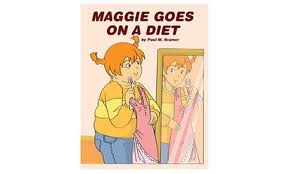
A book aimed at helping young children lose weight has outraged an eating disorder help group.
Maggie Goes on a Diet, aimed at 6 to 12 year olds, tells the story of an overweight girl who goes on a diet and goes on to become the school soccer star.
Its Hawaiian publishers pitch the book on their website as an inspirational tale for kids.
“Maggie has so much potential that has been hiding under her extra weight,” the website says.
Deb Schwarz, manager of Eating Difficulties Education Network (EDEN), a New Zealand not-for-profit organisation, says the book could have the opposite effect, and encourage eating disorders among children.
“Research shows poor body image is associated with depression, bullying, eating disorders, risk taking behaviours, and reduced physical activity. Messages like those in the book promote body dissatisfaction.”
She says there are concerns that dieting messages increase disordered eating in children.
This is another sad situation of literature published for the purpose of stirring controversy and making money at the expense of the vulnerable.
The American Civil Liberties Union continues to act without rhyme or reason. By representing child sex offenders to ensure that they are not evicted from their house which is situated next to day care centers, they are not doing themselves or the greater good of society any favours.
The Delaware American Civil Liberties Union has filed court papers to stop sex offenders from being evicted from a safe house that is located near a new day care center.
The ACLU, along with an attorney representing the safe house and three sex offenders, has asked a judge to issue a temporary restraining order to prevent the city from evicting the residents.
“The state has asked the residents to leave, and if they don’t leave they will be arrested,” attorney Daniel Wolcott, Jr. told Fox News Radio.
Wolcott is representing the owner of the safe house and three sex offenders.
“The safe house has been there for a number of years and has been accepting registered sex offenders who are prohibited from living within 500 feet of a school,” he said.
Wolcott said there are two safe houses in question. One house was operating before the day care center opened for business. The other one was not. However, he said police said any sex offenders living at both houses would have to leave or face arrest.
Being a father of a young girl with a nut allergy, I really hope that schools work hard to reduce the stigma of a child with anaphylaxis. It would be a shame if she was ostracised or treated differently because of the allergy. I personally am in awe of how she can deal with eating differently from her peers without so much as a whimper. She just accepts her lot and doesn’t let it get her down.
Children with potentially deadly nut allergies are being bullied for being different, say researchers.
And their parents are stigmatised as ‘neurotic and attention-seeking’ by other parents, they found.
Relatives of some victims of the condition are even suspected of deliberately giving a child nuts to check they really are allergic.
Overall, the impact of a nut allergy is so great that it could be considered a disability, the Leicester University researchers found.They interviewed 26 families from the Leicester area about their experiences.
Some children told how they were bullied by classmates, who taunted them about their allergy and threatened to trigger it.
What loving family member in their right mind would feed nuts to a child with a severe nut allergy to check if they are really allergic? And for those parents that think we are “too neurotic” about ensuring that our children are safe and not exposed to substances that can kill them, take a long walk down a short pier.
I don’t understand why parents can’t be subject to the kinds of consequences their children are for bullying and harassment. Parents who set up internet groups and Facebook pages to spread untruths about their childs’ teacher should be punished for their actions. Anything from a warning to in the most serious offences expulsion of their child from school is appropriate.
Some may think this is a bit harsh and that children should not be penalised for the deeds of their parents, but bullying is a very serious offence and schools that take it seriously reap the rewards by maintaining a safe environment. Schools are too dismissive of parents who bully teachers. Teachers often feel marginalised and lacking of support. The statement that bullying of any kind will result in strong penalties is essential to delivering the best outcomes from an academic and social standpoint.
Teachers are the latest group found to be at risk of cyber-bullying, according to a recent report.
The study by Professor Andy Phippen found several instances where teachers had been targeted for abuse by social media users on websites such as Facebook and Twitter.
One head teacher interviewed for the study said she had a breakdown and was left feeling suicidal.
The headteacher suffered a year of abuse by a parent at her school who used a Google group to post libellous untruths about her and her school. “I eventually had a mini breakdown in the summer holiday, needing an emergency doctor to be called out as I had become suicidal,” she told researchers.
The message should ring loud and clear – Either play by our rules or find somewhere else to send your kids!
I am in favour of schools playing a far more proactive role in dealing with cyberbullying and advocating privacy settings to protect against cyber stalkers, but spying on their students’ Facebook pages is not appropriate.
SCHOOLS are using internet monitoring companies to read what students are saying on social networking sites.
The typical service used by schools such as Ascham looks at any publicly available material posted on sites such as Facebook, Formspring and Tumblr to monitor the sometimes ferocious use of the media by young people.
Whilst schools often go into their shells when it comes to cyberbullying, spying on their students is an invasion of privacy. Instead of concerning themselves with publicly available material they should work harder to ensure their students have their privacy settings on.
This measure will do precious little to stop bullying. Bullies are much smarter than we give them credit for. They find ways to harass away from the watchful eyes of anyone that might punish them for their crimes.
Yet whilst this will do little to prevent bullying it will make the students even more negative about school and authority in general.
Teachers should stop being so precious about time wasted due to toilet breaks. Of course it’s not ideal to have children come in and out of the classroom from the toilet whilst you are teaching a skill or conducting a classroom discussion. I don’t doubt that students have the option in going at break times but choose not to, and they must learn to take those opportunities. I also know that some students use it as an excuse to leave the classroom whilst not needing to go to the toilet.
But ultimately, so what?
The frustrations listed above should never lead to an imposed trial which could result in children wetting themselves. I would rather have lessons impaired on a constant basis that have even one child wetting themself on account of a harsh rule I have introduced.
PARENTS are alarmed that children at a primary school in Melbourne’s east began wetting themselves after the school tested an approach that discouraged them from going to the toilet in class time.
In the Kew Primary School trial, which parents said was conducted without their knowledge, the entire class would go to the toilet if one child needed to go during a lesson.
One mother, who asked not to be named, said she first became aware of the trial when her child wet herself at the front door. ”I said, ‘What happened? She said, ‘I’m holding on, I didn’t want the whole class to have to come with me to the toilet.’ At first when she told me the rule I disbelieved her.”
Another mother took her high-achieving child to the doctor after she wet herself twice at home.
”She hasn’t done this since she was three,” the mother said. ”There was a kind of ripple effect where parents slowly became aware of changes in their children. Children were complaining of headaches, they were constipated, they weren’t drinking water and were coming home with full drink bottles.”
A group of parents wrote to Kew Primary principal Kim Dray, expressing their concern about the trial and citing medical research about the impact of constipation on children.
In an email, obtained by The Age, Dr Dray said the ”whole class” method of toilet break supervision was ”used successfully by some other schools” and was being tested by some classes.
”Team leaders met at the end of last week to discuss the trialled approaches, and although you may find this surprising, some commented on a decrease in disruption to class lessons, especially in senior and specialist classes,” she wrote.
Below are two clips from a film made by Australia’s behaviour management guru, Bill Rogers. I think all teacher’s will find this useful regardless of experience.
Clip 1
Clip 2
Please share these clips with your colleagues. I’ve attended a Bill Rogers seminar and found it very useful.
I couldn’t help but be struck by this excerpt from an article about the London Riots:
“… what I am saying is that for all of those who live and work in the poorer areas of London this disaster has been totally unsurprising. The fact of the matter is that we have manufactured within our society a sub-culture of sociopaths who care nothing for anyone or anything but themselves and are wholly unable to empathise with the suffering of others. The people most responsible for creating this social plague are the very same politicians, journalists and social commentators who are now asking “How did this happen?”
I believe that to a lesser extent the Educational system has bought into the plague too. So consumed by its bottom line, so obsessed with the meaningless private vs public school debate and so content to take creative children and force them to conform with a robotic set of rules and regulations, that children get lost in the crowd.
I had a discussion with someone recently about the role of schools. He felt that schools were nothing more than institutions with the responsibility of imparting knowledge. According to him, as long as the school could point to the lessons that were taught and the curriculum that was followed, their job was done.
I believe schools have a far greater responsibility. They must do a lot more than concentrate on prime numbers and single-celled organisms. They must try to ensure that every child has a sense of self and an understanding of how they can use their unique skills and qualities to contribute to society.
It sounds fanciful and “airy fairy” but children today are more obsessed than ever before by wealth, gadgets, appearance and all things materialistic. They spend so much time trying to outlook and outdo others simply because they are not happy with who they are and what they have. The question has to be asked, besides close family members, who helps them to understand and appreciate who they are and what they can achieve?
The media is charged with unsettling them and making them fearful. The advertising industry is charged with making them feel that without products and gadgets they cannot be happy. Where are our kids receiving the positive message they desperately need to hear?
Children often say, “Why should I be good to them if they aren’t to me.” Those participating in the riots seem to be making that statement. Whilst it is absolutely no excuse to do what they have done, one has to wonder who does look after the best interests of our children. Shouldn’t the school system who has our kids throughout their crucial developmental years do more to help them find acceptance in who they are? Shouldn’t the school system encourage them better to be themselves rather than conform?
There is no excuse for people who riot and willfully and violently break laws, but when reflecting on incidents lessons must be learnt. Children that are supported and nurtured don’t riot. Children who are in touch with their unique qualities and have been encouraged and accepted by others don’t riot.
We can go on preparing our students for calculus tests and chemistry assignments, but in a time of need and doubt, our students probably wont turn to calculus or tests tubes for salvation.
The scariest thing about education today is not that it doesn’t seem to be nearly effective enough, but that those that challenge conventions and think outside the square get castigated for their opinions.
I have a great deal of respect for teachers that do things differently, whether their methods work or not. Experimentation and ongoing reflection is necessary at a time when curriculums all over the world seem stale and soulless.
New York City teaching fellow Alice McIntosh is fighting for her job at a District 75 school in the Bronx after receiving unsatisfactory ratings from her supervisor – even though she was given glowing recommendations from parents and peers after her second year of teaching.
“Ms. McIntosh should have gotten an award,” said Theresa Smith, 47, whose daughter Vernisha suffers from attention deficit hyperactivity disorder.
Instead, the experienced educator was fired, she said.
Assistant principal William Green, who gave McIntosh satisfactory ratings during the 2009-10 school year at P10X in Throgs Neck, deemed she was unfit to teach this past school year.
“I asked, ‘Why are you U-rating me?'” McIntosh recalled. “[Green] said, ‘I’m not going to get into that right now. I would suggest in your next job that you be more of a team player.'”
A city Department of Education spokeswoman said she could not comment because she was unable to reach Green.
So what did she get fired for? Merely pointing out the bleeding obvious:
McIntosh said that, as a literacy teacher at the special-needs school, she openly challenged the curriculum and used books she thought were less outdated.
According to observations during the 2010-11 year by Green, her methods appeared to work.
“The teacher activates prior knowledge and incorporates it into the new lesson…. The teacher conducts an excellent development of lesson with clear expectations,” one review reveals.
But that same review was used as a basis for her poor performance, which charges she flunked in “planning and preparation of work” and “control of class.”
Green also cited grounds for the dismal ratings from the 2009-10 school year – when McIntosh received glowing reviews.
It appears that Ms.McIntosh’s great crime was that she was prepared to do things differently in a system where conformity is expected and change is frowned upon. You are not considered a team player if you are critical or ignore traditions.
This is what is going to be the result of the stinking teacher evaluations. Teachers who conform and play it safe will keep their jobs, while teachers who challenge the system and try new things will be given a cardboard box to collect their belongings.