Five Signs it is the End of the School Year

December 16, 2011

Teachers find the last weeks of a school year absolutely exhausting. Many of us crawl towards the finishing line amazed that the deadlines have been reached and the seemingly insurmountable boxes have somehow been ticked.

Now that I am both a teacher and a parent of a school aged child, I can see that the end of year poses challenges for parents too.

That’s why I loved this piece by Nancy Davis Kho, whose article about the five telltale signs that the end of the school year has been reached (from a parents perspective) is very insightful and humorous:

1.) You’re Broke. Between the gift for the classroom teacher, the teacher’s aides, the piano teacher, the math tutor, the babysitter graduating high school who wasn’t much for cleanup but at least she could walk home, and the niece graduating college after the five year plan, you are clean out of $20 dollar bills. (Apologies if you are more of $100 dollar bill gifter, I didn’t mean to insult you. Can I please be your babysitter?) It gets so bad that you could almost use a second job. But you can’t do that, because…


2.) Your Productive Workday Has Been Shot to Hell. You have to be up at school to see the end-of-year talent show, of course, and your child would never forgive you for missing out on the end-of-year class picnic. Then the school districts get in on the act, fulfilling some budgetary or union contract obligation by cutting a bunch of June school days in half. Your to-do list becomes an archive, saved in its non-checked-off state for future generations to admire. It’s enough to make you run for comfort to the cookie jar which is full because…

3.) You Have Baker’s Elbow. Brownies for the ballet recital, pound cake for the Little League team party, chocolate chip cookies for the celebration of a completed Social Studies group project; you’re churning them out like your middle name is Poppin’ Fresh. You would like to buy stock in King Arthur Flour and Betty Crocker, but can’t get out of the kitchen long enough to log onto E*trade. And if you’re going anywhere past the stove it’s going to be to the laundry room because….

4.) The Lunch Bags Look Like They’ve Been Beaten. Bruised, torn, bearing tiny flecks of unidentifiable foreign substances that may or may not be mold, the insulated lunchboxes that started off the year in bright primary colors have been reduced, through constant improvised use as seats, soccer balls, and weapons, to an indistinguishable grayish brown.  You weigh running them through the washer one last time. But would it be the cycle that finally separates the strap from the rest of the bag? That would probably make you cry, because…

5.) You Burst Out Crying At Inopportune Times. It’s the inevitable result of being handed concrete evidence, in the form of a graduation certificate or a class council election, that Your Children Are Growing Up. The ultimate example was when the Kindergarten teacher rewrote Eric Carle’s “A Very Hungry Caterpillar” to describe all the knowledge that our children had hungrily gobbled up throughout the year. Then she had them hold up wobbly, colorful pictures they’d drawn of butterflies and said, “And now you are beautiful butterflies who will fly off to First Grade!” Twenty-three moms, 15 dads, and one kindergarten teacher hit the deck sobbing, delaying the children’s American Sign Language performance of “Somewhere Over the Rainbow” until we’d (temporarily) recovered our composure.

Teacher Writes “Stupid” on Student’s Forehead

December 16, 2011

There is no doubt that teachers have a responsibility to maintain their calm and not give in to difficult and challenging students. Whilst this is harder than it sounds, teachers cannot afford to vent at their students.

When people ask me what are some of the most important skills required to be a good teacher, I always mention patience. To me, patience is an essential skill for every teacher. But patience doesn’t come straight away. It often requires years of practise and hard work.

That is why I think it is important to note that the teacher that wrote the word “stupid” on the child’s forehead was in his first year. Yes, he wrong to do what he did. Yes, he deserves to be sacked. But I hope he is not lost to teaching permanently just because of what he did.

A Tennessee teacher’s first year on the job could be his last. He could lose his job for something he did in the classroom.

It’s a simple school supply, but when a teacher, Alex Boles, used a permanent marker to write the word “stupid” on a student’s forehead, the director of Overton County Schools took immediate action.

“One word can break a child I mean I’ve got three children and I wouldn’t want it done to mine,” said Matt Eldridge, Director of Schools.

It happened last week at Allons Elementary. The K-8 school only has a few hundred students just outside Livingston, Tennessee.

One student had a question, and Boles responded and wrote the word on the student’s forehead in front of his classmates.

“The teacher said I was trying to joke with him and of course I’ve tried to talk to him and told him that’s not the way you joke with anyone,” said Eldridge.

Until last week, Boles taught math at Allons Elementary. He was new to the job, he just started this fall, and what many consider his lapse in judgment could cost him in the long haul.

“It’s kind of one of those mistakes that’s hard to correct,” said Eldridge.

The district will allow the teacher due process, but the director said he will insist that Boles lose his job. A big price to pay for a single significant mistake.

I still hold out hope that Mr. Boles has potential to be a very good teacher. It would be great if he was given the support to learn from his mistakes and is given a second chance in another school.  I also hope he apologises profusely to the child involved, as well as the child’s parents.

The System Fails Slow Starting Students

December 15, 2011

As a child who started slow and only came into my own after school, I have always been determined to help slow starting students find their feet as quickly as possible. It is my belief that the classroom teachers can turn the fortunes of a slow starting student around.

This belief however, is not supported by the data:

Three-quarters of children in England who make a slow start in the “Three Rs” at primary school fail to catch up by the time they leave, data shows.

And more than a third (39%) of pupils who make a bright start are no longer reaching advanced levels when they leave.

The government’s school league tables data also shows 9% of primary schools do not meet its floor standards.

Overall 74% of pupils met the required levels in English and maths.

Some of those kids that are allowed to fall through the cracks are victims of poor teaching. Often the slow start comes about because the learning style of the student differs to the way the information is conveyed by the teacher.

I think it’s a major cop-out to let the slow starters continue on their merry way without giving them the intervention they so desperately need.

Is Bribing a Worthwhile Teaching Method?

December 15, 2011

I am not a fan of bribing. Even though such a practice usually has some positive effects, I think the students can see right through it. It paints the teacher as desperate and devalues skills that should be developed without the incentive offered.

In 1995, the classroom drama Dangerous Minds became a box-office hit. It depicted a former marine played by Michelle Pfeiffer struggling to control a class full of stereotypical lower class misfits. Her plan, neither ingenious nor responsible was to bribe them. Some may have left the cinema hailing her as a genius. I thought it was lazy scriptwriting and left us with no realistic answers for our own classroom management issues.

A recent study seems to come to a different conclusion on the bribing issue:

If your preschoolers turn up their noses at carrots or celery, a small reward like a sticker for taking even a taste may help get them to eat previously shunned foods, a UK study said.

Though it might seem obvious that a reward could tempt young children to eat their vegetables, the idea is actually controversial, researchers wrote in the American Journal of Clinical Nutrition.

That’s because some studies have shown that rewards can backfire and cause children to lose interest in foods they already liked, said Jane Wardle, a researcher at University College London who worked on the study.

Verbal praise, such as “Brilliant! You’re a great vegetable taster,” did not work as well.

“We would recommend that parents consider using small non-food rewards, given daily for tasting tiny pieces of the food — smaller than half a little finger nail,” Wardle said in an email.

The study found that when parents gave their three- and four-year-olds a sticker each time they took a “tiny taste” of a disliked vegetable, it gradually changed the children’s attitudes.

Over a couple of weeks, children rewarded this way were giving higher ratings to vegetables, with the foods moving up the scale from between 1 and 2 — somewhere between “yucky” and “just okay” — to between 2 and 3, or “just okay” and “yummy.”

The children were also willing to eat more of the vegetables — either carrots, celery, cucumber, red pepper, cabbage or sugar snap peas — in laboratory taste tests, the study said.

Surely such bribes can’t work in the long-term. Stickers become boring, star charts get tired, lollies are hardly responsible rewards and prizes are expensive.

If the only way to get a child to do what they should be doing anyway is to bribe them, have you really done your job properly?

YouTube To Get the Respect of the Educational Community

December 14, 2011

Two weeks I wrote about one of the most underrated learning tools in modern education. I call YouTube underrated because not only is it not given enough credit for being a valuable resource but it is blocked in many schools.

I wrote:

YouTube is the modern-day instructive tool. It clearly and carefully teaches people practical skills in language they can understand. It plays the part of teacher.

At the moment I am teaching my 5th Graders about finding the lowest common denominator before adding and subtracting fractions. As a test, before writing this blog post, I typed some key words into a YouTube search and came up with many fine online tutorials on this very skill that kids can readily access.  It shouldn’t replace the teacher, but it can certainly help a child pick up a concept.

In the space of 2 weeks YouTube has announced that it will introduce its YouTube for Schools, allowing students to access the site without being exposed to inappropriate material:

After making some changes on its home page UI, Youtube now plans to foray into education. To help the cause of spreading education, Youtube plans to unveil a new tool for teachers as well as students.

Youtube for schools is a new idea to introduce collaborative education as head of Youtube Angela Lin says,” This is a technical solution to allow schools that normally restrict access to YouTube to gain access to it.”

Youtube’s official blog post also suggested that teachers have been looking up to leveraging the Youtube platform to access a huge database of knowledge in form of educational videos. But the bone in the throat was those other videos related to entertainment would distract students. This was the main reason behind schools restricting Youtube videos. However, the educational value of Youtube videos in visually interactive learning was much wider in horizon. Thus, Youtube introduced a new platform for learning.

This is a great coup for students and teachers. Well done YouTube!


Experts Call For Homework to Be Abolished

December 12, 2011

I was once strongly opposed to homework, but I have since softened my approach. It’s not that I believe homework is a good thing, it’s just that I have observed what children do withn the extra time and I can’t say it’s productive. Quite apart from playing in the backyard or walking the dog, kids are more likely to spend their waking hours on the computer or watching television.

Whilst experts believe abolishing homework will free up time for healthy activities, the truth is that it will only result in more time in front of a screen.

CHILDREN are spending too much time “sitting around”, looking at screens and doing homework, when they should be outside playing.

New Deakin University research suggests parents should encourage children to play the old-fashioned way outside with mates rather than nagging them to complete homework or allowing them to watch TV or use computers, the Geelong Advertiser reports.

Associate head of research at Deakin’s School of Exercise and Nutrition Sciences, Professor Jo Salmon, yesterday said pushing kids outdoors to play would help improve the health and happiness of children.

Parents needed to set rules around the amount of screen time children were allowed every day, and enforce a limit of two hours in total, Professor Salmon said.

They should also try not to place too much academic pressure on their kids and recognise that playing outside and being active was probably better for children than sitting inside practising spelling or sums.

While previous generations of children would come home from school, have a quick snack and then head straight outside to play until dinner time, most children now came home from school and propped on the couch, their bed or at a desk, she said.

Recently named one Australia’s top child health researchers by the National Health and Medical Research Council, Professor Salmon said while she was an optimist by nature, she was concerned for the future health of Australian children.

I was once an optimist too. I hoped that instead of homework, my students could help wash dishes or take on some other household duties. I hoped they could go to the library and borrow books. But that is not what happens in reality.

So I am now faced with a choice. Do I prescribe homework that serves as revision for skills taught during the week in class or do I just let them use the extra time for more television and video games?

Encouraging a Nation of Cheats

December 11, 2011

I am very much opposed to cheating in every form. Teachers are entrusted with the responsibility of imparting the lessons of integrity and honesty. It is absolutely vital that they are practising what they preach.

is right when she argues that the current narrow, test dominated view of education is bringing about dishonest behaviour. This further encourages students to continue the trend of dishonesty. This also prevents students from developing skills in persistence and motivation:

This week, the heads of the four main examination boards and officials from Ofqual, the exam regulator, are in for a testing time. They will be required to explain to MPs why some of their profession have indulged in behaviour that prompted Michael Gove, the education secretary, to call the examination system “discredited”.

The revelations of the past week have only reinforced a profound unease on the part of many that while we may be educating our children, are they actually learning anything useful (except, perhaps, that cheating definitely does not come cheap)? Useful, that is, not just for their future employment prospects, but also to equip them to become rounded human beings who desist from giving up the first time they taste failure or hit a hump on the bumpy road to maturity ?

As Mick Waters, a former director of the government’s exam regulator says: “We need to strip back to the bone and decide what education is for. There are children who learn paragraphs all day, every day, in year 11, just so they can write them one day in June.”

Sadly, stagnant teaching methods anchored in the 19th century are not in the dock this week. Instead, MPs want to learn more about examiners’ “tip offs” to teachers on which questions might or might not figure in exams; the perennial issue of dumbing down of standards and grade inflation and the extent to which the pressure of league tables on headmasters is causing them to bend the rules in ways that Mr Chips could never have envisioned.

Qualifications matter, but our neglect of other facets of learning makes us look moribund for a modern society. Better than obsessing about teaching to the test, why aren’t we probing what stokes motivation? Ask any teacher and he or she will tell you a dozen stories of bright pupils who can’t or won’t stick at it; stymied by their own lack of grit. Given that we have thousands of disengaged young people mouldering in school, why are we not more curious about the positive deviants? Those boys and girls, some with low IQs, and against all the odds, who power ahead of their brighter peers for the simple reason that they refuse to give up?

Why aren’t we telling teenagers, captive in the classroom, an alternative story? Why isn’t there a stronger challenge to a child’s belief that they have been labelled “thick” – by implication, at an early age by a well-intentioned graduate teacher, often from a distinctly different background? And to make them realise that judgment may be far from true and certainly shouldn’t mould a lifetime’s choices?

The rest of her article is well worth reading. She has nailed a major issue which our dysfunctional system has to take more seriously. After all, a system that revolves around a test can be exploited.

A system that revolves around quality education outcomes, engaging lessons, a focus on questions, inquiry and everyday, real life experiences can not be exploited so readily.


YouTube Turns Bullied Teen into a Hero

December 11, 2011

There is a simple reason why the video confessional of a bully victim goes viral overnight. The amount of children bullied around the world is horrifying. Clips like the one made by Jonah Mowry certainly cuts at a raw nerve.

A bullied 14-year-old has stood up for himself in an online video – and has become a national icon.

Jonah Mowry’s heart wrenching video was made at 4 a.m. It starts out simply as a teenage boy telling us his name, but it quickly turns into an emotional confession.

With tears in his eyes, Mowry tells people watching that he’s been bullied since the first grade because he is gay.

The video was made in August before Jonah started school and in the video he says he’s not ready to go back because he’s scared the bullying will continue.

The video might have remained buried on YouTube, but last week, Perez Hilton blogged about it and then it went viral.

The video has now been viewed more than 7.4 million times.

Jonah got tweets of support from celebrities like Nick Jonas, Rosie O’Donnell, Jane Lynch and anti-bullying crusader Lady Gaga.

On Friday, Jonah appeared on ABC’s “Good Morning America”. He told those watching that if you’re being bullied, don’t be afraid to tell someone.

“You need to tell your parents, even if it will make it worse maybe. You need to tell someone because keeping it in just makes it a lot harder. If you tell someone, it’s a big weight lifted off your shoulders,” said Mowry.

Jonah says once his story became a viral sensation, he was called into the principal’s office.

“He told me if anything happens, that he’ll do his best to make sure it doesn’t happen again. So, when I came back to school, everyone was very supportive and very welcoming and nice,” Mowry said.

His final message to other kids being bullied is that it will get better. You can be happy. You just have to try.

The positive ending to his message will prove extremely heartening to victims of bullying who can see no end to the constant persecution in sight.

Let Principals Breathalize Their Students

December 9, 2011

If your school is being effected by intoxicated students, why shouldn’t you be allowed to do something about it?

I am very passionate about the importance of firm but fair leadership, especially when it comes to cleaning up a school’s culture and environment. Coming to school drunk is completely unacceptable and should not be tolerated.

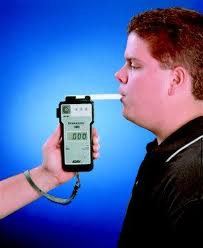
Whilst it is never ideal for a Principal to make his/her students take a  breathalizer test, doing nothing about the problem is far less ideal.

A high school principal in northern British Columbia has been asked to stop using a breathalyzer to test students in school for alcohol use.

A youth said that she and a friend were suspended from Fort St. James Secondary School last week after a blood alcohol screening test showed traces of alcohol.

Civil rights activists call the incident extraordinary and disturbing, but the Ministry of Education has no policy on the use of breathalyzers in public schools.

Kecia Alexis, a first nations student in Grade 11, said she and the other student were suspended after principal Ken Young confronted them when they arrived at school late after lunch.

Both agreed reluctantly to take the test after being threatened with suspension. Ms. Alexis, who said she hadn’t been drinking, said the device gave two “error” readings before she blew the lowest reading, a blood alcohol level of 0.01. (For drivers, the “warn” range for a blood alcohol level is 0.05 to 0.08, while a “fail” is over 0.08.)

Ms. Alexis said she argued with the findings, “but he said he doesn’t talk to students who are drunk. I said, ‘I’m not drunk.’”

She was given a three-day suspension. Despite high drop-out rates for first nations youth, Ms. Alexis returned this week determined to finish her schooling. She said she wants to be a teacher.

Civil rights activists can be a pain in the neck and this is a prime example of their constant interferences. When kids turn up to school and are suspected of being under the influence, it is surely the Principal’s right to do something about it. Breathalizing establishes that there is a problem and therefore fairly allows the Principal to metre out appropriate consequences.

It’s not as if a breathalizer test is invasive or painful. It’s not a blood test or vaccination – just a deep breath.

By not allowing Principals to effectively deal with the problem, civil rights activists are giving tacit approval to kids who decide to turn up to school under the influence. How is that a good thing?

Parents Revolt Against Teacher Who Removed the Word “Gay” From Christmas Carol

December 8, 2011

The teacher who swapped the word “gay”with “bright” so that her class wouldn’t giggle during their rendition of “Deck the Halls” was always going to draw the ire of at least one parents. As much as she may have made the change with the best of intentions, I am sure if she had her time over, she wouldn’t have fiddled with the lyrics:

A Michigan teacher chose to censor the word ‘gay’ from the festive holiday tune ‘Deck the Halls’ and was met by a frosty response from parents.

Parents thought the Cherry Knoll teacher had been naughty and not so nice when the elementary instructor replaced ‘gay’ with ‘bright’ after her students wouldn’t stop laughing when they sang the word.

They took to the school’s Facebook page ranting about the teacher’s decision to change that word in the traditional holiday carol.

Cherry Knoll principal Chris Parker told 7&4 News in Traverse City that he was disappointed the music teacher decided to change the lyrics, saying she could have used the moment for a learning opportunity on tolerance.

‘This would have been a great opportunity to teach that “gay” has more than one meaning and is not a bad word,’ he said.

Enraged parents took to the school’s Facebook page, which has since been disabled, to voice their complaints over the word-swap.

A teacher’s poor choice is not the real story here. The real story is the way the parents handled the situation. Instead of confronting the school or teacher with their displeasure, they did what many parents are now choosing to do, and turned their disapproval into a large-scale Facebook campaign.

I have no doubt that a few quiet phone calls from concerned parents would have been sufficient to provoke this teacher to revert back to the original lyrics and make a profuse apology to all offended. Instead, this teacher had to contend with a barrage of negative comments on Facebook, and now, worldwide media coverage.

This sends a shocking message. It says that whenever parents are upset over the actions of a classroom teacher they can turn to Facebook for a fully fledged smear campaign. This amounts to bullying of the worse kind.

Teachers make mistakes. Some small, some huge. But no well-meaning teacher deserves to be pillaged on Facebook – ever!