Archive for the ‘Education Matters’ Category

Stunning Homeless Experiment Revealed (Video)

April 27, 2014


What an interesting idea! I’m afraid I would have likely failed this test:


If a family member posed as a homeless person, would you recognize him or her?

That’s the question a new campaign — Make Them Visible — is asking. In a video produced by ad agency Silver + Partners and Smuggler for the New York City Rescue Mission, several people come face-to-face with their relatives and significant others dressed as homeless people. However, not a single participant recognizes their mother, brother or wife.

“There’s only one person that didn’t make it into the film — because they couldn’t handle the fact that they walked by their family,” video director Jun Diaz of Smuggler production company told Fast Company. “It happened every time.”

The jarring social experiment, staged in Tribeca and Soho near the mission’s shelter, shows just how invisible homeless people are to pedestrians on the street.

“We don’t look at them. We don’t take a second look,” Michelle Tolson, director of public relations for the New York City Rescue Mission, told The Huffington Post.

Tolson explained that the ad agency and production company hired actors for a documentary video and quietly contacted each person’s family to see if they would be interested in being apart of the social experiment. While the family members were in on the ruse, the participants had no idea they were being set up, and only learned after the fact when they watched themselves walk past their “homeless” family member.

“The experiment is a powerful reminder that the homeless are people, just like us, with one exception,” Craig Mayes, executive director of New York City Rescue Mission, said in a statement provided to HuffPost. “They are in trouble and in pain. And they are someone’s uncle or cousin or wife.”


Click on the link to read Teachers Need to Have High Expectations for all of Their Students

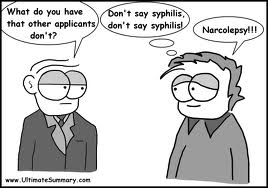
Click on the link to read The Most Common Questions Teachers Are Asked at Job Interviews

Click on the link to read The Profession You Choose When You Don’t Want to Get Fired

Click on the link to read The School They Dub the “Worst Primary School in the World”

Click on the link to read Education New Year’s Resolutions 2014


Teachers Need to Have High Expectations for all of Their Students

February 8, 2014


spell

It doesn’t matter if you have been warned about a student during a handover meeting or are aware of their reputation for misbehavior or lack of performance, your job as a teacher is to give that child the opportunity to start afresh.

Every child should see the beginning of a new school year as an opportunity to improve.  Some students only need to consolidate while others may need to make amends for recent poor habits.

As teachers we should have high expectations for all our students. If we set the bar low then there is no way the student can achieve to their potential. That does not mean we expect straights A’s for all, but rather, that each student works at their maximum and achieves to the best of their ability.

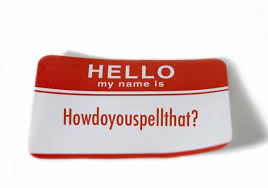
To read that some teachers modify their expectations due to superficial details like the spelling of a child’s name is both disappointing and quite preposterous:

Children who have unusual or oddly spelt names tend to fare worse in the classroom, academics have claimed. 

Teachers may subconsciously lower their expectations for pupils with names such as Destiny, Kayleegh and Chantal.

Alternatively, they tend to predict higher grades from students with traditional names – like Catherine or William.

This may suggest that teachers draw conclusions about pupils’ backgrounds on the basis of their names, according to The Times Educational Supplement (TES).

Meanwhile, what a child is called could also reflect their parents’ backgrounds and achievements. 

James Bruning, Professor of Psychology at Ohio University in America, told the supplement: ‘Clearly all of us use stereotypes about all sorts of things, and names are one of those things.

‘It is a first impression. If you only have a name as a guide then of course you make assumptions based on that.’

Mr Bruning said that if people were asked which of two students – Wa Wei Lee and Kahine Jefferson – was more likely to better at mathematics, most would opt for the Chinese pupil.

This decision would likely be based on an assumption that children of South-East Asian heritage are better with numbers, he said.

It comes as a study of two million children in Florida found that youngsters with traditional names were more likely to achieve higher grades in their end-of-year tests.


Click on the link to read The Most Common Questions Teachers Are Asked at Job Interviews

Click on the link to read The Profession You Choose When You Don’t Want to Get Fired

Click on the link to read The School They Dub the “Worst Primary School in the World”

Click on the link to read Education New Year’s Resolutions 2014

The Most Common Questions Teachers Are Asked at Job Interviews

January 29, 2014

job interview

I stumbled on a brilliant article in the Guardian where Head Teachers share the questions they regularly ask at job interviews and the rationale behind their questions.

I hope this article comes in handy next time you interview for a new teaching position:

If I walked into your classroom during an outstanding lesson, what would I see and hear?

“I’d like to hear about: animated discussions, students clearly making progress as evidenced in oral and written contributions. High quality visual displays of students’ work showing progress. High levels of engagement. Behaviour that supports learning.”

Helen Anthony, head teacher, Fortismere school

“After hearing a candidate’s response I try to get them to talk about their experiences in the classroom. I try to get a sense of the impact that they have had on pupils’ achievement.”

Tim Browse, head teacher, Hillcrest primary school

• Why do we teach x in schools?

“This question really throws people. If it is maths or English they sometimes look back at you as if you are mad. They assume it is obvious – a very dangerous assumption – and then completely fail to justify the subject’s existence.

“Whatever the subject, I expect to hear things like: to improve skills and independent learning; to encourage team work; to gain a qualification; for enjoyment (very important, rarely mentioned); to enhance other subjects; to develop literacy, numeracy and ICT skills; to improve career prospects; self discipline; memory development; to encourage life-long learning in that subject. The list goes on…”

John Kendall, head teacher, Risca community comprehensive school

• Can you tell me about a successful behaviour management strategy you have used in the past that helped engage a pupil or group of pupils?

“This allows candidates to give a theoretical answer – one that anyone who swotted up could give you – balanced with a personal reflection that shows how effective they are.”

Tim Browse, head teacher, Hillcrest primary school

• If you overheard some colleagues talking about you, what would they say?

“This is one of my favourite questions (it’s based on a question my National Professional Qualification for Headship (NPQH) coach used to ask me) because it gets candidates to think about their contribution to the school organisation and their team spirit. If I’m interviewing for a senior leader I would follow this up with: what would you want them to say about you in three years time? This way I can get a sense of where they want to develop as leaders.”

Tim Browse, head teacher, Hillcrest primary school

• Why do you want to work in special education?

“We’re looking to see that the person genuinely recognises that we’re in the business of education as opposed to simply caring for the children (surprisingly, some applicants don’t really see it that way).”

Sean O’Sullivan, head teacher, Frank Wise school

• Why do you want to work in this school?

“We want to see clear indications that candidates have done background work about our school and can talk about why the way we work appeals to them. We’d always want candidates to have visited the school so they should be able to flesh this out with specific examples of what they thought based on their visit.”

Sean O’Sullivan, head teacher, Frank Wise school

• A question that is specific to the candidate’s letter of application

“A candidate may have made a grand statement in their letter, but not gone into details about ‘how’ or the impact it had.”

Tim Browse, head teacher, Hillcrest primary school

• What are the key qualities and skills that students look for in teachers?

“Liking young people. Fairness. Consistency. Sense of humour. Passion for their subject. Good at explaining new concepts/ideas. Able to make the topic or subject relevant. Able to make everyone feel comfortable and confident about contributing.”

Helen Anthony, head teacher, Fortismere school

• Evaluate your lesson

“Teaching a one-off lesson in an unfamiliar school with students you have never met before is a difficult task, but a useful one for candidates and those making the appointment. The evaluation of the lesson by the candidate is crucial. I need to see someone who can be self-critical but who also recognises when things go well. Someone who makes suggestions as to how the lesson may have gone better, what they would do differently with hindsight. I like to hear them talk of the individual student’s progress in the lesson, and how they would follow it up. Remembering pupils’ names is always impressive. I’d rather see an ambitious lesson that goes a bit awry than a safe boring one.”

John Kendall, head teacher, Risca community comprehensive school

• If we decided not to appoint you, what would we be missing out on?

“This is great as it enables candidates to sell themselves and really tell us what they are about.”

Brett Dye, head teacher, Parc Eglos school

Click on the link to read The Profession You Choose When You Don’t Want to Get Fired

Click on the link to read The School They Dub the “Worst Primary School in the World”

Click on the link to read Education New Year’s Resolutions 2014

Click on the link to read Eight Fundamentals that Every Student Deserves

Click on the link to read 21 Reasons to Become a Teacher

The Profession You Choose When You Don’t Want to Get Fired

January 26, 2014


drug


It must be awfully hard to get fired from a teaching job nowadays.

No other profession gives tenure for mediocrity and second, third and fourth chances like teaching does.  Now I read that you can keep your teaching job after a drug or theft conviction.

Put up your hand if you want a convicted drug offender or thief teaching your kids? That’s funny, I don’t see any hands raised.

The problem with this iron clad commitment to keep teachers in their jobs through thick and thin is two-fold:

1. It means that the person selected to be a role model for your child may be anything but; and

2. When a teacher who doesn’t meet expectations isn’t fired, it devalues the whole profession. Whilst nobody wants to be constantly worried about losing their job, the level of job security for many teachers may well lead to a sense of apathy and a lack of appreciation for the responsibilities that come with the profession.

I heard of a story today about a vet that lost his job because he posted a picture of himself at a pub whilst wearing a shirt with the company logo on it. He didn’t get a warning or a demotion – he was just sent packing.

Was the penalty harsh? I think it was. But you can be sure that when this vet secures his next job, he will take his professional responsibilities more seriously.

And it’s not only vets. Someone with a conviction has lost the right to train as a firefighter, even if the offense was seemingly minor or unrelated to the performance of the job. A miner has to undergo regular drug and alcohol tests. Any negative test results in an immediate sacking.

So why don’t teachers face the same amount of scrutiny? Is it because our unions are strong? Is is because policy makers want to look like the friend of education and teachers to score some points with their constituents? Perhaps it’s because they feel sorry for us for our low pay and difficult working conditions?

Whatever it is, it devalues what is the best profession going around.


Click on the link to read The School They Dub the “Worst Primary School in the World”

Click on the link to read Education New Year’s Resolutions 2014

Click on the link to read Eight Fundamentals that Every Student Deserves

Click on the link to read 21 Reasons to Become a Teacher

Click on the link to read  25 Amusing Signs You Might Be a 21st Century Teacher

The School They Dub the “Worst Primary School in the World”

January 14, 2014


STILLS

It’s sad when a school is allowed to turn into what is alleged. Schools can offer so much, even on a shoestring budget, so it is a crying shame to read about PS 106:

Students at PS 106 in Far Rockaway, Queens, have gotten no math or reading and writing books for the rigorous Common Core curriculum, whistleblowers have told the New York Post .

The 234 kids get no gym or art classes. Instead, they watch movies every day.

“The kids have seen more movies than Siskel and Ebert,” a source said.

The school nurse has no office equipped with a sink, refrigerator or cot.

The library is a mess: “Nothing’s in order,” said a source. “It’s a junk room.”

No substitutes are hired when a teacher is absent – students are divvied up among other classes.

A classroom that includes learning-disabled kids doesn’t have the required special-ed co-teacher.

About 40 kindergarteners have no room in the three-storey brick building. They sit all day in dilapidated trailers that reek of “animal urine,” a parent said; rats and squirrels noisily scamper in the walls and ceiling.

And the principal – Marcella Sills, who joined PS 106 nine years ago – is a frequent no-show, sources say.

Sills did not come to school last Monday. On Tuesday, she showed up at 3:30pm.

On Wednesday, The Post found her at home in Westbury, LI, all day before emerging at 2:50pm – school dismissal time. Wearing a fur coat, she took her BMW for a spin.

She showed up at school Thursday, but not Friday.

When Sills, 48, does go to work, it’s rarely before 11 am – and often hours later, say sources familiar with her schedule.

“She strolls in whenever she wants,” one said.

The school hasn’t had a payroll secretary in years.

A Department of Education spokesman said Sills was required to report her absences and tardiness to District 27 Superintendent Michelle Lloyd-Bey but would not say whether Sills did so last week.

Lloyd-Bey did not return a call. Sills hung up on a reporter.

When she is out, an assistant principal is left in charge. Yet Sills, who gets a $128,207 salary, also pockets overtime pay – $2,900 for 83 hours in 2011, the latest available records show.

“This school is a complete s***hole, but nobody in a position of power comes to investigate. No one cares,” a community member said.

PS 106 families hope their cries for attention bring newly installed Schools Chancellor Carmen Fariña to the rescue, saying they can’t recall any prior DOE leader visiting the remote school.

She would find it sinking, they say.

The isolated building sits a block and a half from the beach, surrounded by vacant, weed-choked lots, the road behind it strewed with trash bags and broken TVs.

The floods of Hurricane Sandy in October 2012 wrecked a hangar-like annex, called the Early Childhood Academy, which housed pre-K, kindergarten and first and second grades. It has not been repaired.

Two kindergarten classes moved into “temporary classroom units” in the yard. The other children moved into the main building, forcing some classes to squeeze into small offices and storage rooms. The pre-K class sits in the auditorium, but has to move to the cafeteria during the movies.

Kids in several grades said that last week they watched Fat Albert, Alvin and the Chipmunks and Monsters, Inc., but did not relish the downtime.

More alarming, the teachers have gotten no curriculums since Sandy. Last February, the DOE announced several new options, including “Go Math” for grades K-5, and “ReadyGen” or the state Education Department’s “Core Knowledge” for English language arts. The books cover the Common Core standards, skills that kids should master at each level.

But five months into the school year, PS 106 classes still don’t have the books or teacher’s guides.

“They have no reading program, no math program,” a source said, adding Sills blames outside administrators for not sending materials.

Teachers muddle through by printing out worksheets they find online, buying their own copy paper.

The DOE gave no explanation for the missing curriculums but said it’s “working with the school to provide students with physical education”.

A spokesman denied the trailers are rat-infested.

Staffers won’t speak up or even file a grievance with their union because Sills will retaliate, a source said.

Parents wonder if higher-ups know what’s going on.

PS 106 is allocated $2.9 million to serve a low-income population with 98 per cent of its students eligible for free lunches. As a Title 1 school, it gets extra federal funds, but community members say they’ve never seen a budget tracking the income and spending.


Click on the link to read Education New Year’s Resolutions 2014

Click on the link to read Eight Fundamentals that Every Student Deserves

Click on the link to read 21 Reasons to Become a Teacher

Click on the link to read  25 Amusing Signs You Might Be a 21st Century Teacher

Click on the link to read  20 Questions Teachers Should Be Asking Themselves
Education New Year’s Resolutions 2014

January 1, 2014

2014

With resolutions abounding as the new year arrives, I think it’s apt for our education system to undertake some resolutions of its own:

  1. Work Harder to Manage Cyberbullying Issues – Schools seem more interested in covering themselves legally than actually fixing a problem. Because cyberbullying usually happens off premises, the argument has been that it is a parental issue rather than a school issue. This is an insensitive approach. Schools, administrators and teachers must see themselves as crucial stakeholders in dealing with this problem. The welfare of their students rely on a multi-faceted approach.
  2. Stop Changing the Curriculum – In a bid to be seen to be doing something effective to improve student results, politicians continually change the curriculum so that they can boast about how they overhauled an ineffective syllabus.  In the last ten years I have seen 4 changes of curriculum, each of them decidedly more complicated and inferior to the one being replaced. This makes us teachers dizzy, costs the tax payers a fortune and achieves nothing for the student. We must resolve to put a moratorium on any changes to the curriculum. I don’t want even a comma or full stop tampered with for at least a decade.
  3. Respect Teachers’ Time – Even before the school year starts I have to submit Yearly Planners for literacy and numeracy, term planners for literacy numeracy and science, integrated planners covering my overriding topic of inquiry and weekly planners for maths and literacy covering my lesson for the first week. Then I need to continue the weekly planners and term planners throughout the year. These planners are incredibly detailed and onerous. They simply take a disproportionate amount of time. To deliver fun, engaging lessons, I need to spend less time on the paperwork. It is becoming fashionable for teachers to copy/paste their planners from specially made internet subscriptions sites that contain lessons covering the curriculum. Whilst this saves time, the lessons on these sites are often excruciatingly boring for the students. The best way to get teachers to teach in a fresh manner is to keep them fresh by reducing the paperwork.
  4. Make Politicians Accountable by Not Accepting Their Spin – Lazy politicians like to brag about how much money they are pumping into the system or how they have changed the curriculum, when neither is a major determinant in student performance. Politicians should start to focus on the major areas requiring change such as improving teacher training quality, support for new teachers, reducing teacher stress and helping schools achieve better welfare outcomes for their students.  In fairness to the current Federal minister, he has spoken about some of these matters. Let’s hope he is is able to deliver.

Click on the link to read Eight Fundamentals that Every Student Deserves

Click on the link to read 21 Reasons to Become a Teacher

Click on the link to read  25 Amusing Signs You Might Be a 21st Century Teacher

Click on the link to read  20 Questions Teachers Should Be Asking Themselves
Click on the link to read School Official Allegedly told a Teacher to Train her Breasts to not Make Milk at Work

Eight Fundamentals that Every Student Deserves

November 17, 2013


bag

Courtesy of the great site justintarte.com:

1). Every student deserves to have someone who won’t give up on them; someone who will encourage them, support them, and reassure them that there are those who believe in them. #youmatter

2). Every student deserves to have the appropriate tools and resources available to them that will allow them to find success. We are rightfully obligated to provide the necessary tools for our students, and this must be a part of the bigger picture when it comes to available resources and personnel.

3). Every student deserves to have similar and equal opportunities that others may have; the opportunity gap we have in education is broadening the gap between the ‘educated’ and the ‘non-educated.’ We can’t continue to allow this to happen when we are talking about access to learning.
4). Every student deserves the benefit of the doubt. Far too often we assume students are doing something wrong and not doing what they are supposed to be doing. When we assume, we tend to be incorrect.

5). Every student deserves a teacher who believes that what’s been done in the past is not the only factor when determining what to do in the present and what to do in the future. The choices we make affect our students… we can’t hold them back because we are scared to do something we aren’t comfortable with.

6). Every student deserves the opportunity to design, create, and explore. We must create a safe environment for our students to feel comfortable with doing things they have never done before. This level of comfort and trust makes everything else possible.

7). Every student deserves to have the best teacher. Far too often we put our newest and least experienced teachers with our most challenging and most at-risk students. Shouldn’t we have the best teachers and most experienced teachers working with our students who can most benefit from their skills?

8). Every student deserves a teacher who is willing to take a risk and take a chance. Sometimes it’s appropriate to play it safe, while other times it’s necessary to take a chance and step outside the box. Students all need someone who is willing to be different and someone who is willing to travel this journey with them…


Click on the link to read 21 Reasons to Become a Teacher

Click on the link to read  25 Amusing Signs You Might Be a 21st Century Teacher

Click on the link to read  20 Questions Teachers Should Be Asking Themselves

Click on the link to read School Official Allegedly told a Teacher to Train her Breasts to not Make Milk at Work

Click on the link to read 12 Tips for Managing Time in the Classroom

21 Reasons to Become a Teacher

October 16, 2013


Courtesy of writer


1. To encourage children to DREAM BIG

“On many occasions I play both educator and caretaker, which I admit can make one feel stretched thin at times, but I can’t imagine shutting the door to my classroom and leaving all the troubles of my kiddos behind. How are my young scholars able to learn if they aren’t first met on an emotional level? My thoughts on the rewards of teaching are simple: the joy of watching a child dream and imagine and think significantly outweighs the exhaustion. I would not have it any other way.” – Emily E. Smith teaches English Language Arts at Cunningham Elementary School in Austin, TX

2. To positively IMPACT THE FUTURE of our world

“From the time I started teaching, I was less interested in being a certain type of teacher and more interested in showing the students that they had worth and value. I believe that the true purpose of a teacher is to prepare kids to be good citizens of the world–to be satisfied, well-rounded human beings, which is not entirely about knowledge. A great measure of success is your ability to think critically and be intentional with your life.” – Josh Anderson teaches Debate, Forensics, and English at Olathe Northwest High School in Olathe, KS

3. To live with a deep SENSE OF PURPOSE

“Teachers have many precious opportunities to build a student’s self-concept, help shape a dream, provide redirection, and impart knowledge and wisdom… Having these opportunities and acting on them is what I value most about being a teacher. I don’t think of it as a job. It’s a purpose for living.” – Alma Suney Park teaches 6th grade at Eastside College Preparatory School, East Palo Alto, CA

4. To GET A LETTER like this

When Los Angeles teacher Rafe Esquith sent a check to help out a former at-risk student who was attending NYU, here’s an excerpt of the response he received: “I appreciate your willingness to help me. It reminds me (as if I could ever forget) that you are one of the greatest people I have ever had the honor to meet. But I’d much rather the money you are offering me go to the class, so that one day maybe some other kid will be in a position like mine. And while I’m on that subject I just have to tell you, I tell our story to anyone who will listen. Rafe, I honestly believe I would be dead right now if it wasn’t for you. I was headed down a dark path, where drug dealing didn’t seem so bad and the acceptance of a gang was looking like the only way to be accepted. You saved me from that.”

5. To discover your TRUE CALLING

“Eleven years ago, I began teaching high-school mathematics in Harlem and I’ve never looked back. Every day, my life has purpose. Every day, I make a difference. I teach content, even advanced placement statistics and advanced placement microeconomics at the college level, but I teach so much more. Simply by engaging in spontaneous reasoned dialogue with students, I offer them new ways of perceiving the world around them. I teach life skills; I teach morals; I teach wise choices; I teach compassion. I spend time with youngsters who need an adult who treats them with respect and kindness.” – Jane Klir Viau, left her lucrative Wall Street career to become an AP Statistics and Microeconomics teacher at the Frederick Douglass Academy 1 in New York City, NY

6. To be the ONE CARING ADULT in a child’s life

“I teach in a neighborhood labeled by the national media as ‘the killing zone.’ Some days it feels more like a third-world country–there’s so much violence, ignorance, drugs, poverty, etc. There are classes where my students don’t ever pick up their instruments–we just talk about something that’s upsetting or worrying them. In this neighborhood, things happen all the time that deeply affect these kids. Many of them don’t have an adult to go to. I leave my door open so that the children understand I am a listener for them, and if I’m not the right person to help, I’m going to find the right person.” – Helena Moss-Jack teaches Instrumental Music at Elmhurst Community Prep and Alliance Academy Middle School in Oakland, CA

7. To experience personal GROWTH

“Teaching reflects you. If you can look at that reflection, you will really learn about yourself. That humbles me and brings me to tears when I talk about it. Because in the beginning, I was scared of what I saw. Kids find the cracks in your armor. It is not that they set out to, they just do. But if you are willing to step back and reflect, you can grow so much. It is a wonderful, unexpected caveat. You think you are going to teach, but boy, do you learn.” – Jay Hoffman teaches Multimedia, Broadcasting, and Social Media at Frederick H. Tuttle Middle School in South Burlington, VT

8. To GIVE AND RECEIVE unconditional love

“I was brought up with unconditional love and that inspires me to this day to not be afraid to love with all I have. Anything I can share with my students to help them be more successful–anything–I don’t care what it is, I will do it. Whether it’s morals or math or motion–I just want to give them every tool I possess. I want my students to see the beauty and the value in themselves, and find the strength and confidence to journey down the path they were created to walk and give it all they have.” – Sharon Patelsky teaches Physical Education at Everglades Elementary School in West Palm Beach, FL

9. To be a STUDENT for life

“My job is simply to be the lead learner, to be real for my students, to be authentic–to make mistakes, to be passionate, to geek out, and to get very serious when I need to be. I often use the metaphor of my desk being in the far back corner of the classroom to illustrate this learner-centered philosophy. As much as anything, it’s an outward sign of what is valued in our class: we are all students.” – Sarah Brown Wessling teaches English Language Arts at Johnston High School in Johnston, IA, and was the 2010 National Teacher of the Year

10. To PAY IT FORWARD

“Throughout my childhood, I thrived at school. I was third in my class and was selected to the Hall of Fame by my teachers. Despite that, I really did not believe I had any important talents to offer this world. That is, until one day in 1974, in my public speaking classroom. It was my first speech and I stood in front of the class filled with anxiety, but when I started talking, it felt pretty good. Afterwards, my teacher, Ms. Derbonne, left me a note saying that I had just unwrapped a very special gift. Here was the defining moment in my young life: I was innately designed to speak. She invited me to be on her elite competitive speech team. The countless hours of guidance she provided resulted in my placing as a finalist at the state championship in dramatic interpretation. I knew then that I wanted to become a speech teacher, just like her. I had to keep the ripple effect going.” – Donna Porter teaches Oral Communications at Picayune Memorial High School in Picayune, MS

(more…)

David Letterman’s Top 10 Reasons I’ve Decided To Become a Teacher

May 16, 2013


Click on the link to read  25 Amusing Signs You Might Be a 21st Century Teacher

Click on the link to read  20 Questions Teachers Should Be Asking Themselves

Click on the link to read School Official Allegedly told a Teacher to Train her Breasts to not Make Milk at Work

Click on the link to read 12 Tips for Managing Time in the Classroom

Click on the link to read If Teachers Were Paid More I Wouldn’t Have Become One

Click on the link to read Different Professions, Same Experiences

Click on the link to read Our Pay Isn’t the Problem

The Courage of Overcoming Multiple Failures

February 20, 2013

drive

I suspect that this news article is intended to belittle a man who has failed his drivers test 107 times. Be that as it may, I prefer to look at it as an inspiring account of a person with incredible resilience and stamina who is determined to overturn an endless cycle of failures:

Many of us know someone who has struggled to pass their driving test. But spare a thought for the hapless learner who has set a record for failure.

The unnamed 28-year-old, from London, has flunked the car theory test 107 times and is still yet to pass.

They have so far spent £3,317 trying to pass the exam, which costs £31 a time. The test includes a 57-minute multiple choice exam, with a pass mark of 43 out of 50, and a hazard perception test with a pass mark of 44 out of 75.

Once you’ve passed both parts of the theory, there’s still the practical to overcome.

One determined 40-year-old logged a record number of practical driving tests – passing on his 37th attempt. The unnamed man, from Stoke-on-Trent, forked out at least £2,294 trying to pass – which could have paid for a reasonable second-hand car.

The practical test costs £62 to take on a weekday or £75 for a test on an evening, weekend or bank holiday.

An AA Driving School spokesman said: ‘This is an unusually high number of test attempts, but it is important to remember that everyone learns at their own pace. Their determination to pass highlights how important learning to drive is to most people.

‘It is a milestone that many people aspire to achieving because of the freedom and independence it brings.’