Posts Tagged ‘technology’

The Toy for Children Who Can’t Keep Their Hands off Your iPhone

July 9, 2012

It’s very hard for parents to find time with their iPhones and iPads because children have a habit of getting to them first.

It was only a matter of time before manufacturers invented a toy that will give your children yet another reason to run off with your phone:

Any parent knows that irrespective of what engaging and exciting toys you buy for your children, they will always be more interested in your mobile phone or tablet computer. It’s an inescapable fact of modern day parenting. With this in mind, toy firm Little Tikes has revealed a range of iPhone-friendly toys which can connect with your iOS devices.

The iTikes toys iOS devices toys include a keyboard, map, microscope and an art canvas, all of which can be used as stand-alone toys. But it’s when you add an iPhone, iPad or iPod Touch running a free iTikes app, that the fun really begins and the toys gain additional (and considerably more high-tech) functionality.

I’m still waiting for the iCanMakeMyBed, iWillShareMyToys and the future bestseller iWillDoMyHomeworkWithoutComplaint.

Top 10 Ways Children Hide Their Online Activity From Parents

July 2, 2012

It’s important to be aware of what your children do online. To achieve this one must also be aware of the “tricks” they pull in order to hide their activity.

A recent survey entitled, Teen Internet Behavior study released last week by McAfee, the online-security tech company, found that children are really good at covering their tracks.

The following are the top 10 ways children hide online behaviour from their parents:

-Clearing the browser history (53 percent)

-Closing/minimizing browser when a parent is around (46 percent)

-Hiding or deleting messages and videos (34 percent)

-Lying about online activities (23 percent)

-Using a computer parents don’t check (23 percent)

-Using an Internet-enabled mobile device (21 percent)

-Using privacy settings to make certain content viewable only by friends (20 percent)

-Using a browser’s private viewing mode (20 percent)

-Creating private email address unknown to parents (15 percent)

-Creating duplicate/fake social network profiles (9 percent)

You’ve Heard of Road Rage. Now there’s PlayStation Rage!

July 2, 2012

Reality has become so blurred for some that the expression, “It’s only a game” clearly no longer apples.

To read that grown men are turning violent over video games is outrageous and disgusting:

Young men are getting so caught up in gaming consoles they are lashing out at children, sometimes with deadly consequences.

A New Zealand paediatrician says all too often she treats children who have been struck by a male caregiver because they interrupted a game.

Mikara Reti was just five months old when he was hit so hard he died and his liver was almost split in two.

Trent Hapuku, 23, was found guilty of manslaughter. He was sentenced this month at the High Court in Napier, New Zealand to nine years in prison.

Hapuku had been left alone with his partner’s child in a Flaxmere sleepout in January last year. Prosecution lawyers argued Hapuku was intent on beating his high score in a PlayStation game called Scarface.

When the toddler interrupted the game, Hapuku struck him so hard he died from his injuries. But rather than rushing the child to hospital, Hapuku continued playing. When Mikara’s mother returned she found her partner playing PlayStation and holding Mikara over his left shoulder.

But just wait a minute! This is an isolated case, right? I’m afraid not:

Dr Eleanor Carmichael, from Waikato Hospital, said she frequently sees cases where a young man has abused a child because a game was disturbed. “You sit down, take a bit of P, start your PlayStation game, the baby starts to cry, you’re in a hurry to pick it up and settle it down before you lose your place.”

Shame! Shame! Shame!

Click here to find out if you are addicted to the internet or here to read about kids and technology addiction.

Teens Require the Latests High-Tech Gadgets to Function Socially: Bittman

July 2, 2012

Are parents derelict in their duties if they refuse to buy their children the latest gadgets such as smartphones, tablets, game consoles and i-pods?

Absolutely not!

On the contrary, it can be argued that any parent that buys those items when they can’t afford to, is derelict in their duties:

IT was dubbed the “digital divide” – the gap between the haves and the have nots in the computer age.

But far from missing out on the electronic essentials of modern life, new research shows children from poorer families are keeping up with wealthier counterparts.

High-tech ownership is consistent across all income levels, research by insurer GIO reveals, with the average teen owning $1882.06 worth of equipment.

And tech-savvy teens are much more likely to own computer equipment than sports gear or a musical instrument.

About 42 per cent of kids own a laptop, while half own mobile phones and more than three in five own an MP3 music player such as an iPod. But less than a third of kids own sporting equipment or a musical instrument.

Sociology expert Dr Michael Bittman said most of the devices were essential for teens to function socially.

I disagree vehemently with Dr. Bittman. Teens do not need the latest devices, they need to understand that money doesn’t grow on trees. They need to respect the volatile nature of the economy and the hardships their parents face in ensuring that they have the necessities.

Teens would be best advised to worry less about their social standing and more about how they could contribute to their family, rather than run their family budget dry.

Are you Addicted to the Internet?

June 21, 2012

Technology addiction is one of the most prevalent, yet socially acceptable addictions. It envelopes both children and adults and can ruin marriages, cost jobs and effect sleep.

Courtesy of Dr Oz and Dr. Kimberly Young, I have accessed a quiz to determine whether or not one is addicted to the internet:

1. Do you feel preoccupied with the Internet (think about previous online activity or anticipate next online session)?
2. Do you feel the need to use the Internet with increasing amounts of time in order to achieve satisfaction?
3. Have you repeatedly made unsuccessful efforts to control, cut back, or stop Internet use?
4. Do you feel restless, moody, depressed, or irritable when attempting to cut down or stop Internet use?
5. Do you stay online longer than originally intended?
6. Have you jeopardized or risked the loss of significant relationship, job, educational or career opportunity because of the Internet?
7. Have you lied to family members, therapist, or others to conceal the extent of involvement with the Internet?
8. Do you use the Internet as a way of escaping from problems or of relieving a dysphoric mood (e.g., feelings of helplessness, guilt, anxiety, depression)?

Other Symptoms Include:

• Failed attempts to control behavior
• Heightened sense of euphoria while involved in computer and Internet activities
• Neglecting friends and family
• Neglecting sleep to stay online
• Being dishonest with others
• Feeling guilty, ashamed, anxious, or depressed as a result of online behavior
• Physical changes such as weight gain or loss, backaches, headaches, carpal tunnel syndrome
• Withdrawing from other pleasurable activities


The Monster of all Teacher Resources is About to be Unveiled

June 21, 2012

What a brilliant idea! Creating a universal portal for teachers to access information and materials is just what we need. I can’t wait to use it!

The result of that call, to be unveiled Tuesday, is Share My Lesson, an online portal that teachers will be able to access free of charge. It is expected to contain more than 100,000 user-generated materials.

“We’ve been trying to find a way to have teachers be able to access information quickly, actively and share with each other,” Weingarten said. “It felt to me almost too good to be true, that some private entity had created a platform for teachers to be able to share.”

Share My Lesson is expected to be the largest online resource for teachers in the U.S. and comes at a time when cuts to education budgets have led many districts to slash professional development. AFT and TSL have pledged $10 million to develop and maintain the site, which should be ready for teachers by August.

“We must support the incredibly complex work teachers do at every opportunity, including by sharing and promoting best practices through online resources and communities of practice,” Education Secretary Arne Duncan said.

He said the program would benefit teachers everywhere.

Facebook Doesn’t Seem to Care About Kids

June 5, 2012

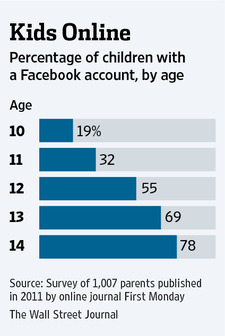
It seems as though Facebook cares more about indoctrinating more young lemmings onto their database than protecting the safety and wellbeing of our children. I have stated before my firm belief that children under 13 do not have the maturity to warrant the privilege of having a Facebook page.

You may argue that many 13 year-olds defy that rule and go and get one anyway. This is unfortunate, and something their parents ought to take an interest in, but at least in this instance there are laws that are being broken. It would be decidedly worse if the age requirement rule was abandoned altogether.

A new proposal to allow children under the age of 13 to have legal access to Facebook is the first step in a concerted effort to rescinding these important regulations:

Facebook Inc. is developing technology that would allow children younger than 13 years old to use the social-networking site under parental supervision, a step that could help the company tap a new pool of users for revenue but also inflame privacy concerns.

Mechanisms being tested include connecting children’s accounts to their parents’ and controls that would allow parents to decide whom their kids can “friend” and what applications they can use, people who have spoken with Facebook executives about the technology said. The under-13 features could enable Facebook and its partners to charge parents for games and other entertainment accessed by their children, the people said.

Facebook currently bans users under 13. But many kids lie about their ages to get accounts, putting the company in an awkward position regarding a federal law that requires sites to obtain verifiable parental consent before collecting personal data from children.

Any attempt to give younger kids access to the site would be extraordinarily sensitive, given regulators’ already heightened concerns about how Facebook protects user privacy. But Facebook, concerned that it faces reputational and regulatory risks from children already using the service despite its rules, believes it has little choice but to look into ways of establishing controls that could formalize their presence on the site, people familiar with the matter said.

The Impact of Social Media on Kids

May 13, 2012

I agree with many of Jim Steyer’s points in regard to the need to educate children about using the personal setting on Facebook, as well as the addiction issues relating to children and social media. I am a big fan of his suggested “erase” button, which would enable children to delete any uploaded information they regretted putting on their pages.

Facebook’s big stock offering on Wall Street must be followed by an intensive debate on Main Street about social media’s powerful impact on children, an expert on the topic says.

Jim Steyer, founder of Common Sense Media, a San Francisco think tank focusing on media and families, said the technology that Facebook represents is having “an enormous impact” on youngsters, families and schools worldwide.

“We need to have a big national, if not global conversation about the pros and cons of that,” Steyer, a father of four who is also a civil rights lawyer and Stanford University professor, told AFP in an interview.

While social media such as Facebook, Google Plus and Twitter offer “extraordinary possibilities” in such areas as education, he said, “there are also real downsides in a social, emotional and cogitative development way.”

Steyer was in Washington to promote his just-published book “Talking Back to Facebook: The Common Sense Guide to Raising Kids in the Digital Age,” which argues for greater parental involvement in their children’s online lives.

“Whether we like it or not, kids are now spending far more time with media and technology than they are with their families or in school,” – as much as eight hours a day on average in the United States alone, he wrote.

Children face the triple peril of what Steyer calls RAP – relationship issues, attention and addiction problems, and privacy issues – as well as cyberbullying, online pornography and, for girls, body image fears.

“There is an arms race for data, and to build things as fast as possible … but that’s not a great strategy when you’re talking about kids,” he said, accusing tech outfits for “not respecting the concept of privacy.”

Earlier this week, a Consumer Reports survey found nearly 13 million US Facebook users – out of 157 million, and 900 million worldwide – do not use, or are not aware of, the site’s privacy controls.

Girls are especially vulnerable, Steyer said, with studies indicating that many body-conscious teens are photoshopping images of themselves so as to look thinner and score more “likes” among their friends.

On a governmental level, Steyer suggested the United States follow Europe’s lead in privacy regulation and introduce an “eraser button” enabling users to wipe off anything they might have posted in the past.

“We need clear and simple rules (around privacy) for the tech companies, too, because right now they’ve dominated the debate and they’ve set the rules themselves,” he said.

But the immediate responsibility, he said, falls on moms and dads.

“It’s part of parenting 2.0 today, so you have to do your homework,” he said.

“You have to actually learn the rules of the road… and then you have to set clear and simple limits for kids, set clear rules of behaviour – and you have to be a role model.

“If you’re constantly addicted to your cellphone or your ‘CrackBerry’ then that’s not sending a very good message to your kids.”

The Overwhelming Challenge of Supervising Childrens’ Online Activity

April 25, 2012

There used to be a standard rule for parents about supervising their childrens’ internet surfing – make sure you take the computer out of their bedroom and into the living room. No longer does this rule work. With the introduction of 3G and 4G technology, lap tops, smartphones and mobile gaming consoles which all connect to the internet, our children can be online without even using a computer.

The challenges for parents are becoming so difficult:

An Ofcom study last year found that 91 per cent of children live in a household with internet access, but that only half of parents of five to 15-year-olds supervised their children’s internet use. A further three million children aged eight to 15 have a smartphone, according to a YouGov survey published in January.

Increasingly, there are fears about the content children are accessing, whether deliberately or by mistake, when they are unsupervised online.

Last week, a cross-party group of MPs warned that it was too easy for children to view pornography. They called for legislation to force internet providers to block access automatically to pornographic websites.

The potential for teenagers to outwit their parents is frequently used as an argument for network-level filtering. Its supporters argue that too many parents lack the technical know-how to secure their computers properly and too few will opt in to a filtering system that is not compulsory.

Set against that are free speech concerns: is it right that an internet provider decides which content is acceptable to be viewed and which should be banned? How do they decide what constitutes “adult” content – and what happens if they get it wrong?

Further, as Nicholas Lansman, of the Internet Service Providers Association, argues, such technology can give parents a false sense of security, leading to less active monitoring of what children are up to online. Filters can fail or be circumvented, and left to their own devices, teenagers will find a way to get what they want.

Technology can help but it can only go so far. Parents must set boundaries and discuss the risks with their children.

Tony Neate, chief executive of Get Safe Online, says: “It is very important to talk to your child about being safe online, taking them through the risks and what they mean. This includes not just your home PC, but anywhere where internet access is involved – including mobile phones and game consoles.

“Don’t be afraid to ask your own questions to get a sense of what they are getting up to online.”

Smartboards Must Become More than Just Classroom Decoration

April 24, 2012

As a classroom teacher, I see new parents taking guided tours of our school all the time. Nowadays parents find it particularly important to sign up to a school while their child is still a newborn. This means that schools are becoming inundated with requests from new parents for guided tours.

During these tours parents openly show an appreciation for the Smartboards that adorn the classrooms.

“So there’s a Smartboard in every single classroom?” they ask in amazement.

As impressive as Smartboards look, in itself they haven’t revolutionised teaching. The challengef or us is to get the technology to compliment our teaching rather than become the focus. Similarly, it is also essential that this technology doesn’t become a mere piece of decoration that manages to impress parents without actually being used for any real educational benefit:

A disruptive technology is one that radically alters an existing market – the iPod displacing the Walkman, for example, or tablets eating into sales of PCs. In the same way, new technologies have the potential to disrupt the education system, bringing about major changes in the way pupils learn and challenging the way schools and colleges are run.

… everyone seems to agree that, as exciting as new technologies are, they should not be seen as a panacea for all ills, or a short cut to more effective teaching. “We’ve seen a lot of whiteboards go into schools, and that’s good because you can have more interactive things on the screen,” says Mills. “But it doesn’t necessarily shift the paradigm of a teacher talking to kids. If done badly, all that investment can just reinforce a model of teaching that isn’t putting the tools in the hands of children.”

Teachers will need more support and resources to embrace the digital classroom idea. “When people spend so much money on the hardware and software, the advice would be you need to spend at least the same amount of money on staff training and development,” says Doug Belshaw, a researcher at JISC infoNet, which provides resources promoting good practice and innovation within the education sector, and co-kickstarter of the Purpos/ed Community Interest Company. “Otherwise you’re never going to get any effectiveness from it.”

Of course, many teachers already know the obvious: that new technologies have the potential to be a disruptive force of the good kind, breaking down barriers between schools and the wider world, the timetable and more flexible forms of learning, pupil ability and the requirements of the curriculum. They can empower children and better prepare them for life in our fast-paced online world. But we are yet to make the leap from pockets of innovation to a mainstream embrace of the digital classroom within our schools.