Posts Tagged ‘Teaching’
July 12, 2012

There is a theory among educational circles that a struggling teacher can’t improve. This is probably true in today’s climate, but it isn’t a reflection on under-performing teachers, but rather a reflection on the total lack of support given to teachers.
A teacher’s journey begins with a pressurised, yet basically completely useless, teacher training course. This course not only fails to provide teachers with the requisite practical skills but is often taught and run by former teachers who are overjoyed at the prospect of finally being out of the classroom.
Then, if that teacher is lucky enough to score a job at a school with resources, a track record of half-decent behaviour and academic standards (because let’s face it – graduate teachers often go to the toughest schools to teach in), they are left on their own. No mentor, no support system. They are put in an environment where every teacher is in charge of their own classroom and teamwork is often non-existent.
That teacher can always break the unwritten rule and ask for help, but that would be a mistake. A graduate teacher’s first contract is usually a 12-month trial run. That teacher cannot afford to advertise their uncertainty and lack of experience. Teachers are overburdened as it is and many resent having to help an amateur when they have an ever-increasing workload to deal with. Therefore, a graduate teacher that asks for help risks not having their contract extended, thereby risking future employment.
So what do these teachers do? They learn on the job. And that’s where mistakes are made and bad habits are formed.
These bad habits sometimes make them look like “poor” teachers. Many of them are just well intentioned teachers who have never been given the support they needed.
The public are probably very supportive of new regulations that makes it harder for teachers branded “incompetent” from finding a new teaching job. I bid them to see beyond the labels and call on the system to support our teachers rather than replacing them for a newer version of the same thing:
For the first time, schools will be given legal powers to find out whether staff applying for new jobs have previously been subjected to official warnings.
Former employers will be required to disclose any disciplinary action taken against teachers over the last two years to give new schools a more comprehensive picture of their ability.
The regulations – being introduced from this September – come amid fears that too many schools allow weak teachers to leave and find new jobs rather than draw attention to their performance.
In the last decade, just 17 staff in England have been officially struck off for incompetence.
But teachers’ leaders insisted that the regulations would treat teachers “worse than criminals” and force some out of the profession altogether.
Click here to read about how I would solve the problem of the unsupported teacher.
Tags:Alison Ryan, Education, Education Secretary, Former employers will be required to disclose any disciplinary action taken against teachers, just 17 staff in England have been officially struck off for incompetence, life, Michael Gove, News, Schools will be able to find out if teachers had been disciplined, Teacher Training, Teachers, Teachers Stress, Teaching, too many schools allow weak teachers to leave and find new jobs
Posted in Teacher Training, Teachers Stress | 5 Comments »
July 3, 2012

Talk about a science experiment that didn’t turn out well:
A teacher on the New South Wales Central Coast has pleaded not guilty to assault charges, after he allegedly dared a group of students to hold dry ice with their bare hands.
Damien Hilton is facing eight charges, including cause grievous bodily harm by neglect, after a group of Terrigal High School students were injured during his science class earlier this year.
The 49-year-old, who was employed as a casual teacher, is accused of daring 10 children to hold dry ice for as long as they could.
The students were treated for burns, with two taken to hospital.
Hilton faced Gosford Local Court today and pleaded not guilty to the charges.
The matter has been adjourned until next month.
Tags:Damien Hilton dry ice, daring 10 children to hold dry ice for as long as they could, Education, Gosford, New South Wales Central Coast, News, professional conduct, Science, Science experiments, Teacher, teacher dared students to hold dry ice with bare hands., teacher pleaded not guilty to assault charges, Teaching, Terrigal High School dry ice
Posted in Professional Conduct | Leave a Comment »
June 19, 2012

I noticed while teaching students about persuasive writing how difficult they find it to form opinions of their own. It is almost as if children today do what they have learned to do without ever reflecting on the reasons why. This poses a significant problem when it comes to peer pressure. If you don’t have the tools to work out right from wrong, positive from negative, you can be very easily lead.
This unfortunate consequence was part of the findings of a recent study undertaken by the University of Virginia:
WHILE parents have been teaching their kids not to argue with adults for generations, new research shows it may have its benefits.
A study by the University of Virginia shows that young teenagers who are taught to argue effectively are more likely to resist peer pressure to use drugs or alcohol later in adolescence.
“It turns out that what goes on in the family is actually a training ground for teens in terms of how to negotiate with other people,” said Joseph Allen, psychology professor and lead author of the study, results of which were published in a recent edition of the journal Child Development.
Prof Allen said that parents are often “scared to death about peer pressure” but also frustrated by argumentative children.
“What we’re finding is there’s a surprising connection between the two,” he said.
Prof Allen said that teens “learn they can be taken seriously” through interactions with their parents.
“Sometimes, it can be counterintuitive to tell parents to let their teens argue with them,” said Joanna Chango, a clinical psychology graduate student who worked on the study.
In fact, learning effective argumentation skills can help teenagers learn to “assert themselves and establish a sense of autonomy”, she said.
I don’t agree with the assertion that we should encourage our children to argue with us. Instead, teachers and parents alike, should encourage students to question everything, to feel confident to form their own opinions and not to follow a crowd just for the sake of safety in numbers.
Tags:adolescence, alcohol, argue, Child Welfare, Drugs, Education, Family, Joanna Chango, Joseph Allen, Parenting, Parents, peer pressure, Psychology, Teaching, Teenagers, University of Virginia
Posted in Child Welfare, Parenting | Leave a Comment »
June 18, 2012

I believe that teachers deserve better pay. This shouldn’t surprise you as I am a teacher. But what I don’t agree with is the often used argument that if we paid teachers more we would attract a better standard of teacher. I have yet to have met a potential teacher who decided not to enter the profession based on the pay. I have also yet to have seen any difference to the quality of teachers after a pay increase.
A recent report finds that salary is a huge factor:
Several reports from the Australian government indicate that, although many high achievers consider teaching important and challenging, they do not pursue a career in teaching because salaries, promotional pathways and status are limited relative to other professions.
The research is clear that annual bonus pay schemes are ineffective in improving the quality of teaching or student outcomes or in making teaching a more attractive career.
There are some professions which attract based on promotional pathways and pay and others that attract based on the rewarding aspects of the job. I don’t want to teachers come in to the system based on pay and promotion reasons over passion and eagerness to make a difference.
Click here to read my post “If Teachers Were Paid More I Wouldn’t Have Become One.”
Tags:Dr Lawrence Ingvarson, Education, Finland, Pay, Productivity Commission, South Korea, Teachers, Teachers Salary, Teaching
Posted in Teachers Salary | 4 Comments »
June 18, 2012

When I was a child there was no punishment more feared than a suspension from school. The idea that the Principal could at any moment call your parents to pick you up and take you home was enough to make any child think before breaking a rule. But times have changed and suspensions have lost their effectiveness. This is partly due to it being metered out for minor offenses such as answering back and rudeness and partly due to a change in parenting styles.
If my parents were given the call to pick me up early they would have been furious. They would have immediately sided with the school and grounded me at home. Nowadays, parents take their children’s side and embrace them rather than berate them. When the child returns to school after their suspension, it is common to hear them boast about being taken out for a coffee and spending the afternoon playing video games.
It is no wonder that a recent survey has labelled suspensions as ‘counterproductive’:
SUSPENDING students from school for bad behaviour is counterproductive, with students who have been suspended twice as likely to be excluded again in the next 12 months.
Research by Australian Catholic University professor Sheryl Hemphill found about 6 per cent of students in Years 6-8 have been suspended, rising to 12 per cent of Year 10 students.
“Kids who are suspended just keep getting suspended. It doesn’t stop the behaviour that resulted in the suspension, it almost sets them on a pathway more likely to lead to suspension,” she said. “The risk for students who are having trouble maintaining engagement and staying at school is that suspension starts to help them move out of school.”
As part of a series of reports on problems in our nation’s schools, The Australian has found that suspended students were 50 per cent more likely to engage in antisocial behaviour and 70 per cent more likely to commit a violent act in the next 12 months.
Professor Hemphill said the policy of excluding students from school as punishment for bad behaviour sent a mixed message: every child must attend school, except on some occasions.
“It’s so contradictory to everything else we’re trying to do,” she said. “We’re trying to keep kids in school longer, we know the positive benefits of keeping them connected to further study and training for employment.
“Suspension doesn’t fit with the current policy environment, a lot of which promotes connection with education, because suspension is potentially a way of cutting off students.”
The problem with scrapping suspensions is that it leaves teachers with fewer options in dealing with class discipline issues.
Click here to read about my post on teachers being stripped of the ability to give punishments that work.
Tags:Australian Catholic University, Behaviour, Classroom Management, Discipline, Education, News, Parenting, Peter Chalkley, Punishments, School, Schools, Sheryl Hemphill, Survey, Suspensions, TAFE, Teachers, Teaching, The Australian
Posted in Classroom Management | Leave a Comment »
June 16, 2012

It’s stories like this that cause me to rethink my idealism. I may believe that teachers sign up for the profession because of a desire to help all children reach their potential. However, when you read stories like this one, you wonder how on earth the teachers involved could have rationalised such a poorly thought out strategy. These are not the actions of proud and passionate teachers:
A Texas teacher will lose her job after ordering more than 20 kindergartners to line up and hit a classmate accused of being a bully, a district spokesman said Friday.
The teacher at a suburban San Antonio school is accused of orchestrating the slugfest after a younger teaching colleague went to her last month seeking suggestions on how to discipline the 6-year-old, according to a police report from the Judson Independent School District.
Both teachers at Salinas Elementary were placed on paid administrative leave, though the one who allegedly arranged the punishment will not work for the district next school year, said district spokesman Steve Linscomb. Prosecutors are reviewing the allegations and will determine whether formal charges will be filed in 30 to 60 days.
The police report alleges the teacher chose to show the child “why bullying is bad” by instructing his peers to “Hit him!” and “Hit him harder!” It also states that the second teacher intervened only after one of the children hit the boy hard on his upper back.
“Twenty-four of those kids hit him and he said that most of them hit him twice,” Amy Neely (pictured above), the mother of 6-year-old Aiden, told KENS-TV. She did not specify what injuries her son may have received.
Neely said her son is not a problem child and that this was the first she’d heard of teachers having issues with him. She said she wants to make sure the teacher who ordered the hitting does not work in a classroom again.
“She doesn’t need to be around any children,” Neely told the television station.
The mother added — and the police report confirmed — that some of Aiden’s classroom friends told him they didn’t want to hit the boy but did so because they were afraid not to.
Tags:Aiden Neely, Amy Neely, Bully, Bullying, Child Welfare, Education, Judson Independent School District, Kindergarten, life, News, Parenting, Salinas Elementary, San Antonio, Steve Linscomb, Teacher, Teachers, Teaching, Texas
Posted in Bullying, Child Welfare | 2 Comments »
June 6, 2012

If you are finding your job quite challenging lately and you are at a loss to work out how to restore order in the classroom, I hope these tips will prove useful:
1. You Have Nothing to be Ashamed of: Even the best of teachers often struggle to keep control of a classroom. You should not feel deflated if your current crop of children are making your life difficult and testing your patience. This is nothing unusual. Make sure you keep a positive front. Children do not tend to feel empathy for a defeated teacher. On the flip side, they have respect for a teacher that can overcome difficult moments and stay positive, enthusiastic and show a willingness to intoduce new ideas to make things work.
2. What you Teach is not as Important as who you Teach: As much as it can frustrate when you have a lot to cover and so little time to cover it, it is important to note that the most important aspect of your job is to look after the wellbeing of your students. It is perfectly alright to interrupt a maths class for a discussion on bullying or respect. It is also important to realise that whilst Timmy may frustrate you and come to class with a poor attitude, the best thing you can do for him is to plant a seed of positivity. He may leave your class without the skills you have taught, but at least you have let him know that you believe in him and are there for him regardless.
3. If They are not Listening, Perhaps you Should Stop Talking: Teachers often complain about the lack of concentration among their students. This is commonplace, but not always entirely the students’ fault. Teachers often talk too much. From laboured mat sessions to interminable board work, teachers have got to realise that the more they talk, the more the students program themselves to daydream. Teachers have got to spend less time talking to the class and more time going from individual to individual. This is less threatening, more effective and better for charting individual progress. Other ideas include: Group work, games and interactive programs.
4. Stop Threatening: Detentions, suspensions and other punishments are important tools in a teachers toolbox, but boy they can get overused! A teacher’s attitude sets the tone for the classroom. If the “go-to” response is always to threaten and punish, the classroom will be a negative place. If the teacher instead put a privilege on the board (such as extra computer time) and during the class add under the privellege according to behaviour, attitude and work ethic, it sets a very different mood. Instead of feeling watched and judged, the students feel empowered to earn the teacher’s respect and motivated to win the reward.
5. Small Changes Make a Big Difference: When you are in a rut, the desperate part of you wants to change the world in a day. This is impossible. A better approach would be to isolate a goal or two such as; working on an orderly line-up, getting the students to raise hands before asking questions or getting the students to reflect on how they treat each other. These goals may seem insufficient in the grader scheme of an uncontrolled classroom but I assure you small goals can make big changes to the classroom dynamic.
I hope these tips are of use. We all struggle at times to teach effectively. You are not alone!
Tags:Behaviour, Classroom Management, Concentration, Detentions, Discipline, Education, Goal Setting, Goals, kids, Listening Skills, Nehgative Thinking, Positive Attitude, Punishments, Rewards, Students, Suspensions, Teacher, Teachers, Teaching
Posted in Classroom Management | 2 Comments »
June 5, 2012

I am not a fan of specialised programs as they tend to clog the school day and leave too few hours for covering the curriculum. Programs such as “Stranger Danger” have been shown in studies to be ineffective and a cause of paranoia and anxiety among students rather than a useful resource for their protection.
An exception to this rule is training children to be safe around pets. As a father of a young girl who is absolutely petrified of dogs of all shapes and sizes, I am concerned that this fear will prevent her from enjoying animals. I am also aware that dog attacks happen on an all too regular basis, with many of these incidents involving children and proving deadly.
Adults may know that running away from an angry or vicious dog is a recipe for disaster, but do children know that? And if they do, do they have the tools to manage such a situation?
The answer to that question is invariably – no!
That’s why I am grateful to prominent veterinarian, author and blogger, Dr. Vadim Chelom, whose passio for this issue prompted him to release a program for teachers to integrate into their literacy/social studies curriculum free of charge. On his blog is a comprehensive lesson by lesson program which will enable teachers to educate their students about how to stay safe around pets.
I have no doubt that this program has the potential to save lives. I certainly encourage parents to share the information with their children and for teachers to find time in a crowded curriculum to at least dedicating a lesson to this very important issue.
What to do When Threatened by an Angry Dog according to Dr. Chelom:
- Lie down face on the ground.
- Pull your legs up to your stomach.
- Bring your hands close to the body to cover your face with your arms and your chest with your elbows.
- Don’t move and don’t shout.
- Lie still until the dog is gone.
Tags:Animals, Doctor Pets, Dogs, Dr. Vadim Chelom, Education, Educational Programs, Literacy, Parenting, Parents, Pets, Social Studies, Teachers, Teaching
Posted in Educational Programs | Leave a Comment »
May 22, 2012

I am not particularly surprised by the finding that bright students, in particular, are being failed by poor maths instruction. It’s been my experience that most teachers come from a strictly humanities (i.e. English, Politics, History) background. These teachers often shirk maths and science as it isn’t their forte.
In a damning report, the watchdog warned that the scale of underachievement at school was a “cause of national concern” that risks robbing the country of well-qualified mathematicians, scientists and engineers.
It said that many of the most gifted children were “insufficiently challenged” at primary and secondary level after being set the same work as mid-ranking classmates.
Inspectors insisted that too much teaching focused on the use of “disconnected facts and methods” that pupils were expected to memorise and replicate without any attempt to solve complex problems in their heads.
Large numbers of pupils are also being pushed into sitting maths GCSEs a year early – forcing schools to completely ignore many of the most demanding algebra topics, it was revealed.
In a highly-critical conclusion, Ofsted said that teaching was not good enough in almost half of English state schools, with almost no improvements being made in the last four years.
I realise that what I am writing is a gross generalisation, but I believe that maths is generally taught in a very abstract and monotonous way. No wonder the students are not benefitting from maths instruction at the primary level. Traditional maths teaching involves worksheets, a mindless array of algorithms and plenty of other rote styled goodies.
The tragedy of it all is that maths can be taught in a completely different way. I find the basic skills of maths the most refreshing and creatively exciting subject to teach. The fact that maths is a composite of everyday skills means it translates wonderfully to problem solving activities.
Tags:Education, GCSEs, gifted children, math, maths, News, Ofsted, primary, Report, secondary level, Sir Michael Wilshaw, Teachers, Teaching
Posted in Maths | 1 Comment »
May 21, 2012
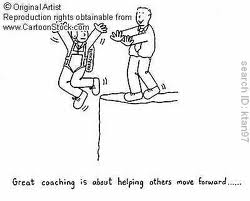
Although I have not had this experience myself, I have heard many young teacher talk with exasperation about their experienced colleagues. These teachers, looking for mentorship, problem solving methods and simple direction and assurance from their older and more confident co-workers, have complained that they are often left to their own devices. They claim that experienced teachers tend to find a comfortable groove and are reluctant to do any more than absolutely necessary.
Whilst I realise that this characterisation of experienced teachers doesn’t reflect all who fall into that category, I wonder whether teacher burnout as well as the fact that experienced teachers have reached the peak both in status and salary, are contributing factors to this likely scenario. Since these teachers have devoted decades to what is a challenging and physically taxing profession, the job of mentoring a new teacher can often be too much of burden.
If this is correct, it is quite unfortunate. Our young teachers, in my opinion, are poorly trained. Our teacher training courses are high on useless theory and low on practical instruction. I have never met a teacher who considered Vygotsky’s theory of proximal development of greater use to their day-to-day teaching than the precious but fleeting weeks spent visiting schools as a pre-service teacher.
There clearly needs to be a greater incentive for experienced teachers to help new teachers settle into their role and adjust to the dramatic change from student-teacher to actual teacher.
Last year I formulated a two-tiered approach to making best use of experienced teachers:
1. Experienced teachers who are deemed to be excelling at a certain standard are offered a mentoring role for higher wages. If accepted to take on that role, these teachers would offer new teachers the chance to spend a few days in their classroom, let them observe their lessons, give them access to the their planning material and be someone out of that teacher’s school environment who can deliver advice and guidance via email and phone. This challenges the mentor teacher to strive in their new position as well as their underling.
2. For the second category of teacher, I recommend that newly retired teachers, who have left the profession with a wealth of knowledge and an eagerness to maintain links with the profession, be paid to mentor and assist teachers who have not been performing at the required benchmarks. Instead of firing teachers in the first instance, I propose that these teachers get the opportunity to improve with a greater deal of support and collaboration.
WHAT THIS SOLUTION ACHIEVES
• Provides the opportunity for excellent teachers to be better paid;
• Allows retired teachers to maintain links with their profession and share their wealth of experience;
• Gives new teachers greater confidence and a non-judgemental mentor who they can approach; and
• Allows teachers currently not working at their premium a second chance that may reinvigorate and refresh them.
Tags:Education, Experience, Mentoring, Salery, Schools, Teacher, Teacher Training, Teachers, Teaching, University, Vygotsky, Zone of Proximal Development
Posted in Teacher Training | 2 Comments »


 Topical Teaching
