Posts Tagged ‘Teachers’

Teachers With Guns

January 21, 2011

If it wasn’t in print, you would have thought it was pure satire.  A Nebraskan senator wants to pass a bill that would allow teachers and administrators to carry concealed weapons for protection.

And that will achieve what?

Sen. Christensen explains his proposal: “I think it’s a local decision, but I think it’s important if you think about a situation that opens up where someone gets shot, that particular individual can continue shooting until police arrive. Or, you could have a security guard armed or administration—whatever you would choose to do locally to defend the situation. It would probably take care of it quickly,” he said.

The notion that the higher the proportion of people carrying guns the lower the rate of shootings is false and utterly preposterous.  Teachers in certain schools face shamefully bad conditions.  School shootings do occur and should never be underplayed.  But arming the caregiver, is the worst possible response to the problem.

Schools have to deal with the issue through constructive strategies and the safety of teachers  must be considered at all times.  But teachers are there to model positive behaviour and good decisions.  They must be there for their students.  A teacher that carries around a gun is distancing himself from all his students.  The gun becomes a representation of an “us vs them” mentality which regardless of the teacher’s school or environment, does not belong in our great profession.

Meanwhile, Christensen is convinced he’s on to a winner:

Christensen doesn’t think giving people guns can become a problem.

“I’ve never seen a gun escalate a situation,” said Christensen, “Guns don’t kill people, people do. You’ve gotta have an individual that’s out of control and at that point in time, you can have someone be shot.”

Here’s my advice for any teacher hoping to one day bring a concealed weapon into their classroom.  Find another profession … quickly!


The Education Version of Groundhog Day

January 14, 2011

In the classic 1993 Bill Murray film Groundhog Day, Murray was forced to relive the same day over and over again until he learnt from his mistakes.  Whilst only a light-hearted comedy on the surface, Groundhog Day was a timely reminder that mistakes and there consequences are repeated over and over again until they are learnt from.

Every time the curriculum changes I think of Groundhog Day.  I’ve only been a teacher for a short time, yet already I have seen the curriculum change 3 times.  First it was the CSF, then it became the CSF 2, followed soon after by VELS. And the curriculum is about to change yet again!

Why do they do it to us?  Just when you get used to one curriculum, they change it from another.

The cynic in me says the Government is bereft of ideas.  They know that education outcomes are underwhelming, that there isn’t much satisfaction in the quality of schools and performance indicators are not painting a rosy picture.  Yet, they don’t have a clue what to do about it.  They neither have the money, vision or gumption to make any real change, so they go for the obvious alternative – perceived change.

When asked to reflect on their achievements in Education, the Government will proudly point to overhauling the curriculum.  In Australia’s case, they will triumphantly declare that by introducing a national curriculum, they have been able to do what previous administrations couldn’t.

But they will know the truth all along – you can’t change the fortunes of a countries academic performance by altering and renaming a curriculum.  In fact, from my experience you can’t expect any change at all.

Even if my cynical take is wrong, and there is some good intention behind this new curriculum, it wasn’t evident in the released draft, which like its predecessors, didn’t seem to be adding anything of substance.  A bit more grammar, a deeper focus on handwriting and a greater emphasis on history sounds good.  But when it comes down to it, it is just like my boss said both this time and last time, “Don’t worry. It is going to be very similar to our current curriculum.”

From reports the states don’t want their current curriculums meddled with. Critics like Chris Berg from the Sydney Morning Herald have slammed the draft curriculum:

The plan was to have the curriculum rolled out in the 2011 school year, but only the ACT will meet that deadline.

New South Wales and Western Australia have decided to delay the curriculum to 2013. The Victorian government announced recently it would do the same. But there are problems with what’s in the curriculum too. //

Take, for example, the history syllabus. After a full quota of compulsory schooling, Australian students will be none the wiser about the origins and central tenets of liberalism: the basics of individual rights, representative democracy and the market economy, and the importance of civil society.

Not to put too fine a point on it, but these are the absolute fundamentals of Western civilisation. And they are missing from the national curriculum.

One need look no further than how the curriculum purports to teach ”struggles for freedom and rights”, a ”depth study” for year 10 students.

The struggle for liberty against tyranny is one of the most important themes of the history of the past 500 years. From the English Civil War to the American and French revolutions, the proclamation of the rights of individuals has given us a rich inheritance of liberalism and civil liberties. That, at least, is how you’d think it would be taught.

But according to the national curriculum, the struggle for individual liberty started in 1945. Because that’s when the United Nations was founded.

To hinge the next generation’s understanding of individual rights on such a discredited institution is inexcusable. And it says a lot about the ideology of the curriculum’s compilers: as if individual rights were given to us by bureaucrats devising international treaties in committee.

At the end of the day, all we are really left with is a bad case of Groundhog Day.  The results wont change, yet the same mistakes are being made over and over and over again …

Time to Show Support for Teachers

January 12, 2011

Something tells me 2011 is not The Year of the Teacher.

After the disappointment of the New York Supreme Court ruling that teachers alleged to be underperforming can be named and shamed by the media, an unfortunate trend is becoming clear –  teacher blame.

Teachers I am told, are the most bullied of all professionals.  They are subjected to bullying from a variety of sources; their superiors, parents, colleagues, students and as we see from New York, the Government regulators.  For a profession desperately looking for fresh, talented and passionate recruits, teachers have never had it so bad.

Today I read of the rise in bullying from parents through the use of social media such as Facebook.

The NAHT (National Association of Headteachers) says it receives hundreds of calls every week from teachers who are being ‘cyberbullied’ – and the majority of complaints are about parents using the web to criticise teachers or heads.

In 2009, research by the Association of Teachers and Lecturers (ATL) and the Teacher Support Network suggested 15% of teachers had experienced cyberbullying, and it is believed this figure is growing.

One English teacher in the West Midlands told the ATL: ‘I found teaching stressful already but when it got to the point where I was getting home and finding messages about me on social networking sites, or horrible photos on my computer I couldn’t cope.’

The ATL says that one teacher had a fake Facebook account set up in his name containing false sexual allegations.

Another teacher suffered stress after a video of her teaching appeared on YouTube.

The 2009 ATL research showed that 63% of teachers who had suffered cyberbullying personally said they had received unwelcome emails. Over a quarter had had offensive messages posted about them on social networking sites such as Facebook and 28% described being sent unwelcome text messages.

A 24-hour counselling helpline called Teacherline set up in October 1999 for stressed teachers in England and Wales now receives thousands of calls a month.

Teacherline reports that teachers are four times more likely to experience stress at work than employees in other professions.

It is true that not all teachers are good at what they do.  Many are way below standard.  But it’s not an easy profession and it usually isn’t the career path a person just falls into.  People usually take on teaching because they have an affinity with either child, subject or both.  Instead of bullying teachers, how about we call for greater support of teachers.  Help them improve with a positive framework rather than negative cajoling.
How about starting pro-teacher Facebook pages?  Facebook pages which call on Governments around the globe to stop using teachers as scapegoats and stop stirring mass hysteria about the quality of teachers through the media?  How about Facebook pages that seek to empower and revitalise the teacher rather than tear them down even lower, and inadvertently, tear down the fabric of this great profession with them.

A Sensitive Issue that Drives Male Teachers Away

January 11, 2011

I don’t like talking about it and neither does many of my male colleagues, but it is a major reason for why there are so few male teachers in Primary/Elementary schools.  The fear of being maliciously and unfairly accused of inappropriate conduct with students drives male teachers away from the early years.  I wrote a post just last month which showed that “the main reason (Canadian) men avoid these young grades is they don’t want to be accused of being pedophiles.”

Recently, a new training video urging teachers never to engage in physical contact with pupils, even when adjusting the position of a child’s hand on an instrument was released.

The film, called Inappropriate Demonstration, shows a violin lesson in which a pupil fails to play the right notes. The teacher explains the technique by placing a hand on the pupil’s shoulder and holding his fingers in the right position on the violin. He then explains it a second time by demonstrating on his own violin the correct position. The pupil then plays the correct notes.

The film advises teachers: “It isn’t necessary to touch children in order to demonstrate: there’s always a better way.”

Thankfully, Michael Gove, the Secretary of State for Education in the UK, condemned the video.

That approach “plays to a culture of fear” among children and adults, he said, as he ordered schools to abandon “no contact” rules between teachers and pupils. It was “positively right” for teachers to comfort distressed pupils by putting an arm around them, or demonstrate sports skills through physical contact with a child, he said.

The mother of one of my best friends is a teacher who was maliciously accused of improper conduct with a student because she touched the students hand in an attempt to guide him in correct handwriting technique.  It’s scares me personally, because as careful as I am to stay professional and squeaky clean, it is much easier (in  this respect) teaching older kids.

To make matters worse, the kids are used to getting hugs from, and sitting on the lap of, female teachers.  I literally have to tell my students on the first day that under no circumstances can they hug, pat or touch me.  They don’t understand, but thankfully they comply.

I believe that the fear of an inappropriate teacher is a natural one.  The media reports on a new  “monster” every day, who takes the privilege of teaching children and abuses it in the very worst way.  I believe that the prime responsibility is to safeguard the children.  Their safety is far more important than my working conditions and pressures.

However, all things said and done, when you are told that you can’t readjust the grip of your music student, you are reminded why male teachers look elsewhere for a career.

There’s a Reason Why Teachers Cheat

January 3, 2011

Let me say this right off the bat – I don’t approve of cheating.  It is unethical and lacks integrity for teachers to cheat.  But let’s not let that discount the likely reasons behind their dishonesty.

It’s called the NAPLAN – Australia’s version of the infamous national test.  And as the recent case in South Australia highlights, it can bring out the worst in some teachers:

A PRIMARY school teacher has been sacked and another reprimanded for cheating in national tests.

A former St Leonards Year 7 teacher was stood down following an investigation by the Education Department into her administration of the NAPLAN tests in May last year.

Correne Woolmer, who joined the Glenelg school at the beginning of 2010, admitted changing answers on a student’s test.

Ms Woolmer isn’t the only teacher to get caught, and she certainly isn’t the only teacher to cheat on the test.  I’m sure many more teachers have gotten away with doing the same thing.

The NAPLAN test like other National tests around the globe have an important function.  Their job is to give information to parents about their childs’ progress, which includes a comparison against all others taking the test in that age group.

But what it also does is set up the teacher.  The teacher carries the blame for the results.  It is the teacher that is the first port of call when parents seek an explanation – it is the teacher that is labelled as insufficient when the school analyses the data.

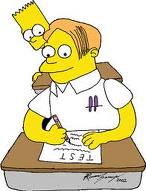
Such pressures lead teachers to teach for the test rather than the typical authentic adherence to the curriculum.  This is not the way teachers are supposed to teach.  It also puts more pressure on teachers.  Teachers are already under significant strain.  We must be mindful that this system puts them in a situation where their performance is scrutinised like never before.  And finally, a test is just a guide.  It is not a perfect form of assessment.  Many factors can cloud and effect the conclusions made by the data such as student anxiety, outliers etc.

Cheating is wrong, and teachers that cheat deserve to be punished.  But somehow I feel that by administering national tests, teachers are getting punished regardless.

The Desperate Need to Keep Students Awake

December 3, 2010

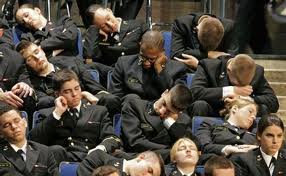
Oh, the things educators do to keep their students awake!  Engaging students are a critical part of teaching.  What we teach shouldn’t just be comprehensive and relevant, but also interesting to the children.  However, there are some terrible methods out there for attempting to bring students out of their slumber.

Take this scatter-brained idea from Germany for example:

Few things rile a teacher more than seeing a pupil chewing gum in class, but a primary school in southern Germany is now actively encouraging them to do so — in order to improve their grades.

Not allowing students to chew, but encouraging!

“Chewing gum is good for the children’s health and improves their cognitive performance,” said Wolfgang Ellegast from the education ministry in Bavaria, home to the Volkenschwand school where the new pilot project is being run.

School headmaster Siegfried Lehr agrees: “The prerequisite for learning with fun is that kids come to school without fear and that they feel happy… Therefore we are encouraging them to chew gum in break and in lessons.”

Does anyone else think that this idea is just plain loopy?  Do they honestly think that by encouraging their students to chew in class they will suddenly get happy and engaged learners?

I am not in favour of restrictive rules in the classroom, yet my school doesn’t allow chewing gum in the classroom, and I stand by that rule.  Chewing gum is messy, distracting and not at all likely to bring about positive outcomes in the classroom.

There are so many bad ideas out there in a bid to get students onside.  For example, the teacher that gives her students a 5-minute break so they can make text messages.

What’s next?  Allowing kids to kick their feet up on the desk for comfort?

Here’s an idea.  How about engaging students with interesting and exciting lessons instead of gimmicks like text breaks and chewing gum?


NAPLAN vs Core Values

October 28, 2010

The wife of Tasmanian Governor Peter Underwood, Frances Underwood, who trained as a primary educator in 1980 delivered the 2010 William Oats Memorial Lecture last night entitled “Nourishing the Spirit in the 21st century: a Challenge for Education.”

Mrs Underwood says that education must get back to core values.

“The real challenges and opportunities for education in the 21st century will only be met by re-assessing our obsession with performance testing being the only measure of educational success and by enabling well-educated passionate and creative teachers, who are at the forefront of knowledge and skill, to fire up the imagination and motivation of students,” she said.

Test like Naplan clearly put a great deal of pressure on teachers and students alike.  Whilst I think it holds lesser teachers to account for their sloppiness, it complicates and stifles the average, hardworking teacher.  Whilst I’m not sure about what “core values”really means, performance testing seems to be quite problematic.