Posts Tagged ‘Teachers’

Do Experienced Teachers Give Enough Back to the Profession?

May 21, 2012

Although I have not had this experience myself, I have heard many young teacher talk with exasperation about their experienced colleagues. These teachers, looking for mentorship, problem solving methods and simple direction and assurance from their older and more confident co-workers, have complained that they are often left to their own devices. They claim that experienced teachers tend to find a comfortable groove and are reluctant to do any more than absolutely necessary.

Whilst I realise that this characterisation of experienced teachers doesn’t reflect all who fall into that category, I wonder whether teacher burnout as well as the fact that experienced teachers have reached the peak both in status and salary, are contributing factors to this likely scenario. Since these teachers have devoted decades to what is a challenging and physically taxing profession, the job of mentoring a new teacher can often be too much of burden.

If this is correct, it is quite unfortunate. Our young teachers, in my opinion, are poorly trained. Our teacher training courses are high on useless theory and low on practical instruction. I have never met a teacher who considered Vygotsky’s theory of proximal development of greater use to their day-to-day teaching than the precious but fleeting weeks spent visiting schools as a pre-service teacher.

There clearly needs to be a greater incentive for experienced teachers to help new teachers settle into their role and adjust to the dramatic change from student-teacher to actual teacher.

Last year I formulated a two-tiered approach to making best use of experienced teachers:

1. Experienced teachers who are deemed to be excelling at a certain standard are offered a mentoring role for higher wages. If accepted to take on that role, these teachers would offer new teachers the chance to spend a few days in their classroom, let them observe their lessons, give them access to the their planning material and be someone out of that teacher’s school environment who can deliver advice and guidance via email and phone. This challenges the mentor teacher to strive in their new position as well as their underling.

2. For the second category of teacher, I recommend that newly retired teachers, who have left the profession with a wealth of knowledge and an eagerness to maintain links with the profession, be paid to mentor and assist teachers who have not been performing at the required benchmarks. Instead of firing teachers in the first instance, I propose that these teachers get the opportunity to improve with a greater deal of support and collaboration.

WHAT THIS SOLUTION ACHIEVES

• Provides the opportunity for excellent teachers to be better paid;

• Allows retired teachers to maintain links with their profession and share their wealth of experience;

• Gives new teachers greater confidence and a non-judgemental mentor who they can approach; and

• Allows teachers currently not working at their premium a second chance that may reinvigorate and refresh them.


If You Respect Teachers, Please Stand Up

May 15, 2012

There is a growing hostility against teachers from the Government down, and children are picking up on it. There is little use reinforcing the message that respect for teachers is paramount to students whose own parents openly treat the classroom teacher with disdain. Teachers are not trusted to do their job, are having to write-up ludicrously long and detailed planners to prove they are covering the curriculum and are subjected to a distasteful smear campaign from elements within the educational system looking for someone to blame.

Why should we be surprised if children exploit the lack of respect for teachers within elements of society?

A STUDENT holds a replica pistol to the head of a staff member in the playground – while a Year 9 boy at another school sprays urine on his teacher.

These disturbing scenes are happening at schools across NSW, just two of 218 serious incidents logged during term four last year in reports to the Department of Education and Training.

The reports show teachers being abused, assaulted and sometimes forced to disarm out-of-control students during fights.

One student fight even featured a didgeridoo as an improvised weapon, while in another incident a pupil stole a teacher’s handbag and made off with her car.

Last November, a Year 8 student threatened a teacher with a replica pistol from the drama department at a south coast school. The deputy principal tried to intervene and was abused by the student.

Meanwhile, at an Illawarra school, a Year 9 student urinated into a bottle and sprayed it on a male teacher on playground duty.

Precise details of the schools, students and teachers involved are removed from the reports, which are published by the department with one-term delays.

A department spokesperson said nine in 10 schools did not report a single incident during term four.

“From time to time, incidents affect schools just as they affect society,” the spokesperson said.

Psychologist Dr Michael Carr-Gregg said the number of violent incidents in schools wasn’t rising but were being noticed and documented “more vigorously”.

“Teenagers tend to be impulsive – all accelerator and no brakes,” Dr Carr-Gregg said.

“Violence as entertainment has desensitised teenagers and made them see violence as a problem solving device.”

He said another factor was teenagers becoming disaffected with rates of family breakdown increasing.

Kids Don’t Need Gold Stars

May 11, 2012

In my opinion, the look that children give when they receive a gold star is misleading. Sure, they look excited, but that excitement is sometimes relative. In truth, kids don’t need gold stars and essentially, that is not what they are after when they produce good work.

What they really want is something – anything. They want a compliment, a smile, a gesture that will make them feel better about themselves. School can be such an overwhelming place. Teachers are so good at being critical. Critical of the way students dress, sit, answer back, talk, the speed in which they work, the neatness of their handwriting etc. The gold star doesn’t just signify an achievement of sorts, it breaks the cycle of criticism and balances the ledger somewhat.

As teachers, we need to be aware that our students crave our acceptance and approval. They may superficially be doing this by trying to earn a gold star, but essentially, all they really want is a confidence boost.

I enjoyed the tips for showing recognition to students by bestselling author and confessed ‘gold star junkie’, Gretchen Rubin:

1. Be specific. Vague praise doesn’t make much of an impression.

2. Find a way to praise sincerely. It’s a rare situation where you can’t identify something that you honestly find praiseworthy. “Striking” is one of my favorite fudge adjectives.

3. Never offer praise and ask for a favor in the same conversation. It makes the praise seem like a set-up.

4. Praise process, not outcome.This particularly relevant with children. It’s more helpful to praise effort, diligence, persistence, and imagination than a grade or milestone.

5. Look for something less obvious to praise – a more obscure accomplishment or quality that a person hasn’t heard praised many times before; help people identify strengths they didn’t realize they had. Or praise a person for something that he or she does day after day, without recognition. Show that you appreciate the fact that the coffee’s always made, that the report is never late. It’s a sad fact of human nature: those who are the most reliable are the most easily taken for granted.

6. Don’t hesitate to praise people who get a lot of praise already. Perhaps counter-intuitively, even people who get constant praise – or perhaps especially people who get constant praise – crave praise. Is this because praiseworthy people are often insecure? Does getting praise lead to an addiction to more praise? Or – and this is my current hypothesis – does constant praise indicate constant evaluation, and constant evaluation leads to a craving for praise?

7. Praise people behind their backs. The praised person usually hears about the praise, and behind-the-back praise seems more sincere than face-to-face praise. Also, always pass along the behind-the-back praise that you hear. This is one of my favorite things to do!

95% of Educators Claimed to Have Been Bullied

May 8, 2012

The plight to stop children from bullying others is a hard enough task, What makes it even more difficult, is the fact that the very same people entrusted with controlling the issue are bullied themselves:

BULLYING of staff is rife within Australian schools, with parents and students among the top perpetrators, research reveals.

A staggering 95 per cent of educators claimed they had experienced at least one of 42 bullying behaviours identified by the researchers.

The most common was personal confrontation or professional destabilisation, often resulting in a deterioration of mental and physical health.

The new book Bullying of Staff in Schools – to be launched by former defence force chief Peter Cosgrove tomorrow – examines bullying where an adult is either the perpetrator or the target.

Researchers Dan Riley, Deirdre Duncan and John Edwards surveyed 2529 employees at schools across all sectors. Respondents reflected the national profile of 83 per cent female and 27 per cent male educators.

SCHOOL bullying victims have received almost $1 million in compensation from the Department of Education since January last year.
MORE parents are becoming involved in cyber-bullying, taking up disputes involving their children, a federal parliamentary committee has been told.

Two-thirds were teachers – more than 50 per cent had 21 years or more teaching experience – one in five executives and one in 15 principals.

According to the research, 81 per cent experienced bullying from parents, and 79 per cent named colleagues, closely followed by executives.

Students were named as bullies by 75 per cent of respondents, about seven percentage points higher than principals.

The principal was identified as the most persistent bully, followed by members of the executive and colleagues.

Educators said the most common form of bullying behaviour was questioning decisions, judgment and procedures, followed by tasks set with unreasonable or impossible targets or deadlines, and then being exposed to an unmanageable workload.

This highlights the uselessness of bullying policies and programs. For us to get on top of this problem, we must address bullying of all natures to all parties. Until the culture of bullying is remedied from the Principal down, our children have no chance!

If You Can’t Beat Them …

May 1, 2012

When teaching maths, I put a large emphasis in imparting the skills through game play. It is amazing what you can teach with a dice, some counters and a pencil and paper! Kids love games. They love the competitiveness of them and the opportunity to socialise while the game is going on.

That’s why I am not surprised that video games have become more popular as a teaching tool. Up until now, video games have been seen as a distraction. It seems as thoug educators have had a change of heart and decided that if you can’t beat them, then join them.

VIDEO games could replace blackboards as parents and teachers increasingly turn to gaming to teach kids.

Seven of 10 Aussie parents see games as an educational tool, a Digital Australia report says.

The number of parents playing games with their children has risen to more than 78 per cent.

Schools and teachers are embracing games in the classroom, as well.

At Fitzroy North primary, gaming has been built into its curriculum in the past four years, from teaching maths with apps on a tablet to learning about ethics and governance with simulator games such as SimCity 4 and Civilization.

Teacher Kynan Robinson, who heads the school’s computer program and admits his son became interested in reading through Club Penguin, says children even get a chance to develop their own games.

“Gaming is engaging and it’s relevant to what kids are into,” Mr Robinson said.

“It’s much more stimulating than a blackboard and chalk.”

In the next three years the value of Australia’s video games industry is expected to top $2 billion.


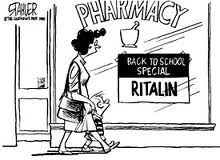
ADHD Diagnosis a “Convenient Out For Lazy Teachers”: Dunham

May 1, 2012

I commend for her courageous piece on the rising rates of ADD and ADHD diagnosis. Ms, Durham refuses to pull punches, raising a view I have been quite vocal about – the dubious role of teachers in the diagnosis process. Deborah suggests that teachers may be taking the lazy approach instead of the responsible one. She also raises strong arguments about the lack of research about the long-term ramifications of taking Ritalin, the contribution of diet to a child’s mental state and the lack of engagement and stimulation in school.

I’m starting to wonder if it’s possible for doctors, teachers and parents to diagnose kids with anything other than  Attention Deficit Disorder? According to a new study, the rate that kids are diagnosed continues to increase by 5.5% each year, but are there really that many more kids with ADD and ADHD? It seems like this has become a convenient “out” for many lazy teachers, doctors and parents who don’t know what to do with kids who don’t fit the “mold”.

The rates of ADHD diagnosis in the developed world increased annually by an average of 3% from 1997 to 2006 and 5.5% from 2003 to 2007 in the U.S. But researchers wanted to know–as did we–how accurate these diagnoses really are.

Led by a team of researchers at the University of Basel’s Katrin Bruchmueller, 473 child and adolescent psychotherapists and psychiatrists across Germany were surveyed on how they diagnose people with ADD or ADHD. In three out of the four cases, the described symptoms and circumstances did not fulfill ADHD diagnostic criteria. In fact, many mental health practitioners were found to base their decisions on unclear standards.

For example, male patients were more readily diagnosed when they displayed symptoms such as impulsiveness, motoric restlessness and lack of concentration–all things that can be perfectly normal when growing up. Boys were more likely to be diagnosed than girls, and on the same note, male doctors tended to diagnose ADHD more frequently than their female counterparts.

In short, what the researchers found what that ADHD is over-diagnosed because doctors rely too much on their intuition and not on a defined set of criteria.

All of this is troubling because it means that kids are the ones who are suffering as a result. Instead of taking the time to accurately diagnose them (if there is even anything at all wrong besides just being a “kid”), they are put on brain-altering drugs which is risky for anyone, especially someone who is still young and developing.

More than three million kids in the U.S. take drugs for their supposed difficulty focusing. In 30 years there has been a twentyfold increase in the consumption of these. And while medications like Ritalin may help increase concentration in the short term, not enough is known about the long-term health consequences–although some say drugs like this can stunt a child’s growth, other speculate that they can cause heart problems and even sudden death.

But is it really possible that three million kids in our country really suffer from ADD or ADHD, or has this just become a catch-all diagnosis by lazy doctors, parents and teachers?

We know that an unhealthy diet, sugar, processed foods, stress and a lack of sleep and exercise can all contribute to someone’s mental state. So, it’s entirely possible that our society has become so unhealthy that we are the ones creating these problems in our kids. And it’s not always synthetic drugs that are the answer.

The other issue that could be a major factor here is that kids are not engaged and stimulated in school enough. Taking millions of kids who all have different learning styles and trying to force them to comply and fit into one method of learning does not work. No one can possibly be expected to sit at a tiny, uncomfortable desk for eight hours a day in a classroom with florescent lights and the blinds drawn on the windows. Yet, when a child doesn’t conform, they are thought to have ADD.

Perhaps instead of jumping to conclusions and forcing our kids to swallow mind-altering drugs in order to fit our ideals of how they should behave, all of us–parents, teachers and doctors–should take more time to fully evaluate the unique learning style and personality that each child has and then alter how we interact with them accordingly. That’s not to say that everyone is lazy (because they aren’t) and there aren’t some legitimate cases of ADD (because there certainly are), but research like this points to the fact that we need to take more time and better understand how to consistently diagnose this disorder.

Tips for Helping Your Child Adjust to a New School

April 29, 2012

Many parents don’t realise just how difficult it is for children to adjust to a change of school. School cultures can vary radically and the look and feel of a new school (not to mention the rules) can be completely different to what the child has experienced before.

Jason Ladcock from healthguidance.org has compiled a list of helpful tips for assisting children in managing the transition to a new school:

• Before the first day of school, make an appointment to meet with the school principal. Introduce your child to the principal and his new teacher. By doing this, you are helping the child feel comfortable because they feel like they already know someone in their new school on their first day.

• When the child isn’t present, talk to the teacher, and discuss your child’s strengths and weaknesses. This will prevent the child from being placed in classes that are too difficult or easy for them. Trying to keep up in a class that is too hard for your child can add extra stress for them at a time when they don’t need it. Being placed in a class that is too easy has its own problems. Your child may become bored and act out or just not fit in with the other children. Talking with the teacher and ensuring proper placement will ease the transition into a new classroom.

• Be positive. The parent’s attitude has more affect on the child than all the other factors put together. If you have a negative attitude about the move or show nervousness, it will affect your child. Be positive and talk about what a good experience it is to have the “opportunity” to move to a new city and school. Explain that it offers all sort new experiences that they will enjoy.

• Acknowledge your child’s feelings and let him express them. Be sure to tell your child that he can talk to you at any time about problems he is having at school or feelings that he is having. Knowing that you’re there for him will take a lot of stress away.

• Make the first day at school as smooth as possible. Prepare everything the night before – clothes, lunches, school supplies, etc. Rushing on the first day at his new school will make the child nervous before he ever enters the school.

• Let your child know that he is welcome to invite new friends home from school.

• Host an activity at your home for your child’s classroom. This is a great way for your child to get to know the other kids.

• Help your child join extracurricular activities at school. When your child has a common interest with other kids, it is easier to get to know them.

I hope these tips prove helpful. I would love to get your feedback about what has worked for you.

Where are the Teachers When a Fight Erupts?

April 17, 2012

Either it’s just me or the quality of yard duty supervision is severely lacking. In the short time I have been working on this blog, I have encountered many cases of schoolyard bullying occurring amongst a crowd of student onlookers, yet without a teacher anywhere in sight. Either this has to do with an awareness issue among teachers or schools that have yet to properly address the supervision requirements for their school. There should be sufficient numbers of teachers on duty to deal with incidents as well as to patrol potential blindspots.

Here is but one example of a fight that occurred without being picked up by a teacher:

Marshall Brooks’s cheekbone was broken in two places and his eye socket shattered when one of his classmates gave him a vicious beating last week just outside their Westwood Senior High School yard.

But what was most horrifying to the seasoned police officers and school principal who viewed video footage of the attack in Hudson is that not one of the 50 or so students looking on tried to stop the beating or bothered to call 911.

Instead, they captured the action on their cellphones, eager to upload the drama to the Web. Only after the damage was done did someone step in.

“I saw the video and can’t believe no one intervened, or called police or even tried to help the young man,” said Sûreté du Québec spokesperson Sgt. Bruno Beaulieu.

“It was an unfair fight, like between David and Goliath, with the attacker at least twice the size of the victim.”

A 17-year-old student at the school, who can’t be named because he’s a minor, was charged with assault causing bodily harm and was released to his parents on a promise to appear in court at a later date.

He’s not allowed on school property for the rest of the academic year.

Brooks, 17, is recuperating at his Rigaud home after having reconstructive surgery at the Montreal General Hospital. Doctors feared he might lose the sight in his left eye, but, fortunately, it has returned – albeit a bit blurry.

“The kids didn’t seem to get that what they were watching was something dangerous,” said Brooks’s mother, Tina.

“Some were his friends and didn’t or couldn’t do anything and instead of calling 911, they were creating something cool and funky for Facebook.”

Brooks said he remembers being put in a headlock, pulled to the ground and punched repeatedly. But he said the fact that no one came to his rescue – and worse, recorded his suffering – doesn’t surprise him.

“It’s high school tradition to record everything and every fight,” he said.

“And compared to what you can find on TV or the Internet, a fight is nothing.”

The video of the beating has since been taken down from YouTube.

Australia has very strict procedures and regulations when it comes to yard duty. Perhaps these standards should be adopted worldwide.

Students Should not be Prosecuted for False Allegations

April 10, 2012

Those of you who follow my blog know how concerned I am about the threat of false allegations against teachers. Data has shown that it is one of the major factors for driving potential male teachers away from the profession. I have a friend who was accused of innapropriate touching by a child for doing nothing more than guiding the child’s hand in a handwriting exercise. She did nothing more than help the child hold the pencil correctly and it landed her in hot water, until the child recanted on his original claim.

But as much as I abhor false accusations, I am aware that the role of the teacher is to put the welfare of the child over their own. If students were prosecuted for false claims, it would have dire consequences for the wellbeing of the student population. The threat of prosecution would ultimately deter students from speaking up against teachers who have genuinely molested them. It is already difficult for victims of sexual assault to speak out and name their perpetrators, lets not put any stumbling block that may keep them quiet.

Still, it seems as though I am in the minority of teachers on this one:

Pupils should be routinely reported to the police after making unfounded claims simply to get their own back on teachers, it was claimed.

The NASUWT union said lying schoolchildren “must understand there is a consequence” to making allegations that are “unjust and malicious”.

The comments came as new figures showed the vast majority of claims made against teachers were unsubstantiated.

Data from the NASUWT shows that fewer than one-in-20 allegations of unlawful behaviour made against teachers last year – including assault, sexual abuse and serious threats – resulted in court action.

Addressing the union’s annual conference in Birmingham, activists insisted that pupils who make false claims should be prosecuted.

Ian Brown, a teacher from North East Derbyshire, said: “Schools must have procedures in place where, when allegations are made, the pupil is made aware at the earliest point of the investigation, through their parents if necessary, that if they wish to proceed with the allegation and are found to be lying, then they will face sanctions.

“They must understand there is a consequence in making those allegations if they are found to be unjust, lies and malicious.”

According to figures from the NASUWT, most allegations made against teachers last year failed to result in court action.

Some 103 claims were made, with no further action being taken in 60. Some 39 are yet to be concluded, although the union claim the vast majority are unlikely to ever make it to court.

Just because most claims against teachers fail to lead to conviction doesn’t mean they were erroneous. Protecting the welfare of children is tantamount, even when it comes to the expense of teachers.

As much as I would like to see children punished for any salacious lie, I desperately don’t want any prohibitive regulation that would deter genuine victims from seeking justice from their perpetrator.


Teachers Advised Not to Report Acts of Violence

April 8, 2012

Surely teachers are one of the most important figures in the educational process. If you were to do a hierarchy of influence when it comes to the education of a child, surely the teacher would feature prominently.

Why then, are teachers treated as if they offer next to nothing? Why is such a crucial ingredient in successful educational outcomes disrespected to the point where they aren’t able to defend a loss of dignity or report a physical assault?

The story below may come from New Zealand, but it looms as a universal story if the treatment and welfare of teachers doesn’t improve dramatically:

A teacher is punched in the face, another is shoved in the chest and their lunch stolen, one is regularly verbally abused while another has their car vandalised. But at the schools’ request, none of it is reported to police.

Post-Primary Teachers Association president Robin Duff called the situation “intolerable”.

He said, in the PPTA News, the teachers’ union could not continue to be “complicit in this conspiracy of silence” that concealed the level of violence within schools.

He said competitiveness in schools gave them an incentive to hide issues of violence towards teachers and staff, and some schools did not want police involved because it could lead to negative publicity.

The national executive was “particularly concerned” to learn that some schools were actually forbidding teachers from reporting instances to police.

In one case a teacher was sitting in their classroom eating lunch when a student walked in and punched them in the face. The school told the teacher not to go to police because it would be dealt with internally. Nothing happened.

Another a teacher was shoved in the chest and their lunch was taken.

There were also numerous reports of teachers being punched, kicked or threatened, and property including cars and houses, being vandalised.

One teacher said every teacher knew a colleague who had been verbally abused, physically threatened or suffered instances with students out of control and a risk to themselves and others.

“Senior management of schools are under pressure to reduce instances of suspension and expulsion and we all know of instances where there is pressure not to report assaults on persons, or criminal damage to teachers’ property.”

Standardised testing, dismissing so-called “poor teacher”, increasing teacher’s responsibilities and paperwork demands are all methods for improving the academic standards of schools.

I would argue that all those methods are doomed to failure. Any other initiative will have a similar fate, unless it comes on the back of a recognition that the teacher is a crucial stakeholder in the education of our children. Until they are respected, supported and appreciated, our children are unlikely to reach their potential.