Posts Tagged ‘Teacher’

Secret Mobile Phone Footage Catches Out Another Teacher

November 19, 2011

Even though I am not in favour of children bringing mobile phones inside the classroom, I am not in the least bit sympathetic when teachers get caught out as a result of being covertly filmed by students.

With a phone camera, a special-needs student in New Jersey managed to turn the tables on a teacher who had been bullying him.
US-based ABCNews.com quoted the school district superintendent as saying teacher Steven Roth now faces disciplinary action for his actions.
The ABCNews.com report said Roth was heard on the recording calling the 15-year-old student a “tard” and saying, “I will kick your a** from here to kingdom come.”
The ABCNews.com report said that when the boy, who has ADHD and emotional issues, first told his parents about Roth’s bullying, they were skeptical.
But eventually, his father gave him permission to take his cell phone to school and record the bullying – and the boy did that last Oct. 24.
On the video, which lasted nearly 10 minutes, the boy had asked the teacher several times to stop calling him “special,” provoking an outburst from Roth.
The ABCNews.com story said the video also showed Roth to appear to use physical intimidation, walking up to the boy and standing directly in front of him.
The boy’s mother said she was appalled after watching the video. “I’m just appalled. I’m sickened and appalled,” she said.
Roth has been at the school for eight years, according to the boy’s mother.
“Teachers are supposed to build students up and build their self esteem, not rip it down. You don’t scream at them … degrade and threaten,” she added.
Mr. Roth may feel set-up or unlucky that he was undone by a child contravening school rules. I think, by the sound of it, he’s lucky it took so long for him to be exposed in the first place.

Teacher Blunder Causes Nightmare for Students

November 16, 2011

Can you imagine the distress that the students must have felt when they discovered the novel they prepared for wasn’t actually covered in the exam?  What do they do?  Try and write about novels they haven’t read?  Can you imagine the teacher’s embarrassment when he/she was informed of the huge error?

SHOCKED students from a private school in Melbourne’s southeast were unable to complete a VCE exam because they had been taught the wrong text.

Authorities have launched an investigation after eight pupils from Lighthouse Christian College in Keysborough spent a year studying a novel not on the prescribed reading list.

The error was discovered last Thursday afternoon – when the year 12 students could not find Julia Leigh’s The Hunter on their literature exam paper.

The VCE English exam is a 3-hr exam.  Unlike all other subjects, it is not an elective. Every Year 12 student in the State sits for it. To study a text, night and day, only to find out during the exam that it wasn’t on the prescribed reading list would have been an earth shattering revelation for the students involved.  If it was me, I would have panicked.  It would have ruined the whole exam for me.

Mistakes happen, but this was a big one!

Addressing Teacher Burnout

November 4, 2011

Teacher burnout is a significant problem that strike even the very best of teachers.  Even the most passionate and dedicated of teachers struggle to see out a term out without getting sick or feeling extremely fatigued.

The question is, how do we address this problem?

Research shows the teaching profession has the highest burnout rate of any public service job. What can we do to keep the best and the brightest teachers in the classroom?

In April, the American Federation of Teachers (AFT) and the American Institutes for Research (AIR) released the report, “Workplaces That Support High-Performing Teaching and Learning: Insights From Generation Y Teachers.”Gen Y teachers—that is, those under 30 years of age—account for at least one in five teachers in US classrooms today. They start out intending to make teaching a lifelong profession. However, according to the report, young teachers leave the profession at a rate 51 percent higher than older teachers and transfer to a different school at a rate 91 percent higher than their older colleagues. Studies also show that the national teacher-turnover rate costs school districts approximately $7 billion annually.

In the AFT/AIR report, young teachers say they want:

  • Feedback on their performance and to be evaluated in a fair way
  • Time to collaborate with their colleagues
  • Differentiated pay for high performance
  • Technology to provide engaging and effective lessons, as well as to support collaboration with other teachers through, for instance, videos and conferencing technology.

I agree with every point, but have a problem with the third one.  Whilst I believe Governments should look into a differentiated model of pay for high performers, I don’t believe such an initiative would have any bearing on cases of teacher burnout.

The list of proposed changes by young teachers above is most fair and reasonable.  If responded to, the outcomes could be quite positive all around.  It’s certainly time to better address teacher burnout.  It’s an issue that cannot be dismissed and will not go away.

The Reason Why New Teachers Often Struggle

October 31, 2011

Ofsted is wrong. Teacher training doesn’t need to be tougher, it needs to be smarter. The reason why our new teachers find it so hard is not because they cruised through their training but because their training didn’t prepare them for the classroom.

Tougher teacher training is not going to achieve anything:

Tougher training should be given to teachers in a bid to raise standards in the classroom, an education watchdog has proposed.

The guidelines, drawn up by Ofsted and published on Monday, would see a greater emphasis on teachers’ behavioural management and ability to teach pupils to read, including those with special educational needs.

The ways in which trainee teachers are currently assessed would also change; inspectors will rate trainees’ effectiveness in few categories but according to a tougher criteria. The inspection will include an increased focus on trainees’ subject knowledge and the quality of training.

My University course was as tough as they come, but it was too steeped in the theoretical.  I needed far more exposure to classrooms than 5 weeks in year one and 9 in the second and final year of my degree.  I needed to see how different teachers and different schools operated. I needed to be in touch with resources that was shown to work and methods that I could employ later on.

Instead, I was treated to mindless theory and useless advice.  It was an extremely tough course, but one that offered me precious little in terms of real experience and practical insight.

I’m Glad I’m a Teacher and Not a Parking Inspector

October 31, 2011

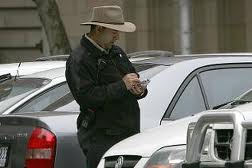
Today I was fined by a parking officer for parking in a permit zone. I had only left my car for a few minutes, and clearly that’s all it takes.

On my way back from the shops I noticed a parking inspector processing a ticket by my car. I asked him what I did wrong. I pointed out the 1 hour parking sign. He pointed to another small sign among others that notified those with good eyesight that the spot was a permit zone on weekends but fine during the week.

I told him that I was only gone for a second and that I had made an innocent mistake. He didn’t pay attention. My daughter cried sensing something was wrong and becoming unsettled by the man’s presence. The man ignored her and kept on typing.

$75 – that’s what the tiny mistake cost me!

I realise that the man was doing his job. He probably has a wife and family to take care of and bills to pay. I don’t blame him for his actions or diminish his right to take on this job.

But ultimately, I’m so glad that I am a teacher and not a parking officer.

Parking officers serve no real value to the community. They are employed by council workers who should have enough revenue to waste through our overpriced rates. But no, through parking infringements, they have another steam of revenue they can waste in good measure.

Nobody is glad to see a parking inspector walking around. Nobody goes to lengths to welcome them or engage in small talk. Their job is to prey on people’s mistake and slug for an inordinate amount of money.

Teaching can be so much more than that. We can represent all that’s positive about this world. We can be mentors and role models. We can help children grow to reach their potential.

Unfortunately, we can also do a lot of damage. If we are not good at our job or our heart isn’t in it, we can be the manifestation of what is wrong with this world.

That’s the great challenge for teachers. To be the polar opposite of a parking inspector.

The Tragic Loss of a Student

October 12, 2011

I recently read a very sad blog post written by notswallowedinthesea.

I never imagined this could happen to me… Especially so early on in my teaching career!

But yesterday, first day of Term 4, and in all my excitement, I went back to the school where I teach music part time, excited to see my students and teaching them all the great things I have planned for them – only to be whisked into the staffroom and briefed by social workers on “how to deal with a death in school.” I looked around confused before the assistant principal came up to me and whispered in my ear that one of our prep kids was hit by a truck during the holidays in front of his mum and older sister (who is in Grade 2).

The AP told me the name of the student but it went past my head. I asked for the name again but it didn’t ring a bell. AP tried to describe him: “little blonde one”. There are so many “little blonde ones”. Which one? When I realized I did not recognize the name I sighed in relief, but only for a second. Because then I shuddered at the thought of not knowing the student. How on earth could I NOT know? I kicked myself for not learning the names of all my students soon enough. I felt an overwhelming sense of guilt and couldn’t wait to break away from the staff room to locate the class list and photo so I can put a face to the name of the student. I have 14 music classes and about 20-28 in each class, so yes, I still don’t know the names of all the students! As the social worker was briefing us, I went through the faces of all my prep kids, trying in vain to remember Rex. Rex, the name is very familiar but I couldn’t put a face to it!

When the briefing was over, I spoke to the school counselor who gave me a bit more details about the accident, and pointed to me a picture of Rex. There he was, the little blonde one. Immediately I knew who he was! He was in my Top 5 students in the final class before the holidays! Sweet smiling Rex. Suddenly the memories overwhelmed me and I felt everything from grief to guilt. Grief because I had lost a student through the worst circumstance, and grief because I wished we could have spent more time together – or that I would have remembered him! It pains me that I couldn’t remember him in the first instant! Why didn’t God give us more time together? Why was he taken away so suddenly? Why hadn’t I paid more attention to him? Why couldn’t I remember him?!

It was awful. I wanted to cry but I couldn’t because my first class came in. I tried my best to hide my tears and answered questions about Rex as honest as I could without breaking down. I had never been in such a situation before, and I found it extremely difficult replying to students who have questions such as : “Why did it happen?” and “Where is he now?”

I know for a fact, because of my faith, that God is taking care of him, that things happen for a reason and that God is in control. But I cannot say this to my kids as I am not teaching in a Catholic school and I don’t want to cross any lines or upset any parents. How can I answer questions like these? I ended up avoiding them as much as I could!

The last class yesterday was Rex’s class, and I knew the moment the students came in that they were itching to tell me about Rex, about why he wasn’t in class and why he was never going to come back. But I went straight into my lesson, avoiding any questions, claiming I do not have time and that we had a lot to get through.

I had a lot to get through… a lot of emotions to get through. At lunch time I stumbled across Rex’s music book, I noticed his work for the first time. 2 weeks ago it was just a book belonging to one of the preps, just a book among the statistics, with scribbly drawings and terrible colouring techniques. Now, it is the precious work of a child no longer here on earth, and the horrifying truth that the child has had only 5 years in this world… not enough to learn how to colour in the lines, not enough to learn to write his name properly… not enough! Not enough!

I don’t know if I am angry. I am definitely not bitter. I know these things happen, and tragedies occur throughout the world. Who am I to complain and pound heaven for an answer? But the fact that it happened, TO ME, at this time has made me realize immensely how precious life is, how precious teaching is, and how fragile we human beings are.

While singing with the Preps yesterday I found myself staring into each student’s eyes, trying to take in as much of them as possible, drinking in their personalities and hoping that they will all come back again next week. I do not want anyone else to leave! I do not want any of them to get hurt!

But I cannot save them all… and I did not save Rex. Rex is gone. My class of 21 preps is now down to 20. He was hit by a truck, and died at the scene. Rex, who only 2 weeks ago I had given a piece of chocolate cake for making it into the Top 5 because he sat patiently for his book while others were shouting for it. Little blonde Rex.

I find myself looking towards the right everytime I pass his classroom to go to the staffroom or toilets. I keep looking because I still see his photo in the class wall, on the class door, on his table, his book shelf, his bag shelf, his music book…

I am only in my first year of teaching, and already I have had to deal with a student’s death. I wonder how much more will come? How much more can I take?

I was wondering if you have experienced something similar?  If so, what advice do you have for this teacher to help her get through this emotionally traumatic experience.

The Motivation of a Bully

October 11, 2011

Recently I wrote about a cyberbully’s motivation.  The same can be true of a conventional bully:

It is my belief that cyber-bullying is often based on “dominance” and “popularity” rather than “hate”.  I don’t think most cyberbullies hate their victims.  Instead, I think they see them as stepping-stones to wider acceptance from their peer group.  Often the victims are minorities or outcasts.  The pressure to be in the “in group” has always been high.  For an “in group” to exist there needs to be a clearly defined “out group”.  It is often seen as a sort of right of passage for someone seeking popularity to kick the easy target.

This view seems to be backed up by a recent study conducted by CNN’s “Anderson Cooper 360°”:

A new study commissioned by CNN’s “Anderson Cooper 360°” found that the stereotype of the schoolyard bully preying on the weak doesn’t reflect reality in schools.

Instead, the research shows that many students are involved in “social combat” — a constant verbal, physical and cyber fight to the top of the school social hierarchy.

“Kids are caught up in patterns of cruelty and aggression that have to do with jockeying for status,” explains Robert Faris, a sociologist whom “Anderson Cooper 360°” partnered with for the pilot study. “It’s really not the kids that are psychologically troubled, who are on the margins or the fringes of the school’s social life. It’s the kids right in the middle, at the heart of things … often, typically highly, well-liked popular kids who are engaging in these behaviors.”

Faris, along with the co-author of the study, Diane Felmlee, also found that bullies, whom they call aggressors, and victims are not defined roles, but in many cases, they can be the same person. The higher students rise on the social ladder, the more they bully other students, and the more other students bully them.

“When kids increase in their status, on average, they tend to have a higher risk of victimization as well as a higher risk of becoming aggressive,” Faris says.

The study was conducted this spring at The Wheatley School, a nationally top-ranked high school on Long Island, New York. More than 700 students at the school were given a survey with 28 questions on aggressive behavior four separate times throughout the semester. They were also given a roster of the entire school in which every student had an identification number and kids were asked to write down specifically who did what.

This is part of the reason why I am so critical of the way bullies are handled at some schools.  So often the emphasis is on the actions of the bully and not on the social environment that encourages bullying behaviour in the first place.  That is why so much of  my energy is devoted to changing the social fabric of my class.

After all, bullying isn’t a priority – it is THE PRIORITY.  As a teacher, I am entrusted not with people’s money or belongings but with the most important and precious things they have – their children.  It is my responsibility to ensure that they are safe and secure.  Sure, I have to teach them and help them grow academically, but even more so, I have to do my best to make sure that the child they dropped off at my classroom is going to come back in as good if not better emotional shape than when they arrived.

When I speak to my class at the beginning of the year, I tell them there is a sure-fire way for them to have to repeat the year a second time.  It’s not if they find the work difficult or are struggling to pass assessments – it’s if they are not treating their classmates with respect.  Because if they are not ready to treat others with respect, they are not emotionally ready to go up a year level.

I’m not joking.  I really do mean it.

There is a lot of talk about ‘child centered learning’ vs ‘teacher centered learning’.  I prescribe to neither.  Instead, I believe in what I call “class centred learning”.  The main focus of my teaching is that everyone in the class must respect each other.  It is the fundamental rule for assessing my own performance.  They don’t have to be best of friends, but they absolutely must respect each other.  And ultimately, it is my duty to empower the class and create an environment of closeness and mutual respect.

Does it mean that there is no bullying in my classroom?  Absolutely not.  I wish.  I’m only an ordinary teacher.  What it means is, I take more interest in the welfare of my class than any other consideration.

On the topic of bullying, I again strongly recommend (not for the last time) this most brilliant anti-bullying film developed by young students in their own free time.  It is the best of its kind by a long, long way!


Teaching is Worth It!

October 5, 2011

People who don’t know me well assume that I fell into teaching because it pays my bills.  They look at a male primary teacher and think that I must have been low on choices to pick a profession that the average man wouldn’t opt for in a million years.

Their impressions are all wrong.  In fact, I did have choices, but all I wanted to do was to teach.  It’s hard to explain to those who associate teaching with low pay, long hours, high stress, immense pressure and classroom management headaches.

I read a brilliant piece by student teacher Stephanie Vincent, entitled Why I Really Shouldn’t Be a Teacher. She lists 3 reasons why she shouldn’t go down the path she is going – the workload, lack of recognition and the challenges stemming from difficult parents.

Yet, with all those detracting factors, she is very happy with her choice:

By becoming a teacher I will be lucky enough to spend every day doing something that I’m passionate about. From the first day of my teaching practicum I felt as though I had entered a sacred world, and I can confidently say that I want to spend my future there. Quite simply, I love teaching and children.

Luckily, I don’t seek recognition or a prestigious job. I want a job that excites me. Every day students remind teachers why they teach. This was made clear to me throughout my practicum experience. When I was able to connect with students or when I saw students’ eyes light up when they finally understood a difficult concept, I felt deeply rewarded. Students are why teachers teach.

But what about those difficult parents I mentioned? Although I have not yet had to deal with upset parents, I did deal with an upsetting experience. I worked with one student in particular in a one-on-one setting, and we developed a close bond. During my practicum her entire life was essentially flipped upside down, and she reached out to me. It was devastating to know what she was going through. I was helpless and questioned my ability to deal with it. I discussed my fears with my teaching associate, and as always, she was amazing. She reminded me that, as a teacher, I could help this student. Teachers are in a unique position in that they can provide every child in their class with a positive environment, for at least part of their day, and show them that someone cares.

Suddenly those three reasons I talked about above for not becoming a teacher seem far away. I cannot think of anything that I would rather do. I want to learn how to teach so that I can spend every day with students and so that we can learn from each other. Each and every student brims with energy and unrealized possibility. I want to help them release that energy and realize their potential. In the end, teaching is the most rewarding and enjoyable job anyone can do.

This was just a pleasure to read.  There is so much negativity surrounding this great profession, it is a joy to read from a passionate and driven teacher.  I wish Stephanie all the best during her training and beyond.  She presents as the type of teacher you’d want looking after your child.  She reminds disillusioned teachers that if they don’t feel the same way as she does, they should perhaps consider a change of career.

Truant Teachers

October 2, 2011

I remember getting very little in the way of useful advice during my teaching degree.  One of the worst and most irresponsible pieces of advice came from an English lecturer who said that we were going to get a generous amount of sick days per year and it is his recommendation that we use them all up whether we’re sick or not, because “we either use them or lose them.”

It says a lot about what our instructor thought of the profession.  Unfortunately, my instructors mirrored the disillusionment felt by many teachers all over the world.  Take the story of Kulvinder Billan for example:

A teacher of Indian-origin ‘played truant’ for two years by forging fake sick notes, but escaped being sent to prison.

Kulvinder Billan, 31, forged half a dozen sick notes and a letter from a leading doctor so he could get out of teaching at Weston Favell School, Northampton, Dail Mail reported today.

A court heard he was paid 33,000 pounds a year but could not face returning to teaching after being off work with stress and as a result his pupils were left with no consistent teaching and school had to shell out about 7,000 pounds to hire part time staff.

I personally hate taking days off.  I am not a control freak, but I must admit that I strongly prefer teaching lessons I have planned for.  The thought of others stepping in and taking my class makes me reluctant to take a day off.  I also find that the class often fails to adjust in the days after I’ve come back from sick leave.  They often take a few days to settle back into gear.

What is your view about sick days?  Do you subscribe to the “use them or lose them” policy?

Teacher Escapes With 3-Month Ban for Kissing Student

September 13, 2011

Unprofessional behaviour sets a terrible example for teachers and undermines the essence of what teaching is all about.  Parents send their kids to us hoping we can help make them safe and take care of them.  When teachers break that trust and cross the line of professional standards there must be consequences befitting the crime.

To get a three-month suspension for kissing a student is a disgrace that cheapens the entire teaching profession:

Emma Walpole, 28, had accepted lifts from three of her year 13 pupils — aged 17 or 18 — and made sexually provocative comments to one during the journey. She invited another into her home where she tried to give him alcohol and kiss him.

She admitted unacceptable professional conduct. In a ruling published by the General Teaching Council, the committee said that Miss Walpole would be suspended for three months but felt further sanctions were not necessary as she had expressed remorse and it was felt she would not pose a further threat.

The council was told that Miss Walpole, a teacher at Denstone College in Uttoxeter, Staffs, had befriended the pupils between September 2007 and June 2010.

She sent and received about 25 inappropriate text messages with one of the youngsters between May 2010 and June 2010, some of them of a sexual nature. In May 2010, she requested that he give her a lift in his car and made “sexually provocative” comments to him during the journey.

I’m glad that Miss Walpole regrets her actions and has promised not to reoffend but that doesn’t excuse her behaviour.  The punishment received is tantamount to a slap on the wrist.  It sends the message to other teachers that they can exploit teenagers for the barest of consequences.

Miss Walpole should consider herself very lucky.  If I was on the Council I wouldn’t have been anywhere near as charitable.