Posts Tagged ‘social media’
November 24, 2011

Last month I wrote the following comment about the lunacy of putting naive children on child pornography charges:
The same laws that seek to protect children are being severely undermined by a total lack of common sense.
Australia has a sexual offender registry which was designed to assist the government authorities to keep track of the residence and activities of sex offenders. You don’t have to be Einstein to realise that being on that list is detrimental to that person’s ability to get a job, loan, sense of freedom and quality of life.
The registry is a vital tool in dealing with pedophiles. That is why I was astounded to read that children caught ‘sexting’ photos of themselves or friends have been put on this very list.
Two days ago I spoke against the “Sneaky Hat” craze. “Sneaky Hat” refers to teenagers posting half-naked pictures of themselves with a hat covering their genitals. As much I find this fad quite unpleasant and potentially dangerous, I would be very disappointed if the teenage founders of this craze to face child pornography charges:
Police are investigating a Facebook craze that originated in Queensland encouraging teenagers to post pictures of themsleves nude on the internet.
The Queensland teenagers behind the new Facebook craze “Sneaky Hat” and contributors to the website could face child pornography charges, a cyber safety expert says.
The craze involves young people posting naked pictures of themselves with a hat covering their genitals and/or breasts, and has spawned similar social media pages, websites and Youtube videos.
The original page was started by 15-year-old students from Dalby, Queensland “for a laugh” but quickly attracted about 100 photos of their friends in the “Sneaky Hat” pose — and more than 10,000 followers.
“We just thought it was funny, but after a while it started like getting wild, out of control,” the Sneaky Hat website’s founder told ninemsn.
“There were all these people who were posting naked pictures and stuff.”
“My mum saw it, she knew and just thought it was funny.”
Police have now requested the images and Youtube videos created by the students.
Cyber safety expert Susan McLean, formerly of the Victoria Police cyber safety project, said the page was infamous around the world and that “any pedophile worth his salt” would be saving the pictures for their own purposes.
“I would question the brain matter of these parents,” McLean said. “That it is just for fun or between friends is the biggest load of crap I have ever heard.”
“This is a form of child pornography and they need to realise that the law applies to teenagers just as much as anyone else.
Well if that is the case, change the law! It is just plain senseless to ruin the life of silly immature teens by charging them with an offence intended for paedophiles. This isn’t just dumb. By bunching young, stupid teenagers with sick, evil paedophiles, we completely undermine the significance of being on the sex registry.
Tags:Cyber Safety, Education, facebook, Greg Dickman, Law, Parenting, pornography, Queensland, Sneaky Hat, Sneaky Hat Brisbane, social media, Susan Mclean, Victoria Police, YouTube
Posted in Social Media | 4 Comments »
November 22, 2011

Some fads are just harmless fun. Many would argue that the Sneaky Hat craze falls under that category. Sneaky Hat, which refers to the practice of taking a photo of yourself naked with nothing more than a hat to cover your private parts, is not “harmless”. Kids that take part in it are not just stupid and foolish. They are reckless in the extreme:
The Sneaky Hat trend has been branded a ”paedophile’s paradise” and involves mostly young people posing in nothing but a hat covering their genitals.
Countless Facebook pages and other sites, open for anyone to see, have sprung up showing male and female teens in provocative poses after reportedly originating at a Queensland Highschool.
Cyber safety campaigner Susan Mclean said contributors to the fad were not only staining their futures but risking child pornography charges.
”It’s no use saying its just fun, it’s harmless fun, the consequences can be quite severe,” she said.
”It is going to end in tears and those pictures – it’s not like sending it on your phone to your boyfriend who may or may not send it on – this is on www (world wide web).
“They’re on public sites, anyone can see them and people are posting them with their names, they’re proud of the photos,” Ms Mclean, founder of Cyber Safety Solutions said.
A Queensland Police spokesperson said they were monitoring the trend but a Victoria Police spokesperson said there had been no reports they knew of in Victoria.
Parents, please do want you can to make sure your children don’t entertain the idea of sharing their hats with the world.
Tags:Cyber Safety, Cybersafety, Dr Michael Carr-Greg, Education, facebook, life, News, paedophile, Parenting, Queensland, Sneaky Hat, Sneaky Hat Brisbane, social media, Susan Mclean, Teens
Posted in Cyber Safety | Leave a Comment »
November 12, 2011

There will be many supporters of the concept of online classrooms. People will see it as cheap, engaging and an opportunity for children who haven’t been able to acclimatise to the classroom to find a workable alternative.
But do we really want our children living through their computers? Is real human interaction being permanently dismantled in favour of communication via the computer screen?
The online classroom takes the social media age a step further:
In a radical rethinking of what it means to go to school, states and districts nationwide are launching online public schools that let students from kindergarten to 12th grade take some—or all—of their classes from their bedrooms, living rooms and kitchens. Other states and districts are bringing students into brick-and-mortar schools for instruction that is largely computer-based and self-directed.
In just the past few months, Virginia has authorized 13 new online schools. Florida began requiring all public-high-school students to take at least one class online, partly to prepare them for college cybercourses. Idaho soon will require two. In Georgia, a new app lets high-school students take full course loads on their iPhones and BlackBerrys. Thirty states now let students take all of their courses online.
Nationwide, an estimated 250,000 students are enrolled in full-time virtual schools, up 40% in the last three years, according to Evergreen Education Group, a consulting firm that works with online schools. More than two million pupils take at least one class online, according to the International Association for K-12 Online Learning, a trade group.
It’s all part of a burst of experimentation in public education, fueled in part by mounting budgetary pressures, by parental dissatisfaction with their kids’ schools and by the failure of even top-performing students to keep up with their peers in other industrialized countries. In the nation’s largest cities, half of all high-school students will never graduate.
Advocates say that online schooling can save states money, offer curricula customized to each student and give parents more choice in education.
In my opinion, some of the biggest advantages of the conventional school system is that it provides children with the exposure to help, guidance, leadership opportunities, social interactions and a taste of the challenges that they will meet in the real world.
None of these advantages are addressed by a i-Pad.

Tags:BlackBerrys, Child Development, cybercourses, Education, Engaging Students, iPhones, Online Education, Parenting, Rocketship Education, social media, technology, Technology in the Classroom, vergreen Education Group, Virtual Classrooms
Posted in Social Media, Technology in the Classroom | 3 Comments »
November 7, 2011
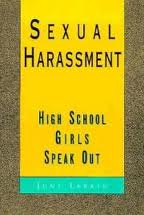
Just when you thought that respect for girls and women was on the marked improve comes yet another reminder that things are not what they seem:
During the 2010-11 school year, 48 percent of students in grades 7-12 experienced some form of sexual harassment in person or electronically via texting, email and social media, according to a major national survey being released Monday by the American Association of University Women.
The harassers often thought they were being funny, but the consequences for their targets can be wrenching, according to the survey. Nearly a third of the victims said the harassment made them feel sick to their stomach, affected their study habits or fueled reluctance to go to school at all.
The survey, conducted in May and June, asked 1,002 girls and 963 boys from public and private schools nationwide whether they had experienced any of various forms of sexual harassment. These included having someone make unwelcome sexual comments about them, being called gay or lesbian in a negative way, being touched in an unwelcome sexual way, being shown sexual pictures they didn’t want to see, and being the subject of unwelcome sexual rumors.
The survey quoted one ninth-grade girl as saying she was called a whore “because I have many friends that are boys.” A 12th-grade boy said schoolmates circulated an image showing his face attached to an animal having sex.
In all, 56 percent of the girls and 40 percent of the boys said they had experienced at least one incident of sexual harassment during the school year.
After being harassed, half of the targeted students did nothing about it. Of the rest, some talked to parents or friends, but only 9 percent reported the incident to a teacher, guidance counselor or other adult at school, according to the survey.
In my view there are two main reasons for this disturbing set of figures:
1. Schools have become hamstrung when it comes to access to appropriate and effective consequences for infringements such as bullying and harassment. Call the parents? No big deal. They gave up long ago. Suspensions? Nowadays you get a suspension for talking out of turn. Suspensions have lost their impact because they are metered out out too readily. In the end, no punishment given seems to come close to matching the crime.
2. Schools have been notorious at turning a blind eye to incidents. I am not talking about all schools, yet in truth, plenty goes under this category. Teachers have been taught not to get emotionally involved with their students. The result being, an emotional distance which inhibits the teachers capacity to pick up on these things, Teachers must have enough of a connection with their students (within the obvious professional parameters of course), as to notice when things are not right with their them. They are intrusted to look after their students and must do so by being proactive. Kids are told from an early age not to dob on a classmate. If teachers wait around for things to get reported to them, they will miss the opportunity to intervene and change a potentially abusive situation.
We must expect schools to be proactive with harassment. They must be able to use tough and uncompromising punishments and show enough of an interest in students as to detect a problem before it gets completely out of hand.
Tags:AAUW, American Association of University Women, Catherine Hill, Child Welfare, Education, Email, facebook, Fatima Goss Graves, Knowledge Networks, life, National Women's Law Center, News, Niobe Way, Parenting, Psychology, Sexting, sexual harassment, social media, Students, Survey, Texting
Posted in Child Welfare | 3 Comments »
November 2, 2011
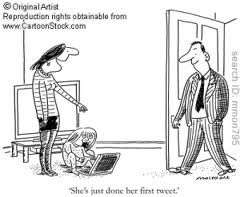
To those parents who are contemplating assisting their underage children to get on Facebook, I strongly suggest you reconsider. The age requirements for Facebook is necessary, as Facebook has a clear downside. From cybersafety issues to cyberbullying, Facebook is clearly not designed for pre-teens.
Almost all parents of ten-year-olds signing up for the site – 95 percent – were aware of what their children were doing, and 78 percent of those helped them do it.
“Although many sites restrict access to children, our data show that many parents knowingly allow their children to lie about their age — in fact, often help them to do so — in order to gain access to age–restricted sites in violation of those sites’ ToS,” the authors write.
“This is especially true for general–audience social media sites and communication services such as Facebook, Gmail, and Skype, which allow children to connect with peers, classmates, and family members for educational, social, or familial reasons.”
The survey found that 55 percent of 12-year-olds, 32 percent of 11-year-olds and 19 percent of 10-year-olds were active Facebook members.
The authors suggest that the COPPA rules may need re-examination, given that they appear only to be encouraging parents to lie. Universal, rather than age-based, privacy protecitons might make more sense, they say.
The full report is here.
Tags:Berkman Center for Internet & Society, Children, Children's Online Privacy Protection Act, COPPA, Cyberbullying, Cybersafety, facebook, kids, Lie, lying, Mozelle Thompson, Parenting, social media, Survey, Underage, Why Parents Help Their Children Lie to Facebook About Age
Posted in Social Media | 1 Comment »
October 26, 2011

We all love our internet connections and mobile phones and would find it extremely difficult to live without them. However, addictions are still addictions, and there is no doubt that our children have grown a deep addiction to the internet. So bad is the problem, that children have become more addicted to the internet than to TV:
Just 18% of children would miss TV most, compared to mobile (28%) and Internet (25%), finds Ofcom research
A new research by communications watchdog Ofcom has revealed that more young British teenagers can do without TV but not without mobile and the Internet.
Ofcom research found that just 18% of children aged 12 to 15 would miss TV most, compared to mobile (28%) and the Internet (25%). However, the research suggests that the teenagers are also watching more TV than ever before, with viewing figures increasing by 2 hours since 2007.
In 2010, children aged 4-15 watched an average of 17 hours and 34 minutes of TV per week, compared with 15 hours and 37 minutes in 2007. Nearly one third (31%) of children aged 5-15 who use the Internet are watching TV via an online catch-up service such as the BBC iPlayer or ITV Player, said Ofcom.
Ofcom’s research said that 95% of 12-15 year olds now have Internet access at home through a PC or laptop, up from 89% in 2010 and 77% in 2007.
Social networking is still one of the most popular uses of the Internet amongst 12-15s. Ofcom said that children are visiting social network sites more often on their mobiles. Half (50%) of 12-15s with a smartphone visit them weekly compared with 33% in 2010.
Children aged between 8-11 are more likely to use Internet for gaming, with 51% saying they play games online on a weekly basis, up from 44% in 2010. 8-11s are also spending more time playing on games players/ consoles compared with 2010 (9 hours 48 minutes – an increase of nearly 2 hours), said Ofcom.

In my school days television addiction was a problem. Now we have another addiction which comes with the same side-effects. It creates tired students who have been up so late they can’t concentrate. It has compromised our children’s capacity to have healthy social interaction. Playing with a friend has now become messaging a friend. It’s just not the same.
As soon as people go from the moderate to the obsessive, they lose control of themselves. Children today are certainly showing the signs of a lack of control, to the point where they are smuggling mobiles in their bags so they can reply to Facebook messages as soon as they receive them.
Kids require rules for their internet usage. Rules that outline when, how and where they can use it.

Tags:Addiction, Children, Ed Richards, Education, facebook, Friends, Gaming, Health, Internet, kids, Mobile Phones, Ofcom, Parenting, social media, technology, Teenagers, tv
Posted in Social Media, Technology | 1 Comment »
October 25, 2011

Unfortunately, teachers and Facebook aren’t always a match made in heaven. Whilst the vast majority of teachers on Facebook are responsible and mature enough to stay out of trouble, there’s always a news story popping up about tasteless comments a teacher made against students or minority groups. This month it is Viki Knox, a Special Education teacher who was rightly condemned for her anti-gay comments on Facebook.
The media storm resulting from the Knox case and others like it serve as a timely reminder to teachers on Facebook that they must be extremely careful not to offend (something which shouldn’t be hard to do).
But what about the myriad of incidents of parents and students ganging up on and bullying teachers?
More than one in seven teachers has been the victim of cyberbullying by pupils or parents, and almost half know a colleague who has been targeted, according to a survey published today.
Students have set up “hate” groups on social networking sites calling for specific teachers to be sacked and have even created fake profiles in their names containing defamatory information.
Schools must make clear to pupils that such behaviour will lead to punishment, the Association of Teachers and Lecturers (ATL) said.
Schools seem to be increasingly soft on parents that bully teachers. Turning a blind-eye to Facebook campaigns and insulting comments against teachers is not acceptable. Teachers so often feel isolated and powerless against taunts from parents.
Who do they turn to for support?
When schools claim to have a “zero tolerance for bullying”, they ought to include bullying of teachers by parents. Any parent caught bullying a teacher online should be subjected to the same penalty as a teacher. They should be told to take their child and find another school.
If you think that’s harsh, try being a bullied teacher. I’m glad I’ve never been bullied, because I guarantee you, it’s not easy!
Tags:Association of Teachers and Lecturers, Bebo, Bullying, Cyber Bullying, Education, facebook, Gay, Julian Stanley, Nick Clayton, Ofsted, Parenting, social media, Teacher Support Network, Teachers, Viki Knox
Posted in Bullying, Cyber Bullying, Dealing with Parents, Parenting, Teacher Welfare | 2 Comments »
October 24, 2011

Today, my blog Topical Teaching, celebrates its very first birthday.
In the past 12 months I have witnessed probably the most difficult period for teachers in recent memory. From layoffs, to debates over tenure vs skilled teachers, it has been a period of great uncertainty. Teachers are facing great negativity by those that are looking for an easy target to blame.
Whilst there are a premium of poor teachers out there, there are also brilliant teachers in great supply. Teachers are not to blame for the state of our education system. There are other stakeholders that must lift their game as well.
In the past year the Facebook phenomenon has uncovered a potential danger for teachers. It is clear that teachers on Facebook must be extra careful to avoid controversy, as some have made very poor judgement calls that have cost them dearly in the end.
Teachers are also faced with an ever-growing bullying problem. From the classroom to cyberbullying, teachers have the important task of limiting incidences of bullying as best they can.
The rigours of standardised testing has also been a hot topic throughout the year. From cheating scandals to stressed out teachers the blasted tests are here to stay and the question is, are our students better for it?
Thank you to those of you who clicked on and contributed to my blog. I have really enjoyed sharing ideas and interacting with you. A special thank you to regular contributors, Margaret, Carl and Anthony for their loyalty and insight.
I hope, as I continue writing this blog, teachers get the break they so richly deserve. Teaching is a profession that attracts people who want to make a difference. We aren’t in it for the money or prestige, just the opportunity to help the students of today become the role models of tomorrow.
Thank you for a wonderful year!

Tags:Birthday, Bullying, Cyberbullying, Education, facebook, News, social media, Standardized Tests, Teachers, Teaching, Tenure
Posted in Bullying, Cyber Bullying, Standardised Testing | Leave a Comment »
October 8, 2011

At present schools have been able to turn a blind-eye to cyberbullying. As the offence occurs out of school hours, schools have been only too happy to handball the problem to the parents of the bully. Whilst I believe that parents are ultimately responsible for the actions of their children, I ask that schools do more to help deal with this ongoing problem.
The reason why I feel schools should involve themselves more actively with this issue is that most cases result from pre-existing schoolyard bullying. Having started in the playground and classroom, the bullying then gets transferred online. Whilst the school isn’t liable for what goes on after school, the problem is often a result of what started during school hours.
To me, the best schools are the ones that work with the parents in a partnership for the wellbeing of their students. For a school to excel it needs to show that it cares about its students beyond its working hours. That is why a teacher or staff member that is aware of cyberbullying must be able to do more than discuss the issue with the class. They must be able to contact parents, impose sanctions and actively change the situation at hand.
We also have to understand what cyberbullying is and why kids do it.
I disagree with ABC online columnist, Hemu Nigam, who is of the view that cyberbullying is about “hating” others:
Suicides from cyberbullying are extreme cases that draw attention. Media and government attention are creating a panic around the wrong issue. The issue isn’t so much that a child killed himself because he was cyberbullied. He did it because he was subjected to hate crime — harassment based on sexual preference, race and the like — couldn’t get it to stop, and felt hopeless, eventually leading to suicide. Thus, the attention needs to go to the source. How do you teach young people to be kind, open, or at the very least accepting of kids different from them?
If we are to ever put a stop to bullying — wherever and however it takes place — we must step back for a moment and think of what we have done for many years before “cyber” became an indelible part of our language.
I am reminded of this lesson my father taught my brothers and me as we were growing up. Like many kids do, we would say we “hated” something or someone. Perhaps it was a certain food or a person in our school. My father always reminded us not to hate by not allowing us to use the word “hate.” We could simply express our feelings by talking about what we didn’t like about a thing or agree with about a person.
As we adopted this house rule, we found ourselves talking about things and people we liked more than the things and people we didn’t like. Today I find myself sharing the same lesson with my own children. I am hearing them talk about things they like about a person or thing without mentioning hate. The lessons that strengthen tolerance begin in the home, “cyber”-connected or not.
It is my belief that cyber-bullying is often based on “dominance” and “popularity” rather than “hate”. I don’t think most cyberbullies hate their victims. Instead, I think they see them as stepping-stones to wider acceptance from their peer group. Often the victims are minorities or outcasts. The pressure to be in the “in group” has always been high. For an “in group” to exist there needs to be a clearly defined “out group”. It is often seen as a sort of right of passage for someone seeking popularity to kick the easy target.
If my theory is right, there is even more reason for schools to see cyberbullying as a problem that they have a significant share in.
Tags:Bullying, Cyberbullying, Education, facebook, Hate, Hate Crimes, Hemu Nigam, Jamey Rodemeyer, Lady Gaga, Law, life, News, Parenting, social media, Suicide, Teen Suicide
Posted in Bullying, Cyber Bullying | 5 Comments »
October 3, 2011

The message to parents has been clear: Monitor your child’s Facebook page to ensure that they maintain their page in a safe and responsible way. But there are parents who think they are doing a meticulous job of supervising their children, only to come undone by a loophole being heavily exploited to ward off protective parents:
Are you a parent who keeps an eye on who posts what on your child’s Facebook account? Perhaps you know their password and sneak a look at their messages from time to time? You may even enjoy the trusted privilege of being a “friend”.
Whatever the situation, social networking sites are a source of anxiety for parents, and now the latest trend will only add to their alarm. Children are staying way ahead of attempts by parents and schools to police their online activity And the latest ruse is a secret, fake-name Facebook account.
“Some kids will have two or even three,” says Dr Barbie Clarke, of the youth research agency Family Kids and Youth, who monitors online trends among schoolchildren in the UK.
“Their habits change and we’re seeing them progress from the obvious lie about their age – allowing them to use Facebook in the first place – to this second or third identity. It’s usually driven by Mum picking up on something from their page and raising it with them. They want privacy and they want a secret world.” She is very relaxed about Facebook use by children, saying she thinks they are generally more sensible and supportive of each other than they get credit for. “A second identity can be used for nastiness, to anonymously bully, but generally it’s about secrecy – like a secret diary, or dialogue they can have away from parents and other family members.”
Many children use school facilities to access their fake accounts. “I have two,” admits Harriet, 14.
I feel sorry for today’s parents. With new and highly specialised technological advances flooding the market, parents are finding it much harder to adapt than their children. No matter how hard they try to supervise and protect their children, sometimes it must feel like hitting your head against a brick wall.
Tags:Bullying, Children, Dr Barbie Clarke, facebook, Family Kids and Youth, ICT, kids, Kidscape, Lyn Cook, Parenting, Peter Bradley, social media, Social-networking, Spying, Xbox Live
Posted in Parenting, Social Media | Leave a Comment »







 Topical Teaching