Posts Tagged ‘Schools’

School Adopts Chinese Students to Boost Grade Levels

August 2, 2012

If it isn’t discrimination, then it’s certainly opportunism:

The U.S. Department of Education’s Office of Civil Rights has launched an investigation into allegations that the San Mateo Union High School District is discriminating against Chinese students.

A discrimination complaint lodged against the California school system has the agency looking into claims that the district holds Chinese students to “different standards for demonstrating residency or guardianship than students of other races” and nationalities, a department spokesperson told The Wall Street Journal.

The civil rights complaint comes as at least a dozen Chinese students say they have been transferred from top-performing high schools to low-performing ones. The district says the students were transferred because they don’t reside with their parents — who, in many cases, live in China — and instead live in homes owned by relatives.

Private tutor Marian Kong filed a complaint on behalf of two students who she said fell victim to the district’s bias. Both were accepted to attend high-performing, Asian-majority Mills High School last fall, and lived with guardians whose addresses fell within zoning boundaries for the school. But just days later, they were transferred to lower-performing Capuchino High for failing to show proof of residency for Mills.

Click on the link to read Only Closed-Minded Schools Block YouTube

Click on the link to read No Place for Ambulance Chasers at our Schools

Click on the link to read Proof You Can Be Suspended for Anything

Schools Invite Kids to Parent-Teacher Meetings to Subdue Angry Parents

July 14, 2012

If you ever wanted evidence that some schools have a selfish mentality towards their own wellbeing over the welfare of their students, this story proves it.

It is unacceptable to use children as ‘human shields’ to protect teachers from hostile parents. This strategy puts children in the middle of a very difficult situation. Should the parents lose their temper, it can potentially harm the child psychologically.

SCHOOLS have found the perfect solution to maintain the calm during parent-teacher interview nights – bring along the student.

In a bid to quell “pushy parents” and to encourage greater student input, schoolkids are involved in the three-way discussions to highlight their main concerns.

Education experts said having the student present encourages them to be responsible for their own learning, behaviour and to reflect on their academic goals.

The principal of Corpus Christi Primary in Cranbrook, Richard Blissenden, said having students present acts as a “grounding” for some parents who might use the interview night to bombard teachers with irrelevant questions.

“It means that perhaps parents who might have been a little more over the top might not have that opportunity because their child is present,” Mr Blissenden said.

 “It emphasises we are here because we are all interested in the learning for this child.

“You can’t get distracted with issues which are off the topic. You just don’t have the time and having the child there helps to refocus.”

Click on the link to read my post, ‘Tips For Parent-Teacher Conferences‘.

Arguments For and Against Single-Sex Education

July 8, 2012

I am glad that I teach both boys and girls in my Grade 3 classroom.  I find it more challenging and the social dynamic can be quite fascinating. At the same time, I can understand why many prefer a single-sex classroom to a co-ed one.

Below are some popular arguments put forwards in favour of single-sex classrooms:

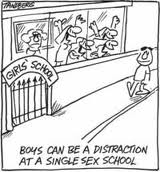
  • Some parents don’t want their children to be in mixed-gender classrooms because, especially at certain ages, students of the opposite sex can be a distraction.
  • Leonard Sax and others agree that merely placing boys in separate classrooms from girls accomplishes little. But single-sex education enhances student success when teachers use techniques geared toward the gender of their students.
  • Some research indicates that girls learn better when classroom temperature is warm, while boys perform better in cooler classrooms. If that’s true, then the temperature in a single-sex classroom could be set to optimize the learning of either male or female students.
  • Some research and reports from educators suggest that single-sex education can broaden the educational prospects for both girls and boys. Advocates claim co-ed schools tend to reinforce gender stereotypes, while single-sex schools can break down gender stereotypes. For example, girls are free of the pressure to compete with boys in male-dominated subjects such as math and science. Boys, on the other hand, can more easily pursue traditionally “feminine” interests such as music and poetry. One mother, whose daughter has attended a girls-only school for three years, shares her experience on the GreatSchools parent community: “I feel that the single gender environment has given her a level of confidence and informed interest in math and science that she may not have had otherwise.”


Below are some arguments put forward by critics of single-sex classrooms:

  • Few educators are formally trained to use gender-specific teaching techniques. However, it’s no secret that experienced teachers usually understand gender differences and are adept at accommodating a variety of learning styles within their mixed-gender classrooms.
  • Gender differences in learning aren’t the same across the board; they vary along a continuum of what is considered normal. For a sensitive boy or an assertive girl, the teaching style promoted by advocates of single-sex education could be ineffective (at best) or detrimental (at worst). For example, a sensitive boy might be intimidated by a teacher who “gets in his face” and speaks loudly believing “that’s what boys want and need to learn.”
  • Students in single-sex classrooms will one day live and work side-by-side with members of the opposite sex. Educating students in single-sex schools limits their opportunity to work cooperatively and co-exist successfully with members of the opposite sex.
  • At least one study found that the higher the percentage of girls in a co-ed classroom, the better the academic performance for all students (both male and female). Professor Analia Schlosser, an economist from the Eitan Berglas School of Economics at Tel Aviv, found that elementary school, co-ed classrooms with a majority of female students showed increased academic performance for both boys and girls. In high school, the classrooms with the best academic achievement were consistently those that had a higher percentage of girls. Dr. Schlosser theorizes that a higher percentage of girls lowers the amount of classroom disruption and fosters a better relationship between all students and the teacher.
  • The American Council on Education reports that there is less academic disparity between male and female students overall and a far greater achievement gap between students in different racial, ethnic and socioeconomic groups, with poor and minority students children faring poorly. Bridging that academic chasm, they argue, deserves more attention than does the gender divide.
  • Single-sex education is illegal and discriminatory, or so states the American Civil Liberties Union (ACLU) . In May 2008, the ACLU filed suit in federal court, arguing that Breckinridge County Middle School’s (Kentucky) practice of offering single-sex classrooms in their public school is illegal and discriminatory. The school doesn’t require any child to attend a single-sex class, yet the suit argues that the practice violates several state and federal laws, including Title IX and the equal Educational Opportunities Act.


Evidence that Daydreaming Helps Children Perform Better in Tests

July 3, 2012

I love this research. I am a proud daydreamer – always has been, always will be.

Daydreaming has the capacity to drive teachers insane. In my day it lead to bad reports and vicious lectures. Nowadays it often leads to recommendations for an ADHD diagnosis and the resultant daily dosages of Ritalin.

Well, throw those blasted tablets in the rubbish bin. Daydreaming is here to stay:

Daydreaming could help children concentrate – and even perform better in tests, researchers claim.

The children also feel less anxious and more motivated to perform, according to a review of studies on the value of time to reflect.

Education should focus more on giving children time to think, claim researchers at the University of Southern California.

Research indicates that when children are given the time and skills necessary for reflecting, they often become more motivated, less anxious, perform better on tests, and plan more effectively for the future.

It is also important in helping us make sense of the world at large … and contributes to moral thinking and well being.

Cash-Strapped School Auctions Itself on eBay

July 3, 2012

Interesting idea. Hope it works:

A CASH-strapped US high school hopes to raise money from a wealthy benefactor by auctioning itself on eBay.

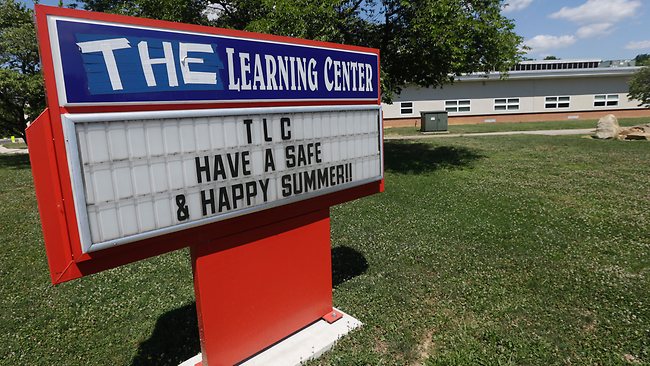
Officials at The Learning Center in Langhorne, Pennsylvania, are seeking bids starting around $US600,000 ($548,000) to offset steep budget cuts.

The eBay listing describes the public alternative school for at-risk teens as “pre-owned” and “slightly used.”

The winner won’t own the school, which is located near Philadelphia. But he or she will get a naming opportunity, a free large pizza and the satisfaction of “delivering an education to a group of kids who could really use it”.

If a bidder is found it will be the first time someone buys a school in return for a free pizza.

Schools are Failing Gifted Students

June 21, 2012

Catering for gifted students is a significant challenge for a teacher. Teachers can go dizzy trying to find time with students at both ends of the spectrum, whilst also working to help the rest of the class progress.

I am not surprised that many schools have struggled to properly cater for gifted students:

SCHOOLS are failing the state’s best and brightest students, a damning parliamentary report has found.

A 15-month inquiry has found the education provided to gifted students is often inadequate – sometimes with severe and devastating consequences.

The report, tabled in Parliament today, said up to 85,000 Victorian students fit the category of gifted.

“These students are frequently frustrated and disengaged,” the education and training committee report said.

“And rightfully so: they are being let down by the education system. These neglected students represent our state’s future visionaries and innovators.”

All teachers should be capable of recognising and teaching the gifted, the report said.

Education Minister Martin Dixon welcomed the report and said he “looked forward to responding to it in detail”.

“Our job in education is to engage, excite and extend students,” he said.

This problem is very real, but let’s not forget the difficulties teachers face with an ever-increasing workload and an overcrowded curriculum.

Who Needs Quality Teaching or Parenting When You Have Medications?

June 19, 2012

Wake up America!  Your preparedness to prescribe powerful stimulants to children for reasons as slight as a lack of concentration is lamentable. It is a trend that threatens to effect a whole generation. Teachers have got to take a far more passive approach on this issue. Instead of recommending that students take these drugs they should instead concentrate on their own performance. Too many teachers take the selfish choice of trying to restrain a wayward or naughty child rather than focus on their own weaknesses as a teacher. Instead of picking on a childs’ lack of focus, they should be concerned about how engaging their lessons are.

To hear the medical fraternity boast about a reduction in antibiotics subscriptions when the real issue is Ritalin and others of its kind is very disappointing:

The new report also found an uptick in the use of some drugs in children, with stimulants for attention deficit hyperactivity disorder, or ADHD, leading the pack.

From 2002 to 2010, the use of ADHD drugs grew by 46 percent — or some 800,000 prescriptions a year. The top drug dispensed to adolescents was the stimulant methylphenidate, also known as Ritalin, with more than four million prescriptions filled in 2010.

“What the article is suggesting is that the number of children that we are treating for attention deficit disorder has gone up,” said Dr. Scott Benson, a child and adolescent psychiatrist and a spokesperson for the American Psychiatric Association.

“For the most part I think the overall increase reflects a reduction in the stigma,” he told Reuters Health. “It used to be, ‘You’re a bad parent if you can’t get your child to behave, and you’re a doubly bad parent if you put them on medicine.'”

Dr. Lawrence Diller, a behavioral pediatrician who has written extensively about ADHD, was more critical of the rise in stimulant prescriptions, noting that the U.S. is far ahead of other countries in its use of the drugs.

“You have to look at how our society handles school children’s problems. It’s clear that we rely much, much more on a pharmacological answer than other societies do,” Diller said. “The medicine is overprescribed primarily, but under-prescribed for certain inner-city groups of children.”

A report in the New York Times last Sunday said stimulant use is becoming a commonly used study drug even among high schoolers, with healthy students easily fooling their doctors into prescribing the coveted drugs.

“There is no objective test, so obtaining the medications is relatively easy,” said Diller.

The Punishment That Used to Work but No Longer Does

June 18, 2012

When I was a child there was no punishment more feared than a suspension from school.  The idea that the Principal could at any moment call your parents to pick you up and take you home was enough to make any child think before breaking a rule. But times have changed and suspensions have lost their effectiveness. This is partly due to it being metered out for minor offenses such as answering back and rudeness and partly due to a change in parenting styles.

If my parents were given the call to pick me up early they would have been furious. They would have immediately sided with the school and grounded me at home. Nowadays, parents take their children’s side and embrace them rather than berate them. When the child returns to school after their suspension, it is common to hear them boast about being taken out for a coffee and spending the afternoon playing video games.

It is no wonder that a recent survey has labelled suspensions as ‘counterproductive’:

SUSPENDING students from school for bad behaviour is counterproductive, with students who have been suspended twice as likely to be excluded again in the next 12 months.

Research by Australian Catholic University professor Sheryl Hemphill found about 6 per cent of students in Years 6-8 have been suspended, rising to 12 per cent of Year 10 students.

“Kids who are suspended just keep getting suspended. It doesn’t stop the behaviour that resulted in the suspension, it almost sets them on a pathway more likely to lead to suspension,” she said. “The risk for students who are having trouble maintaining engagement and staying at school is that suspension starts to help them move out of school.”

As part of a series of reports on problems in our nation’s schools, The Australian has found that suspended students were 50 per cent more likely to engage in antisocial behaviour and 70 per cent more likely to commit a violent act in the next 12 months.

Professor Hemphill said the policy of excluding students from school as punishment for bad behaviour sent a mixed message: every child must attend school, except on some occasions.

“It’s so contradictory to everything else we’re trying to do,” she said. “We’re trying to keep kids in school longer, we know the positive benefits of keeping them connected to further study and training for employment.

“Suspension doesn’t fit with the current policy environment, a lot of which promotes connection with education, because suspension is potentially a way of cutting off students.”

The problem with scrapping suspensions is that it leaves teachers with fewer options in dealing with class discipline issues.

Click here to read about my post on teachers being stripped of the ability to give punishments that work.

Do Experienced Teachers Give Enough Back to the Profession?

May 21, 2012

Although I have not had this experience myself, I have heard many young teacher talk with exasperation about their experienced colleagues. These teachers, looking for mentorship, problem solving methods and simple direction and assurance from their older and more confident co-workers, have complained that they are often left to their own devices. They claim that experienced teachers tend to find a comfortable groove and are reluctant to do any more than absolutely necessary.

Whilst I realise that this characterisation of experienced teachers doesn’t reflect all who fall into that category, I wonder whether teacher burnout as well as the fact that experienced teachers have reached the peak both in status and salary, are contributing factors to this likely scenario. Since these teachers have devoted decades to what is a challenging and physically taxing profession, the job of mentoring a new teacher can often be too much of burden.

If this is correct, it is quite unfortunate. Our young teachers, in my opinion, are poorly trained. Our teacher training courses are high on useless theory and low on practical instruction. I have never met a teacher who considered Vygotsky’s theory of proximal development of greater use to their day-to-day teaching than the precious but fleeting weeks spent visiting schools as a pre-service teacher.

There clearly needs to be a greater incentive for experienced teachers to help new teachers settle into their role and adjust to the dramatic change from student-teacher to actual teacher.

Last year I formulated a two-tiered approach to making best use of experienced teachers:

1. Experienced teachers who are deemed to be excelling at a certain standard are offered a mentoring role for higher wages. If accepted to take on that role, these teachers would offer new teachers the chance to spend a few days in their classroom, let them observe their lessons, give them access to the their planning material and be someone out of that teacher’s school environment who can deliver advice and guidance via email and phone. This challenges the mentor teacher to strive in their new position as well as their underling.

2. For the second category of teacher, I recommend that newly retired teachers, who have left the profession with a wealth of knowledge and an eagerness to maintain links with the profession, be paid to mentor and assist teachers who have not been performing at the required benchmarks. Instead of firing teachers in the first instance, I propose that these teachers get the opportunity to improve with a greater deal of support and collaboration.

WHAT THIS SOLUTION ACHIEVES

• Provides the opportunity for excellent teachers to be better paid;

• Allows retired teachers to maintain links with their profession and share their wealth of experience;

• Gives new teachers greater confidence and a non-judgemental mentor who they can approach; and

• Allows teachers currently not working at their premium a second chance that may reinvigorate and refresh them.

Kids Don’t Need Gold Stars

May 11, 2012

In my opinion, the look that children give when they receive a gold star is misleading. Sure, they look excited, but that excitement is sometimes relative. In truth, kids don’t need gold stars and essentially, that is not what they are after when they produce good work.

What they really want is something – anything. They want a compliment, a smile, a gesture that will make them feel better about themselves. School can be such an overwhelming place. Teachers are so good at being critical. Critical of the way students dress, sit, answer back, talk, the speed in which they work, the neatness of their handwriting etc. The gold star doesn’t just signify an achievement of sorts, it breaks the cycle of criticism and balances the ledger somewhat.

As teachers, we need to be aware that our students crave our acceptance and approval. They may superficially be doing this by trying to earn a gold star, but essentially, all they really want is a confidence boost.

I enjoyed the tips for showing recognition to students by bestselling author and confessed ‘gold star junkie’, Gretchen Rubin:

1. Be specific. Vague praise doesn’t make much of an impression.

2. Find a way to praise sincerely. It’s a rare situation where you can’t identify something that you honestly find praiseworthy. “Striking” is one of my favorite fudge adjectives.

3. Never offer praise and ask for a favor in the same conversation. It makes the praise seem like a set-up.

4. Praise process, not outcome.This particularly relevant with children. It’s more helpful to praise effort, diligence, persistence, and imagination than a grade or milestone.

5. Look for something less obvious to praise – a more obscure accomplishment or quality that a person hasn’t heard praised many times before; help people identify strengths they didn’t realize they had. Or praise a person for something that he or she does day after day, without recognition. Show that you appreciate the fact that the coffee’s always made, that the report is never late. It’s a sad fact of human nature: those who are the most reliable are the most easily taken for granted.

6. Don’t hesitate to praise people who get a lot of praise already. Perhaps counter-intuitively, even people who get constant praise – or perhaps especially people who get constant praise – crave praise. Is this because praiseworthy people are often insecure? Does getting praise lead to an addiction to more praise? Or – and this is my current hypothesis – does constant praise indicate constant evaluation, and constant evaluation leads to a craving for praise?

7. Praise people behind their backs. The praised person usually hears about the praise, and behind-the-back praise seems more sincere than face-to-face praise. Also, always pass along the behind-the-back praise that you hear. This is one of my favorite things to do!