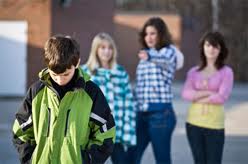
I just watched an absolutely incredible movie featuring 4th and 5th Grade students about dealing with bullies and bullying. As the intro to the movie explains:
The following movie was developed with a cast and crew of only 4th and 5th Graders (and one 1st Grader) from Glendaal Elementery School. They worked during recess, lunch, before and after school for 3 months. They hope it helps shed some light on the issues of bullying, and helps anyone who might be experiencing the effects of bullying.
As someone who is currently preparing to make a movie with my Grade 5’s, I was blown away by this technical and artistic achievement. The kids act beautifully, the direction is solid and the script is very effective. I hope this garners worldwide attention and gets used in classrooms all around the world. These kids have done more for bullying awareness than any anti-bullying program I know of.
Please show this video to your kids/class and let them enjoy the message. You may want to use it to inspire your class to make a powerful film of their own.
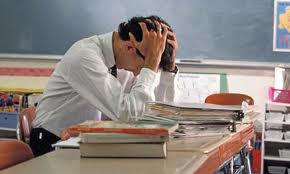
Students have found new ways to demean and embarrass their classroom teacher. In a digital age where students invariably have mobile phones at their disposal, teachers are often filmed without their knowledge and broadcast world-wide without their permission.
Take this prank, that for reasons unknown to me has not been banned from YouTube. Not only is it allowed to remain, regardless of the hurt and embarrassment it must have caused the teacher, but children from all around the world have been given the opportunity to comment on it. Apparently they think this is hysterical. I most certainly do not:
It’s called being “YouTubed” and the Internet is full of hundreds of videos of students either badmouthing their teachers or provoking them to explode in class, then recording the fireworks and posting it to the Web.
And parents have also gotten in on the action, posting videos where they verbally attack their kids’ teachers or post allegations against them.
But teachers have begun to fight back. On Tuesday, 800 delegates at the annual meeting of the Elementary Teachers’ Federation of Ontario voted unanimously to urge boards and schools to establish clear policies around the unauthorized use of digital recordings and photos taken by students.
Teacher Dave Buddell told CTV News on Wednesday night that he occasionally Googles his name.
“I’ve been online and looked around,” he said. “You do see instances where teachers have been filmed obviously without their consent.”
To me, there is a gaping double standard when it comes to education and social media. Teachers are being told that it is not legal to conduct lessons and give support through mediums like Twitter, yet students are allowed to put horrendous videos like the one above without so much as a “please explain.”
I don’t understand why parents can’t be subject to the kinds of consequences their children are for bullying and harassment. Parents who set up internet groups and Facebook pages to spread untruths about their childs’ teacher should be punished for their actions. Anything from a warning to in the most serious offences expulsion of their child from school is appropriate.
Some may think this is a bit harsh and that children should not be penalised for the deeds of their parents, but bullying is a very serious offence and schools that take it seriously reap the rewards by maintaining a safe environment. Schools are too dismissive of parents who bully teachers. Teachers often feel marginalised and lacking of support. The statement that bullying of any kind will result in strong penalties is essential to delivering the best outcomes from an academic and social standpoint.
Teachers are the latest group found to be at risk of cyber-bullying, according to a recent report.
The study by Professor Andy Phippen found several instances where teachers had been targeted for abuse by social media users on websites such as Facebook and Twitter.
One head teacher interviewed for the study said she had a breakdown and was left feeling suicidal.
The headteacher suffered a year of abuse by a parent at her school who used a Google group to post libellous untruths about her and her school. “I eventually had a mini breakdown in the summer holiday, needing an emergency doctor to be called out as I had become suicidal,” she told researchers.
The message should ring loud and clear – Either play by our rules or find somewhere else to send your kids!
Below are two clips from a film made by Australia’s behaviour management guru, Bill Rogers. I think all teacher’s will find this useful regardless of experience.
Clip 1
Clip 2
Please share these clips with your colleagues. I’ve attended a Bill Rogers seminar and found it very useful.
I couldn’t help but be struck by this excerpt from an article about the London Riots:
“… what I am saying is that for all of those who live and work in the poorer areas of London this disaster has been totally unsurprising. The fact of the matter is that we have manufactured within our society a sub-culture of sociopaths who care nothing for anyone or anything but themselves and are wholly unable to empathise with the suffering of others. The people most responsible for creating this social plague are the very same politicians, journalists and social commentators who are now asking “How did this happen?”
I believe that to a lesser extent the Educational system has bought into the plague too. So consumed by its bottom line, so obsessed with the meaningless private vs public school debate and so content to take creative children and force them to conform with a robotic set of rules and regulations, that children get lost in the crowd.
I had a discussion with someone recently about the role of schools. He felt that schools were nothing more than institutions with the responsibility of imparting knowledge. According to him, as long as the school could point to the lessons that were taught and the curriculum that was followed, their job was done.
I believe schools have a far greater responsibility. They must do a lot more than concentrate on prime numbers and single-celled organisms. They must try to ensure that every child has a sense of self and an understanding of how they can use their unique skills and qualities to contribute to society.
It sounds fanciful and “airy fairy” but children today are more obsessed than ever before by wealth, gadgets, appearance and all things materialistic. They spend so much time trying to outlook and outdo others simply because they are not happy with who they are and what they have. The question has to be asked, besides close family members, who helps them to understand and appreciate who they are and what they can achieve?
The media is charged with unsettling them and making them fearful. The advertising industry is charged with making them feel that without products and gadgets they cannot be happy. Where are our kids receiving the positive message they desperately need to hear?
Children often say, “Why should I be good to them if they aren’t to me.” Those participating in the riots seem to be making that statement. Whilst it is absolutely no excuse to do what they have done, one has to wonder who does look after the best interests of our children. Shouldn’t the school system who has our kids throughout their crucial developmental years do more to help them find acceptance in who they are? Shouldn’t the school system encourage them better to be themselves rather than conform?
There is no excuse for people who riot and willfully and violently break laws, but when reflecting on incidents lessons must be learnt. Children that are supported and nurtured don’t riot. Children who are in touch with their unique qualities and have been encouraged and accepted by others don’t riot.
We can go on preparing our students for calculus tests and chemistry assignments, but in a time of need and doubt, our students probably wont turn to calculus or tests tubes for salvation.
Below is an excerpt of a book dealing with tips for making the transition between schools more manageable:
Michele Borba, author of “The Big Book of Parenting Solutions,” says moving to an upper-level school is a severe change for kids. Here are Borba’s tips for helping guide your kids through each school transition.
Middle school
Going from elementary to middle school is a big change for kids because they generally go from having one teacher to several. Borba says it’s important that kids find at least one buddy in each of their classes so they have someone to turn to in case they have questions on an assignment or are absent.
She urges parents to walk through the school with their children before the first day so they know how to get from class to class. They should also know how to get to the bathrooms, the cafeteria and the school office.
Organization is important at this stage, since kids will have different classes and teachers. Make sure your kids have a binder with different-colored folders for each class and know where to write their homework assignments.
High school
Once kids reach high school, they won’t want you to walk the school with them before the year starts. What Borba suggests, though, is that you print out a map of the school, and show your children where their classes are and how to get to them. Then have them walk the halls with a buddy before the first day.
Now that they’ll have six or seven classes a day, students will have to be even more organized than in middle school.
In terms of social issues, bullying is a big concern. Borba says the No. 1 place where bullying occurs is in the cafeteria, so make sure your high schooler has at least one friend who has lunch at the same time so he can sit with that person and not feel alone.
It mystified me how in the modern era that we live in, we still haven’t properly addressed some fundamental issues effecting the comfort of our students. The following are three examples:
1. The Mat – The mat serves a clear purpose. There are times when the mat is ideal for teaching a new concept or skill or for giving opportunities for students to present their work to the class. But it must be used in short spurts because it is so uncomfortable. Sitting in a confined space, without a back rest is not fun at all. Once, whilst teaching a mat session, I tried it. I sat on the floor with the kids/ In no time, I’d had enough. Teachers who use the mat for long, drawn out periods of time should not be frustrated at the child that can’t sit still. It is to be expected that a naturally restless person will find the challenge just too difficult.
2. The Chair – Even sitting in a chair for long periods of time is too much to expect. Why is education often so dormant? Surely the best forms of teaching allow students to move around.
3. Lack of Engagement – Currently, there is a strong push to bring back traditional teaching. This involves lines of handwriting practise, together with pages of maths algorithms followed by reading with comprehension questions. There are always going to be certain students who will enjoy the safe, predictable, routine side to rote learning. But on the whole, this methods is nothing short of tedious. It lacks creativity, energy and critical thinking. It is unimaginative, noninteractive and downright boring.
I hear teachers complain all the time about how poor attention spans are nowadays. It makes me wonder whether teachers realise that we are partly to blame. I can’t concentrate unless I’m engaged and comfortable in my chair. I need time to move and stretch and I need to feel as if I am able to express myself.
Remember the day when teachers actually got to speak their mind? When they were able to put an evaluation of a child in writing without fear of a lawsuit? I’m afraid those days are long gone.
Report writing is as bigger chore now as it has ever been. Required to complete at least 2 a year, I stay up nights on end in the lead up to my report writing deadline, typing away, without any idea why reports need to be so long and arduous.
The following are 5 frustrating features of a modern-day school report:
1. It is often written in technical language that makes no sense at all to parents. This is a ploy by the teacher to use up as much space as possible, make themselves look extra professional and write in such a way that parents have no idea what they are talking about (so they wont have what to complain about). I feel sorry for parents that genuinely try to read their child’s report, only to be left totally confused by the experience.
2. The Government is scared that put in the hands of teachers, reports would be too short and wouldn’t include enough detail. That is why they have directed teachers to write about every detail about the child, down to how neat his/her desk is and how clearly he/she speaks in public. That means Primary school teachers must write over 1000 characters each in four sections (General Comment, Maths, English and Unit of Inquiry). Added to that the teachers need to isolate skills yet learnt and pinpoint how they are going to help the students catch up in these areas. It’s just too long!
3. Similarly, the Government wanted students to be graded according to an insane scale. The letter grade “B” means the child is a semester ahead, “C” refers to where the child should be, and “D” means the child is a semester behind. There is “A” and “E”, but teachers are advised not to go there because it makes the school look bad. In other words, if your student is going well, you give them a “C” – go figure!
4. The report tell you nothing of real substance! The threat of lawsuit is too great. It’s designed to say a lot without saying anything at all!
5. Teachers are so exhausted from writing these blasted reports that they come to school tired and emotionally drained. Their planning time has been compromised, so often their lessons are less engaging.
I am as happy with my reports as the constraints lets me be. I feel as though I’ve written in “plain speak”, demonstrated that I know my students and have shown an understanding of where they are at academically and socially.
In Australia, if a school Prinicipal was seen to be authorising the handcuffing of students to polls, all hell would break loose! The Principal would be sacked immediately, and the school would be faced with closure. In America, it seems that it’s more complicated than that.
A recent school alleged to have shackled its students for hours at a time needs to have been proven contravene a rule that allows handcuffing of kids in certain instances, before legal action can be imposed.
US civil rights activists have filed a lawsuit against a school they claim shackled children to railings and poles to punish misbehaviour.
Five pupils at Capital City Alternative School in Jackson, Mississippi, claim staff there handcuffed by their wrists, and sometimes the ankles too, for up to six hours at a time.
Some say they were forced to eat lunch while handcuffed, and had to shout to be released to use the bathroom, sometimes unsuccessfully.
They allege school principals often ordered the shackling, WLBT reported.
The Southern Poverty Law Centre filed a lawsuit naming Jackson Public Schools and Capital City Alternative School officials and seeking class-action status on behalf of all the school’s students.
The complaint says the alleged punishments violate the US Constitution and school board policy.
The centre’s director, attorney Jody Evans, said that the policy states students can only be handcuffed if they present a danger to themselves or others, or if they are destroying property.
‘In these instances, none of these occurred. Students were simply (saying) I forgot my belt today, have the wrong shoes on. They were handcuffed,’ he said, according to WLBT.
Critics of the Capital City Alternative School in Jackson say the allegedly excessive punishment makes students more likely to drop out of school – and commit crimes later in life.
The school admits pupils in grades 4-12 who have been suspended or expelled from Jackson Public Schools for 10 days or longer.
School district officials said the agency takes the allegations seriously and will respond through legal channels.
It deeply upsets me that schools should ever have the authority to handcuff students. That’s the job of the police. Misissippi needs to change their education policy quickly. It is not acceptable for this practice to be allowed in any form.
Some schools just don’t get it! Their job goes beyond education. They are looking after people’s kids! Schools are duty bound to actually look after the safety of their students (as opposed to just saying they do in a catchy but meaningless slogan). They must understand that parents don’t give the responsibility of having others look after their kids lightly. It’s not like giving over the keys to your car to the valet. It’s a huge deal.
That’s why schools must do their utmost to earn the confidence and respect of their parents. They must be actively protecting the students whilst also communicating regularly with parents. To have a school issue a dictate that all students wear baggy clothes to ward off probable paedophiles is a disgrace! How is a parent supposed to take that advice?
Furious parents yesterday criticised a school after they were asked to buy their children baggy clothes to deter paedophiles.
King’s Park Secondary School, in Glasgow, asked parents to ensure modesty in their children’s uniform in a bizarre letter which claims sex offenders may be taking pictures of schoolboys in tight trousers.
The letter, dubbed ‘paranoid in the extreme’ by one parent, was sent home even though police say there have been no incidents of schoolchildren in the area being targeted.
And children whose parents fail to conform to the approved dress code could be forced to miss out on fun school trips.
The letter says: ‘We believe an appropriate school uniform protects children from being targeted by sexual predators.
‘There is recent evidence in south Glasgow of adults photographing schoolgirls in short skirts and schoolgirls/boys in tight trousers, then grooming them through the internet.
‘We must do all we can to keep our children safe. A modest school uniform is more appropriate than fashion skirts, trousers or tops.’
The crackdown on pupil attire has been slammed by shocked parents whose children don’t want to obey the strict rules.
One blasted: ‘There is no way an ugly uniform is going to deter a predator and determined sex offender.
‘This is just paranoid in the extreme. There are better ways to safeguard children than spreading needless panic.’
Another added: ‘It is laughable to think the uniform can act as some sort of paedophile-repellent.’
The tough new policy forces cash-strapped parents to shop from an approved list of items available only at high street store Marks and Spencer.
Girls can wear only knee-length pleated skirts or trousers and boys loose-fitting trousers.
This is an awful thing to do to parents. To play on their fears and insight paranoia is just unacceptable. I am glad Australian schools aren’t so stupid and downright insensitive!


 Topical Teaching