Posts Tagged ‘Ritchard Gale’

Fighting Bullying Through Letter Writing Wont Work

March 30, 2011

After a recent speight of bullying incidents, the New Zealand Government has kicked into gear by …. writing letters to schools!

The letters, to be written by Education Minister Anne Tolley, will demand for schools to become tough on policing and preventing bullying.

What caused the need for such a response (albeit a lame one)?

This month, two teenagers were taken to hospital after schoolyard attacks. On March 8, a 15-year-old girl was punched and kicked as she walked home from Wanganui Girls’ College.

She was hospitalised and said the attack had left her unconscious, bleeding from the ears and with extensive bruising. The assault was filmed.

Also this month, a teenager was hospitalised after being beaten in another schoolyard fight.

The attack on the Lynfield College, Auckland, student was filmed on a cellphone and shared.

Whilst I find bystanders who film acts of bullying instead of intervening extremely upsetting, it seems that video evidence is the only successful device for waking Governments (as well as some schools) up to the realties of their inert response to this very serious issue.  If the Casey “Body Slam” incident had not been filmed, his school would still arguably be hiding from its responsibilities today.

Will writing letters work?  Of course not!

Mr Shearer (Labor MP) said tough action was needed not letter writing.

“John Key(Prime Minister) has a clear pattern of behaviour – he raises hopes high that he is going to fix things, and then comes up with wet solutions that don’t help at all.

Writing to schools about bullying is a good way of saying he is worried about the issue but a useless way of making a difference,” Mr Shearer said.

“If they want to get rid of bullying they will have to take on some tough and complex problems – including getting tougher on intervening with the families of bad kids and with bad parents.

“The Government has to start intervening in the huge gap between haves and have not’s in the education system, instead of making it worse. And the Government has to support anti-violence campaigns in the community instead of cancelling them to pay for high income tax cuts.”

In my opinion, schools that are failing to curb bullying, should be assessed and made to comply with the resulting recommendations.  If they don’t, the Government should strip them of their funding.

A school that doesn’t take a proactive and emphatic stance on bullies and schoolyard bullying, doesn’t deserve a cent of taxpayers money!

Valuable Advice for Bystanders of School Bullying

March 27, 2011

One of the underreported aspects of the Casey Heynes/Ritchard Gale bullying incident, was the role of the onlookers in inflaming the situation (or at least failing to intervene).  Not enough of the ensuing conversation focussed on the importance of intervening and diffusing a bullying situation.  Many media outlets omitted the fact that the child filming the incident was suspended, and few columnists even bothered to see it as an issue.

Whilst it is easy to blame bystanders of a bullying incident for their inaction, intervening in such a heated situation is quite a difficult assignment.  That’s why I was so thrilled to stumble on a wonderful article by Rosalind Wiseman, which detailes strategies that bystanders can employ:

Recently I’ve taken a hard look at the advice we give to kids who are being bullied and challenged all of us who work on this issue to do better. Now I want to question the common advice we give bystanders. This is critical for two reasons; we rarely admit the complex role bystanders play in bullying and I’ve never seen us publicly acknowledge that often the reason bystanders don’t come forward is because they don’t have confidence in the adults to do what’s right.

Being a bystander:

It’s not like any of us look forward to the opportunity of confronting a bully, as we saw in the recent Dateline special. Ironically, it can often be harder to confront a bully we’re close to than someone we don’t know or don’t like. And no matter how you feel about the bully or the target, it can be easy to stay silent because you don’t want the abuse directed at you.

But here are three inescapable facts:

  • Almost all of us will be in a situation at some point of our lives where we see someone bully someone else.
  • Bystanders often decide to get involved based on their feelings toward the bully and/or the target. If you like the bully then you are more likely to excuse the behavior. If you think the target is annoying, then you’ll more easily believe the target was asking for it. But a bystander’s decision to get involved should be based on the merits of the problem, not on their relationship to the people.
  • In that moment, we will have three choices. 1. Reinforce the abuse of power by supporting the bully; 2. Stay neutral — which looks like you’re either intimidated by the bully yourself or you support their actions; 3. Act in some way that confronts the bully’s abuse of power.

In the face of seeing someone bullied, here are some common reactions:

  • Deny it’s going on.
  • Distract yourself so it looks like you don’t know what’s going on. And if you don’t know then you have no obligation to do stop it.
  • Remove yourself from the situation.
  • Laugh to try to convince yourself that what’s going on isn’t serious.
  • Join in the bullying, because it’s safer to be on the side of the person with the most power.
  • Ignore it in the hope that it will go away.

What do you do if you are a bystander?

Even if you aren’t proud of how you handled the bullying when it occurred, it’s important to recognize how hard it is to know what to do in the moment. But that fact doesn’t mean it’s too late now to speak out. Especially if you are friends with the bully, reaching out to them is actually the ultimate sign of your friendship.

Supporting someone who’s been bullied.

Say, “I’m sorry that happened to you, do you want to tell me about it?”

Don’t tell them what they should have done or what you would have done. Listen and help them think through how to address the problem effectively. And if they ask you to back them up the next time it happens, ask them what that looks like to them. If it means upholding their right to be treated with dignity and not getting revenge on the bully, then do it.

Supporting someone who is being the bully.

In your own words say something like, “This is uncomfortable to talk about but yesterday when you sent that picture of Dave you know that really embarrassed him. And I know I laughed and I know he can be annoying but it’s still wrong. If you do it again I’m not going to back you up.”

Yes the bully is going to push back, make you uncomfortable, try to get you on their side but remember what happened and why you feel like the bully’s actions were wrong.

Why are bystanders so reluctant to come forward?

Let’s move away from the bystanders and focus on the adults. The prevailing explanation of why kids won’t come forward is because there’s a code of silence that forbids them. No one wants to be a snitch. While there’s some truth in that — I think just as powerful a reason for kids’ silence is because the adults haven’t created an environment where kids think reporting will make the problem better instead of worse. Yet, the most common advice we give to bystanders is to is tell an adult. Like it or not, the truth is it’s not good enough to tell kids to tell an adult.

Telling an adult won’t magically solve the problem. What far too many kids know and experience on a daily basis but we deny is that far too many adults are ill-equipped to respond effectively and often only cause the child to give up on adults entirely. Furthermore, the very way a lot of adults treat young people — in a condescending or dominant (i.e. “bullying”) manner — makes it impossible for children to have any confidence in our ability to be effective advocates.

While there are many effective counselors, even the suggestion to “talk to your counselor” may not be realistic. The child may have no idea who the counselor is — let alone a strong enough relationship with them to take this leap of faith. Recent budget cuts have led many school districts to cut back on their counselors or eliminate them completely. And it has always been the case that kids tend to form strong relationships with their teachers and coaches. It’s these people who bystanders will more likely tell what’s going on. Especially for a bystander that could easily think that since the bullying isn’t technically happening to them, reporting to a counselor is too extreme.

That’s why teachers need to know what to do. Instead of, “That person just needs to get a tougher skin”, “It can’t be that bad, can it?” they need to respond with “I’m really sorry this is happening. Thanks for telling me. I know it can be hard to come forward about things like this and I really respect the fact that you did. Let’s think about what we can do about it.”

Let’s be clear: beyond the peer pressure not to snitch and adolescent cynicism, adults matter. If our kids see us treat people with dignity, if we are outspoken about our respect for people who come forward, if we are honest with how scary reporting can be but assure them that we will be with them throughout the process, I guarantee our kids will find the courage to speak out.

Ms. Wiseman can be contacted through her Twitter account on: www.twitter.com/rosalindwiseman

Casey and Ritchard Gale’s Interviews

March 22, 2011

How sad this story is.  The only good thing to come out of this story, is that it sends a clear message to schools that they need to be more proactive in stamping out bullying of all kinds.  Below is Casey’s A Current Affair interview and Ritchard Gale’s unfortunate lack of remorse in his Channel 7 interview.

I was hoping the backlash would have taught Ritchard a lesson.  I hoped it would make him reflect on his past actions and help to bring changes to his approach and attitude.  It is very disappointing to see that he remain unrepentant for his part in this incident.

I have no doubt that Gale has had it tough.  But he could have come out of this a champion of reform.  It would have been so powerful to hear him admit wrongdoing instead of painting himself as a victim.

Bullied Hero Speaks

March 21, 2011

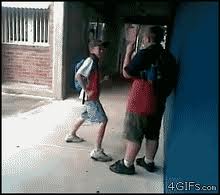
Last week I wrote a post about Casey Heynes, the Australian boy who was caught on tape defending himself against a bully.  In a graphic show of what seems to be a completely unprovoked attack, the bully is seen striking Casey with a fist to the jaw.  Casey then responds with the now infamous body slam.  I devoted the post to criticising the school’s response to the incident (It turns out that the child that filmed the video did in fact get suspended too).

So big was the news, and so divided was people’s reaction to Casey’s show of self-defense, that A Current Affair got a 1-on-1 interview with Casey:

The schoolboy who’s become an internet sensation after turning the tables on a bully has told how he snapped after years of cruel taunts about his weight.

Casey Heynes, 16, says he has been bullied nearly every day at his school, Chifley College, at St Marys, but could take no more when Year 7 student Ritchard Gale tormented and attacked him last Monday.

“All I was doing was defending myself. I’ve never had so much support,” he said during an interview with A Current Affair.

Casey reveals he’d been targeted by a new group of Year 7 boys who had started picking on him and teasing him about two weeks prior to the fight.

The Year 10 student said he was surrounded by the students when he went to get a school timetable before class.

As Ritchard backed him against the wall and started throwing punches, Casey said he felt scared and worried that others in the group would also start hitting him.

Eventually, he snapped, picking Ritchard up over his shoulder and throwing him to the ground.

The brawl was recorded on the mobile phone of another student who later posted the video online where he has earned “hero” status.

Asked if he was a superhero, he laughed and said: “No I wish I was.”

The video, which was taken off YouTube on Tuesday, has gone viral worldwide spawning dozens of websites and facebook pages congratulating Casey for fighting back.

It also sparked a media storm with St Marys residents claiming television stations were offering up to $1000 for information about the fight.

Yesterday, Ritchard was unrepentant. Asked whether he was sorry for attacking Casey, he bluntly replied: “No.”

The issue has divided the western Sydney community.

“Good on him. I was so happy to see a bully finally getting what he deserved,” one St Marys resident said.

“I don’t condone violence but when kids stage an attack like that and record it to humiliate the victim it’s wrong.”

But another resident Jayne Saunders said: “He could have broken that little kid’s neck.”

He explained that this wasn’t a one-off incident and he has been taunted for 3 years:

Casey said his outburst was a “build-up” of more than three years of being attacked verbally and physically by other students.

“They used to slap me on the back of the head and said I was a fatty and to lose some weight.

“I’ve been duct taped to a pole before as well. They target me because I don’t retaliate.

“I’ve never reacted that way before but everything built up inside me for three years…I just had enough. All I wanted is for it to stop.”

I am very disappointed that the bully is unrepentant. I would have thought that this saga would have taught him the lesson he needed to learn. Whilst I in no way condone violence of any kind, what rational human person can blame Casey for snapping? Yes Ritchard’s injury could have been a lot worse, and there is a concern that there will be copycat incidents because of the hype around this case. But I can’t help but go back to my original argument.

What is a child supposed to do when they are being taped to polls and there doesn’t seem to be anything done to protect them? I am glad that Casey feels more confident as a result of his new-found fame. But perhaps, the real story is not about Casey. Perhaps the real story is about all those kids who continue to be bullied without adequate intervention by their schools.