Posts Tagged ‘Psychology’

Explaining the Colorado Movie Theater Shooting to Children

July 22, 2012

An awful tragedy that is going to unsettle children:

Today, parents across the country are struggling with how to talk to their kids in the aftermath of a tragedy that killed and injured both adults and children. Experts generally agree that after such a tragedy, parents should keep their answers simple, leaving out dramatic details, while reassuring their children of their safety.

Below are some tips by experts in the field:

Watch for Trauma: “Young children may have difficulties identifying and expressing feelings. Parents should pay attention to the children’s play (for instance, preoccupation with certain aggressive electronic games, drawings, repetitive play that imitates the traumatic event or events). Another sign of trauma is avoidance of reminders (in this case, going to the movies or to a show or watching certain movies or avoiding other activities that they didn’t avoid before).” — Dr. Aurelia Bizamcer, Medical Director, Outpatient Psychiatry at Temple University Hospital

Keep Answers Truthful but Simple: “We’re not holding back, but we’re not giving more because the giving more could have the risk ofalarming the child. … As a parent you have an obligation to protect a young child from being overwhelmed.” –Alan Kazdin, Professor of Psychology and Child Psychiatry at Yale University; Director of the Yale Parenting Center.

Reassure Them: “We need to appreciate that kids have different fears. Many will worry about the movies, but others will worry about such events spilling over to other areas, such as the mall, school, the neighborhood. For kids of all ages, it is really important to let them know that these kinds of events are incredibly rare. Movie theaters are very safe places. Just think of all the movies you, mom and dad and everyone has gone to. Things like this really do not happen much at all.” –Dr. Gene Beresin, Director of Child and Adolescent Psychiatry Residency Training, Massachusetts General Hospital and McLean Hospital

Keep Answers Age-Appropriate: “Parents should be sure to pitch the discussion to their kids’ developmental level ? for a 6-year-old, it’s completely appropriate to reassure them of their safety, with some emphasis on the fact that police have caught the person they think did this, and he is no longer at large. For kids over the age of 8, more concrete details are appropriate, along with, perhaps, a general discussion of how to be safe in public — locating exit doors for instance, and getting to safety in the event of any dangerous occurrence.” –Jay Reeve,President and Chief Executive Officer, Apalachee Center

Don’t Make Assumptions: “Don’t project your own feelings, fears and anxietyon kids because you know you don’t really know exactly what your kids are feeling until you talk to them.” –Dr. Jane Taylor, psychiatrist

Click here to read ‘Helping Our Children Make Sense of Natural Disasters’.

Study Reveals Children Aren’t Selfish After All

June 21, 2012

I must say that I was pleasantly surprised by the results of a study that found that children aren’t in fact selfish:

A new study from the University of B.C. shows kids might be generous and giving because it makes them happy, contrary to the popular belief children are inherently selfish.

Adults report feeling better when spending money on other people instead of themselves and research shows the part of the brain that processes rewards is activated when donating to charity.

Three UBC researchers hypothesized very young children — under age two — experience similar emotional benefits from generosity. For adults, the happiness that results from giving could be caused by many things, like conforming with social pressure or receiving rewards.

“But looking at young kids helps us get a little closer to understanding whether this is something rooted in human nature or not,” said Lara Aknin, a PhD in social psychology. Aknin designed the study with her UBC thesis supervisor, Elizabeth Dunn, and developmental psychologist Kiley Hamlin.

This is the first study to look at the emotional benefits of giving in young children.

Aknin cited news and parenting websites that argue young kids are innately selfish and self-absorbed, and she admitted some studies have shown kids can be territorial with their possessions.

“But you also don’t have to look far to see really young kids wanting to share their soggy Cheerios,” she said. “There is this dichotomy when we look at kids, and I think most people’s assumptions are that kids are self-oriented and hoard things for themselves.”

It just goes to show how effectively adults can model good behaviour.

Click here to read my post on teaching children to be grateful.

Teaching Children How to Argue

June 19, 2012

I noticed while teaching students about persuasive writing how difficult they find it to form opinions of their own. It is almost as if children today do what they have learned to do without ever reflecting on the reasons why. This poses a significant problem when it comes to peer pressure. If you don’t have the tools to work out right from wrong, positive from negative, you can be very easily lead.

This unfortunate consequence was part of the findings of a recent study undertaken by the University of Virginia:

WHILE parents have been teaching their kids not to argue with adults for generations, new research shows it may have its benefits.

A study by the University of Virginia shows that young teenagers who are taught to argue effectively are more likely to resist peer pressure to use drugs or alcohol later in adolescence.

“It turns out that what goes on in the family is actually a training ground for teens in terms of how to negotiate with other people,” said Joseph Allen, psychology professor and lead author of the study, results of which were published in a recent edition of the journal Child Development.

Prof Allen said that parents are often “scared to death about peer pressure” but also frustrated by argumentative children.

“What we’re finding is there’s a surprising connection between the two,” he said.

Prof Allen said that teens “learn they can be taken seriously” through interactions with their parents.

“Sometimes, it can be counterintuitive to tell parents to let their teens argue with them,” said Joanna Chango, a clinical psychology graduate student who worked on the study.

In fact, learning effective argumentation skills can help teenagers learn to “assert themselves and establish a sense of autonomy”, she said.

I don’t agree with the assertion that we should encourage our children to argue with us. Instead, teachers and parents alike, should encourage students to question everything, to feel confident to form their own opinions and not to follow a crowd just for the sake of safety in numbers.
Click on the link to read my post on beating peer pressure.

Children as Young as 7 are Cutting Themselves

June 11, 2012

It is terribly tragic to read of the number of children harming themselves on purpose. What makes it even more unsettling is that these children don’t take up this practice based on peer pressure, television, advertising or any other common triggers for unhealthy child behaviour.

When a child decides to cut themself, they are expressing deep and complex issues such as hopelessness, self-hatred, loneliness and anger. Often a child’s cuts goes unnoticed.

I am grateful that a study has brought this silent but shocking issue to the fore:

Studies have suggested about one-fifth of teens and young adults engage in self-injury at some point to relieve negative emotions or reach out for help, for example. But this report is the first to ask the question of kids as young as seven. Researchers found one in 12 of the third-, sixth- and ninth-graders they interviewed had self-injured at least once without the intention of killing themselves.

“A lot of people tend to think that school-aged children, they’re happy, they don’t have a lot to worry about,” said Benjamin Hankin, a psychologist from the University of Denver who worked on the study. “Clearly a lot more kids are doing this than people have known.”

Hankin and his colleagues spoke with 665 youth about their thoughts and behaviors related to self-harm. They found close to eight percent of third graders, four percent of sixth graders and 13 percent of ninth graders had hit, cut, burned or otherwise purposefully injured themselves at least once. In younger kids hitting was the most common form of self-injury, whereas high schoolers were most likely to cut or carve their skin.

Ten of the kids, or 1.5 percent, met proposed psychological criteria for a diagnosis of non-suicidal self-injury, meaning they had hurt themselves at least five times and had a lot of negative feelings tied to the behavior, the researchers reported Monday in Pediatrics. Youth who self-injure often say they do it to help stop bad emotions, or to feel something — even pain — when they are otherwise feeling numb, according to psychologists.


Both a Parents’ Best Friend and Worst Enemy

April 21, 2012

I witnessed a 10 year-old boy having a major meltdown at the shoe shop last Sunday. He acted in an obnoxious way and completely embarrassed his mother. Kicking out in obvious frustration, he berated his mother for taking him to the shop (even though she took him because he needed new shoes!) He screamed out on a number of occasions, “This is so boring!”

It took a while for the mother t0 react decisively. At first she tried to reassure him, then sweet talk him. Finally she decided to threaten him. Nowadays, when a parent threatens their child there seems to be a standard “go to” consequence – the use of the family game console. The mother said, “That’s it! No more Playstation for the rest of the day!”

And then she paused, if only to reflect on what she had just done and whether she was comfortable with the challenges that come with setting such a punishment.

“What?” came the boy’s reply. “No Playstation? For the whole day? Why?”

“Because of your tantrum. I’m fed up with it!”

“But that’s not fair! I was just bored, that’s all!”

And then, as if the penny dropped, the mother realised what she had done. In a haste to punish her child, it dawned on her that she had in fact punished herself. She realised that her child is tolerable in front of the Playstation and a considerable challenge away from it. So she scrambled for an “out clause.”

“If you behave for the rest of your time here I might reconsider.”

Unfortunately, this is becoming standard practice among parents. As much as they hate watching their children becoming couch potatoes and gaming addicts, as much as they wish that they could get their attention quicker and steer them away from these distractions when it’s time to do homework, they have come to rely on it for peace and quiet. Here this mother had the perfect punishment for her son’s terrible exhibition. Following through would certainly be a “game changer.” It would make the statement that if you want to misbehave like that in public again it may come at a major price.

But no, this parent wasn’t prepared to risk ruining the rest of her Sunday for the sake of this statement. She probably wanted her son to be out of sight and mind for the rest of the day and there was no way that was going to happen with the punishment she nominated.

I am not trying to judge this parent. We have all breathed a sigh of relief as our child has camped in front of television or computer screen at some stage.

I am merely commenting on the stranglehold this technology has over parents, children and families.

Can You Affect the Emotional Intelligence of Your Baby?

March 30, 2012

As a father of a newborn baby I was wondering what, if any, impact I could have on his emotional intelligence. I came across a piece by psychologist Angharad Candlin, that raises some of my questions and seeks to answer them.

Can you influence your child’s emotional intelligence from birth? Does your style of parenting influence the way your child responds to stressful situations? Are you potentially pre-disposing your toddler to tantrums? Are there behaviours as a parent you can adopt to help your child develop without worrying behaviours. Without meaning to set you up for further parenting guilt baby and family psychologist Angharad Candlin talks about emotionally connecting with your baby and toddler and gives us some easy hints to make those important early connections.

As a parent I am always trying to research the best way of raising my child. It’s simple, there are behaviours I want to encourage and quite a few I want to avoid, mainly tantrums. It’s easy to imagine if you were a terrible and reckless psychopath it would be easy enough to damage a child very badly but what about the vast majority of parents who want the very best for their child? How much can we as parents can do to influence our baby’s personality and approach to stressful issues and if it is possible to influence such behaviours why aren’t we running classes for all parents!

This podcast is not designed to point out where you might be going wrong but rather to show just how a few simple tweaks might make your parenting journey a little easier. Angharad Candlin is a child psychologist with twenty years experience working with children, young people and families. Angharad offers parents insight into ‘Emotion Coaching’, which is one way that parents can connect with what is really happening in their child’s life.

Angharad says when toddlers experience emotion; they often have “big” behaviour, which can be read as ‘misbehaviour’ rather than as an emotional response. If parents pick this up early, and give toddlers a reliable language and feedback about their emotional world, then they can choose a response that connects with their child.

Angharad is an Honorary Associate with Macquarie University’s Psychology Department.

The podcast is available by following this link.

Cyberbullying is More Harmful than Traditional Bullying

March 15, 2012

I’ve been of the opinion for quite a while that cyberbullying is the form of bullying that does the most harm and is the hardest to address. By invading the home of the child, cyberbullying takes an environment that was traditionally safe and has ensured that victims of such bullying have nowhere to hide. Cyberbullying also reaches a far wider audience, replacing the half a dozen or so witnesses in a playground incident with literally thousands online.

Children think face-to-face bullying is more harmful than cyber bullying but new research shows that perception to be false.

Researchers from Queensland University of Technology surveyed over 3000 students in Years 6 to 12 from 30 schools nationally and found 45 per cent said they were bullied.

The victims of face-to-face bullying, often referred to as traditional bullying, reported it had harsher impacts than victims of cyber bullying. However, other signs show the opposite to be true.

Lead researcher, Associate Professor Marilyn Campbell, said victims of cyber bullying reported higher levels of anxiety and depression than children who had been bullied face-to-face.

“When we measured their social problems, children who had been cyber bullied had much higher scores than victims of traditional bullying but they didn’t see it themselves,” Campbell told Education Review.

Campbell said children were usually bullied by kids they knew and often because they were different.

“It’s a cycle. They go to school, they get bullied. They go home and get cyber bullied. They go back to school and are bullied again.”

It is absolutely vital that schools stop sitting on their hands and start becoming more proactive when it comes to fighting cyberbullying. Schools are quick to point out that since the bullying is done outside school gates it becomes a parenting issue rather than a school issue. That may be true when it comes to legal obligations but not moral obligations. Schools should be expected to do what they can to ensure that their students are protected from being harassed or bullied by other students, regardless of where the harassment takes place.

Schools have got to stop obsessing about potential lawsuits and handballing issues to other stakeholders. They must show they care and fight for the wellbeing of their students!

Kids Need Meaningful Relationships More than Mobile Phones

March 12, 2012

No matter how advanced technology becomes, nothing will stop us from needing human contact and real interaction. You might be able to stockpile Facebook friends, but nothing can replace the loyalty and support offered by a real friend.

Sometimes I feel that we have allowed ourselves to live in glass cubicles, shielded from real people, real conversations and real experiences. The same technology which was devised to bring us closer together has been misused and ultimately, has kept people out.

Teachers have been instructed to keep emotional distance from their students, the local small business operator who cared about his/her community as much as their bank balance, has been replaced by people not interested in the place where they work or the people who frequent their establishment. People are much less likely to say things like, “I just met someone on the train. We got talking and she told me all about her interesting life.” The only talking on trains is via mobile phone.

Is this really a natural way to live? Is this how we want our children to grow up? Are we really surprised to read that children don’t play with other children like they used to?

A new study that found almost 50 per cent of kids don’t play every day has prompted an expert’s warning about a generation of depressed and anxious youngsters.

The study, hailed as the first of its kind in Australia, carried out a total of 1397 interviews, including 344 with children aged between eight to 12.

About 40 per cent of them said they don’t have anyone to play with while 55 per cent say they’d like to spend more time playing with their parents.

Forty-five per cent said they were not playing every day.

The MILO State of Play study, which also interviewed 733 parents and 330 grandparents, found that more than 94 per cent of them believed play was essential for child development.

But it is still rapidly falling off the list of priorities, said child psychologist Paula Barrett.

“The longer we de-prioritise it, the more likely we are to have unhappy and inactive Australian kids which are more likely to be anxious and depressed, resulting in a raft of social problems in adulthood,” she said.

Dr Barrett said unstructured, active play was essential to help children learn important life skills, develop imagination and creativity.

“This finding highlights a concerning yet common misperception that many parents share – they dont think that kids need to play regularly after the age of eight,” she said.

Many will criticise me for drawing a parallel with the state of society and the development of new technologies. Of course technology isn’t solely to blame for a lack of real and personal interactions. But let’s face it, they have made the issue more serious. Just look at the advertisement above. Do we really want life’s pleasures to be about how nifty our touch screens can become?

In 2005 a landmark movie was released entitled, Crash. It depicted New York as a place where people are too insecure and selfish to interact with others. The only way a person can have any dialogue with a stranger is if they, quite literally, crash into each other.

Our children need real friends, not Facebook friends, they need play dates not peer-to-peer gaming sessions and they need the adults in their lives (including teachers) to scrap any notions of emotional distance and become engaged.

Let’s tear down the barriers and bypass the touch screens and actually … talk with each another!

Schools Have to Wake Up to Confidence Issues Amongst Students

February 27, 2012

I’m not a medical expert, so excuse me if I show my ignorance, but I am constantly amazed by what looks like a overdiagnosing of kids. From ADHD to autism, from dyslexia to language disorders, our students are being bombarded with medically based names for sometimes seemingly everyday based problems.

Sometimes these diagnoses prove spot on, and ultimately guide the teacher to better understanding their students. At other times however, I feel the diagnosis seems rushed, lazy and counter productive. Not only do such students receive the stigma of their newfound disability, but they also tend to lose more confidence because of it, rather than letting the revelation give them a new lease on life.

What bothers me is that in making these diagnoses, GP’s, occupational therapists and speech pathologists often see a child’s low confidence levels as a sign of a condition that is impeding their learning. Why can’t a child’s learning challenges be caused plainly and simply by their confidence issues? Why does it always have to be a condition? Why don’t they try to improve a child’s self-esteem before prescribing and labelling?

I can’t tell you how many students I have seen over the years that have been diagnosed with some learning disorder that have responded not to the recommended regime, but to a devoted teacher that spends just as much time trying to raise the child’s self-esteem as they do trying to improve the child’s academic skills.

Sometimes I think we fool ourselves into believing that school life is easy and that all children should be able to cope fairly well. School is tough for children. It can potentially damage a child’s sense of self and can be quite detrimental to their feeling of worth.

I’m not surprised kids are reluctant to go to school. I am surprised however, that our psychologists think that only 1-2% of children fall in that category:

… suffering from school refusal, an anxiety condition that affects 1 to 2 per cent of children.

”A certain degree of anxiety or reluctance to go to school is normal,” psychologist Amanda Dudley says.

”But for some, they experience excessive anxiety and it can result in persistent refusal to go to school.”

Children who experience school refusal often complain of stomach aches, headaches, nausea and other physical symptoms and are often extremely distressed when it is time to go to school.

”It can be all of a sudden that the child refuses to attend; it can be after something upsetting at school or after legitimate absence from school,” she says.

School refusal isn’t a condition. It is a natural response to the challenges that children face at school. It is also a sign that educators are blind to the real needs of their students. By overlooking self-esteem issues and instead concentrating on placing seemingly normal children on an ever-growing spectrum, we are labelling children instead of responding to them. We are diagnosing instead of truly connecting with them.

I accept that there are children with special learning needs who require targeted programs and individual support, but I also believe that there are many children who would be better served if their school helped them to adjust to school life instead of bracket them with a condition or disorder.


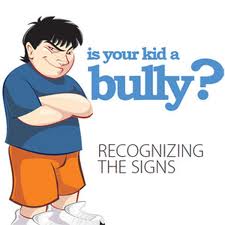
Would You Notice if Your Child Was a Bully?

February 21, 2012

Psychologist Jodie Benveniste thinks parents are so blinded by the belief that their child is perfect that they are startled when confronted with the possibility that their child has been bullying others:

Psychologist Jodie Benveniste says most parents don’t – until they get a call from their child’s school.

“That’s often the first time you hear about it because you’re not there to observe the behaviour,” she says.

Youth worker and school chaplain Nigel Lane says in his experience parents are usually in “total shock” or “total denial” when they learn their child is a bully.

The experts agree there are tell-tale signs parents can look for, including very aggressive behaviour towards siblings, talking aggressively and negatively about other children and coming home with money or items that don’t belong to them.

Lane, who has written several books and is working on another about how to recognise a bully, says most parents eventually accept there is a problem.

 “Generally I say to parents that the first thing they should do is listen. Listen to the accusation, don’t deny and ignore it,” he says.

“Then do exactly the same with your child. Sit down with your son or daughter and just listen. Ask broad questions, such as, ‘School gave me a ring today to tell me something happened at lunch time, what was it?’ rather than saying, ‘You’re a bully’, which could make them defensive.”

Lane says this “gentle” approach is more likely to bring out the truth or a version close to it.

The bullying stigma has become a massive one. It is essential that we don’t label people as bullies haphazardly. What that does is unnecessarily complicate the issue, while it also puts children who are involved in one-off incidents in the same basket as perpetual offenders.

Parents should be open to the fact that their children acts differently at school than they do at home. Schools must realise that such a disparity often comes as a result of the unnatural array of clicks and the deep social segregation that are a common fixture in many schools.

The reason why parents may be surprised to know that their child is bullying isn’t just due to their lack of objectivity, it’s also due to the ‘dog eat dog’ environment rampant in many schools. Kids are presented with an environment that is often vicious, unrelenting and difficult to navigate through.

This of course doesn’t excuse their behaviour. What it does do, is make schools equal partners with the parents in reforming bullying children.