Posts Tagged ‘Politics’

Teacher Morale at an All Time Low

March 8, 2012

Should we be the least bit surprised that teachers are generally not getting job satisfaction? Did anyone consider for a moment that the introduction of standardised testing would do little for student achievement and do even less for teacher morale?

Or better yet, an even more compelling question, does anyone even care about the plight of teachers?

As long as Governments keep on peddling their diatribe about how many poor teachers there are in the system and how they are determined to expose them before slowly weeding them out. As long as Educational bureaucrats have someone to blame for low achievement levels, then why should they care?

Sure there are more stakeholders in the educational system than just teachers, and it’s true that teachers aren’t the only ones responsible for disappointing academic figures, But who cares? As long as the public buy the spin about the poor state of the teaching fraternity, it doesn’t really matter that spending on education is mismanaged and misallocated, curriculums are inflexible and politically motivated and the paperwork expectations of teachers are extremely unfair. Why should it matter?

“Those hopeless teachers! All they ever do is complain!”

So, no, I am not surprised the teachers of New York are not enjoying themselves:

More than half of teachers expressed at least some reservation about their jobs, their highest level of dissatisfaction since 1989, the survey found. Also, roughly one in three said they were likely to leave the profession in the next five years, citing concerns over job security, as well as the effects of increased class size and deep cuts to services and programs. Just three years ago, the rate was one in four.

The results, released in the annual MetLife Survey of the American Teacher, expose some of the insecurities fostered by the high-stakes pressure to evaluate teachers at a time of shrinking resources. About 40 percent of the teachers and parents surveyed said they were pessimistic that levels of student achievement would increase in the coming years, despite the focus on test scores as a primary measure of quality of a teacher’s work.

Sandi Jacobs, vice president of the National Council on Teacher Quality, a nonpartisan advocacy group in Washington, said the push for evaluations, punctuated by a national movement to curb the power of unions, had fostered an unsettling cultural shift.

“It’s easy to see why teachers feel put upon, when you consider the rhetoric around the need to measure their effectiveness — just as it’s easy to see why they would internalize it as a perception that teachers are generally ineffective, even if it’s not what the debate is about at all,” Ms. Jacobs said.

More than 75 percent of the teachers surveyed said the schools where they teach had undergone budget cuts last year, and about as many of them said the cuts included layoffs — of teachers and others, like school aides and counselors. Roughly one in three teachers said their schools lost arts, music and foreign language programs. A similar proportion noted that technology and materials used in the schools had not been kept up to date to meet students’ needs.

“The fixation on testing has been a negative turn of events when the things that engage kids in schools are all being cut,” said Randi Weingarten, president of the American Federation of Teachers.

I could argue that unless teachers are given the conditions and freedom to thrive in their workplace the results are not going to come. But solutions have never been an urgent matter for politicians. They are far more interested in scapegoats – and let’s just say, teachers make great scapegoats!

Sending Children Home With Nits is Appropriate

February 26, 2012

As inconvenient as it is for a parent to pick their child up early from school, there are times when it is necessary to do so. Yes, there is a stigma with lice than can potentially embarrass both child and parent. There is no doubt about that. But schools that are sensitive to the needs of their students will make the necessary arrangements in a discreet and private fashion.

The political correct police obviously don’t trust schools to deal with internal issues themselves. Like in other instances, they like to overrule and impose themselves:

VICTORIAN schools have been accused of discriminating against students with head lice by sending them home from school when their nits are detected, the Herald Sun can reveal.

Federal and state guidelines say schools must not send children home if they have head lice, but merely send a notice home at the end of the day telling parents to treat their child’s hair that night.

Guidelines also say teachers should “exercise sensitivity” towards children with nits for fear of upsetting them.

But schools, preschools and childcare centres across the state are flouting these policies by immediately asking parents to collect their children. Children are often isolated from classmates until they are picked up.

One Melbourne primary school has been asked to change its approach after a complaint from a parent. In a letter to the principal, obtained by the Herald Sun, the parent said any child with head lice should not be “singled out, sent home and denied valuable education, only to return the following day to be reinfested”.

 The parent, who did not want to be identified, said it was “discrimination to pick out one child and send them home when they might be in a whole class of kids with nits.”

Whenever Government regulation overrules schools you know it will end up bringing undesirable results. Lice spreads so quickly and the children suffering with lice are uncomfortable and unable to concentrate. I will continue pressing my school for the right to send children home with lice. That doesn’t mean that I am unaware that children with lice often feel humiliated and ostracised. What it does mean, is that I will handle the matter in such a way as the child receives my care and support and the rest of the class is never made aware of the child’s condition.

Pitting Private vs Public Schools is Bad for Education

February 22, 2012

The fallout of the Gonski Report into educational spending has resulted in the typically predictable bashing of private schools. There is a misguided notion that by funding private schools, Governments are robbing the needs of struggling public schools.

This is simply not the case.

I stand by my remarks from last year:

The continued debate between private and public school funding tires me out. I am a big believer of a well-funded (i.e. wisely funded) public school sector as well as a thriving private school sector. There is no reason why parents can’t be given choice and why supporting private schools must come at the expense of quality public education.

This is where the “Moneyball” analogy fits in.

Moneyball is the true story of Oakland A’s GM Billy Beane. Oakland is severely restricted due to the lowest salary constraints in baseball. Winning means beating teams with much better infrastructure and player payment capacities. Billy is presented with the unenviable task of finding a winning team with the miniscule budget offered. Together with a Harvard economics major, a system is devised that uses statistical data to analyse and value players they pick for the team.

Public schools need to take the same approach. Just like the big baseball teams of the time, plenty of money is spent on public schools, but much of it is wasted money. I look at education in a very traditional way. Whilst it is ideal to have the best sporting fields, technologies and building designs, none of these ingredients has been proven to be essential for teaching and learning the curriculum. The school across the road may be able to give each child their own i-Pad, but that shouldn’t explain a marked difference in maths, science or english results. A teacher should be able to deliver on the curriculum with or without such devices.

Whilst many get worked up when Governments subsidise private schools, there is a good reason why they do it.

1. It takes billions off the budget bottom line. This saves Governments money, resulting in reduced taxes and smaller class sizes in public schools.

2. It allows private schools to lower their fees. This is crucial for parents who are by no means wealthy, but are prepared to scrimp and save (and sometimes take on multiple jobs and a second mortgage) to get their children into private schools. These people should be commended. They work long hours, weekends, give up overseas travel and big screen TV’s, just to give their kids the best education possible. Government subsidies allow that to happen.

In Australia, the Government gives $13,000 to every public school per student. Private schools get $5,000. Factor in to the equation that many private schools are not elite schools with truck loads of money and resources (I work in such a private school, where I earn considerably less than a public school teacher), and you realise that the subsidy shouldn’t detract from a thriving public education system.

By constantly drawing attention to private schools, we risk bringing the private school system down to the public level. What we should be doing instead is trying to get the public school system improved to the level where it gives its private school equivalent a run for its money. That way, you have a private school that sets the bar for top quality education and a public school system that is structured to be able to go toe-to-toe with them based on prudent spending, good decision-making and a workforce of supported and fairly paid teachers.

13-Year-Old Girls Given Contraceptive Implants at School Without Consent of Parents

February 8, 2012

There may exist a rule of patient-child confidentiality, but it just doesn’t seem right that such important information would be withheld from the parents. What makes it even tougher to comprehend is that this service is all done at school.

Girls as young as 13 are being given contraceptive implants at school without their parents’ knowledge.

Nurses insert devices into their arms which temporarily prevent pregnancy by releasing hormones into the blood.

Last year 1,700 girls aged 13 and 14 were fitted with implants, while 800 had injections which have the same effect.

The 2010/11 NHS figures also show that 3,200 15-year-old girls were fitted with implants, and 1,700 had injections.

But under strict ‘patient confidentiality’ rules, staff are banned from seeking the permission of parents beforehand – or even informing them afterwards.

Both forms of contraception can bring on unpleasant side-effects including weight gain, depression, acne and irregular periods.

The jabs have also been linked to bone-thinning, although experts say fractures are unlikely if they are used only for a short time.

The implants and injections are being offered to girls in nine secondary schools and three sixth form colleges in Southampton under a scheme run by NHS Solent. The sexual health clinics also offer other forms of contraception, advice and tests for infections.

I think the patient/child confidentiality should have loopholes and shouldn’t include children under the age of 16. As parents, we have the right to be informed and the right to overrule. People might say that this is a very important service against unwanted pregnancies. That may be so. But in my opinion, the best way for 13 year-olds to avoid unwanted pregnancies is to allow the parents to do their job. The best remedy against teenage pregnancy is vigilant parenting.

Teachers Cautioned Against Venting

February 1, 2012

There is no other job in a democratic country that is legally cautioned against venting or giving political opinions. Unfortunately, teachers have become the focus of regulations that are sensible for the most part, but contain some over-the-top directives.

TEACHERS have been warned against contacting students online amid fears too many are befriending their charges on Facebook.

In a major crackdown on social media use in schools, the State Government has released new guidelines designed to protect teachers’ reputations.

Educators say online smear campaigns by students have put teachers’ careers at risk, with some being forced to move schools.

The Government says the guidelines will also help protect students from inappropriate conduct by teachers.

“That boundary between being a teacher and a friend is one which teachers have to sometimes tread very carefully,” Minister for the Teaching Profession Peter Hall said.

“It’s important to provide parents with the confidence that their teachers have the knowledge available for them to do their job well.”

 Under the online directives launched today, teachers are also cautioned against:

CONTACTING students by mobile phone or email “without a valid educational context”.

POSTING any “offensive or slanderous” material about students, parents or colleagues.

SHARING content from personal social media sites, such as their Facebook accounts, with students.

UPLOADING images of themselves that have “potential to negatively affect their reputation”.

“VENTING” about their work, or posting personal or political opinions.

I have no issue with most of these directives. What I don’t appreciate is being told what I can say and do by somebody else. Teachers have the right to exercise discretion without having to be regulated to do so (I am not referring to inappropriate contact with students). Being told I can’t express my personal or political opinion is not appreciated.

Should Parents Be Allowed to Smack Their Children?

January 29, 2012

Parenting is a difficult job, and as much as I am not in favour of smacking, I think it inappropriate for me as a loving yet imperfect parent to impose restrictions on other parents. How they choose to discipline their children should not be up to me or our politicians.

I believe that smacking does little good in the long-term and can potentially do a disservice to the child. Yet, I was smacked by my parents and have nothing but respect for the way they reared me. They clearly disciplined me out of love and an unwavering determination to enforce healthy routines and boundaries, not out of frustration.

I realise that smacking can escalate into worse cases of abuse, and I naturally abhor the abuse of children. I must say, that I also dislike the spoiling of children and the indifference of some parents in setting boundaries and enforcing consequences for their childs’ unruly behaviour.

Advocate good parenting skills and practices by all means, but don’t stop parents from doing what they feel is right for their own children.

The Exploitation of Children Reaches a New Low

January 27, 2012

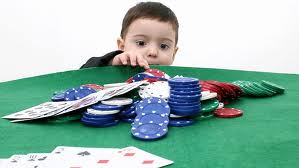
For a developed country like Australia to stoop so far as to allow cafes to give free food to children whilst their parents gamble is simply unacceptable.

CHILDREN are being offered free food as an enticement for their parents to play pokies, in what is being labelled as a gambling loophole.

The gambling watchdog is investigating as inducements for gamblers are banned in South Australia.

In one instance, Cafe 540 – on Port Rd, Allenby Gardens is offering the food to children of gamblers playing nearby poker machines at Tavern 540.

A spokesman for Cafe 540 said the business was a separate entity from Tavern 540 but acknowledged it was “under the same roof”.

He said the free food was served in an area totally separated from the gaming machines of Tavern 540 and was not an enticement to gamble. The Advertiser investigated the issue after a reader complained that the school holiday free food deal was offered “all day every day”.

The Only Ones Who Should Be Named and Shamed are the Policy Makers

January 22, 2012

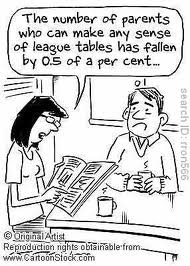
Nick Gibb wants to remove incentives to schools that are protecting their league table ranking at the expense of extending bright students.

Secondary schools that fail to push bright children will be named and shamed in a bid to prevent comprehensives from manipulating the league table rankings, the schools minister has said.

Nick Gibb said he wanted to remove the incentive for schools to play the system by focusing only on pupils whose grades will affect their league table ranking.

Gibb said the tables would include additional information to expose schools who fail to push bright students who were capable of performing even better if they had better teaching.

In the reformed league tables, which will be published for the first time next week, parents will be able to compare schools based on the amount of progress made by the top pupils between 11 and 16.

“The way school league tables have evolved over the past two decades can encourage a degree of ‘gaming’ by some weaker schools, desperate to keep above the standard that would trigger intervention by Ofsted or the Department for Education,” Gibb writes in Saturday’s Telelgraph.

“But the purpose of performance tables must be to incentivise schools to raise standards and to enable parents to make informed decisions when choosing a school.”

The reason why schools don’t invest more time into bright students is not because they don’t care. It is because the system was set up to force schools to protect their ranking. It’s these blasted rankings that taint education. Teaching and learning is not a game. It shouldn’t come by way of fear or shaming, but through sound methods and a positive approach,

Policy makers should be named and shamed for changing the landscape of education. No industry is under so much pressure, with so little real reward. Teaching under a cloud of negativity poorly impacts staff and students.

Perhaps there will be more attention to brighter students as a result of these measures. But in the end, nobody wins from negative tactics and a data driven school system.

Make-Up Lessons for 14-Year-Old Girls Draws Outrage

January 19, 2012

You would have thought we were stuck in the 1960’s. Honestly, to offer make-up classes to young girls is such an outdated idea.

A school has triggered outrage for giving make-up lessons to girls as young as 14.

The classes at Mount St Mary’s Catholic High School in Leeds even teach the youngsters how to get ready for a night out, the Mirror reports.

Teachers claim they help pupils learn how to make a good first impression and can boost their self-confidence.

However, family campaign groups and parents yesterday criticised the school.

The Family Education Trust told the paper: ‘At a time when there is growing public concern about the sexualisation of children and young people, it is irresponsible for schools to provide make-up lessons.

‘Parents don’t send their daughters to school to learn how to put on make-up but to receive a decent education.

‘The fact that some of the pupils asked for these lessons is no defence.

Indeed, it is not for students to dictate what is taught in class. My issue here is it sends the wrong message. True confidence doesn’t come from the ability to apply make-up, it comes from achievement. Far more worthier programs can be undertaken by the school than this one.

Whilst I don’t feel it’s necessary to condemn the school for this error in judgement, I think it’s time they concentrated on making these girls feel good about themselves within their charter of educational outcomes.

Stripping Summer Holidays and Lengthening School Days is Not a Solution

January 14, 2012

If I wasn’t a teacher I think I would have supported Michael Gove’s push for reduced summer vacation and longer school days. Non-teachers are quick to remind us teachers that our vacation time is too long and our contact hours are just as generous. These same people wouldn’t teach if their life depended on it!

Firstly, while it is true that are holidays are long, we teachers get burnt out by the demands of our job. As much as I love teaching, towards the end of a given term, I am crawling towards the finishing line. Teaching is such a physically and emotionally charged career, it is simply impossible to envisage a 4 week annual holiday like other professions experience.

Secondly, our working hours do not stop at the end of day bell. Unlike many other professions, teachers are expected to take their work with them. From planning and marking to writing reports, teachers are forever working. This includes night, weekends and yes, holidays!

Michael Gove seems to think that quality will come with quantity. I am not so sure:

The school day could be extended and summer holidays reduced, Michael Gove, the Education Secretary, said yesterday.

Under the proposals for the extended day, pupils could remain in school between 7.30am and 5.30pm and attend on Saturdays, with an extra two weeks potentially being added to school terms.

Over a five-year period, the extended hours would mean pupils gained as much as a year’s worth of extra education, allowing them to take vocational subjects in addition to their exam material.

Asked how this would affect teachers, he said: “If you love your job then there is, I think, absolutely nothing to complain about in making sure you have more of a chance to do it well.”

Mr Gove said the move would benefit “poorer children from poorer homes”, who “lose learning over the long summer holidays”.

Mr. Gove’s assertion that if teachers loved their jobs they would have nothing to complain about is quite insensitive and offensive. I love my job and do the best that I can. But I have limitations. I feel that if I was teaching in England, this proposal would burn me out earlier and more severely. I find it very sad that the Education secretary is so out of touch with teaching and the demands of a modern-day teacher.