Posts Tagged ‘Parenting’

Modern Educational Thinking: Comedy or Tragedy?

January 31, 2011

Most of us acknowledge that school systems worldwide are deeply flawed and require fresh, new and innovative ideas to get them kickstarted again.  What we don’t need, however, are bizarre, extreme and non-sensical ideas that do more harm than good.

Last week I wrote about the Nebraskan senator trying to pass a bill that would allow teachers and administrators to carry concealed weapons for protection.

This week it’s Florida’s turn to create headlines for putting forward horrendous educational policy:

As lawmakers continue to debate education reform, Florida Rep. Kelli Stargel has a new idea: give teachers a break and grade parents instead.

Stargel has submitted a bill that would let teachers grade parent performance along with student outcomes, reports CNN.

Stargel said that parents should be just as involved in the education process as the students themselves.

“We have student accountability, we have teacher accountability, and we have administration accountability. This was the missing link, which was, look at the parent and making sure the parents are held accountable.”

The bill would give the option of grading parents as “satisfactory,” “unsatisfactory” or “needs improvement.”

Grading parents?  Are you kidding?  Is this some candid camera trick?

Because Stargel so evidently has failed to do her homework, I feel obliged to fill her in on some important points:

1.  Teachers should never judge parents.  It is the teacher’s job to co-operate with parents and assist them, not to assess them.  Unless a parent is abusing the child or engaged in any other form of criminal activity, it is not the business of a teacher to make judgements on parental skills.

2.  Yes, there are parents that do not involve themselves with their child’s education.  Teacher’s should see this as an opportunity rather than an excuse.  The child that doesn’t have actively engaged parents relies even more heavily on their teacher.  This scenario should be seen as a fabulous opportunity to inspire, influence and reinvigorate the child.  Stargel’s idea takes what some teacher’s see as a great opportunity to make a real difference and asks us to see it only as a negative.

3.  By calling on teachers to grade parents, you are turning two crucial stakeholders in a child’s education against each other.  Education is best administered when all major stakeholders are on the same page, or at least can work together harmoniously.  To muddy the waters with negative ideas and forced judgments, Stargel has overlooked the most important ingredients to successful teaching.

In one week we have seen two law makers come up with insane ideas that deal with important issues in a simplistic and scattershot way.  What is it with politicians?  How can such seemingly intelligent people come up such lousy ideas?

Teacher Myth #4

January 28, 2011

Teacher Myth: 4

Teachers should not become emotionally involved with their students


There is a prevailing philosophy in educational circles that teachers are best served by not involving themselves emotionally in the lives of their students.  According to this principle, a teacher must follow procedures without caught up in the difficulties and hardships of their students.

The rationale given for this is as follows:

  1. Teachers are not friends.  Any emotional connection between a teacher and student is unprofessional and breaks the much needed divide between the teacher and student;
  2. Teachers lose their ability to make objective decisions regarding their students when they are emotionally involved; and
  3. If teachers worried about every little thing that concerned their students they would be so overwhelmed and overburdened they would cease to have the energy to work effectively.

So strong are the proponents of this philosophy that some go as far as to say that teachers shouldn’t smile until Easter (Christmas in the US and Europe).  The logic being that is a teacher who smiles loses the authority required to teach effectively.

I personally despise this philosophy.  I find it to be negative, destructive and absolutely outrageous.  If I was forced to teach in such a manner, I would be handing my resignation in before you could say the words, “No smiling!”

When a teacher decides not to become emotionally available to their students, they automatically become emotionally distant.  They become cold, unapproachable, lose their empathy, and lose the respect they thought they could only achieve by acting this way.  Sure they may preside over a quiet and orderly class, but it ultimately would be doing their students more harm than good.

Teachers are the most crucial of role-models.  An integral part of a teacher’s job is to model healthy behaviours.  One of the most humane and important qualities a person can have is empathy.  Without empathy, a person finds it hard to relate and connect with others.  They can become insular, cold and selfish.  These are not the ideal characteristics of a teacher.

Yes, teachers are not friends, and they never should be.  But you don’t have to present yourself as a friend to connect, worry, defend or care about your students.  Sure teachers must be aware that they can’t interact with their students as they would with their friends, but it doesn’t mean that they can’t share a joke or feel bad for a student going through a tough time.

The notion that a teacher loses their objectivity just because they care about their students is utterly false.  Teachers can certainly can maintain objectivity whilst providing care and support for their students.

Whilst I have lost sleep on the account of students’ hardships, it did not overburden me one bit.  In actual fact, I would be far more overtaxed by forcing myself to keep an emotional distance.

This terrible philosophy cost me a number of times during my teaching rounds.  On one occasion it almost caused me to fail.  I had a University inspector sit in on one of my lessons.  Her job was to grade me on my performance.  If I received anything less than a 4 out of 7, I would not only have to repeat the rounds, I would probably have to repeat the entire year.  The lesson went very well.  I prepared my class beforehand for the likelihood that there would be a visitor inspecting me, just so they weren’t freaked out by having a strange adult sitting in the back of their classroom.

I was really happy with how the lesson transpired.  The kids were incredibly well behaved, seemed to enjoy the activity and produced very pleasing work.  After the session, the inspector let me know that she graded me a 4 out of 7.  She said that the class was too well behaved and that she had to mark me down accordingly.  I asked her how teaching a well behaved class could possibly earn me a deduction.  She said that the students were clearly behaving, not because I was a good teacher, but because they liked me and wanted me to succeed.  She said that it is not viable for a teacher to teach in such a friendly manner as opposed to a firm and authorative manner and maintain control of a class.

I absolutely detest this argument.  I had cold, emotionally distant teachers when I was at school, and there’s no chance I am going to become that sort of teacher.  My experience since that episode has shown me that I was right.  Whilst my students are not the best behaved students in the world, and I clearly don’t control a classroom nearly as well as some, my students are happy, respectful, engaged and a pleasure to teach.  They respect me not because I am overly firm, but because they don’t want to disappoint me.  They know I care about them and in turn they want to please me and make me proud of them

Students deserve a teacher who cares about them.  There are plenty of other career options for people who pride themselves on emotional distance such as parking inspectors and tax auditors.


There is Something Seriously Wrong Happening Here!

January 28, 2011

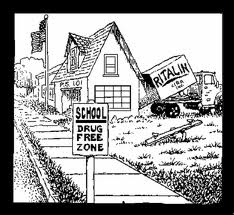
I am no expert and don’t pretend to be one, but I can’t help being quite disturbed by the incredible amount of young children being prescribed medication.  As a teacher and parent, it hurts to know that kids all over the world are being prescribed these drugs in vast numbers.

I realise that there are children that legitimately require medication – but surely we are prescribing these drugs far too easily and haphazardly.  This is not Aspirin!  These are powerful drugs.  Surely, a global body needs to be set up to review the practice of mass prescriptions and to further tighten the regulations.  I am scared for the next generations of children.  I never want to live in a society where prescribing powerful drugs to kids is seen as normal or standard practice.

In the past week alone I have read countless articles on this issue.  The article below from the UK claims drugs are being prescribed for ‘normal’ reasons, such as shyness:

Children are being prescribed mind-altering “chemical cosh” drugs for conditions such as shyness and mild social anxiety, behaviour experts have warned.

Young people are routinely being given medication to treat normal childhood conditions, it was claimed, despite fears over their long-term health.

The disclosure came as it emerged that the number of eight- to 13-year-olds on drugs such as Ritalin has soared seven-fold since 1997.

But Dave Traxson, a senior educational psychologist who works in schools in the West Midlands, warned that children were increasingly prescribed drugs for “normal” conditions.

“I feel very strongly that the time is right to challenge the growing practice of medicating our children for displaying behaviours and thought processes that until recently would have fallen within the normal range,” he said.

There was this article along the same lines from Australia:

THE use of stimulant drugs to treat attention deficit hyperactivity disorder (ADHD) is soaring, with data showing prescriptions for some medications grew by 300 per cent over seven years.

Prescription of the stimulant drugs rose by 87 per cent between 2002 and 2009, Australian researchers have found. Use of one drug commonly sold as Ritalin, methylphenidate, increased by 300 per cent.

Most studies of stimulant medication only tested its effects for between six and 12 weeks, and there was no evidence it improved educational or life outcomes, Associate Professor Jureidini said.

This description from the US site defending the use of Ritalin and other such drugs:

Stimulants are safe and effective for most children, helping them to focus their thoughts and control their behavior. In some children, these medications may cause mild side effects, such as decreased appetite, weight loss, stomachaches, sleep problems, headaches and jitteriness. Rarely, there may be more serious side effects, such as dizziness, stuttering, tics or increased blood pressure.

This article was printed in a Malaysian newspaper:

ALMOST one million children in the United States are potentially misdiagnosed with Attention Deficit-Hyperactivity Disorder (ADHD) because they were the youngest and least mature in their kindergarten classes, a US study found.

And finally, another damning article from the US:

While stimulant drugs have long been known to help children with ADHD alleviate symptoms, new studies have shown the opposite effects.

Many experts recommend prescription of a stimulant drug in severe cases, and often believe ADHD symptoms can be treated by using methods other than medication.

One dangerous possible side-effect of Ritalin is the potential alteration of personality. Some individuals have explained that when medication is stopped, the actions, thoughts, and feelings are vastly different than when taking the medication.

Whilst ADHD no doubt exists, and is often best treated with drugs, I am still of the opinion that we are drastically overprescribing these drugs.  I may not be an expert, but I still feel sufficiently concerned to speak up about it.

As teachers have a part in the decision as to whether or not a child is prescribed medication, I make the following request.  Please don’t take the decision lightly.  Don’t let an easier classroom experience ever taint your objectivity.

An Obsession With Success Leads Tiger Mother to Failure

January 26, 2011

As a teacher, it is my policy not to judge parents on their parenting styles.  I do this for three reasons:

  1. It is rude to judge another person when you haven’t walked in their shoes.
  2. Negative judgements against parents would inevitably cause me to lose focus on my responsibilities to the child; and
  3. Parenting is extremely difficult. I know this because I am a parent.  It is so hard to find the right balance for your child.  Judging others would distract me from improvements I need to make to my own parenting skills.

But every so often you find you have no choice but to make an exception to your rule.  My exception is  Amy Chua, the so-called “Tiger Mother”.

When a person writes a book about parenting they open themselves up to public criticism.  After reading her essay in the Wall Street Journal (I will not be rushing out to buy the entire book) and finding myself cringing all the way through it, I feel that it is the right time to dismiss my “no judgements policy” and respond to her disappointing advice.

The Tiger Mother’s methods are particularly extreme. Swapping one set of extreme methods (The Western methods) for another is unworkable.  Why does everything have to be so extreme these days?  The Education System operates like this.  One day the trend will be all about Teacher Centred Learning, and when that strategy falls flat, the answer then becomes Child Centred Learning.   And back and forward we go between the two very extreme strategies.   The same applies here.  Yes, Western style parenting features some methods which leaves a lot to be desired, but the answer is not its polar opposite.

Why not find “balance?”  That’s right, neither far left or right.  Why not try to focus on what works in different styles of parenting and mould them together?  Surely that’s preferable to going in the extreme opposite direction.  In truth, extremism comes about from insecurity.  The  Tiger Mother’s methods of parenting is both extreme and riddled with insecurity.

By not letting your child go on play dates and taking part in school plays, you are preventing the child from being involved in healthy social activities.  The fact that the stereotypical Asian parents see mingling as a waste of time is very sad indeed.

Pushing a child to not only achieve, but achieve beyond the rest of the class is such a terrible goal for your child.  It forces the child to see their friends as threats and rivals instead of human beings.  It emphasises selfishness and makes it difficult for the child to relate or empathise with others.  Her policy of not letting her kids be anything less that number 1 in their class is quite distressing.

“Chinese parents believe their kids owe them everything.”  This line stunned me.  Why would kids owe their parents everything?  Because their parents sacrificed for them?  Well, what are parents for?  Would it be alright for Amy’s child to approach her and say, ”Mum, how about we make a deal?  I’ll let you enjoy life a bit, and in return, you can let me live a less restrictive existence”?

Amy’s husband is spot on when he said, “Children don’t choose their parents.”  Her response to this more than reasonable point was, “This strikes me as a terrible deal for the Western parent.”  Whilst I think that parents are owed respect and honour, in return, I believe parents owe their children love and support.  I’m not looking for a better deal than that.

Whilst I don’t agree with the Tiger Mother’s approach, I understand that there are people out there looking for strategies that will improve their parenting.  However, when she happily recounted the time she called her daughter “garbage”, I couldn’t help but worry about the effect this book was going to have on others.

Amy’s father once referred to her as “garbage”, and although upset by it, she understood where he was coming from and the point he was trying to make.  That is why she had no qualms with repeating the dose on her poor daughter.   So comfortable was she about referring to her daughter by this term, she goes on to recount how she upset people at a dinner party by frankly discussing how she called her daughter by this name.

Amy, a professor at Yale Law School, should know better.  “Garbage” refers to something that is both useless and worthless.  Calling your child useless and worthless is just not acceptable!  How can a parent be proud of calling their child by such a terrible name?  I don’t care if that type of putdown turns the kid into a Nobel Prize winning scientist, it is not acceptable.

What the Tiger Mother’s  of this world have all wrong is their definition of success.  Success isn’t outdoing people, becoming famous, obtaining wealth or becoming a prodigy.  A successful person in my opinion is somebody who lives with integrity, cares and empathises with others and uses their gifts and qualities to help improve the lives of other people.  Anyone can be successful. Receiving  an A or a C for a maths quiz is not a determining factor.

The Tiger mentality is an extreme one, that combats poor aspects of Western parenting with another equally dismal style of parenting.  What you are left with is a maths whizz that may never enjoy maths, a musical prodigy that never got to enjoy music or properly express themselves through music, a person who thinks parenting is about entitlement rather than love and who is brought up to believe that a friend is anybody that doesn’t dare perform at their level.

It’s time that we preached balance and perspective rather than extremism, we dispensed with “dog eat dog” in favour of “dog support  dog”, and motivate our children without the use of put downs.

Stop Pretending and Start Acting!

January 20, 2011

Parents looking for a school for their kids must hate reading the same line that tends to pop up in all the school’s brochures.  It’s the line that Principal’s claim they pride themselves on.  I bet if I asked you to guess what the line is, you’d come close.

“We provide a warm, safe and secure environment for our students.”

Heard it before?  Have you ever been convinced that it’s true?

A recent poll of parents of Primary school aged kids were asked about their greatest concerns regarding sending their kids to school.

The results were not surprising:

Bullying is the biggest worry parents have when they send their children back to school.

Three quarters of parents fear their child will be bullied – at school and online – a survey has found.

In a sign of their concern, 89 per cent plan to monitor their children’s online activities closely.

Australian parents are also concerned about the costs associated with sending a child back to school, with one in three nominating money as an issue.

A national poll of 1000 parents of primary school age children found almost half believed a passionate and caring teacher, and a fun learning environment, were critical to their child’s success at school.

Curbing bullying is not just a priority – it is the number one priority.  Yes, more important than academic performance.  And why shouldn’t it be the case?  Parents who invest everything they have towards their child’s health and happiness deserve the right to feel confident the school will do its utmost to provide a safe environment for their child.

Don’t just say you are.  Prove it.  Because parents obviously don’t buy it.

And speaking of parents, I couldn’t disagree with this quote from Parenting Victoria’s Elaine Crowle more strongly:

“The best way to prevent bullying is for parents and schools to work together to build resilience within your child.”

No, the best way to prevent bullying is not simply to fortify the victim – it is to stop the perpetrator.  Resilience often means not reacting when being bullied and instead soaking it up.  That is not a remedy against bullying.  Schools must invest a great deal more into curbing bullying than resiliency programs.

It’s time schools were stripped of their right to boast about their so-called safe and secure environment until they adequately prove that this is actually the case.

How Do They Come Up With These Ideas?

January 18, 2011

The latest response to fighting truancy is a full out assault against the parents.  The reasoning is clear.  It is the parents responsibility to ensure that their children attend school.  So bad must be the problem and so unable are authorities to motivate the parents to take a more diligent and proactive role, that a range of strategies, including some very weird ideas are being floated around to punish the parents.

Take this one for example:

Sen. Erik Wells wants to give parents an ultimatum: Send your kids to school, or lose your driver’s license.

The Kanawha County Democrat said Friday he plans to introduce a bill that would revoke a parent’s driving privileges if their child has 10 or more unexcused absences.

“We have to get to a point where we send a serious message to parents,” Wells told reporters at The Associated Press’ annual Legislative Lookahead conference in South Charleston.

Then there is a fine or jail time in California:

As of the new year, California parents face prosecution, fines up to $2,000, and even jail time if they don’t make sure their kids attend school regularly. The new state law took effect on January 1 and was signed into law last September by former Gov Arnold Schwarzenegger.

It’s a strict law, which holds three designations for kids who chronically miss school. A truant is any student who is 30 or more minutes late to class on more than three school days, a chronic truant any student who misses more than 10 percent of school days without a valid excuse. A habitual truant is a truant who continues to miss class even after school officials attempt to reach out to the student. Parents of kids who are chronically truant can be found guilty of a misdemeanor and face a series of fines and punishments, starting with a $100 fine for the first conviction and ending with a year of incarceration and up to $2000 for parents of chronic truants.

The UK have taken a softer approach whilst proudly dubbing it “cutting edge”:

A School in the Peterborough area is introducing cutting-edge technology in its fight against truancy.

Casterton Business and Enterprise College, in Stamford, is attempting to tackle students skipping lessons with Truancy Call, a scheme which allows the school to contact parents of absent children by e-mail, text message or telephone as soon as a child is absent.

Once registration of the schoool’s 800 pupils has been completed, the Truancy Call system automatically calls, texts or emails parents until a response is received.

Once a response is received from the parents any further calls that day are stopped automatically. The school has an attendance rate of more than 95 per cent.

This one is my favourite:

Schools are bribing parents to make sure their children attend classes with the promise of cheap foreign holidays.

Families are being offered a discount if pupils turn up for ­lessons every day next term.

Education chiefs have joined forces with a travel company to offer the holiday discount scheme, which is aimed at slashing truancy.

Please tell me they are putting just as much time and effort into conceiving ways in which to make school a more inviting and accepting place for our children.

Teacher Myth #2

January 14, 2011

Teacher Myth 2:

Teachers have the right to keep parents at a distance.  Since the parents aren’t experts, it’s best they leave it up to professionals.

Teachers, over the course of their careers, will frequently confront angry and difficult parents.  It comes with the territory.  Then there are those parents that are overly anxious and extremely insecure (the ones that provide you with a 100 page dossier on their child before taking them on an overnight camp).  As much as it is tempting to want to shut the door on some parents in particular, and demand that they stay out of the affairs of the classroom, this is not wise.

Teachers have the responsibility to work with all types of parents and to ensure that the parents are well-informed and updated.

Think of it this way.  You have a person who invested most of his savings in shares through a stockbroker.  The person is nervous, and worried that perhaps one day his shares will crash drastically, causing him to lose his nest egg.  So he calls his stockbroker regularly, seeking updates, assurances and reassurances, sometimes more than once weekly.  The stockbroker isn’t a fan of the constant phone calls but sees this as part of his job.  After all, his client is making a big investment.

Now compare that to a parent.  They have entrusted to the teacher the greatest investment any person can make – their own flesh and blood.  Of course, being bugged and badgered by a parent is not much fun, but it is part of the job.  It makes any financial investment drift into irrelevance.

I am certainly not advocating hostile or abusive parents and I believe there are times when teachers must assert themselves against disrespectful and insensitive parents.  But teachers must also be mindful of the rights of parents.  After all, the data is pretty clear – the experiences a child has at school are a great indicator of how they will grow up.  Negative experiences at school can offset all the good work parents do at home.  You can have a tremendously loving home, but if it isn’t complimented by a supportive and nurturing school, the child could grow up with self-esteem issues.

The following are some methods I incorporate in my own teaching to keep parents informed:

1.  I write a newsletter every week which is low on gloss and high on content.  I write about what we covered in class in Maths and English and some of the activities that proved particularly popular or useful.

2.  Together with my newsletter (which I print in hard copy to ensure that the parents read it) I attach a personal student report for each child.  The mini-report features different boxes to either tick or cross off depending on whether or not the child has performed in that area.  The indicators include: behaviour, respecting others, homework, understanding concepts etc.  As well as that, it has room for a comment so I can elaborate and explain why I marked the child the way I did.

This mini-report distributed with the newsletter every Friday allows me to deal with social disagreements, homework not handed in and behavioural issues straight away.  The students know it’s coming and the parents know that they wont have to hear about an incident months later.  My students get very disappointed when (and it happens very seldom) I don’t have the time to include the student report, because they know that their reports usually feature compliments and words of encouragement which they are very proud to share with their parents.

3.  I include parents over the course of the year in selected classroom activities so they feel part of the goings on in their child’s class.

Does this take a lot of my time?  It sure does.  But it’s worth it because the parents trust that I know what I’m doing and they are properly informed about the progress of their child and the skills and concepts being taught in class.  It works brilliantly at cubing the amount of complaints and enquiries I get.  By saturating (and perhaps even boring) parents with information, they stopped feeling the need to ask questions.  Because some teachers don’t disclose such information, it leaves it to the parents to guess.  Guesswork can often lead to negative conclusions.

Again, no teacher should tolerate abuse from parents.  However, teaching involves interaction with a diverse range of students and parents who have their own unique personalities and character traits.  And the key is to function in a way that’s going to benefit all stakeholders.

Time to Show Support for Teachers

January 12, 2011

Something tells me 2011 is not The Year of the Teacher.

After the disappointment of the New York Supreme Court ruling that teachers alleged to be underperforming can be named and shamed by the media, an unfortunate trend is becoming clear –  teacher blame.

Teachers I am told, are the most bullied of all professionals.  They are subjected to bullying from a variety of sources; their superiors, parents, colleagues, students and as we see from New York, the Government regulators.  For a profession desperately looking for fresh, talented and passionate recruits, teachers have never had it so bad.

Today I read of the rise in bullying from parents through the use of social media such as Facebook.

The NAHT (National Association of Headteachers) says it receives hundreds of calls every week from teachers who are being ‘cyberbullied’ – and the majority of complaints are about parents using the web to criticise teachers or heads.

In 2009, research by the Association of Teachers and Lecturers (ATL) and the Teacher Support Network suggested 15% of teachers had experienced cyberbullying, and it is believed this figure is growing.

One English teacher in the West Midlands told the ATL: ‘I found teaching stressful already but when it got to the point where I was getting home and finding messages about me on social networking sites, or horrible photos on my computer I couldn’t cope.’

The ATL says that one teacher had a fake Facebook account set up in his name containing false sexual allegations.

Another teacher suffered stress after a video of her teaching appeared on YouTube.

The 2009 ATL research showed that 63% of teachers who had suffered cyberbullying personally said they had received unwelcome emails. Over a quarter had had offensive messages posted about them on social networking sites such as Facebook and 28% described being sent unwelcome text messages.

A 24-hour counselling helpline called Teacherline set up in October 1999 for stressed teachers in England and Wales now receives thousands of calls a month.

Teacherline reports that teachers are four times more likely to experience stress at work than employees in other professions.

It is true that not all teachers are good at what they do.  Many are way below standard.  But it’s not an easy profession and it usually isn’t the career path a person just falls into.  People usually take on teaching because they have an affinity with either child, subject or both.  Instead of bullying teachers, how about we call for greater support of teachers.  Help them improve with a positive framework rather than negative cajoling.
How about starting pro-teacher Facebook pages?  Facebook pages which call on Governments around the globe to stop using teachers as scapegoats and stop stirring mass hysteria about the quality of teachers through the media?  How about Facebook pages that seek to empower and revitalise the teacher rather than tear them down even lower, and inadvertently, tear down the fabric of this great profession with them.

A Sensitive Issue that Drives Male Teachers Away

January 11, 2011

I don’t like talking about it and neither does many of my male colleagues, but it is a major reason for why there are so few male teachers in Primary/Elementary schools.  The fear of being maliciously and unfairly accused of inappropriate conduct with students drives male teachers away from the early years.  I wrote a post just last month which showed that “the main reason (Canadian) men avoid these young grades is they don’t want to be accused of being pedophiles.”

Recently, a new training video urging teachers never to engage in physical contact with pupils, even when adjusting the position of a child’s hand on an instrument was released.

The film, called Inappropriate Demonstration, shows a violin lesson in which a pupil fails to play the right notes. The teacher explains the technique by placing a hand on the pupil’s shoulder and holding his fingers in the right position on the violin. He then explains it a second time by demonstrating on his own violin the correct position. The pupil then plays the correct notes.

The film advises teachers: “It isn’t necessary to touch children in order to demonstrate: there’s always a better way.”

Thankfully, Michael Gove, the Secretary of State for Education in the UK, condemned the video.

That approach “plays to a culture of fear” among children and adults, he said, as he ordered schools to abandon “no contact” rules between teachers and pupils. It was “positively right” for teachers to comfort distressed pupils by putting an arm around them, or demonstrate sports skills through physical contact with a child, he said.

The mother of one of my best friends is a teacher who was maliciously accused of improper conduct with a student because she touched the students hand in an attempt to guide him in correct handwriting technique.  It’s scares me personally, because as careful as I am to stay professional and squeaky clean, it is much easier (in  this respect) teaching older kids.

To make matters worse, the kids are used to getting hugs from, and sitting on the lap of, female teachers.  I literally have to tell my students on the first day that under no circumstances can they hug, pat or touch me.  They don’t understand, but thankfully they comply.

I believe that the fear of an inappropriate teacher is a natural one.  The media reports on a new  “monster” every day, who takes the privilege of teaching children and abuses it in the very worst way.  I believe that the prime responsibility is to safeguard the children.  Their safety is far more important than my working conditions and pressures.

However, all things said and done, when you are told that you can’t readjust the grip of your music student, you are reminded why male teachers look elsewhere for a career.

Cell Phone App to Take on Bullying

January 9, 2011

It was always going to happen.  Marketing and advertising executives were always going to try to find a way to cash in on the unfortunate bullying issue which is prevalent in schools worldwide.  Here are two new products invented to ward off bullies:

1. Cell Phone App – For $10 a month a parent can buy an app for your child’s cell phone. It will scan texts and emails for language that might indicate bullying is going on, and if it is found the parent receives an alert. It is available at www.websafety.com.

2. The Backpack with Alarm – The iSAFE backpack is marketed as something a child can use if they feel their safety is in danger because of a bully. It comes with a cord the child can pull that sounds an alarm. It costs about $60.

I don’t feel comfortable with companies profiting from bullying.  That cell phone app should be free of charge.

And the bag? Can you imagine how much worse the bullies are going to become when they find out their victim carries a bully bag?  I can just hear them now:

“Oh, your mommy bought you a bully bag!”

The true reason why this is all so sad, is not just that executives in fancy suits are starting to equate bullying with dollar signs, and it’s not just because some of these ideas are going to incite bullies rather than tame them.  No, the saddest part of this story is that there are desperate people out there so deeply afflicted by bullying and so desperate to make it go away.

My recommendation to every boy and girl subjected to constant bullying is to buy the backpack and hand deliver it to your Principal.  The message needs to get through loud and clear.  This is not good enough!