Posts Tagged ‘Parenting’

Enough With the Soft Penalties for Bad Teachers!

April 6, 2012

I am sick of reading about terrible teachers getting whipped with a feather for grossly unprofessional and immoral behaviour. Why they can’t be given their marching orders makes no sense to me. Some of these offences are awful.

Who would want their child exposed to these people?

A health teacher at a high school in Manhattan, joking about life for homosexuals in prison, forced a male student to bend over a desk, lined up behind him to simulate a sex act, then quipped, according to an Education Department investigative report, “I’ll show you what’s gay.”

A high school science teacher in the Bronx who had already been warned about touching female students brushed his lower body against one student’s leg during a lab exercise, coming so close that she told investigators she could feel his genitals through his pants.

And a math teacher at a high school in the Bronx, investigators said, sent text messages to and called one of his female students nearly 50 times in a four-week period and, over the winter holidays, parked himself at the McDonald’s where she worked.

The New York City Education Department wanted to fire these teachers. But in these and 13 other cases in recent years in which teachers were accused of inappropriate behavior with students, the city was overruled by an arbitrator who, despite finding wrongdoing, opted for a milder penalty like a fine, a suspension or a formal reprimand.

As a result, 14 of those 16 teachers are still teaching and in contact with students, on either a daily or occasional basis. The other two were removed from their positions within the last month when new allegations of misbehavior surfaced against them, according to the Education Department. The department released records of the 16 cases, including reports compiled by the department’s special commissioner of investigation and the arbitrators’ rulings, under a Freedom of Information request.

The subject of teachers behaving inappropriately has suddenly emerged as a pressing concern, given the arrests of at least seven school employees on sexual offenses involving students in the last three months, including one Tuesday of an assistant principal in the Bronx who was accused of groping two girls.

In two of those cases, the employees had a history of behaving improperly around students, but simply moved to another school and kept working. So in February, Dennis M. Walcott, the schools chancellor, ordered a review of all substantiated cases of misconduct. After the review, he fired four aides and began proceedings to fire four tenured teachers.

But as the 16 newly released cases show, they will not be easy decisions. As in many states, New York law grants tenured teachers the right to a hearing in front of an arbitrator before they can be fired. Teachers can also appeal an arbitrator’s ruling to a civil court.

“As I was reviewing these cases, I said, ‘Huh? How could this person go back to the classroom?’ ” Mr. Walcott said in an interview Thursday. “It’s very frustrating. Definitely my hands are tied because the arbitrator made a ruling, because I would not have put these people back in the classroom.”


Are Parents Creating a Generation of Spoilt Children?

April 4, 2012

I think teachers should be very careful when criticising parents. Whilst I have no doubt that parents who don’t demand help around the house often breed lazy kids who lack independence and motivation, school isn’t necessarily the place to gauge whether or not a child is spoilt.

Teachers have been instructed for many years to become emotionally distant. This philosophy has become very prevalent and the results are as gloomy as the methodology. No teacher adopting this style of teaching can ever compare themselves to a parent. When parents set boundaries they do it with love and deep concern. If a teacher decides to become emotionally distant, they lead their students to believe that their boundaries are set without a deep-rooted connection to the child. The child comes to believe taht the rules were set for selfish reasons, because “it’s not as if my teacher cares about me anyway!”

That’s why I am not sure the connections made in this article are necessarily accurate:

Some middle class parents are turning their children into “little Buddhas” by “waiting on them hand and foot” at home, a teachers’ leader has said.

Association of Teachers and Lecturers general secretary Dr Mary Bousted warned spoilt children had “disproportionate” consequences for behaviour in schools.

Parents needed to be confident in saying no to their children, she said.

It come as the union debated calls for tough behaviour sanctions in school.

The ATL conference in Manchester earlier heard that measures such as detention, suspension and exclusion, were failing to deal with behavioural issues.

But Dr Bousted laid the blame firmly with poor parenting in both poor and middle class homes.

While acknowledging most parents did a good job, she told reporters: “Children without boundaries at home resent boundaries imposed at school.

“We need to be confident in saying we can go so far but no further we need to be more confident in what we think is reasonable.

“How many parents ask their children regularly to contribute to the running of the house?

“Far too many children are waited on at home hand and foot. They don’t do the washing up and they don’t do the hoovering and the don’t have to make their own beds.

“We are not doing them any favours if we make them into little Buddhas at home,” she said.

“And it certainly doesn’t do them any favours in school”.

I also don’t agree that this style of parenting is more prevalent in lower and middle class families than wealthy families.

At the end of the day, until our teachers uniformly dispense with strategies that preach distance rather than concern, we can never connect symptoms in the classroom to habits taught from home.

Boundaries are more likely to be respected when the child feels that the person setting them respects them.

When Will Principals Start Taking the Side of a Teacher Over a Parent?

April 3, 2012

Those who read my blog know how nervous I am about teachers who have readily accessible Facebook pages. I have read too many stories of teachers whose careers and reputations have been jeopardised by an update status or cheeky photo.

But the story below story reminds us that there is another important factor at play here. Teachers are people like everyone else. We have every right to enjoy the sorts of pleasures that non-teachers do. Teachers should be able to, within reason, use their Facebook page without the need to have it monitored or vetted by a superior.

And if a parent complains about content on a teacher’s Facebook page, or any other matter that doesn’t qualify as extremely serious, I’d love to see the hierarchy defend their teachers.

Principals and superintendents seem far too reluctant to back their teachers in the face of controversy. A healthy school culture requires parents to be involved in the running of the school. An unhealthy school culture has the parents actually running the school.

When a parent complained about a PG-13 photograph on a teacher’s Facebook page, the superintendent should have defended his/her teacher:

When Kimberly Hester of Cass County, Mich. posted with permission a photo a coworker sent her on Facebook, she didn’t think it would offend the public school where she taught, or lead the superintendent to demand access to her Facebook page.  But a photo of her coworker with her pants down did just that.

Hester, 27, was a full-time peer professional, or teacher’s aide, at Frank Squires Elementary in Cassapolis, Mich. for about two years. In April 2011, a coworker texted a photo showing herself with her pants around her ankles, with the message “thinking of you” as a joke.

“She’s actually quite funny.  It was spur of the moment,” Hester said, adding that there was nothing pornographic about the picture, which only showed the pants, part of her legs, and the tips of her shoes.

“I couldn’t stop laughing so I asked for her permission to post it [on Facebook],” she said.  The coworker agreed.  Hester said all this took place on their own time, not at or during work.

Hester said a parent (not of one of her students) showed the photo to the superintendent, calling it unprofessional and offensive.  Hester said the photo could only be viewed by her Facebook friends.  The parent happened to be a family friend.

In a few days, the superintendent of Lewis Cass Intermediate School District, Robert Colby, asked Hester to come to his office.

“Instead of asking to take the photo down and viewing it from my friend’s point of view, they called me into the office without my union,” she said.  Hester is a member of the Michigan Education Association, which represents more than 157,000 teachers, faculty and support staff in the state, according to its website.

The superintendent asked that she show her Facebook profile page.

“I asked for my union several times, and they refused.  They wanted me to do it right then and there,” Hester said.

Hester’s story echoes reports of employers asking job applicants for access to their Facebook pages.

Hester said she and her coworker pictured in the photo were put on seven weeks of paid administrative leave, and they were eventually suspended for 10 days.  She said the coworker, who was up for tenure, was forced to resign.

Hester said she returned to work in September when the school year began.  While Hester previously worked assisting a teacher for emotionally impaired students in kindergarten through the fourth grade, she was assigned another program and was placed under a strict directive.  She said she was instructed not to speak with coworkers unless it was about a student and could not go to the bathroom before asking.

She said her contract allowed her 14 paid days off but the school would not let her use them.  She said she was also directed to read books about communication and to take 49 online classes.  She said that and the work environment at school took a toll on her emotionally in November 2011.

“I had a nervous breakdown, went to hospital and was put on medication,” said Hester, who has been on unpaid leave since November.

I greatly respect parents who are actively involved in their childs’ progress. However, if they ever raise concerns over a teacher, that teacher should be given the support and assurance they deserve.

Counsellor Calls for Parents to Become More Selfish

April 2, 2012

Parents do not need to become more selfish. If anything, the opposite it true.

Parents should not be criticised for the time they invest into their children’s wellbeing. That is time well spent. Parents who devote extra time to ensuring that they are spending quality time with their kids, have an understanding of the specific personality that their child possesses and makes adjustments to their parenting to suit the child in question is bound to be rewarded.

Counsellor Jenny Brown seems to disagree:

The Growing Yourself Up author says parents need to stop obsessing about their children and start focusing on themselves – for their own and their child’s sakes.

“The key to being a grown-up parent is to take away your focus on making your child’s happiness a project, and putting the focus back on being a clear-minded, principled adult,” Brown says.

“It’s when the parent takes time to clarify their principles, think about their job description, think about what they’re in control of and what they can’t control in their child.”

The Family Systems Institute director says focusing on yourself is the best way to ensure your child grows up happy and self-reliant.

“It’s definitely not selfish. It takes a lot of thoughtful effort to be a strong, loving presence for a child,” she says.

I don’t disagree with the notion that parents also need to look after themselves. Likewise, I agree that the time spent with their kids needs to be ‘quality time’, not ‘babying’ time. Parents shouldn’t be doing their children’s homework and they should attempt to help their children grow to become independent.

I just don’t believe that selflessness is a problem affecting the broader parenting community.

Supreme Court Gives Permission for Teachers to Have Sex With Students

April 2, 2012

I don’t care if the student is 18 or 80, a teacher has no place engaging in sexual activity with a student. It is inappropriate and immoral, and should at the very least cost the teacher their job. A teacher can not properly conduct a classroom when they are intimate with one of their students.

I am very disappointed to read that an Arkansas Supreme Court decided it is okay for teachers and students to have sex, as long as the student is 18.

The ruling is in response to an appeal by David Paschal, an Elkins High School teacher found guilty of having consensual sex with an 18-year-old student.

State attorneys argued the law protects high school girls and boys from sexual advances by teachers. But the high court says regardless of how it feels about Paschal’s conduct, they can not abandon their duty to uphold the law.

Therefore, Paschal will have his convictions reversed and dismissed.

At a local high school baseball game on Saturday, parents reacted to the news.

“These teachers should know better because there is a difference when you are being a teacher and a friend; and somebody that is having sex with your students,” said Denise Colson.

Amy Dardenne added, “If the child wants to have sex when they are 18 with their teacher, that is fine. They are adults at 18, so they might as well do what they want to do.”

It’s unclear whether anyone in the legislature will attempt to rework the law. A spokesperson for Governor Mike Beebe says it is way to early to talk about any kind of response from the State Capitol.

Arkansas Attorney General Dustin McDaniel says his office respects the court’s decision, although they disagree with it and are evaluating all options.

It is not”fine” for an 18 year-old to bed their teacher. It is tantamount to a breach of trust on the part of the teacher. That teacher is bestowed with the responsibility of grading impartially, treating each student fairly, being a good role model and responsible citizen.

None of which can be said of a teacher who has sex with a student.

In my opinion, a high school teacher who is found to have been engaged in a sexual relationship with their student should be imprisoned for their actions.

Click on the link to read How Can a Child Sex Lobby Exist in the First Place?

Click on the link to read Should Classrooms Be Fitted With Surveillance Cameras?

Click on the link to read Teacher Orders 20 Classmates to Beat Up Bully

Tips for When Your Child is the Bully

March 31, 2012

It is never a pleasant experience when loving parents find out that their child is bullying others. The crucial reaction is not to deny it or pretend it doesn’t exist. The child must be confronted, and the tone of the communication must be both direct and supportive. They must realise that whilst you deeply care about their feelings and wellbeing, their behaviour needs to change.

Below are some helpful tips by Dr. Christine Carter, Mary Gordon, Pat Mitchell and Dr. June Reynolds:

  • One building block toward empathy can be talking with them about their feelings and emotions.
  • Model empathetic, compassionate behavior by treating children and others respectfully.
  • Share your own experiences of vulnerability with your children.
  • Provide consequences for bad behavior. If a child mistreats another, take away a privilege; if a child sends mean texts, take away his/her phone, for example.
  • If a child mistreats others, examine the family and school dynamics for signs that he/she is feeling mistreated or powerless.
  • Seek help from teachers and principals, other parents and mental health professionals, if necessary.

Can You Affect the Emotional Intelligence of Your Baby?

March 30, 2012

As a father of a newborn baby I was wondering what, if any, impact I could have on his emotional intelligence. I came across a piece by psychologist Angharad Candlin, that raises some of my questions and seeks to answer them.

Can you influence your child’s emotional intelligence from birth? Does your style of parenting influence the way your child responds to stressful situations? Are you potentially pre-disposing your toddler to tantrums? Are there behaviours as a parent you can adopt to help your child develop without worrying behaviours. Without meaning to set you up for further parenting guilt baby and family psychologist Angharad Candlin talks about emotionally connecting with your baby and toddler and gives us some easy hints to make those important early connections.

As a parent I am always trying to research the best way of raising my child. It’s simple, there are behaviours I want to encourage and quite a few I want to avoid, mainly tantrums. It’s easy to imagine if you were a terrible and reckless psychopath it would be easy enough to damage a child very badly but what about the vast majority of parents who want the very best for their child? How much can we as parents can do to influence our baby’s personality and approach to stressful issues and if it is possible to influence such behaviours why aren’t we running classes for all parents!

This podcast is not designed to point out where you might be going wrong but rather to show just how a few simple tweaks might make your parenting journey a little easier. Angharad Candlin is a child psychologist with twenty years experience working with children, young people and families. Angharad offers parents insight into ‘Emotion Coaching’, which is one way that parents can connect with what is really happening in their child’s life.

Angharad says when toddlers experience emotion; they often have “big” behaviour, which can be read as ‘misbehaviour’ rather than as an emotional response. If parents pick this up early, and give toddlers a reliable language and feedback about their emotional world, then they can choose a response that connects with their child.

Angharad is an Honorary Associate with Macquarie University’s Psychology Department.

The podcast is available by following this link.

Too Many Tests, Not Enough Teaching

March 30, 2012

The rise of standardised testing has replaced authentic teaching and learning with a saturation of practise and formal testing:

SATURATION testing is seriously undermining the quality of primary school education and should be stopped immediately, parents and educators claimed yesterday.

Thousands of kids are subjected to trial exams every week in the lead up to the compulsory Naplan tests, as well as exams for opportunity classes or selective high schools, and coaching by private tutors.

But while Naplan, which forms the basis of performance ratings on the My School website, focuses on literacy and numeracy, experts claim they are being “taught to the test” at the expense of other areas such as arts, physical education and music.

With the barrage of testing beginning in kindergarten, education consultant and public schools principals’ forum official Brian Chudleigh said the system was “out of control” and skewing education in the wrong direction. A former senior principal who is the education expert for The Daily Telegraph’s People’s Plan, Mr Chudleigh said the testing regime was contributing to a “massive dysfunction” in the state’s education system.

“We have become a system that is manic about measurement – the main problem is that it is so convenient for the politicians,” he said. “They want to reduce things to the value of a percentile or a number, and that has an impact on education.

“If a kid can’t be measured they don’t want to know about it.

“It reduces the value of anything that you can’t measure and the curriculum becomes focused on the measurable stuff,” Mr Chudleigh said.

“So the development of the whole child – including socialisation, emotional welfare, physical fitness and cultural factors – are relegated in importance.

“Many schools are having two or three lessons every week practising Naplan-style tests and that takes valuable teaching time away from other subjects. A lot of the best stuff we do with kids, particularly in primary school, is not measurable.

“It’s out of control. But our universities are littered with these kids who don’t do as well there as the generally all-round educated students.”

Federation of Parents and Citizens’ Associations spokeswoman Rachael Sowden said being taught to the test was “not what parents want”.

“They do not want to know that their child scored three marks more than the kid down the street,” she said. “Parents are as concerned about the whole child and how they are going in creative arts, physical education and music as much as in literacy and numeracy.

“Parents do want to know where their child is up to at school and they do that best by having a conversation with the teacher.”

I hate having to prepare 8 year-olds who have never sat for a formal test before for the rigours of the 3 day marathon that is NAPLAN. It’s just not fair! They are too young!

Teachers Concerned About Violent Video Games

March 28, 2012

Whenever teachers dispense parenting advice, the outcome is almost never a positive one. As much as I agree that children who are exposed to violent movies and video games are worse for it, I think it is essential that teachers spend less time judging parents and more time concentrating on the curriculum.

Still, in a perfect world, parents should reflect on some of the criticisms conveyed by teachers:

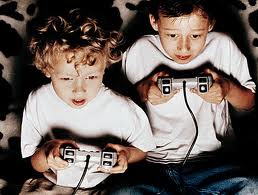
School pupils are being allowed to stay up until the early hours of the morning playing games that are inappropriate for their age, said Mary Bousted, general secretary of the Association of Teachers and Lecturers.

She said many parents were failing to adhere to age-restrictions on the most violent games, raising concerns that children are growing up desensitised to aggression and bloodshed.

It was also claimed that over-exposure to screen-based entertainment was robbing children of valuable time interacting with friends or playing outdoors – harming their education and long term development.

It follows repeated concerns from psychologists that watching violent films and playing games such as Grand Theft Auto, Mortal Kombat and Modern Warfare makes youngsters more prone to violence.

Speaking yesterday, Dr Bousted said: “I think what we are talking about, first of all, is the amount of time children spend locked in their room. The fact that children spend hours locked in their rooms playing computer games, which means they’re not interacting, they’re not playing and not taking exercise.”

Some of these games were “very violent”, she said, and risk having a major effect on “tender young minds of children and young people.”

Dr Bousted said that many teachers fear parents are ignoring age restrictions on computer games, which often ban their sale to children aged below 18.

“The watershed tends to work quite well, but with online TV and video children and young people are probably watching inappropriate content over a range of media,” she said.

It would be great to share criticisms with parents without fear of reprisal. But, in my experience, the importance of having parents on side means that these criticisms can interfere with a healthy parent/teacher partnership.

3rd Graders Perform Sex Act in the Classroom Without Being Noticed

March 25, 2012

Whilst I can’t understand why a teacher wouldn’t have spotted their students performing oral sex in the classroom, I don’t think that the teacher’s role in this story is the critical one. What I want to know is how on earth do 8 year olds end up behaving like that in the first place?

An unnamed teacher at Tallulah Elementary School in Tallulah, Louisiana has been fired from her job as a teacher for not noticing two third graders engaged in oral sex underneath a table, according to the local News Star.

District Superintendent Lisa Wilmore made it clear to the paper that the teacher was fired because the incident occurred on her watch.

Wilmore said, according to the News-Star,

“The principal felt that she was not monitoring the classroom adequately. The principal made a decision, and I supported the principal. We have to make sure we have people in these classrooms who are monitoring our students.”

The district of Tallulah has been dealing with several problems this year.  Recently another teacher was placed on leave for a substance abuse problem.

The School District also announced that while the two children are going through counseling they are not going to be disciplined or have their studies hurt.

Both teacher dismissals were part of what Wilmore is calling her program of “Changing the culture” in the school district.

It doesn’t matter how many teachers that school fires, they won’t come close to changing the culture of the school without investigating the behaviour of their students. What are these children exposed to at home? Are these kids exposed to pornographic material? Did they now what they were doing? What are their parents’ role in this incident?
It is not enough to focus on the teacher. Yes, the teacher could have prevented it from happening by being more alert. Yes, teachers who don’t notice major incidents under their watch have some serious questions to answer. But that should never prevent the school from investigating the reasons behind the incident and find out what caused their students to act that way.
Sacking teachers in the name of an improved school culture is useless when third grade children feel the need to engage in sex acts and seemingly nothing is done about it.