Posts Tagged ‘Nutrition’

Popcorn Linked With Alheimer’s

August 9, 2012

Looks like the calories in movie popcorn isn’t the only reason to consider passing on the traditional cinema treat:

Movie popcorn has often been criticized for its high calorie count, but now the tasty treat may harm more than just your waistline.

A recent study has found that diacetyl, an ingredient in popcorn responsible for its buttery flavor and smell, may be linked to Alzheimer’s disease, UPI.com reported.

The scientists said they focused on the substance, because it has already been associated with respiratory and other health issues in workers at microwave popcorn and food-flavoring factories.  According to UPI.com, diacetyl is used in other products such as margarines, snacks and candies, baked goods and in some beers and chardonnay wine.

Click on the link to read The School Campaign Against Milk

Click on the link to read Teachers Should Stop Blaming Parents and Start Acting

Click on the link to read The Benefits of Reality TV on Kids

Click on the link to read Study Reveals Children Aren’t Selfish After All

Food Giants Marketing Unhealthy Kids Foods as Healthy

July 10, 2012

Food companies wouldn’t be “conning” well-meaning parents, would they?

CHILDREN are being conned by food companies who are making fatty and sugary foods appear to be healthy, a study suggests.

Some of Australia’s most popular brands, including Kellogg’s and Nestle, have been accused of making food that appeals to children look healthier than it actually is, the Flinders University study shows.

Researchers, led by lecturer Kaye Mehte, found 157 products on a major supermarket chain’s shelves with packaging designed to appeal to children through cartoons, competitions and give-aways.

More than three-quarters of these products were deemed to be unhealthy, primarily because they are high in fat and sugar.

But more than half of them had prominent nutrition claims on the packaging, boasting that the product is, for example, “99 per cent fat free”, “high in calcium” or has “no artificial colours”, they found.

“This has the potential to mislead and confuse children as well as parents who would be more inclined to purchase products carrying claims about health and nutrition,” Dr Mehte said.

Jane Martin, executive manager of the Obesity Policy Coalition said using the techniques to attract children to unhealthy food was “simply unethical”.

Discussing Weight Issues with Your Children

July 2, 2012

I am of the opinion that one shouldn’t need to discuss ‘weight’ with issues with your children. I prefer a more positive approach where healthy food and exercise is promoted rather than “negative talk” which is likely to make the child even more self-conscious.

A new report says parents are concerned that talking to their child about their weight will lead to an eating disorder.

This figure rises to 65% of parents who identify their child as being overweight or obese.

More than 1,000 parents with a child aged 5-16 responded to the Let’s talk about weight survey on Netmums and shared how they feel about bringing up the topic of weight with their child.

I do understand that the problem is more complicated than just advocating health over weight loss. I also realise that children are too smart not to realise that healthy lifestyle measures are a result of their weight issues.

What is your opinion? How should parents discuss weight issues with their children?

Click on the link to read my post, ‘Sparing Young Children the Affliction of Body Image‘.

We Should be Promoting Health Instead of Focusing on Obesity

June 21, 2012

It seems that we have given up on promoting healthy lifestyles and educating our students about nutrition. It’s now all about avoiding obesity:

The American Medical Association on Wednesday put its weight behind requiring yearly instruction aimed at preventing obesity for public schoolchildren and teens.

The nation’s largest physicians group agreed to support legislation that would require classes in causes, consequences and prevention of obesity for first through 12th graders. Doctors will be encouraged to volunteer their time to help with that under the new policy adopted on the final day of the AMA’s annual policymaking meeting.

5 Ways to Get Kids Active

June 19, 2012


I heard a very surprising fact on the radio the other week. A nutritionist asked the listeners what they thought the leading cause of death was. Like most, I thought the answer was something like heart disease, obesity or cancer. It was none of the above. Apparently, the leading cause of death is inactivity.

That’s why it is so vital that we help our children to become more active. Here are some helpful hints by Steve Ettinger, a children’s fitness expert and author:

Be creative

Whether you live in an urban, suburban or rural environment, use the space, time and resources you have to find ways to exercise. For example, if you live in the city and don’t have access to outdoor space, find indoor activities. Ettinger also says if kids are sitting in front of the TV, challenge them to exercise in short spurts during commercials. It is a far better solution than having them get up to snack on junk food.

Schedule time to exercise

Writing down time to exercise makes it much more likely that you will do it. Even if it’s just playing at the park, schedule that time in your calendar.
Ettinger also says children who eat poorly will naturally not have as much energy and as high of an activity level as children who eat nutritiously.

Get involved as a family

One of the best ways to get children to exercise is for the family to participate together. Find something that everyone enjoys doing, such as bike riding or going for a walk around the neighborhood, and do it together. That way, there are fewer safety concerns because kids aren’t out by themselves, and everyone in the family – including yourself – gets to benefit from moving around.

Find something your kids enjoy

One reason kids stop exercising is that they are forced into activities they don’t enjoy. If your child doesn’t like a particular activity or organized sport, be patient and take the time to explore different options. Ettinger says if kids find activities fun, they will usually stick with them. He also says it’s best to find an activity for children before age 10 – otherwise, inertia will become a habit.

Educate yourself

Modeling proper nutrition and exercise is the best way to teach your kids about maintaining a proper weight and a healthy lifestyle. Ettinger says he is amazed by the number of parents who have misconceptions about proper nutrition. Seek out resources so you can learn the basics and incorporate these lessons into your own life.

Click on the link to read my post on 6 Strategies for Promoting Healthy Food to Kids.

Most People Think This Woman is Fat

June 3, 2012

This morning’s newspaper asked readers to comment on whether or not they thought this woman was fat. Whilst I don’t think this woman is fat at all, it is the question itself that got me worked up.

It reminded me about how obsessed we are about weight, and how this obsession is going to ensure that our children will spend more time aspiring to fit a certain look rather than to become good people.

Nobody seems to care anymore whether a person is caring, selfless, charitable or kind. These are attributes of losers. Surveys that ask what we would prefer to be, beautiful or kind, favour beautiful every time. The rationale being, that nobody is jealous of a kind person in the way they are of a good-looking one.

How are our children supposed to make sense of this?

It upsets me to see Primary aged children so conscious of their weight. It bothers me no end that 8-year olds know everything there is to know about the perfect body size and shape, but have no insights on the correct protocol for offering ones seat to an elderly person on a crowded train. The thought would never have entered their mind.

Haven’t we learnt our lesson? Did we not realise that an obsession with looks leads nowhere. It doesn’t make one happy. Why are we creating kids that follow our sick ways? Why are we perpetuating the message that there’s nothing wrong with gossiping, fakery and selfishness, but eating ice-cream is a sin?

So, no, I don’t find the woman fat. But guess what? I don’t care whether she is fat or not. I care whether she is a good woman, a kind wife, a loving mother, a loyal friend, a friendly co-worker etc. And ultimately, that’s what I want us all to look for.

There are frumpy, unfit people out there, with pale complexions who have unpopular taste in clothes. Some of these people are also tremendously kind and good-hearted. It would be criminal for us to marginalise these people, as some of them are the real beautiful people!

6 Strategies for Promoting Healthy Food to Kids

April 19, 2012


It is very difficult task to ensure that your child is eating the right foods and is not overdosing on unhealthy, preservative ridden rubbish. It can make me feel quite despondent when my daughter’s lunchbox comes back with the chopped up vegetables and apple untouched.

I appreciated reading Casey Seidenberg’s tips for helping kids have a heathy relationship with food:

1 Food, especially unhealthful food, shouldn’t be used as a reward. The common incentive used by parents “Eat your vegetables so you can have dessert” clearly communicates to children that vegetables are to be avoided and desserts are to be desired.

2 Food should not be used as a punishment either. Taking away dessert as discipline teaches kids that dessert is the prize.

3 Labeling a food as “bad” can cause children to feel guilty or bad themselves when they eat it. Instead label unhealthful foods “sometimes foods,” as they really are the foods we should eat only sometimes.

4 Unhealthful foods shouldn’t be labeled “treats” either. Wouldn’t it be great if our kids perceived a delicious ripe peach or a slice of summer watermelon as a treat?

5 A child forced to eat may not learn what it feels like to be hungry or full, or how to listen to his body. Sometimes kids are not hungry. That’s okay. Don’t then force them to eat five more bites.

6 Teaching children that a holiday or celebration is about spending time with friends, participating in a fun activity or being active together, instead of simply consuming a lot of food and drink, is an important message. When our kids are teenagers and win a sports championship, or when they are adults and receive a promotion, we hope they will understand that celebrating does not need to be focused on excessive consumption of food and drink.

So as much as I’d love to tell my children that they should never eat at McDonald’s and always refuse soda and fluorescent food products, that’s not a healthy message. And knowing most kids, it might make them more determined to get their paws on those forbidden fruits!

So what is the right message to our kids?

The right message is that certain foods nourish our bodies, make us strong and help us feel good. We should fill our bodies with those foods when we are hungry at a meal. Other foods don’t do those wonderful things for us, so we should eat them on occasion. All food should be enjoyed.

Then, if you are like me, hide your grimaced face and keep your mouth shut when they dive into those Spider-Man snacks because “sometimes foods” are absolutely okay sometimes.

Seidenberg is the co-founder of Nourish Schools, a D.C.-based nutrition education company.

Good Heavens! It’s the Lunch Box Police!

February 17, 2012

Governments that poke their nose into people’s daily life are extremely annoying. It is a Governments job to provide people with the freedoms and resources required for living a comfortable life. The day they impose regulations that limit our basic freedoms, is the day they have gone too far.

Apparently, in some parts of the Western world, that day has well and truly arrived:

The elementary school in Raeford, North Carolina, decided the four-year-old’s lunch — which consisted of a turkey-and-cheese sandwich, banana, potato chips, and apple juice — did not meet nutritional standards established by the U.S. Department of Agriculture. Why? Because it did not contain a vegetable.

The USDA guidelines say lunches, even those brought from home, must consist of one serving each of meat, milk, and grain, and two servings of fruit or vegetables. Those guidelines — introduced last month as “historic improvements” by the federal government — spring from the Healthy, Hunger-Free Kids Act championed by First Lady Michelle Obama as part of her Let’s Move! Campaign and signed into law by President Barack Obama.
 
Dr. Janice Crouse, senior fellow for the Beverly LaHaye Institute at Concerned Women for America, sees the incident at the North Carolina school as historic in another sense. She says it is just another way government intrudes on the rights of parents.
 
“It’s another way that the government says it knows best, another way to waste taxpayer dollars, quite frankly, and to really irritate parents,” Crouse tells OneNewsNow.
 
The mother of the young girl, in an interview with Carolina Journal, says what angered her the most was the message her daughter received. “…Number one, don’t tell my die I’m not packing her lunch box properly,” she stated. “I pack her lunchbox according to what she eats.” The child, she reported, does not like vegetables; so the mom packs fruit instead.

Why do Governments resort to strict regulations and negative tactics to enforce standards which can be met without limiting freedoms and isolating people?

The Difficulties of Parenting

February 6, 2012

This afternoon I met a colleague outside her eldest child’s school. She had just picked him up from school and was struggling to get both him and his younger sibling inside the car. Her youngest child was making life very difficult for her by having a temper tantrum by the side of the road.

When she saw me, she apologised for the commotion and looked terribly embarrassed by the behaviour of her screaming 2 year-old. I tried putting her at ease, by explaining that I know what it’s like when young children are hot and tired, but it was no use. The whole ordeal clearly embarrassed my poor colleague.

This got me thinking. Society, women in particular, are so judgemental when it comes to parenting and “proper” parenting styles. They are so good at making a poor young mother feel insecure about a whole range of related issues. Any parent can tell you that tantrums are part of the job description. No matter how good or bad your parenting skills are, your kids are a good bet to have a public tantrum every once in a while.

The same goes for parents that feed their kids the odd candy bar or take them out for fast food once in a while. The needn’t feel judged, but they are.

That is why I would like to start a movement. It’s called the “Mind Your Own Business” movement.

You think I’m too lenient on my child? – Mind Your Own Business!

You object to what I put in my child’s lunchbox? – Mind Your Own Business!

You think I should work less and be home more? – Mind Your Own Business!

What’s that? My child is too young to go to child care? – Mind Your Own Business!

I shouldn’t have given up so easily on breastfeeding my baby? – Mind Your Own Business!

You think I’m an over protective parent? – Mind Your Business!

Parenting is a might hard job. Getting a healthy balance between work and home as well as not being too strict or too lenient is so difficult. People should avoid giving parenting advice unless they are specifically called on to do so. People shouldn’t go around thinking they are better parents than everyone else, because chances are they’re not.

And most of all, people should learn to mind their own bloody business!

How to Get Kids to Eat From Their Packed Lunch

January 26, 2012

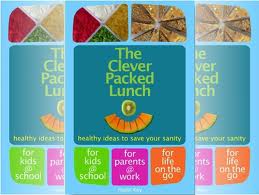
Hazel Keys, the author of The Clever Packed Lunch has come up with a system for getting kids to eat the contents of their lunchbox.

Below is a portion of an interview of Ms. Keys conducted by the Courier Mail:

Q: You’ve run a tuckshop – what’s your take on ensuring kids leave home each day with a properly packed lunchbox?

 A: It’s essential. A healthy nutritious lunch supports learning by allowing children to settle, focus and learn. Processed, refined and sugary foods have been shown to do the opposite.

Q: What motivated you to write The Clever Packed Lunch?
A: My many years of parenting and preparing school lunches resulted a system that I felt could benefit families and I wanted to share that.

Q: What are your three top tips when it comes to creating great packed school lunches?
1. Involve your kids in the preparation; listen to them and try to accommodate their preferences within the guidelines of health and balance.
2. Include plenty of fresh fruit and vegetables, preferably choosing in-season varieties.
3. Choose “whole” foods and ingredients that are as close to their natural state as possible, like seeds and whole grains.

Q: You suggest parents should try to get their children actively involved in making lunchbox choices – what are the benefits?
A: This is a great way to achieve a number of goals, so that:
• children feel empowered
• they’re far more likely to eat their lunch
• they’ll learn how to cook and feed themselves healthily in the process.

Q: Can you give us an example of a delicious and balanced lunchbox that could turn fussy eaters into fans?
A: Kids are attracted to “fast” food, there’s no doubt, and in my experience they love pizza. Pizza can definitely be healthy as long as you use quality ingredients like (some) wholemeal flour, olive oil and organic tomatoes. I serve it with salad, or the mixed potato wedges recipe from the book, which uses sweet potato, a highly nutritious food. And then there’s my healthy chocolate cake recipe!

Q: It’s Sunday night and the fridge is looking bare any lunch items that can be made up from simple pantry staples?
A: Yes! I always keep small tins of prepared salmon in the pantry, along with dried egg (not wheat) noodles, and frozen vegetables like corn and peas. The other items I always have on hand are a wide range of seeds. The noodles, once cooked, can be combined with the salmon, veggies and some sesame seeds, perhaps with a little sesame oil.

Q: Top three sandwich combos?
A: Ooh, yes! For kids I find the following are popular:
– sliced turkey breast, cranberry sauce and sliced green apple
– salmon, chopped gherkin, egg mayonnaise and cucumber
– grated cheddar, creamed corn and diced red capsicum toasted

Q: We automatically think of sandwiches when it comes to packed lunches? Can you suggest three options we could consider instead?
A: Yes, I’ve a recipe in the book I call “Sleeping Dogs”, which is a healthy version of hot dogs or sausage rolls. Home-made dips with wholegrain rice crackers or pappadams are a nutritious gluten-free choice. And my personal favourite, also from the book; the creamed corn puddings, which are rich in eggs and served with sour cream and guacamole. Yummy!

Q: How important is it to include a treat?
A: I think it’s important not to give “treat” foods too much attention, but to demonstrate flexibility by including them now and again, although not in the lunchbox unless the food has a nutritional benefit, like quality dark chocolate. That’s a real win-win treat!

Q: You suggest doubling up lunch box prep with dinner – can you give us a couple of examples to get us thinking on the right lines?
A: When making meatballs I double the quantity and shape some into patties instead. I serve them for dinner in a wholemeal or multi-grain roll with lots of salad. And when I make chicken and corn soup, I add the uncooked chicken to the stock. Chicken cooked this way is both moist and tender and adds flavour to the soup. So I often double the amount of chicken, and once cooked, remove half. Then I freeze it and use it for Asian dishes another day.

Q: What do you think are the main issues facing families in relation to providing healthy lunches for children at school, and what solutions can you offer?
A: It seems to me that families are finding themselves over-stretched, and lacking the time and money to provide really nutritious lunches. I’m convinced that this is contributing to the growing issue of child obesity. My answer is to move away from packaged and processed foods and choose fresh, simple, high quality foods instead. So much of our money goes straight into the bin wasted on fancy packaging and clever marketing, and the ingredients are often inferior. Feeding ourselves properly takes a little effort, but it’s absolutely worth it. Good food, like charity begins at home and offers an opportunity to develop in your children healthy eating habits that will last a lifetime. It’s one of the greatest gifts you can give them. And there are clever systems that can make the process fast and efficient too, such as the one outlined in my book.


The author can be contacted at hazel@lunchideasforschool.com