The parents of a third-grade boy have sued two Texas school employees, alleging that they forced their son to strip and shower in front of them because he “smelled badly, was dirty and had bad hygiene.”
The eight-year-old was singled out last November and taken to the nurse’s office at Peaster Elementary School where he was forced to remove his clothes, the suit alleges, the Courthouse News Service reported.
The two school officials then “began violently washing his body with a washcloth, scrubbing him over a large portion of his body, stuck cotton balls in his ears, all while ridiculing and harassing him about being ‘dirty,'” the complaint claims.
The child’s parents, Amber and Michael Tilley, said they lodged a police report over the incident but no charges were laid.
On Thursday, the Tilleys filed their lawsuit against Peaster Independent School District and Peaster Elementary School employees Julie West and Debbie Van Rite in federal court in Fort Worth.
“It’s terrible, and we don’t want anything like that to happen to any other children,” Amber Tilley told NBC Dallas-Fort Worth.
According to the lawsuit, the incident left the boy “visibly and severely distraught,” and he had to see a therapist after.
“He just kept on and on, wanting to take baths,” Amber Tilley said. “You know, he just felt so disgusting.”
She added that her son did not have a problem with body odour or cleanliness.
The school district and Peaster Elementary did not respond to calls for comments Friday.
What is the point of filling curriculums with the latest in nonsensical new-age methodology and a raft of programs that are time-consuming but utterly ineffective when our children don’t even know the basics? It seems that we are allowing our kids to become selfish and insular, far more concerned about themselves than the world around them. It is essential that our children become more aware of the world around them.
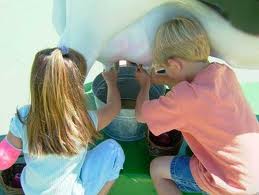
More than a third of 16 to 23-year-olds (36%) do not know bacon comes from pigs and four in 10 (40%) failed to link milk with an image of a dairy cow, with 7% linking it to wheat, the poll of 2,000 people for charity Leaf (Linking Environment and Farming) found.
Some 41% correctly linked butter to a dairy cow, with 8% linking it to beef cattle, while 67% were able to link eggs to an image of a hen but 11% thought they came from wheat or maize.
A total of 6% of those questioned knew that salad dressing could come from rapeseed oil, compared with the national average among all age groups of 24%.
Although four in 10 young adults (43%) considered themselves knowledgeable about where their food comes from, the results revealed a “shocking” lack of knowledge about how the most basic food is produced, the charity said.
Leaf chief executive Caroline Drummond said: “We often hear reports that our food knowledge may be declining but this new research shows how bad the situation is becoming.
“Despite what they think, young adults are clearly becoming removed from where their food comes from.
“Three in 10 adults born in the 1990s haven’t visited a farm in more than 10 years, if at all, which is a real shame as our farmers not only play an important role in food production but are passionate about engaging and reconnecting consumers too.”
The charity, which is organising an Open Farm Sunday event this weekend, also found almost two-thirds of young adults (64%) did not know that new potatoes would be available from British farms in June, and one in 10 (10%) thought they took less than a month to grow.
OnePoll surveyed 2,000 C adults online between May 11 and 14.
It’s stories like this that cause me to rethink my idealism. I may believe that teachers sign up for the profession because of a desire to help all children reach their potential. However, when you read stories like this one, you wonder how on earth the teachers involved could have rationalised such a poorly thought out strategy. These are not the actions of proud and passionate teachers:
A Texas teacher will lose her job after ordering more than 20 kindergartners to line up and hit a classmate accused of being a bully, a district spokesman said Friday.
The teacher at a suburban San Antonio school is accused of orchestrating the slugfest after a younger teaching colleague went to her last month seeking suggestions on how to discipline the 6-year-old, according to a police report from the Judson Independent School District.
Both teachers at Salinas Elementary were placed on paid administrative leave, though the one who allegedly arranged the punishment will not work for the district next school year, said district spokesman Steve Linscomb. Prosecutors are reviewing the allegations and will determine whether formal charges will be filed in 30 to 60 days.
The police report alleges the teacher chose to show the child “why bullying is bad” by instructing his peers to “Hit him!” and “Hit him harder!” It also states that the second teacher intervened only after one of the children hit the boy hard on his upper back.
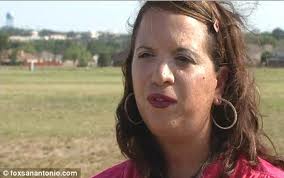
“Twenty-four of those kids hit him and he said that most of them hit him twice,” Amy Neely (pictured above), the mother of 6-year-old Aiden, told KENS-TV. She did not specify what injuries her son may have received.
Neely said her son is not a problem child and that this was the first she’d heard of teachers having issues with him. She said she wants to make sure the teacher who ordered the hitting does not work in a classroom again.
“She doesn’t need to be around any children,” Neely told the television station.
The mother added — and the police report confirmed — that some of Aiden’s classroom friends told him they didn’t want to hit the boy but did so because they were afraid not to.
As a teacher it distresses me greatly that schools are becoming less progressive, less inviting and less humane. Problems are dealt with in nonsensical extreme measures. The political correct police have all but taken over and the fear of lawsuits prevails in place of a desire to accommodate the true needs of its student population.
Introducing a no-contact rule as a means to prevent schoolyard injuries isn’t just reactionary, it’s insane!
Guess what? Children hurt themselves. It’s a fact of life! To ban contact sports, hugging and high fives as a result of incidental knocks and bruises reduces the playground atmosphere to that of a doctor’s waiting room. Is that what we want for our children?
Parents claim they were not told directly of the new rule, which extended a ban on contact sports to a ban on any physical contact at all, such as playing “tiggy”, hugging or giving each other high-fives.
They claim the new rule was explained to pupils over the public address system, and students were left to tell their parents.
One parent, Tracey, said her son was winded on the playground yesterday and, when his friend tried to console him by putting his arm around his shoulder, the friend was told his actions were against the rules.
The friend then had to walk around with the teacher on playground duty for the rest of lunch as punishment, Tracey told radio 3AW.
“I’m just a bit outraged that it has come to this. There must be other ways,” Tracey said.
Another parent, John, said his children were told they could not high-five each other.
“I have a couple of children, and they have been told that if they high-five one another that’s instant detention, and if they do it three times they will be expelled,” John said.
“I mean, what are they actually trying to teach?”
One child was reportedly told that if students wanted to high-five, it would have to be an “air high-five”.
Principal Judy Beckworth said it was “not actually a policy, it’s a practice that we’ve adopted in the short-term as a no-contact games week”.
She said the new practice was introduced yesterday after students suffered a number of injuries on the playground in recent weeks, and the new no-touching rule was only due to last for one week.
However one parent, Nicole, claimed that the school was backpedalling because some parents were told by the school that the new rule would be in place for a minimum of three weeks, which would be extended if the children did not behave themselves.
What’s next? Soon schools will ban chairs because students sometimes lean back dangerously. Staples and scissors will have to go, as will monkeybars, sharp pencils, bunsen burners, glass bottles, electrical sockets, polls, doors and polished floors. Soon the only activity that students will be allowed to engage in is high fiving each other. No, wait! That’s banned too.
It is terribly tragic to read of the number of children harming themselves on purpose. What makes it even more unsettling is that these children don’t take up this practice based on peer pressure, television, advertising or any other common triggers for unhealthy child behaviour.
When a child decides to cut themself, they are expressing deep and complex issues such as hopelessness, self-hatred, loneliness and anger. Often a child’s cuts goes unnoticed.
Studies have suggested about one-fifth of teens and young adults engage in self-injury at some point to relieve negative emotions or reach out for help, for example. But this report is the first to ask the question of kids as young as seven. Researchers found one in 12 of the third-, sixth- and ninth-graders they interviewed had self-injured at least once without the intention of killing themselves.
“A lot of people tend to think that school-aged children, they’re happy, they don’t have a lot to worry about,” said Benjamin Hankin, a psychologist from the University of Denver who worked on the study. “Clearly a lot more kids are doing this than people have known.”
Hankin and his colleagues spoke with 665 youth about their thoughts and behaviors related to self-harm. They found close to eight percent of third graders, four percent of sixth graders and 13 percent of ninth graders had hit, cut, burned or otherwise purposefully injured themselves at least once. In younger kids hitting was the most common form of self-injury, whereas high schoolers were most likely to cut or carve their skin.
Ten of the kids, or 1.5 percent, met proposed psychological criteria for a diagnosis of non-suicidal self-injury, meaning they had hurt themselves at least five times and had a lot of negative feelings tied to the behavior, the researchers reported Monday in Pediatrics. Youth who self-injure often say they do it to help stop bad emotions, or to feel something — even pain — when they are otherwise feeling numb, according to psychologists.
There has been an overwhelming amount of approval from the general public following teacher David McCullough Jr’s declaration to his graduating class that they are “not exceptional.”
I can understand why people have agreed with his comments and I, like many, found his speech very entertaining. However, I do not agree with the method of reducing people down to a lowly level.
Sure, the standard graduation speech, like many parenting styles, reveal an untruthful optimism that makes the student/child believe they are more than they really are and are bound to achieve more than they really do.
But don’t replace one extreme viewpoint with another.
Sure, the students at a graduating ceremony may not be exceptional, but that doesn’t mean they can’t be. Who is exceptional anyway? Who has the authority to label someone as exceptional?
I believe that everyone in the world has the capacity to live a life of integrity. Is integrity not an exceptional character trait? Not according to David McCullough Jr . I believe everyone has the potential to make others feel better about themselves. Is that an exceptional character trait? Not according to David McCullough Jr .
According to David McCullough Jr.’s standards we should just all replace our arrogance with something that doesn’t seem especially satisfactory:
A Massachusetts high school teacher who told graduating students in a speech that they were nothing special and should learn to come to terms with it has won widespread approval.
The no-nonsense David McCullough Jr told Wellesley High School’s “pampered” and “bubble-wrapped” class of 2012 that they were “not exceptional” at a graduation ceremony last weekend, the NY Daily News reports.
“Capable adults with other things to do have held you, kissed you, fed you, wiped your mouth, wiped your bottom, trained you, taught you, tutored you, coached you, listened to you, counselled you, encouraged you, consoled you and encouraged you again,” Mr McCullough said.
“But do not get the idea you’re anything special. Because you’re not.”
The English teacher illustrated his point mathematically.
“Think about this: even if you’re one in a million, on a planet of 6.8 billion that means there are nearly 7,000 people just like you,” he said.
The son of Pulitzer prize-winning historian David McCullough told the graduates and their parents that around 3.2 million other students would be graduating from over 37,000 US high schools that year.
The teacher warned that gestures have taken precedence over deeds and that today people sought to accomplish thing for the recognition rather than the pursuit of a goal.
“As a consequence, we cheapen worthy endeavors, and building a Guatemalan medical clinic becomes more about the application to Bowdoin than the well-being of the Guatemalans,” he said.
Despite his unusual approach the speech was welcomed by students and parents alike who said they appreciated being told “what we need to hear and not necessarily what we wanted to hear,” local newspaper The Swellesley Report commented.
Mr McCullough told FOX News in an interview that parents are often overly protective of their children and this doesn’t help them learn to deal with a tough and competitive world.
“So many of the adults around them — the behaviour of the adults around them — gives them this sort of inflated sense of themselves. And I thought they needed a little context, a little perspective,” he said.
“To send them off into the world with an inflated sense of themselves is doing them no favors.”
I quite liked aspects of the speech and think that it made some very good points expressed with great humour. What I didn’t buy into however, was his version of what life should be like. It seemed almost as unsatisfactory as the things he warned against.
I wish that graduating class well. I hope they grow up to be kind, caring, selfless people who try to enrich the lives of others and resist from judging or ignoring the people around them. I hope they grow up to use their skills for good, be charitable with their time and money and raise children that will do the same.
Is that exceptional? Not according to David McCullough Jr .
I am vehemently opposed to politically correct rules instituted in softening the reality of a non-performing child. If a child doesn’t deserve any more than an “F” grade it is ludicrous and disingenuous to give that child any higher grade. Preventing teachers from giving a mark they feel is reflective of their students’ achievement is outrageous.
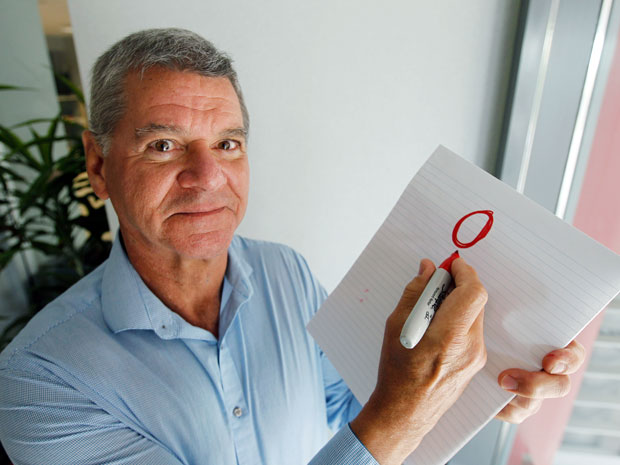
Lynden Dorval, 61, has been a teacher for 35 years. He’d be in in the class room again today, except he’s suspended.
Why?
Because Dorval can’t in good conscience go along with a misguided new scheme cooked up by educational theorists and school administrators.
Under this scheme, it’s no longer possible for high school teachers at Ross Sheppard and numerous other Edmonton schools to give a student a mark of zero on a test or an assignment, even if the student refuses to hand in the assignment or write the test. Instead, students are given a mark based on the work they do complete.
This policy has been in place at Edmonton junior high schools for decades, Dorval says, but it is now making its way into local high schools.
Ross Sheppard’s principal brought it in last year. Dorval refused to go along with it then and was reprimanded. He again refused this year. He was reprimanded some more.
Finally, on May 18, after a meeting with Edmonton Public School Board superintendent Edgar Schmidt, Dorval was suspended.
In his letter to Dorval, Schmidt said it was mandatory for Dorval to follow the instructions of his principal. “You chose to disregard the requirements and thus repeatedly behaved unprofessionally and blatantly undermined the authority and responsibility of the Principal.
“You must turn in your school keys … You are not allowed entry into Ross Sheppard School or its grounds without your Principal’s permission. If you defy this directive, you will be considered a trespasser and charged …”
If Dorval doesn’t buckle under and go along with the new way of marking students who don’t do their work, he says he will lose his job.
I met with Dorval on Thursday and immediately thanked him. It’s not often any of us see real heroes, people who put their reputations and jobs on the line to uphold a righteous principle. Dorval fits that category. By refusing to accept lower standards in our schools, even if it cost him his job, he’s standing up for all parents and students.
I should say that Dorval is a reluctant hero. When I ask how he’s handling his suspension, his eyes fill with tears.
“It’s been pretty tough. … I didn’t expect to end my career in such a dramatic and sudden way.”
Education needs people of principle. It needs people prepared to go against the trend and fight for transparency and fairness.
Firing Dorval would be typical yet extremely damaging.
This morning’s newspaper asked readers to comment on whether or not they thought this woman was fat. Whilst I don’t think this woman is fat at all, it is the question itself that got me worked up.
It reminded me about how obsessed we are about weight, and how this obsession is going to ensure that our children will spend more time aspiring to fit a certain look rather than to become good people.
Nobody seems to care anymore whether a person is caring, selfless, charitable or kind. These are attributes of losers. Surveys that ask what we would prefer to be, beautiful or kind, favour beautiful every time. The rationale being, that nobody is jealous of a kind person in the way they are of a good-looking one.
How are our children supposed to make sense of this?
It upsets me to see Primary aged children so conscious of their weight. It bothers me no end that 8-year olds know everything there is to know about the perfect body size and shape, but have no insights on the correct protocol for offering ones seat to an elderly person on a crowded train. The thought would never have entered their mind.
Haven’t we learnt our lesson? Did we not realise that an obsession with looks leads nowhere. It doesn’t make one happy. Why are we creating kids that follow our sick ways? Why are we perpetuating the message that there’s nothing wrong with gossiping, fakery and selfishness, but eating ice-cream is a sin?
So, no, I don’t find the woman fat. But guess what? I don’t care whether she is fat or not. I care whether she is a good woman, a kind wife, a loving mother, a loyal friend, a friendly co-worker etc. And ultimately, that’s what I want us all to look for.
There are frumpy, unfit people out there, with pale complexions who have unpopular taste in clothes. Some of these people are also tremendously kind and good-hearted. It would be criminal for us to marginalise these people, as some of them are the real beautiful people!
Just because young Julie Warning was framed for having a relationship with a student doesn’t in any way excuse her behaviour. It was extremely mean-spirited and heartless for Eric Arty and his friends to collect bets on who would successfully be the first to kiss her, but regardless, a great deal more is expected of teachers than to be involved personally with a student.
Over the course of the next few days there will be a lot written about Julie Warning, yet, possibly not enough criticism levelled at Eric Arty and his friends. Their role in this saga should not go unpunished. Their bet was quite shocking and should not be tolerated by the school hierarchy. They should be expelled for their little gambling venture.
Expelled? But they were just being kids?
They were exhibiting behaviour which was quite misogynistic, terribly destructive to a young woman’s reputation and career and downright immoral.
Keeping them at the school will not only give the school a bad name, but will turn these pranksters into heroes and celebrities among the student body. This is not an acceptable outcome.
A high school teacher filmed in a passionate embrace with a pupil fell victim to a $500 bet between five friends about who could kiss her first, it emerged today.
Eric Arty, 18, beat his friends to the jackpot after the student and four friends put in $100 for a race to romance their global studies teacher Julie Warning, 26.
Andrew Cabrera, a junior at Manhattan Theater Lab HS, where Warning worked until Tuesday, told the New York Post: ‘It was a bet with a group of his friends. They gave him the $500 [pot].’
Speaking about Arty’s seduction, he said: ‘He would go after class and basically try to seduce her.
‘I don’t know if she knew [about the bet]. They were all trying to get with her.
‘One of his [Arty’s] friends flirted with her more than anyone — I thought he would be the one, but Eric came out of nowhere and got her.’
The affair was revealed yesterday by The New York Post — which ran a front-page picture of the pair kissing on Friday at Bleecker Playground in Greenwich Village and published the video online.
The case has been turned over to the Department of Education Special Commissioner of Investigations and Warning was reassigned.
However, school officials said Warning did not report to her new job yesterday and could not be reached for comment.
Schools Chancellor Dennis Walcott said: ‘It’s my understanding that she did not show up to her reassignment center.
‘So we’ll do more investigating on why she hasn’t shown up.’
A new report dispels the long-held theory that bullies have low self-esteem. This report maintains that bullies often come as a result of being over-praised and over-complimented.
LAVISHING children with praise and constantly pumping up self-esteem is breeding a generation of bullies, groundbreaking research reveals.
Prof Helen McGrath from RMIT, a key player in Australia’s anti-bullying policies, says mums, dads and educators have spent too much time telling kids that “darling, everything you do is wonderful”.
Rather than giving children “trophies for coming seventh, eighth and ninth”, they instead need a good old-fashioned dose of reality – including in their school reports, she said.
“The silliest thing you can tell children is, ‘If you set your mind to it, you can do anything you want’,” Prof McGrath said.
Now the State Government has flagged a comprehensive discussion on teaching methods.
Education Minister Martin Dixon said last night: “What Prof McGrath’s research has shown makes good sense and is worthy of wider debate.
“While parents and teachers want to encourage their children and students to be the best they can be, it is also important that we are genuine. A measure of self-esteem is good, but a large dose of self-respect and respect for others is even better.”
Well-meaning parents and teachers had been unwittingly contributing to the problem for 30 years through the “failed self-esteem movement”, she said.
“Parents love their children and are trying really hard to keep their self-esteem high, not realising … they’ve made the mistake of assuming that means their child can never have any failures, disappointments, sadness,” she said.
“But if we’re getting kids who are increasing in their sense of narcissism, and the need to be entitled and always get positive feedback … that is a fairly dangerous way for our community to go.”
It is fascinating to read of the Government’s clumsy response to this findings. They want teachers to start being “genuine” with the2ir students. Great idea! Now why didn’t I think of that?
It is quite a simple interpretation to think that bullies are just often children with overfed egos. The mistake this report seems to make is that it assumes that children grow to believe the messages that these parents send. The assumption is that these kids grow up thinking they can achieve anything they want (whether they have natural ability or otherwise).
This is not my experience. My experience tells me that such children weigh up the compliments and positivity they get from home with some of the negative talk they get outside, and it confuses them. Children who are constantly told how beautiful they are at home, are then called “ugly” and “fat” in the schoolyard. This mixture of messages makes them feel terrible insecure. Are their parents liars? Are their school friends just being cruel, or do they have a point?
So indeed, I do believe such children have low self-esteem. The realisation that some of the messages being sent from home are not shared by the world outside doesn’t inflate their ego, but rather, confuses them and makes them less trustworthy of others.
The best depiction of a bully (or I should say, “bullies”) comes from Mike Feurstein’s classic movie “How to Unmake a Bully“. Instead of portraying the bully as a person that has no characteristics that other children can related to, Feurstein paints him as a lost child, bullied himself in the past, without a undesratnding of other options and modes for letting off steam.
The beauty about the film is that after watching it, my students gain an appreciation and a unserdtanding not only for the victim but also for the bully himself.








 Topical Teaching