Posts Tagged ‘Michael Gove’

Captain Phonics to the Rescue!

July 7, 2011

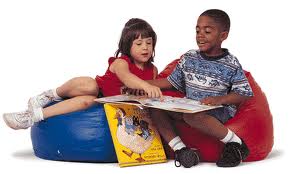
It’s like the pest that wont go away.  Phonics sneaks up on us all the time, with it’s many proponents insisting it is the missing key in getting literacy levels up to standard.  I doubt that is the case.  In fact, while I think phonics has a minor secondary role to play, if you make phonics the key method for teaching reading, you will almost certainly turn your students off literature.

It seems some British MP’s agree with me:

MPs have criticised government plans to test pupils on their reading ability at the age of six, warning that it will put children off reading for pleasure.

The report criticises the government’s focus on phonics – in which children learn individual sounds and then blend them to read words – as a “mechanical” approach and warns that it will contribute to a decline in literacy.

Fabian Hamilton, who chairs the MPs’ group, said: “If there is a central theme to this, that is, reading must be a pleasure. Of course children need the tools to understand what sounds the symbols make, and what those sounds mean. Phonics is only one way of doing it, there are others.”

The MPs’ report says: “The phonics test is likely to demotivate children rather than ensure that they become eager and fluent readers.”The government is facing a backlash over phonics. Critics, including the United Kingdom Literacy Association, have written to education secretary Michael Gove lobbying him to abandon the test.

The schools minister, Nick Gibb, said: “High-quality evidence from across the world – from Scotland and Australia to the National Reading Panel in the US – shows that the systematic teaching of synthetic phonics is the best way to teach basic reading skills, and especially those aged five to seven.

“It is vital that we focus on the reading skills of children early on in their lives, and give those who are struggling the extra help they need to enable them to go on to enjoy a lifetime’s love of reading rather than a lifelong struggle.”

Surely the greatest contribution a teacher of reading can make is helping to nurture an appreciation and fondness of reading.  Phonics is for most students a giant slog.  Even the expression “systematic teaching of synthetic phonics” is a turnoff.

Phonics has its place, but enjoyment of reading is tantamount.  I want my students to enjoy reading about different people and places, connect with well drawn characters and gain insights. I want them to experinece how reading can trigger emotions, form opinions and nurture their imaginations.

I didn’t become a teacher to turn my students off reading.

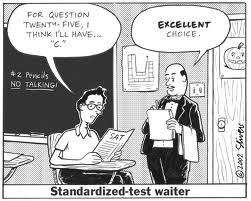
Another Day, Another Standardised Test

July 5, 2011

UK teachers are told to add mandatory phonics tests to the ever-expanding list.  Remember when teaching was about engaging the students not test practise?

This time next year, every year 1 pupil in England is likely to encounter a new national test assessing a central aspect of their ability to read.

The children, aged five and six, will be presented with 40 individual words on paper, and asked to sound them out to their teachers or to another adult. Some words will be familiar to most, while others will be made-up or “non” words such as “mip” or “glimp”, designed only to assess the child’s ability to follow the pronunciation rules, such as they exist, of written English.

The results of this test, or “screening check”, will then be collected, given to the child’s parents and also used to produce statistics on national and local performance and to inform Ofsted inspection judgments on schools.

One leading literacy figure has described the new test as potentially “disastrous”, while another told this newspaper it was an “abomination” and likely to be a major waste of taxpayers’ money. A petition with more than 1,000 signatures against it has been collected.

The debate surrounds the principle of teaching phonics, another boring, routine and old-fashioned way of teaching content that could be conveyed in a far more exciting and engaging way.

Beyond this debate, I feel there is another issue at stake.  The rise of obsessive testing inevitably leads to the curriculum being hijacked by test practise as well as pressure needlessly put on Primary aged students.  These students deserve to have their crucial first years of schooling without the stresses they will confront later on down the track.


Maths Lessons Should be “Toughened Up”: Gove

June 30, 2011

Michael Gove might think that rigorous daily and weekly testing in maths is the answer, but my experience tells me that testing doesn’t work for all types of students.  There are some students that lift their game when tested.  Their competitive juices get going, and their drive to get a good grade is palpable.  Then there are students who need to learn in a less pressurised and more r
elaxed setting.  They freeze during formal testing, but progress extremely well when the focus is on the skill or concept rather than the grade.

Michael Gove disagrees:

All primary school children should be given daily maths lessons and weekly tests to stop pupils falling behind those from the Far East, Michael Gove suggested today. 

Mr Gove said schools should also “bear in mind” a system used in Shanghai where pupils have daily maths lessons and regular tests to “make sure that all children are learning the basics”.

What disappoints me as a Primary Maths teacher, is that in the quest for better results the focus becomes testing instead of engagement.  I believe that Maths can be taught in a turgid and lifeless way.  Conversely, it can be taught in an interesting, engaging and creative way.  Whilst constant testing will make students resent the subject, there are ways of teaching maths which can engage and excite students.

The answer to improving our students’ maths skills should not result in them hating the subject.


Sometimes the Unions Don’t Help

June 26, 2011

There are times when the Education Unions just make me shake my head.  At a time when respect for teachers is at an all time low, unions have the opportunity to help promote the good work teachers do.  Instead, they often make things so much worse.  Take this story for example:

Students will not be allowed to enter teacher training in England if they fail basic numeracy and literacy tests three times, under tougher rules to raise teaching standards.

At present students are allowed to take unlimited re-sits while they train.

The Department for Education said one in 10 trainees takes the numeracy test more than three times, while the figure is one in 14 for the literacy test.

The National Union of Teachers said it considered the tests “superfluous”.

The aim is to improve the standard of students entering teaching.

From September 2012, candidates will have to pass the assessments before they are permitted to begin their training courses.

The tests are the same for both primary and secondary school teacher trainees, who must also have achieved a grade C or above in GCSE maths and English.
What is “superfluous” about ensuring that teachers have basic skills in the areas they teach?  What profession would allow trainees to practice without the requisite knowledge or skill?  It’s not as if the questions are so hard.  Here are a sample of the questions on such a test:

SAMPLE QUESTIONS

  • Q: Teachers organised activities for three classes of 24 pupils and four classes of 28 pupils. What was the total number of pupils involved?
  • A: 184.
  • Q: There were no ” ” remarks at the parents’ evening. Is the missing word:
  • a) dissaproving
  • b) disaproveing
  • c) dissapproving
  • d) disapproving?
  • A: d
  • Q: For a science experiment a teacher needed 95 cubic centimetres of vinegar for each pupil. There were 20 pupils in the class. Vinegar comes in 1,000 cubic centimetre bottles. How many bottles of vinegar were needed?
  • A: 2
  • Q: The children enjoyed the ” ” nature of the task. Is the correct word:
  • a) mathmatical
  • b) mathematical
  • c) mathemmatical
  • d) mathematicall
  • A: b

50 Books Every Child Should Read

March 24, 2011

I stumbled on a wonderful piece by the Independent entitled The 50 Books Every Child Should Read. It was written in response to Michael Gove’s recommendation that children read 50 books a year.  They asked three of Britain’s leading children’s authors and two of their in-house book experts to each pick 10 books, suitable for Year 7 students.”

Below is the list:

Philip Pullman

* Alice’s Adventures in Wonderland and Through the Looking Glass by Lewis Carroll. Indispensable. The great classic beginning of English children’s literature.

* Pinocchio by Carlo Collodi. What effortless invention looks like.

* Emil and the Detectives by Erich Kastner. A great political story: democracy in action.

* Swallows and Amazons by Arthur Ransome. As clear and pure as Mozart.

* Black Hearts in Battersea by Joan Aiken. If Ransome was Mozart, Aiken was Rossini. Unforced effervescence.

* The Owl Service by Alan Garner. Showed how children’s literature could sound dark and troubling chords.

* The Phantom Tollbooth by Norton Juster. Superb wit and vigorous invention.

* Moominsummer Madness by Tove Jansson. Any of the Moomin books would supply the same strange light Nordic magic.

* A Hundred Million Francs by Paul Berna. A particular favourite of mine, as much for Richard Kennedy’s delicate illustrations (in the English edition) as for the story.

* The Castafiore Emerald by Hergé. Three generations of this family have loved Tintin. Perfect timing, perfect narrative tact and command, blissfully funny.

Michael Morpurgo

* The Star of Kazan by Eva Ibbotson.

The heroine is blessed with such wonderful friends who help her through the twists and turns of this incredible journey.

* A Christmas Carol by Charles Dickens. The first few pages were so engaging, Marley’s ghostly face on the knocker of Scrooge’s door still gives me the shivers.

* Just William books by Richmal Crompton. These are a must for every child.

* The Happy Prince by Oscar Wilde. This was the first story, I think, that ever made me cry and it still has the power to make me cry.

* The Elephant’s Child From The Just So Stories by Rudyard Kipling. The story my mother used to read me most often, because I asked for it again and again. I loved the sheer fun of it, the music and the rhythm of the words. It was subversive too. Still my favourite story.

* Treasure Island by R.L. Stevenson This was the first real book I read for myself. I lived this book as I read it.

* The Old Man and the Sea by Ernest Hemingway. A classic tale of man versus nature. I wish I’d written this.

* The Man Who Planted Trees by Jean Giono. A book for children from 8 to 80. I love the humanity of this story and how one man’s efforts can change the future for so many.

* The Singing Tree by Kate Seredy The story of two children who go to find their father who has been listed missing in the trenches of the First World War.

* The Secret Garden by Frances Hodgson-Burnett. I love this story of a girl’s life being changed by nature.

Katy Guest, literary editor for The Independent on Sunday

* Refugee Boy by Benjamin Zephaniah. Story of a young Ethiopian boy, whose parents abandon him in London to save his life.

* Finn Family Moomintroll (and the other Moomin books) by Tove Jansson.

A fantasy series for small children that introduces bigger ones to ideas of adventure, dealing with fear, understanding character and tolerating difference.

* Diary of a Wimpy Kid by Jeff Kinney. It’s rude, it’s funny and it will chime with every 11-year-old who’s ever started a new school.

* I Capture the Castle by Dodie Smith. Written for a teenage audience but fun at any age.

* The Hobbit and The Lord of the Rings by JRR Tolkein. Be warned, these tales of hobbits, elves and Middle Earth are dangerously addictive.

* The Tygrine Cat (and The Tygrine Cat on the Run) by Inbali Iserles. If your parents keep going on at you to read Tarka the Otter, The Sheep-Pig and other animal fantasies, do – they’re great books – also try Iserles’ stories about a cat seeking his destiny.

* Carry On, Jeeves by PG Wodehouse. A grown-up book – but not that grown-up.

* When Hitler Stole Pink Rabbit by Judith Kerr. Judith Kerr’s semi-autobiographical story of a family fleeing the Nazis in 1933.

* Moving Pictures by Terry Pratchett. Elaborate mythological imagery and a background based in real science. If you like this, the Discworld series offers plenty more.

* The Story of Tracy Beaker by Jacqueline Wilson. The pinnacle of the wonderful Jacqueline Wilson’s brilliant and enormous output.

John Walsh, author and Independent columnist

* The Adventures of Sherlock Holmes by Sir Arthur Conan Doyle. Irresistible puzzle-solving tales of the chilly Victorian master-sleuth and his dim medical sidekick.

* The Curious Incident of the Dog in the Night-Time by Mark Haddon. Age-transcending tale, both funny and sad.

* Mistress Masham’s Repose by TH White. Magical story of 10-year-old Maria, living in a derelict stately home, shy, lonely and under threat from both her governess and her rascally guardian.

* Little Women by Louisa May Alcott. Inexplicably evergreen, trend and taste-defying 1868 classic.

* How to be Topp by Geoffrey Willams and Ronald Searle. Side-splitting satire on skool, oiks, teechers, fules, bulies, swots.

* Stormbreaker by Anthony Horowitz. First of the action-packed adventures with 14-year-old Alex Rider.

* Private Peaceful by Michael Morpurgo. “Dulce et Decorum Est” for pre-teens.

* Artemis Fowl by Eoin Colfer. Lively, amoral, wildly imaginative debut (six more followed) about the money-grabbing master-criminal Artemis, 12. The author called it “Die Hard with fairies”.

* The Silver Sword by Ian Serraillier. Inspiring wartime story of the Balicki family in Warsaw.

* Animal Farm by George Orwell. Smart 11-year-olds won’t need any pre-knowledge of Marx, Lenin, Trotsky and 1917 to appreciate this brilliantly-told fable.

Michael Rosen

* Skellig by David Almond. Brings magical realism to working-class North-east England.

* Red Cherry Red by Jackie Kay. A book of poems that reaches deep into our hidden thoughts but also talks in a joyous voice exploring the everyday.

* Talkin Turkeys by Benjamin Zephaniah. A book of poems that demands to be read aloud, performed and thought about.

* Greek myths by Geraldine McCaughrean. Superheroes battle with demons, gods intervene in our pleasures and fears – a bit like the spectres in our minds going through daily life, really – beautifully retold here.

* People Might Hear You by Robin Klein. A profound, suspenseful story about sects, freedom and the rights of all young people – especially girls.

* Noughts and Crosses by Malory Blackman. A book that dared to go where no one thought you could with young audiences because it raises tough stuff to do with race.

* Einstein’s Underpants and How They Saved the World by Anthony McGowan. A crazy adventure set amongst the kids you don’t want to know but who this book makes you really, really care about.

* After the First Death by Robert Cormier. Cormier is never afraid of handling how the personal meets the political all within the framework of a thriller.

* The London Eye Mystery by Siobhan Dowd. A book that allows difference to be part of the plot and not a point in itself.

* Beano Annual. A cornucopia of nutty, bad, silly ideas, tricks, situations and plots.

Top Ten Lists are fun.  What books would you recommend for a Year 7 child?