I’m no teaching guru – just an ordinary teacher that loves his job. I am a primary level generalist teacher, which means I teach all major subjects such as Maths, English, Social Studies and Science. As much as I love teaching all subjects, I find Maths most exciting.
Is it because I have a background in Maths? Absolutely not. I have an Arts degree.
Is it because I am good at Maths? On the contrary. As a student I would frustrate my teachers no end. As a kid, I had as much chance of passing a maths test as Homer Simpson has of suffering from dandruff!
The reason I love teaching maths is that I find it an untapped and underrated subject for injecting creativity and role-play. Last week I wrote about how primary teachers often struggle to teach maths, as they mostly come from a humanities background.
Commenting on that post, loyal reader and frequent contributor Margaret Reyes Dempsey, wrote, “I’d love to read a post about some of the ways you approach math in the classroom.”
Every week I will endeavour to describe an innovative Maths lesson I have concocted.
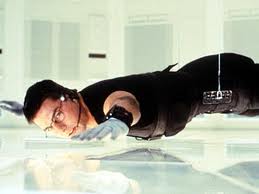
Lesson 1: Mission Impossible Maths (Place Value)
I get the students to bring a pair of sunglasses to school for homework. The students invariably ask me what the glasses are for. I tell them it’s a surprise. They automatically think science, perhaps an activity out in the sun. The truth is, the sunglasses are nearly irrelevant, only there to raise curiosity and engagement.
On the day of the lesson I take the kids to our small but homely hall. I carry a briefcase and have on my own pair of “spy” glasses. The kids have no idea what is in the briefcase, and have no clue what is happening. I sit them down on the floor and tell them that there is a problem. There is a mansion close by. In that mansion there is a suitcase. In the suitcase there is a key. The key, in the hands of evil would change the world as we know it. It would give them the power to ban all music except for the golden oldies and make sure that nothing but news is on TV. The kids groan at the prospect. Lucky you are here, I tell them. You are the best spies in the world, and your mission is to break in to the mansion and get the key before they do. I call their names out, adding their secret spy name e.g. Sammy “The Drummer” Smith. The spy name is just another opportunity for me to connect with the interests and skills of my students. I split them into groups based on ability, as the lesson will involve maths problems ranging from basic to more complex.
I take them outside and show what they have to do to break into the mansion. I show them the slide which I call “The Tunnel of Terror.” Getting through the tunnel will be tricky, as a wrong turn would send out the crocodiles. To get through the tunnel without being eaten, group 1 has to work together to order a sheet of 5 digit numbers from lowest to highest number.
I then take the class to the school door, or “Dynamite Door”. To gain access to the mansion, Group 2 has to order a sheet of 5-digit numbers, this time from highest to lowest, otherwise the door will explode.
I show the class the door that leads to the hall, or as I call it “The DNA door.” To gain access to the room in which the suitcase is kept, Group 3 has to bypass the special DNA sensitive handle. To do that, they are given 6-digit numbers to order.
Group 4 has to get past the infra red sensors to get to the suitcase. This involves making as many 4-digit numbers from, for example, 4, 3, 1, 8. Once they have gotten past all 4 obstacles they will face one more test (to be revealed at the time) before being able to open the briefcase. They are told they have 45 minutes and the time starts now …
I distribute the sheets to each group, watching them feverishly try to solve the problems without making a mistake. Each group appoints a checker, to check for a careless error that would complicate this dangerous mission. If a group finishes early, they are quiet, because they rely on the proficiency of the other groups. When all groups are done we go back to the slide. The clock is still running.
The first member of group 1 reads the first part of the answer and when I confirm that it’s right goes down the slide. The other members do the same until they have all slid down the slide. Members of group 2 read out their answers. On getting the right answer each member is allowed access through the door until they are all inside the building. The same for Group 3 with their door and Group 4 with the sensors.
The final challenge involves a representative from each group stepping forward to help break the suitcase code. I tell the 4 representatives that the code number is between 3,500 and 3,600, and they have to guess it right. All I can tell them is whether their guess is higher, lower or spot on.
Once the final code has been broken, the person that correctly broke it gets to open the case and take out the key. They usually get the key with only a few minutes left to spare. You should see the cheers and hugs that come about from unearthing the key. It is such a great bonding experience.
I do this lesson in the second week of the school year. At that stage my students almost uniformly claim they hate maths with a passion. It is only after the lesson that I spill the beans that they had just taken part in a maths activity. In reality, it was nothing more than a set of dry worksheets with a bit of imagination and wackiness added on.
If you feel that this lesson would be suitable for your kids, I’d love to know how it goes.




 Topical Teaching
