Posts Tagged ‘life’

Research Suggests That There’s no Such Thing as a Good Divorce

December 19, 2011

I feel very sorry for children of divorced parents who find themelves the center of a tug-of-war act between duelling parents on Christmas Day.

At Christmas time, like no other, family relationships are put to the test.

This time of year seems to bring not only a rise in domestic violence, but family tension and relationship breakdown.

So much for the season of peace and goodwill.

Fights over who will get the kids on Christmas Day are common, and children are often forced to spend Christmas traipsing across town to keep both parents happy.

Many argue that since divorce is so rampant, children are able to adapt with the change extremely well. This is simply not the case.

Research suggests that there’s no such thing as a good divorce: All you can do is have a breakup that is not as bad as it might be.

A US study of 994 families identified three types of post-divorce parents: Those who were co-operatively continuing to parent together, those who were parallel parenting with little communication, and those who were effectively single parents.

Children from the first group – the good divorce group – had the smallest number of behavioural problems and the closest ties to their fathers.

However, the differences were only minor, and the children in this group didn’t score any better than others on 10 additional measures, such as self-esteem, school grades, early sexual activity and closeness to their mothers.


Five Signs it is the End of the School Year

December 16, 2011

Teachers find the last weeks of a school year absolutely exhausting. Many of us crawl towards the finishing line amazed that the deadlines have been reached and the seemingly insurmountable boxes have somehow been ticked.

Now that I am both a teacher and a parent of a school aged child, I can see that the end of year poses challenges for parents too.

That’s why I loved this piece by Nancy Davis Kho, whose article about the five telltale signs that the end of the school year has been reached (from a parents perspective) is very insightful and humorous:

1.) You’re Broke. Between the gift for the classroom teacher, the teacher’s aides, the piano teacher, the math tutor, the babysitter graduating high school who wasn’t much for cleanup but at least she could walk home, and the niece graduating college after the five year plan, you are clean out of $20 dollar bills. (Apologies if you are more of $100 dollar bill gifter, I didn’t mean to insult you. Can I please be your babysitter?) It gets so bad that you could almost use a second job. But you can’t do that, because…


2.) Your Productive Workday Has Been Shot to Hell. You have to be up at school to see the end-of-year talent show, of course, and your child would never forgive you for missing out on the end-of-year class picnic. Then the school districts get in on the act, fulfilling some budgetary or union contract obligation by cutting a bunch of June school days in half. Your to-do list becomes an archive, saved in its non-checked-off state for future generations to admire. It’s enough to make you run for comfort to the cookie jar which is full because…

3.) You Have Baker’s Elbow. Brownies for the ballet recital, pound cake for the Little League team party, chocolate chip cookies for the celebration of a completed Social Studies group project; you’re churning them out like your middle name is Poppin’ Fresh. You would like to buy stock in King Arthur Flour and Betty Crocker, but can’t get out of the kitchen long enough to log onto E*trade. And if you’re going anywhere past the stove it’s going to be to the laundry room because….

4.) The Lunch Bags Look Like They’ve Been Beaten. Bruised, torn, bearing tiny flecks of unidentifiable foreign substances that may or may not be mold, the insulated lunchboxes that started off the year in bright primary colors have been reduced, through constant improvised use as seats, soccer balls, and weapons, to an indistinguishable grayish brown.  You weigh running them through the washer one last time. But would it be the cycle that finally separates the strap from the rest of the bag? That would probably make you cry, because…

5.) You Burst Out Crying At Inopportune Times. It’s the inevitable result of being handed concrete evidence, in the form of a graduation certificate or a class council election, that Your Children Are Growing Up. The ultimate example was when the Kindergarten teacher rewrote Eric Carle’s “A Very Hungry Caterpillar” to describe all the knowledge that our children had hungrily gobbled up throughout the year. Then she had them hold up wobbly, colorful pictures they’d drawn of butterflies and said, “And now you are beautiful butterflies who will fly off to First Grade!” Twenty-three moms, 15 dads, and one kindergarten teacher hit the deck sobbing, delaying the children’s American Sign Language performance of “Somewhere Over the Rainbow” until we’d (temporarily) recovered our composure.

Teacher Writes “Stupid” on Student’s Forehead

December 16, 2011

There is no doubt that teachers have a responsibility to maintain their calm and not give in to difficult and challenging students. Whilst this is harder than it sounds, teachers cannot afford to vent at their students.

When people ask me what are some of the most important skills required to be a good teacher, I always mention patience. To me, patience is an essential skill for every teacher. But patience doesn’t come straight away. It often requires years of practise and hard work.

That is why I think it is important to note that the teacher that wrote the word “stupid” on the child’s forehead was in his first year. Yes, he wrong to do what he did. Yes, he deserves to be sacked. But I hope he is not lost to teaching permanently just because of what he did.

A Tennessee teacher’s first year on the job could be his last. He could lose his job for something he did in the classroom.

It’s a simple school supply, but when a teacher, Alex Boles, used a permanent marker to write the word “stupid” on a student’s forehead, the director of Overton County Schools took immediate action.

“One word can break a child I mean I’ve got three children and I wouldn’t want it done to mine,” said Matt Eldridge, Director of Schools.

It happened last week at Allons Elementary. The K-8 school only has a few hundred students just outside Livingston, Tennessee.

One student had a question, and Boles responded and wrote the word on the student’s forehead in front of his classmates.

“The teacher said I was trying to joke with him and of course I’ve tried to talk to him and told him that’s not the way you joke with anyone,” said Eldridge.

Until last week, Boles taught math at Allons Elementary. He was new to the job, he just started this fall, and what many consider his lapse in judgment could cost him in the long haul.

“It’s kind of one of those mistakes that’s hard to correct,” said Eldridge.

The district will allow the teacher due process, but the director said he will insist that Boles lose his job. A big price to pay for a single significant mistake.

I still hold out hope that Mr. Boles has potential to be a very good teacher. It would be great if he was given the support to learn from his mistakes and is given a second chance in another school.  I also hope he apologises profusely to the child involved, as well as the child’s parents.

The System Fails Slow Starting Students

December 15, 2011

As a child who started slow and only came into my own after school, I have always been determined to help slow starting students find their feet as quickly as possible. It is my belief that the classroom teachers can turn the fortunes of a slow starting student around.

This belief however, is not supported by the data:

Three-quarters of children in England who make a slow start in the “Three Rs” at primary school fail to catch up by the time they leave, data shows.

And more than a third (39%) of pupils who make a bright start are no longer reaching advanced levels when they leave.

The government’s school league tables data also shows 9% of primary schools do not meet its floor standards.

Overall 74% of pupils met the required levels in English and maths.

Some of those kids that are allowed to fall through the cracks are victims of poor teaching. Often the slow start comes about because the learning style of the student differs to the way the information is conveyed by the teacher.

I think it’s a major cop-out to let the slow starters continue on their merry way without giving them the intervention they so desperately need.

Experts Call For Homework to Be Abolished

December 12, 2011

I was once strongly opposed to homework, but I have since softened my approach. It’s not that I believe homework is a good thing, it’s just that I have observed what children do withn the extra time and I can’t say it’s productive. Quite apart from playing in the backyard or walking the dog, kids are more likely to spend their waking hours on the computer or watching television.

Whilst experts believe abolishing homework will free up time for healthy activities, the truth is that it will only result in more time in front of a screen.

CHILDREN are spending too much time “sitting around”, looking at screens and doing homework, when they should be outside playing.

New Deakin University research suggests parents should encourage children to play the old-fashioned way outside with mates rather than nagging them to complete homework or allowing them to watch TV or use computers, the Geelong Advertiser reports.

Associate head of research at Deakin’s School of Exercise and Nutrition Sciences, Professor Jo Salmon, yesterday said pushing kids outdoors to play would help improve the health and happiness of children.

Parents needed to set rules around the amount of screen time children were allowed every day, and enforce a limit of two hours in total, Professor Salmon said.

They should also try not to place too much academic pressure on their kids and recognise that playing outside and being active was probably better for children than sitting inside practising spelling or sums.

While previous generations of children would come home from school, have a quick snack and then head straight outside to play until dinner time, most children now came home from school and propped on the couch, their bed or at a desk, she said.

Recently named one Australia’s top child health researchers by the National Health and Medical Research Council, Professor Salmon said while she was an optimist by nature, she was concerned for the future health of Australian children.

I was once an optimist too. I hoped that instead of homework, my students could help wash dishes or take on some other household duties. I hoped they could go to the library and borrow books. But that is not what happens in reality.

So I am now faced with a choice. Do I prescribe homework that serves as revision for skills taught during the week in class or do I just let them use the extra time for more television and video games?

Let Principals Breathalize Their Students

December 9, 2011

If your school is being effected by intoxicated students, why shouldn’t you be allowed to do something about it?

I am very passionate about the importance of firm but fair leadership, especially when it comes to cleaning up a school’s culture and environment. Coming to school drunk is completely unacceptable and should not be tolerated.

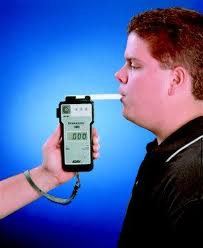
Whilst it is never ideal for a Principal to make his/her students take a  breathalizer test, doing nothing about the problem is far less ideal.

A high school principal in northern British Columbia has been asked to stop using a breathalyzer to test students in school for alcohol use.

A youth said that she and a friend were suspended from Fort St. James Secondary School last week after a blood alcohol screening test showed traces of alcohol.

Civil rights activists call the incident extraordinary and disturbing, but the Ministry of Education has no policy on the use of breathalyzers in public schools.

Kecia Alexis, a first nations student in Grade 11, said she and the other student were suspended after principal Ken Young confronted them when they arrived at school late after lunch.

Both agreed reluctantly to take the test after being threatened with suspension. Ms. Alexis, who said she hadn’t been drinking, said the device gave two “error” readings before she blew the lowest reading, a blood alcohol level of 0.01. (For drivers, the “warn” range for a blood alcohol level is 0.05 to 0.08, while a “fail” is over 0.08.)

Ms. Alexis said she argued with the findings, “but he said he doesn’t talk to students who are drunk. I said, ‘I’m not drunk.’”

She was given a three-day suspension. Despite high drop-out rates for first nations youth, Ms. Alexis returned this week determined to finish her schooling. She said she wants to be a teacher.

Civil rights activists can be a pain in the neck and this is a prime example of their constant interferences. When kids turn up to school and are suspected of being under the influence, it is surely the Principal’s right to do something about it. Breathalizing establishes that there is a problem and therefore fairly allows the Principal to metre out appropriate consequences.

It’s not as if a breathalizer test is invasive or painful. It’s not a blood test or vaccination – just a deep breath.

By not allowing Principals to effectively deal with the problem, civil rights activists are giving tacit approval to kids who decide to turn up to school under the influence. How is that a good thing?

Students Should be Treated Like People Not Numbers

December 6, 2011

I just read a piece too good to cut into excerpts. It’s written by Sheila French and is about the way she has learnt to approach parent-teacher conferences. She discusses the need to put grades and data to a side and instead, concentrate on talking about the child.

Below is the entire article. It is absolutely worth reading:

In elementary school Parent-Teacher Conferences come and go every year. This year I tried something new with the parents of my third graders at De Laveaga Elementary School. Rather than discussing test scores, grades and assessments I told the families I would like to talk about their child as a PERSON.

There’s no doubt about it, instruction in the kindergarten through high school is data driven. Our students have ID numbers, are assessed at least three times a year, and all of their data is kept on line. Our students are ranked anywhere from far below basic, basic, proficient to advanced.

But how are they as people? 

Are they able to work well with others?

Do they have the skills to make friends and create lasting relationships that will be needed throughout life?

Or our these children little turning into little robots who have “apps” for everything from studying their times tables to practicing for the SAT’s? Do these children of today need to memorize anything when they can run to their laptop and “Google” something?

I say there’s way too much emphasis put on test scores and grades. Let us step back and take a closer look at what our goals are as educators and parents. I don’t think I stand alone when I say that we would like to educate and parent children who have work-ethics, life skills and are well-rounded.

If you go to talk to your child’s teacher, go prepared to talk about your WHOLE child.  Go with a list (just like you’d go to the doctor), ready to ask questions about your child’s social behavior inside the classroom as well as outside on the playground. 

Before your parent-teacher conference, I suggest that you take the time to sit down and talk to your children. Ask them about their favorite classes. Where do they struggle? Do they have friends? Who are they? What do they do at recess? Of course these questions are not limited to pre-conference discussions. They are good conversations to have with your children on an on-going basis.

The playground is just as important as the classroom.

Chances are, the teacher will be more than happy to share some insight about your child as a whole person, not just another test score. Parents, take this opportunity to learn about your child from someone who cares about your child’s social, emotional and education development. This will ensure that our students become GOOD people even in this crazy data-driven world.

Ms. French has echoed many of the points I have made on this blog (although she writes more eloquently). She is absolutely right to point out that the playground is as important as the classroom.

I hope you enjoy reading this as much as I have.

4 Million Children in the UK Don’t Own a Single Book

December 5, 2011

If we continue to sit there passively watching whilst reading and literature dies a slow death, we will be all the worse for it. To read that books are extinct from up to 4 million British homes is quite distressing.

Almost 4 million UK children do not own a book, research suggests.

The latest report by the National Literacy Trust discloses that one in three does not have a book of their own.

The number has increased from seven years ago, the last time the poll was conducted, when it stood at one in 10 youngsters, meaning the number of children without books has tripled.

The latest survey, which was based on a survey of 18,000 children aged between eight and 16, shows that boys are more likely to be without books than girls.

Why parents buy the latest phone for their young children before something they really do need like a library of books is something I’ll never understand.

I Thought Christmas Was About Good Will?

December 4, 2011


I thought Christmas was about family, community, good will, acceptance, tolerance and togetherness.  Turns out I was wrong.

Should a teacher have told her class that Santa doesn’t exist? Of course not. Should she have told them that their presents are planted under the tree by their parents? Absolutely not.

But here’s where the parents of these children had a choice. They could have had a quiet word to the teacher, accepted her heartfelt apology, practised the long-lost art of forgiveness and not taken the matter any further.

Allowing this mishap to get overblown and on the nightly news suggests that Christmas may not be about real values, but rather, about the “real” Santa:

A teacher ruined Christmas for a class full of second-graders when she told them that there is no Santa Claus during a lesson about the North Pole at their Rockland County, N.Y., school.

The educator even told the youngsters, mostly 7 and 8-year-olds, that the presents under their trees were put out by their parents, and not St. Nick.

The stunning behavior caused a blizzard of outrage at the quiet George W. Miller Elementary School in Nanuet, where angry parents would like to see the teacher roasted like a chestnut over an open fire.

“If that happened to my daughter in her second-grade class … I’d be very upset,” according to 48-year-old Sean Flanagan, whose child was in second grade at the school last year. “If her brothers told her [there was no Santa], they would be punished. So I can’t imagine what should happen to the teacher.”

A nanny picking up a child at the school said that anyone who tells kids that Santa does not exist should get coal in their stocking.

“It’s outrageous that a teacher would strip a child of their innocence and try and demystify something,” 59-year-old Margaret Fernandez said.

A grandmother of a kindergartener added, “I think this is awful. If it happened to my granddaughter, I’d tell her [that] her teacher made a mistake, and there is a Santa.”

The unidentified teacher reportedly made her anti-Santa comments Tuesday during a geography lesson, when students told her that they knew where the North Pole was because that is where Santa lives.

School officials would not discuss the Christmas incident or say if the teacher would face any discipline.

District Superintendent Mark McNeill released a brief statement, saying only, “This matter is being addressed internally.”

Above is one of many scathing reports about this teacher. Let’s examine the facts.

Did she “ruin Christmas” for these kids? If so, their whole enjoyment of Christmas was founded on a lie. If the legitimacy of Santa is the only thing a 7-year-old can take out of Christmas, then they are missing a hell of a lot.

Was this “stunning behaviour”? No. It was a mere lapse in judgement.

Does she deserve to be “roasted like a chestnut over an open fire”? Absolutely not! Whoever wrote that line was being quite unfair and should have been made to delete it.

Did she “strip children of their innocence”? Hardly. Innocence isn’t just about believing everything adults want you to believe, it’s about seeing the good in people. It’s about not being judgemental and giving everyone a chance.

Apparently this teacher rang all the parents in the class and apologised. I think this is a fair consequence for her improper behaviour.

But I think this story is about more than a teachers conduct.

Is it possible that the mad scramble to make kids believe in Santa eclipses the very heart and soul of what the holiday is supposed to represent?

Charity Wants Us to Teach About Gambling to Our Students

December 4, 2011

There’s no limit to good causes, but at some point teachers have to put these to a side and concentrate on their main responsibility – teaching Maths, English and Science.

It’s really frustrating to be told to put the ever-packed curriculum on the backburner to teach about road safety, internet safety, sex education, fire safety and for some, gambling ed. It’s not that these causes aren’t important. On the contrary, they are very important!

It’s just that it leaves us precious little time for doing what we are evaluated to do – teach the curriculum!

Schoolchildren as young as 12 should learn about “responsible betting” to tackle problem gambling, the Government has been told.

Pupils should be taught about risk and probability, and how to gamble responsibly, in the same way they are taught about the risks of drinking alcohol and taking drugs, according to a charity that supports gambling addicts.

I’ve got a novel idea. How about we ask the parents to teach some of these skills?