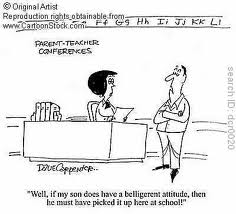
One of the most important skills of a successful teacher is the ability to harness positive interactions with parents. I believe that a teacher must consider themselves part of a team. After all, the parents and teacher form the three major stakeholders in a child’s education.
A GOOD parent-teacher relationship is important to every child’s learning journey and helps develop a memorable school experience.
That’s the opinion of Sunshine Coast education expert Karen Campbell.
And like any relationship, she says these need nurturing and constant attention to be of benefit to the child.
With the new school year only a week away, many parents may be meeting their child’s teacher for the first time.
“Parents have to realise that a teacher is such an important part of their child’s life,” Mrs Campbell, a tuition facilitator and former teacher, said.
“They need to introduce themselves to the teacher, and tell the teacher any special things about their child.
“Open communication is essential, so it’s important for parents to inform the teacher if there’s a problem at home such as a death, break-up or business failure.
“This allows teachers to develop an understanding and appreciate why a child may be behaving a certain way.”
Not all parents are easy to get along with and some employ methods that are not exactly to my liking, but I realise that a disconnect between myself and the childs’ parents is potentially destructive to the academic progress of the child.
It is important to work past any differences one may have and find common ground in the best interests of the child.
Today is a disappointing day for all Americans (and the vast majority don’t know it). The Supreme Court’s decision not to overturn a previous decision which found in favour of students who harassed and slandered two Principals on the grounds that the school did not have the authority to punish them for deeds committed outside of the school gates.
The court let stand the suspension of a West Virginia high school’s “Queen of Charm,” who created a Web page that suggested another student had a sexually transmitted disease, and invited classmates to comment.
The court also left alone rulings that said schools could not discipline two Pennsylvania students for MySpace parodies of their principals that the students created at home. An appeals court, following 40-year-old case law on student speech, said the posts did not create substantial disruptions at school.
Lawyers on both sides were disappointed that it will be at least another year before the high court wades into the issue. Federal judges have issued a broad range of opinions on the subject.
“We’ve missed an opportunity to really clarify for school districts what their responsibility and authority is,” said Francisco Negron, general counsel of the National School Boards Association. “This is one of those cases where the law is simply lagging behind the times.”
This is a bitter blow for American society. Cyber bullying is a significant problem. It is my opinion that schools should most certainly get involved when its students are bullying each other (irrespective of where they are when they do it). By working with the parents, schools can play a vital role in deterring bullies from victimising others online.
I am very saddened to read that the Supreme Court is of the opinion that when a child call their Principals names like a “big fag”, “whore”, “hairy sex addict” and “pervert”, their posts do “not create substantial disruptions at school.” Really? I would have thought it would certainly undermine the authority of the Principal. And should she/he is unable to take any action, it sets an awful message that you can get away with saying anything online.
Whilst I believe that it’s the right of every parent to decide what is and isn’t appropriate at school, sometimes they go overboard. The parents that pulled their primary aged children from their school’s massage program (a program which gets children to massage each other) on the grounds that it was inappropriate, had every right to do so. What bothers me, is that by making the school’s program a big issue, they are in fact railroading future programs which may benefit their children.
As much as they may have disagreed with the outcome, the intention of the school was clearly commendable. They wanted to provide a more relaxed and harmonious environment for their students.
Parents are up in arms at a primary school where youngsters have been giving each other massages before lessons.
The ten-minute massage sessions were introduced at Sheffield’s Hartley Brook Primary School to help calm down pupils after lunch breaks.
School head Mrs Chris Hobson said the massage sessions have been a big success but some parents have withdrawn their children from the massage programme claiming it is ‘inappropriate’.
The Massage In Schools programme is designed to help pupils relax and concentrate after energetic lunchtime playtimes.
Parent Rachael Beer who has two children at the school said: ‘I just feel it is inappropriate for children touching each other. I do understand that children need calming down after lunch.
I just think there are better relaxation techniques out there that can help with that, such as yoga, that have the same benefits as peer massage that don’t involve them touching each other.
‘I think children like their own personal space.
‘Many parents do feel the same way as me. If the head had consulted parents better, she would have a clear view of how parents feel about it.
‘Other parents are telling me they didn’t even know peer massage was being rolled out in school and they do feel uncomfortable with it.
‘I have opted my children out of it. They are then sat doing the actions to peer massage. I feel that those 20 minutes could be better spent doing something more academic.’
One of the big challenges educators of primary aged children have, is the ability to get their students to maintain concentration. It is very hard to keep young children engaged. Anxiety is also often prevalent, posing extra challenges on teachers to reduce the tension and keep the proceedings positive. An extra 20 minutes of academic studies is useless if the children are having trouble concentrating.
When parents make a school’s attempts at innovation difficult and take an idea born out of compassion and turn it into controversy, they discourage schools to want to do something new and different.
Innovation is the way forward in education. We all know our education system is flawed and it requires some fixing. That can only come about from thinking different and acting differently. When parents take a worthwhile idea and make it a media circus they are in effect rallying for the status quo.
Take a step back and observe the status quo. Is that what you really want?
Last week I wrote a post on the challenges of teaching shy students. I gave an account of my struggles with one particularly shy student and the strategy I used to get him to talk. I have great empathy for the child that is too afraid to speak and understand the frustrations involved when teaching such a student.
The Courier-Mail reports new research from Southern Cross University has found strong benefits for the use of Twitter by students too embarrassed or uncomfortable to ask teachers questions in the time-honoured raised-hand method.
Southern Cross business lecturer Jeremy Novak, along with Central Queensland University’s Dr Michael Cowling, studied the use of Twitter among university students as a method for asking questions and gaining feedback without having to stand the stares and scrutiny of fellow students.
The positive feedback from students, particularly international students, has convinced the research team the use of Twitter technology could also be embraced by classrooms at high school and even primary school level.
In my opinion, shyness is not a genetic disease or impenetrable condition. To me, shyness is a result of a lack of self-esteem. Shy children act that way because they don’t feel valued. Instead, they feel judged, ostracised or labelled.
A teacher can do one of two things. They can either enable the shy student by using Twitter, or they can actually attempt to help that student find their feet and feel good about themselves.
“But who has the time for that? We have the curriculum to cover!”
This line sums up my frustrations with current educational thinking (as perpetuated through teacher training programs). In my opinion, it is every bit as important for a teacher to assist their students in matters of self-confidence as it is for them to teach them the curriculum. In fact, I would suggest that it is more important. Facts are learnt and forgotten. The average person on the street has long forgotten calculus and how many chemical elements make up the periodic table. What they wouldn’t have forgotten is how they were treated and how their experiences at school have changed them for the better or worse.
Why placate a shy person when you can change a shy person? Why play the game when you can show them that they have a voice and it’s special and unique and something to be proud of.
And besides, receiving Tweets in class is so unprofessional.What, am I supposed to stop my class so I can check my phone for a Tweet?
Trust me, as good a feeling as it is to teach children new skills or concepts, helping a child discover that they are important and that their thoughts and opinions matter is so much more rewarding.
I am a big believer in free speech. I consider myself very lucky to be in a country where my thoughts and feelings can be expressed freely without recriminations. But like all other laws and freedoms there are boundaries. I might have free speech, but I am also restricted by sensible limitations to what I can say.
When students use social media to call their Principals names like a “big fag”, “whore”, “hairy sex addict” and “pervert”, and the consequence for their actions is nothing more than a suspension, I think they should count themselves very lucky. To then sue on the grounds of freedom of speech and win says a lot about the judicial system and the difficulties educators face in earning basic respect.
A middle school principal in northeastern Pennsylvania was shocked to see his photo online along with a description of him as a “hairy sex addict” and a “pervert” who liked “hitting on students” in his office.
A high school principal north of Pittsburgh saw a MySpace profile of himself that called him a “big fag,” a “whore” and a drug user. And in West Virginia, a school principal found out that a girl had created an online site to maliciously mock another girl as a “slut” with herpes.
All three students were suspended from school and filed suits against the principal and the school districts. They argued the 1st Amendment protected them from being punished for postings from their home computers. And in the two Pennsylvania cases, they won.
Whilst these awful slurs may technically be classified as “free speech”, verbal bullying of any kind can also be defended under the guise of free speech. Is this what we want? People supported by the courts to demoralise, slur and denigrate others? How are principals supposed to tackle bullying when they can’t even deal with bullies who are attacking them?
The exploitation of free speech will see bullying, especially cyber bullying, continue to gain momentum. These students should never have been suspended. They should have been expelled!
I am not a big fan of Barbie. However, I think the initiative to get Mattel to include a cancer suffering “Bald Barbie” has plenty of merit:
Most kids in America recognize Barbie immediately.
She’s tall, she’s thin, and she’s…bald?
Rebecca Sypin is one of the people behind this Facebook campaign urging Mattel to create a bald Barbie, one she says children battling cancer and other diseases that cause hair loss can relate to.
“When you go to the supermarket, sometimes you have little kids who’ve never seen it before, staring, and I think it would make it much more mainstream and more normal for kids to see that,” said Sypin.
Sypin knows about children and cancer all too well. Her daughter, Kin Inich, is battling leukemia.
“Everybody else has hair, even a boy has hair and you don’t. So it would make you feel like you’re Barbie, you would be the glamorous girl with the big lifestyle and everything now,” said Kin.
The Beautiful and Bald Barbie Facebook page has been up and running for less than a month, and already has more than 65,000 friends.
But despite that support, Sypin says the bald Barbie idea has gotten a cool reception from Mattel, saying that the company has told her they do not take unsolicited Barbie doll suggestions from outside sources.
A bald Barbie may still be a possibility though. Mattel released a written statement Thursday saying the company is honored that so many people are looking to Barbie as the face of such an important cause.
“We receive hundreds of passionate requests for various dolls to be added to our collection,” the statement reads. “We take all of them seriously and are constantly exploring new and different dolls to be added to our line.”
Let’s face it. The reason that Mattel seem less than enthusiastic about the idea, is that it would almost certainly make a loss. That, and the fact that the Barbie name is synonymous with looks and dimensions that lack realism and are deliberately out of proportion. A doll that humanises the Barbie name and presents her as flawed and vulnerable is not what they are setting out to do.
I will be watching closely to see whether or not Mattel has the conviction to bypass profits for this extremely noteworthy cause. If they don’t, it will only serve to reaffirm my current dislike of the product.
I once taught a child that refused to talk. He was already in fourth grade by the time I had him and some of his previous teachers had told me that they hardly recall a time when they heard the sound of his voice. No matter what I tried, nothing was working. By the end of Term 1 I was beginning to doubt I could do anything for him.
Then it hit me. It was a long shot, but I couldn’t think of anything else so it was worth a try. The boy reminded me of Harpo from the Marx Brothers. Not only didn’t he talk, but he had the same facial features and a similar haircut. I decided to show the class my favourite Marx Brothers movie, Duck Soup, and dedicate the screening to this student that refused to talk. I mentioned how Harpo Marx is cool and so is this student who happens to share a resemblance.
I figured that instead of trying to get him to talk and making his silence a negative, I would celebrate it and cannonise it. The class loved the Marx Brothers and particularly enjoyed Harpo Marx. In fact, no one loved it more than this particular child, who would mimic Harpo, get his parents to order the Marx Brother’s DVD’s and yes, the positive attention from peers in particular made him start to talk!
I recently stumbled on a valuable website that deals with helping parents and educators deal with shy children. The website is called shakeyourshyness.com and it features some useful tips. By following the link provided, the tips below are explained in more detail.
Normalize shyness and depict it in a positive light.
Make regular contact.
Give shy children a job to do.
Comment on their successes and post their work.
Help Children Learn To Initiate Contact With Others.
Educate Parents.
Reward Small Improvements
Keep an eye out for teasing
It turns out that he was just waiting for somebody to at least attempt to understand him. He didn’t want people to try to change him, he wanted people to appreciate him for who he was.
Later that year, this very child performed in the school concert. Thank you Harpo!
I find the ADHD trends highly frustrating. I am not a doctor or medical professional of any kind so it’s not for me to speculate whether or not ADHD exists. What bothers me, is the rapid increases in children being diagnosed (and more importantly, medicated) with the syndrome. To me Ritalin and other types of ADHD medication must be the last resort. It’s side-effects are often quite pronounced and sometimes quite sad to experience. Kids with larger than life personalities and great bursts of creativity can often be left following their own shadows (I have personally witnessed this!)
When I first entered into the profession I was given medical forms to fill out about a particular student. A previous teacher must have recommended that this student be assessed due to the belief that she may have some ADHD symptoms. In my view she was just a child with poor self-esteem who lacked concentration. In my assessment of her I made it clear that I felt that beyond her concentration being poor there was no other reason to suspect that she may have ADHD.
It didn’t help. Unfortunately, within weeks of being presented with this patient, the doctor prescribed her with Ritalin. No suggestions of a change of diet, no therapy to examine if there is any cause for her low self-esteem and no evidence that she was sent to have her language skills tested. Just the “go to” method, the “one pill fits all” strategy – the blasted pill!
I am proud to say that this child is now off the medication. Her parents decided it was not something they wanted her to be on permanently so they eased her off it. Doctors would be shaking their heads right now and accusing the parents of being irresponsible. But the parents were right. She is now a happy, focussed, non-medicated young teenager.
SIMPLY eating healthier may improve the behaviour of children with attention deficit hyperactivity disorder (ADHD) if therapy and medication fail, says a study published in the journal Pediatrics.
Nutritional interventions should therefore be considered an alternative or secondary approach to treating ADHD, not a first-line attack, said the review by doctors at Northwestern University Medical School in Chicago, published on Monday.
What they mean by that is first pop the pills and then consider your sugar intake. This is ridiculous. What is the big deal about investigating diet and other possible causes before, as a last resort, prescribing the medication?
People who draw attention the benefits of teacher/student Facebook communication miss the point. There is no doubt that there are some fantastic innovations through social media that would allow teachers to respond to the educational needs of their students. But all benefits go out the window when one considers the dangers.
High school teacher Jennifer Kennedy has a prepared response for students who send her “friend” requests on Facebook.
No. Or, at least not until they graduate.
It’s a rule she said she shares with fellow teachers at Sacramento New Technology High School.
Increasingly, school district officials across the region and throughout the country are coming up with their own guidelines for what kind of online and electronic communication is acceptable between teachers and students.
“We have a generation of kids who communicate this way,” said Kennedy, who teaches sophomores and seniors. “If you say absolutely no Facebook or texting, you are cutting off an important relationship with students.”
In districts with policies against such behavior, officials have said social media sites blur the line between the professional and private lives of teachers. And then there are the rare but widely reported allegations of abuse initiated or intensified through social media.
These allegations of abuse spoil any chance teachers and students have of communicating via social media sites. Perhaps this if for the best.
I have a confession to make. As driven as I am to help my students master the curriculum, there is something more important to me than their academic achievement. I would not be even remotely satisfied if my students were at or above the national standard in numeracy and literacy if they also happened to be bullying, bullied or struggling to cope with everyday life. Conversely, if my students were below national standards but were functioning well and getting along with each other, I would be far more satisfied.
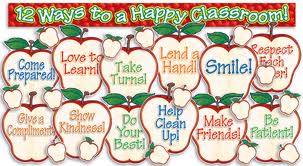
That’s not to say that I don’t understand that a vital function of my job is to educate. I know that all too well. It’s just that I wont let that distract me from my mission in setting up a classroom that is caring, friendly and allows each child to express themselves in their own unique way.
I am sick and tired of reading about how bullying is causing kids as young as 7 to diet. It infuriates me that so little is done by teachers to protect young kids from this stigma and prevent bullies from causing distress. I know what I am claiming will be seen as a gross generalisation, but how many teachers are prepared to overlook a hurtful comment about weight or ignore the activity by the “in-crowd?”
No classroom should have an “in-crowd”. In-groups cannot exist without a readily defined “out-group”. It is a teacher’s job to foster a classroom environment without such divisions. It is more important than any equation or scientific experiment.







 Topical Teaching