Posts Tagged ‘life’

What Happened to Honesty and Integrity?

April 11, 2012

My generation is going to point to today’s youth at some point (if they haven’t already) and blame them for having less respect and being more selfish than they were when they were young.

That may be so, but who do you think is really to blame?

Last week, as I went to pick up my daughter from school a driver smashed into my parked car.

Did he (could have been a “she”, but I’ll stick with “he” for convenience sake) stop and wait for me to return?

Nope.

Did he leave a note with his insurance details and a contact number?

Nope.

That’s right, he just drove away like some kind of gutless chicken. He probably thought that my insurance would cover the damage and there would be no loss to me.

In reality, even though I have full cover, my insurance company will only pay for the damage over $1000 (I would have to pay for the first $1000). My car is probably not worth that much more than $1000 and I can’t afford to buy another at this stage, so it looks like I’m going to have to walk to work!

This story is not a new one. One of my friends experienced a similar thing on the very same day!

We can blame today’s children for plenty if we want to. But on further reflection, one has to ask – How are they supposed to end up if we can’t get our own act together and become more responsible rolemodels.

Students Should not be Prosecuted for False Allegations

April 10, 2012

Those of you who follow my blog know how concerned I am about the threat of false allegations against teachers. Data has shown that it is one of the major factors for driving potential male teachers away from the profession. I have a friend who was accused of innapropriate touching by a child for doing nothing more than guiding the child’s hand in a handwriting exercise. She did nothing more than help the child hold the pencil correctly and it landed her in hot water, until the child recanted on his original claim.

But as much as I abhor false accusations, I am aware that the role of the teacher is to put the welfare of the child over their own. If students were prosecuted for false claims, it would have dire consequences for the wellbeing of the student population. The threat of prosecution would ultimately deter students from speaking up against teachers who have genuinely molested them. It is already difficult for victims of sexual assault to speak out and name their perpetrators, lets not put any stumbling block that may keep them quiet.

Still, it seems as though I am in the minority of teachers on this one:

Pupils should be routinely reported to the police after making unfounded claims simply to get their own back on teachers, it was claimed.

The NASUWT union said lying schoolchildren “must understand there is a consequence” to making allegations that are “unjust and malicious”.

The comments came as new figures showed the vast majority of claims made against teachers were unsubstantiated.

Data from the NASUWT shows that fewer than one-in-20 allegations of unlawful behaviour made against teachers last year – including assault, sexual abuse and serious threats – resulted in court action.

Addressing the union’s annual conference in Birmingham, activists insisted that pupils who make false claims should be prosecuted.

Ian Brown, a teacher from North East Derbyshire, said: “Schools must have procedures in place where, when allegations are made, the pupil is made aware at the earliest point of the investigation, through their parents if necessary, that if they wish to proceed with the allegation and are found to be lying, then they will face sanctions.

“They must understand there is a consequence in making those allegations if they are found to be unjust, lies and malicious.”

According to figures from the NASUWT, most allegations made against teachers last year failed to result in court action.

Some 103 claims were made, with no further action being taken in 60. Some 39 are yet to be concluded, although the union claim the vast majority are unlikely to ever make it to court.

Just because most claims against teachers fail to lead to conviction doesn’t mean they were erroneous. Protecting the welfare of children is tantamount, even when it comes to the expense of teachers.

As much as I would like to see children punished for any salacious lie, I desperately don’t want any prohibitive regulation that would deter genuine victims from seeking justice from their perpetrator.


One of the Most Overrated Skills in the Classroom

March 28, 2012

Whilst I can obviously see the value of teaching spelling skills, I don’t think it is anywhere near as important as schools make out.

The emphasis that spelling gets when it comes to teaching allotments, testing and reporting is astounding. Surely there are more vital skills such as maths, writing and reading that can profit from taking some of the ‘treasured’ spelling time.

Many skills now have specialised spelling programs complete with up to 5 weekly periods per class from the Second Grade upwards. Talk about overkill! My daughter recently brought home a form requesting our written consent to take her out of her classes in order to strengthen her spelling skills. What makes this request even more bizarre is that she is only in the first grade! I can understand taking her out for maths or English, but spelling?

What upsets me most about the obsession with children and spelling is what it does to our students. Our children know whether they are good spellers or not. They have been tested countless times and their work is often given a ‘dose of red’ where every misspelled word corrected. What then tends to happen, is that students become self-conscious about their spelling capabilities and try to avoid the dreaded red ink corrections. Instead of using the most appropriate word for their written work, they choose words they know how to spell. This has a severe negative impact on the quality of their writing.

I am a big fan of minimising the emphasis of spelling. I want my students to write freely, to choose words that best fits their work and have a fearless approach to spelling difficult words. To me, a free and unhampered piece of writing replete with spelling errors far outweighs a dreary, disjointed piece of work with correct spelling.

I’m not against the teaching of spelling and I certainly believe that spelling rules and the understanding of morphographs have a place in the classroom. I just don’t think these skills are anywhere near as important as many would have you believe.

The Fine Line Between a “Fragile” Teacher and a Dangerous One

March 25, 2012

Sometimes it is absolutely vital to call a spade a spade. There is no good reason to protect the honour or devise a defence for a teacher that incites her class to stand for a minute silence for a known terrorist. It doesn’t matter how troubled this teacher may have been, there was no excuse for this incredibly irresponsible act:

A French teacher was suspended on Friday for allegedly urging her class to observe a minute’s silence for serial killer Mohamed Merah, the day after he was shot dead by police.

Education Minister Luc Chatel had called for the teacher to be suspended after her class reported she called Merah a “victim” and said his links to Al-Qaeda were invented by the media and “Sarko”, referring to President Nicolas Sarkozy.

“An immediate suspension has been decided along with a ban on entering the school,” the local education authority’s Florence Robine told journalists, adding that the suspension did not imply any guilt.

She “clearly said that Mohamed Merah was a victim, that the link with Al-Qaeda had been invented by the media and ‘Sarko’,” said the letter, a copy of which was published by the Paris Normandie newspaper.

“This is not the political act of an extremist but the act of a colleague who has health concerns, who is fragile and who is receiving psychological treatment,” the local head of the SGEN-CFDT union, Pascal Bossuyt, told AFP.

“She said something unfortunate in a particular context and she immediately regretted what she said,” he added.

Police shot Merah dead on Thursday at his flat in southwest France where he was holed up after going on a jihadist-inspired killing spree. His victims included three young Jewish children and three paratroopers.

It is a shame that “fragile” teachers with “health concerns” are often allowed to practice until they do something inappropriate. This was more than the act of a teacher requiring “psychological treatment.”

This was the act of a teacher who is completely unfit for teaching.

101 Ways to Misdiagnose ADHD

March 20, 2012

I am not sure if ADHD exists or not. Since I am not a doctor or medical professional, I will decide to err on the side of caution and give ADHD the benefit of the doubt. But whether or not it exists doesn’t seem to be the pressing issue. The issue seems more to do with the poor children misdiagnosed with ADHD in what seems to be a completely haphazard fashion:

A STUDY of almost a million Canadian children has found those born in December, the last month of the school year intake, are more likely to be diagnosed with ADHD and medicated for it than those born in January.

Relative immaturity may result in the inappropriate diagnosis of ADHD, the University of British Columbia researchers suggest.

They raise “concerns about the potential harms of overdiagnosis and overprescribing” for the condition. Children given medication for ADHD may suffer adverse effects on sleep, appetite and growth and face increased risk of cardiovascular events, the paper says.

Inappropriate diagnosis may lead teachers and parents to treat the child differently and change self-perceptions.

The study in this month’s Canadian Medical Association Journal, found boys born in December were 30 per cent more likely to receive a diagnosis of ADHD than boys born in January and 41 per cent more likely to be given medication for ADHD.

The medical fraternity has let themselves down with ADHD. It seems from this untrained eye that too many kids are being diagnosed with this condition and therefore, too many kids are needlessly medicated. What this does is bunch real sufferers of ADHD with kids who have come down with a bout of, for example, immaturity.

The Worrying Trend With Children and Alcohol

March 18, 2012

It really bothers me when there is a real problem facing our children and instead of tackling it head-on we get distracted by minor factors. A disturbing number of kids are turning to alcohol and instead of getting to the crux of the issue, experts are worried about alcohol advertising::

ALCOHOL is fast becoming the No. 1 threat facing Australian children and there is no adequate system in place to stop them being exposed to alcohol advertising, Australia’s foremost child health expert, Fiona Stanley, says.

The former Australian of the Year will chair a new alternative alcohol advertising review body, which health experts say is needed because the industry-based code is failing to protect children.

The Alcohol Advertising Review Board will assess complaints from members of the public about alcohol advertising, and will look at areas not covered by the current code, such as sponsorship or advertisement placement.

My tip: You could ban all advertising of alcohol and it still wouldn’t have a meaningful effect on child consumption. I really respect what Fiona Stanley is doing, I just don’t think much will come of it.

Cyberbullying is More Harmful than Traditional Bullying

March 15, 2012

I’ve been of the opinion for quite a while that cyberbullying is the form of bullying that does the most harm and is the hardest to address. By invading the home of the child, cyberbullying takes an environment that was traditionally safe and has ensured that victims of such bullying have nowhere to hide. Cyberbullying also reaches a far wider audience, replacing the half a dozen or so witnesses in a playground incident with literally thousands online.

Children think face-to-face bullying is more harmful than cyber bullying but new research shows that perception to be false.

Researchers from Queensland University of Technology surveyed over 3000 students in Years 6 to 12 from 30 schools nationally and found 45 per cent said they were bullied.

The victims of face-to-face bullying, often referred to as traditional bullying, reported it had harsher impacts than victims of cyber bullying. However, other signs show the opposite to be true.

Lead researcher, Associate Professor Marilyn Campbell, said victims of cyber bullying reported higher levels of anxiety and depression than children who had been bullied face-to-face.

“When we measured their social problems, children who had been cyber bullied had much higher scores than victims of traditional bullying but they didn’t see it themselves,” Campbell told Education Review.

Campbell said children were usually bullied by kids they knew and often because they were different.

“It’s a cycle. They go to school, they get bullied. They go home and get cyber bullied. They go back to school and are bullied again.”

It is absolutely vital that schools stop sitting on their hands and start becoming more proactive when it comes to fighting cyberbullying. Schools are quick to point out that since the bullying is done outside school gates it becomes a parenting issue rather than a school issue. That may be true when it comes to legal obligations but not moral obligations. Schools should be expected to do what they can to ensure that their students are protected from being harassed or bullied by other students, regardless of where the harassment takes place.

Schools have got to stop obsessing about potential lawsuits and handballing issues to other stakeholders. They must show they care and fight for the wellbeing of their students!

Kids Need Meaningful Relationships More than Mobile Phones

March 12, 2012

No matter how advanced technology becomes, nothing will stop us from needing human contact and real interaction. You might be able to stockpile Facebook friends, but nothing can replace the loyalty and support offered by a real friend.

Sometimes I feel that we have allowed ourselves to live in glass cubicles, shielded from real people, real conversations and real experiences. The same technology which was devised to bring us closer together has been misused and ultimately, has kept people out.

Teachers have been instructed to keep emotional distance from their students, the local small business operator who cared about his/her community as much as their bank balance, has been replaced by people not interested in the place where they work or the people who frequent their establishment. People are much less likely to say things like, “I just met someone on the train. We got talking and she told me all about her interesting life.” The only talking on trains is via mobile phone.

Is this really a natural way to live? Is this how we want our children to grow up? Are we really surprised to read that children don’t play with other children like they used to?

A new study that found almost 50 per cent of kids don’t play every day has prompted an expert’s warning about a generation of depressed and anxious youngsters.

The study, hailed as the first of its kind in Australia, carried out a total of 1397 interviews, including 344 with children aged between eight to 12.

About 40 per cent of them said they don’t have anyone to play with while 55 per cent say they’d like to spend more time playing with their parents.

Forty-five per cent said they were not playing every day.

The MILO State of Play study, which also interviewed 733 parents and 330 grandparents, found that more than 94 per cent of them believed play was essential for child development.

But it is still rapidly falling off the list of priorities, said child psychologist Paula Barrett.

“The longer we de-prioritise it, the more likely we are to have unhappy and inactive Australian kids which are more likely to be anxious and depressed, resulting in a raft of social problems in adulthood,” she said.

Dr Barrett said unstructured, active play was essential to help children learn important life skills, develop imagination and creativity.

“This finding highlights a concerning yet common misperception that many parents share – they dont think that kids need to play regularly after the age of eight,” she said.

Many will criticise me for drawing a parallel with the state of society and the development of new technologies. Of course technology isn’t solely to blame for a lack of real and personal interactions. But let’s face it, they have made the issue more serious. Just look at the advertisement above. Do we really want life’s pleasures to be about how nifty our touch screens can become?

In 2005 a landmark movie was released entitled, Crash. It depicted New York as a place where people are too insecure and selfish to interact with others. The only way a person can have any dialogue with a stranger is if they, quite literally, crash into each other.

Our children need real friends, not Facebook friends, they need play dates not peer-to-peer gaming sessions and they need the adults in their lives (including teachers) to scrap any notions of emotional distance and become engaged.

Let’s tear down the barriers and bypass the touch screens and actually … talk with each another!

The Difficulties of Parenting a Special Needs Child

March 10, 2012


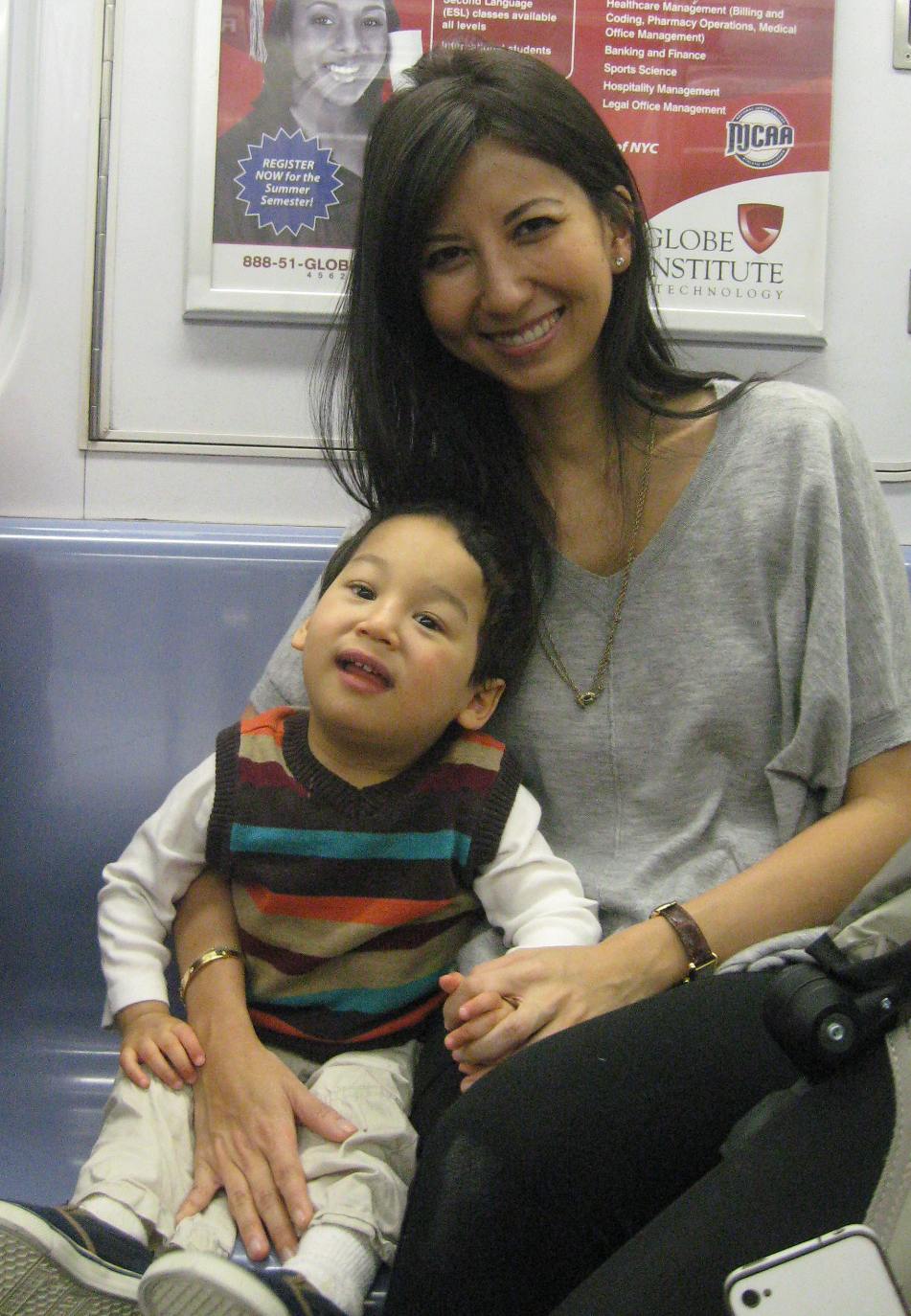
Teaching a Special Needs child can be a most difficult proposition, but parenting one is infinitely harder.

I read a brilliant piece entitled, “6 Things You Don’t Know About a Special Needs Parent.” It’s honesty provides the reader with great insight into the difficulties of raising a child that suffers from a disability. Maria Lin, the author of this wonderful article, is the parent of a 3-year-old suffering from a disorder of the 18th Chromosome. Up until now she has been tight-lipped about her experiences. I have no doubt that this article will serve to educate people like myself and will provide some comfort to other parents who are in a similar situation.

Below is her list of 6 insights:

1. I am tired. Parenting is already an exhausting endeavor. But parenting a special needs child takes things to another level of fatigue. Even if I’ve gotten a good night’s sleep, or have had some time off, there is a level of emotional and physical tiredness that is always there, that simply comes from the weight of tending to those needs. Hospital and doctors’ visits are not just a few times a year, they may be a few times a month. Therapies may be daily. Paperwork and bills stack up, spare time is spent researching new treatments, positioning him to sit a certain way, advocating for him in the medical and educational system. This is not to mention the emotional toll of raising a special needs child, since the peaks and valleys seem so much more extreme for us. I am always appreciative of any amount of grace or help from friends to make my life easier, no matter how small, from arranging plans around my schedule and location, to watching my son while I am eating.

2. I am jealous. It’s a hard one for me to come out and say, but it’s true. When I see a 1 year-old baby do what my son can’t at 4 years-old (like walk), I feel a pang of jealousy. It hurts when I see my son struggling so hard to learn to do something that comes naturally to a typical kid, like chewing or pointing. It can be hard to hear about the accomplishments of my friend’s kids. Sometimes, I just mourn inside for Jacob, “It’s not fair.” Weirdly enough, I can even feel jealous of other special needs kids who seem to have an easier time than Jacob, or who have certain disorders like Downs, or autism, which are more mainstream and understood by the public, and seem to offer more support and resources than Jacob’s rare condition. It sounds petty, and it doesn’t diminish all my joy and pride in my son’s accomplishments. But often it’s very hard for me to be around typical kids with him. Which leads me to the next point…

3. I feel alone. It’s lonely parenting a special needs child. I can feel like an outsider around moms of typical kids. While I want to be happy for them, I feel terrible hearing them brag about how their 2 year-old has 100 words, or already knows their ABCs (or hey, even poops in the potty). Good for them, but it’s so not what my world looks like (check out Shut Up About Your Perfect Kid). It’s been a sanity saver to connect with other special needs moms, with whom it’s not uncomfortable or shocking to swap stories about medications, feeding tubes, communication devices and therapies. Even within this community, though, there is such variation in how every child is affected. Only I understand Jacob’s unique makeup and challenges. With this honor of caring for him comes the solitude of the role. I often feel really lonely in raising him.

4. I wish you would stop saying, “retarded,” “short bus,” “as long as it’s healthy… “ I know people usually don’t mean to be rude by these comments, and I probably made them myself before Jacob. But now whenever I hear them, I feel a pang of hurt. Please stop saying these things. It’s disrespectful and hurtful to those who love and raise the kids you’re mocking (not to mention the kids themselves). As for the last comment, “as long as it’s healthy,” I hear a lot of pregnant women say this. Don’t get me wrong, I understand and share their wishes for healthy babies in every birth, but it’s become such a thoughtless mantra during pregnancy that it can feel like a wish against what my son is. “And what if it’s not healthy?” I want to ask. (My response: you will be OK. You and your child will still have a great, great life.)

5. I am human. I have been challenged and pushed beyond my limits in raising my son. I’ve grown tremendously as a person, and developed a soft heart and empathy for others in a way I never would have without him. But I’m just like the next mom in some ways. Sometimes I get cranky, my son irritates me, and sometimes I just want to flee to the spa or go shopping (and, um, I often do). I still have dreams and aspirations of my own. I travel, dance, am working on a novel, love good food, talk about dating. I watch Mad Men, and like a good cashmere sweater. Sometimes it’s nice to escape and talk about all these other things. And if it seems that the rest of my life is all I talk about sometimes, it’s because it can be hard to talk about my son. Which leads me to the final point…

6. I want to talk about my son/It’s hard to talk about my son. My son is the most awe-inspiring thing to happen to my life. Some days I want to shout from the top of the Empire State Building how funny and cute he is, or how he accomplished something in school (he was recently voted class president!). Sometimes, when I’m having a rough day, or have been made aware of yet another health or developmental issue, I might not say much. I don’t often share with others, even close friends and family, the depths of what I go through when it comes to Jacob. But it doesn’t mean that I don’t want to learn how to share our life with others. One thing I always appreciate is whenever people ask me a more specific question about my son, like “How did Jacob like the zoo?” or “How’s Jacob’s sign language coming along?” rather than a more generalized “How’s Jacob?” which can make me feel so overwhelmed that I usually just respond, “Good.” Starting with the small things gives me a chance to start sharing. And if I’m not sharing, don’t think that there isn’t a lot going on underneath, or that I don’t want to.

Our Children and the Disgusting Climate of Fear

March 6, 2012

I love my job but if the Government ever forces me to scare my students in the name of “science” I will plainly refuse. I would sooner lose my job than transfer the negatively geared, sensationalistic, propaganda, intended at frightening children into believing that the world is going to go to bits because of man-made global warming.

I am more than happy to help motivate my students to care for their environment and reduce their own carbon footprints – this is a positive message. However, the Government, United Nations and various scientific agencies have no interest in positive messages. Their game is to fill our young impressionable children with fear and dread. These people believe that a nightmare in the name of science makes the experience worthwhile.

Just watch this advertisement below. This is no underground commercial. This was played at the Copenhagen Climate Summit. It is absolutely appalling! It has as much scientific value as a mound of cow turd! How dare they use children like that. What manipulative cowards they are! Who needs to communicate truths when you can terrorise children?

Anthony Sharwood is right in his assessment of this advertisement and the message we our sending our impressionable young:

One of the worst things I’ve seen in ages was the Copenhagen Climate Summit opening film, where a small child has terrible, apocalyptic nightmares after learning about human-induced climate change.

He is also correct in offering a much more palatable alternative in teaching the challenges of conserving our environment.

My six year old daughter has been learning about Earth Hour at school. Want to know how to really inspire her and others like her to save the world? Get them to love it, not fear it. Allow them to develop their own sense of environmental responsibility, rather than indoctrinating them to feel part of a “problem”.

I’m not a perfect parent. If anyone has an IKEA-style parenthood manual complete with helpful Swedish pictograms, please loan it to me. But one piece of parenting I think I’ve gotten right is instilling a deep love of nature in both my kids.

Together, we’ve bushwalked, skied and swum in some of Australia’s most beautiful locations. We’ve thrown summer snowballs on a New Zealand volcano and caught (and then released) tadpoles in a clear, Blue Mountains stream.

At home, I teach my kids about clouds and the wind direction, and always Google the birds that alight on our backyard trees, so that we can observe their habits armed with a few facts. How many city kids do you know that tell the difference between a white cockatoo and a Corella?

One day, I hope my daughter becomes an environmental scientist or activist who helps save the world. More likely, she’ll live a regular life with a regular job, and that’ll be fine too. Either way, I’m sure she’ll choose to pursue a lifestyle of modest consumption and environmental light-stepping.

If ever called on to teach this subject in such a negative way I will flatly refuse. If they force an educational pack on me I will immediately throw it in the bin (recycle bin, of course).

One wonders why those investing time into spreading the message about our carbon footprint consistently put their foot in it.