Posts Tagged ‘Katharine Birbalsingh’

The Case in Favour of Homework

September 24, 2011

I used to be philosophically opposed to homework in all forms.  That was, until I witnessed how my students used their after-school time.  It was then, that I realised that ten to fifteen minutes a night would constitute the only meaningful activity some of these students would take part in on a given night.

I am still hardly a proponent of homework, but I do share some of the opinions of author and teacher, Katharine Birbalsingh:

The radio presenter Alan Jones doesn’t believe in homework because children should have time to play outside and learn skills that only time after school with your family can teach. Normally, I would agree. But do children today have these types of experiences after school?

Families are so busy working that when children come home, they often sit in front of the TV for hours or play computer games. Children spend hours every day networking on Facebook. Exhausted parents do not realise just how dangerous these modern technological tools can be.

Technology can open a world of excitement to children. Yet it can also glorify gangster lifestyles through MTV, and encourage the use of bad language and ”text speak” in social networking.

An hour of homework a night distracts children from such activities and enables them to practise what they were taught at school. Excellent learning requires constant revisiting, and homework is the perfect tool to reinforce facts and skills. Teachers often find that children forget what they learnt the day before. At high school, you may not see your history or geography teacher for a few days until the next lesson. Without any homework in between to bridge the gap, often teachers take two steps forward, then one step back in the following lesson.

It is the school’s responsibility to inform parents that homework has been set – easily done through a diary system. The school should also ensure the homework set is of quality and not some assignment that can essentially be downloaded from the internet. Equally, it is the parents’ responsibility to ensure homework gets done.

I object to her call for an hour of homework per day, but I do currently favour 10-15 minutes of revision work, to consolidate on skills and concepts currently being covered in class.
Anthony Purcell from the brilliant blog Educationally Minded employs a similar strategy for homework inspired by his will to see his students gain some confidence from working independently:
Well, I have taught math in the past. My thoughts on homework was that if students had homework, they didn’t get finished in class. I never assigned homework. Homework was there if they didn’t get finished in class, but most times students did.

Now that I teach Science, it’s the same way. A lot of what we do is in class, hands-on activities. Homework are the questions they didn’t get to because they were goofing off or not focused in class.

In my opinion, teachers who teach the entire period and allow no work time are not good teachers. Students need to know they are being successful and have confidence. They can’t have a teacher telling them they are correct when they are at home.

This topic remains a very contentious one.  I look forward to reading your opinions on this much discussed issue.
Lack of Male Teachers Not Responsible for Boys in Gangs

September 3, 2011

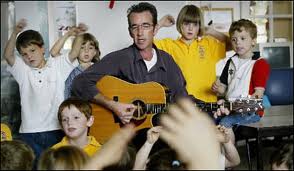
I think the experts have it all wrong when it comes to the lack of male teachers in Primary schools.  Sure, the male teachers currently working in the primary/elementary system are generally doing a great job, especially in teaching boys, but there are legitimate reasons why male teachers are not lining up to teach.

It was great to read a blog post by writer and educator Katharine Birbalsingh, who dispels the far-fetched assumptions made about the lack of male primary teachers :

Only 12.4 per cent of the primary school workforce is male. 27 per cent of primary schools in Britain are staffed entirely by women. And in secondary schools, only 37.5 per cent of teachers are male. In an age where some fathers have so little to do with their children, these statistics are seen to be scandalous. Clearly this must explain why some of our boys end up in gangs, why boys underachieve at GCSE in comparison to girls – a gap that widened to record level this year – and why chaos reins in our classrooms. Or does it?

Ms. Birbalsingh goes on to conclude that whilst male teachers have a positive effect on male students, the real issue is the fathers of these students.

Sure, having more men in our schools would be a good thing. And absent fathers is a bad thing. But no teacher can really ever replace a missing father. And that’s where the problem for our boys lies on the whole. What we need are families. Indeed, not too long ago, when ordinary families were more the norm, when fathers were present, male teachers hardly existed, and our boys were doing just fine. So are the schools really to blame for the underachievement of our boys? I would think not. I would think the onus is on our broken families.

My view is that the obsession for male teachers is unhealthy.  Men just don’t seem to be interested in taking up teaching.  My former classmates just assume that I fell into teaching and that my grades must have been so poor that I didn’t have much of an option.  Whilst this couldn’t be further from the truth, it does tell us a bit about the average man’s attitude to teaching – there is no interest in the profession whatsoever.  Especially teaching children under the age of 13.

And I ask you, who would you rather have teaching your son, a diligent, professional and passionate female teacher or a male teacher who reluctantly signed up because the Government were offering cash incentives too good to refuse?

I love teaching at the Primary level and wouldn’t swap my job for any other.  I know other male teachers who feel the same way.  But the reality is, men just don’t want to teach.  We can’t expect them to do something they just don’t want to do.

My school doesn’t even have a male toilets.  The male staff members of our school are forced to use the disabled toilets when they need to go.  As sad as that sounds, it’s hard to justify building a toilet in the current climate.