Posts Tagged ‘Health’

There is Something Seriously Wrong Happening Here!

January 28, 2011

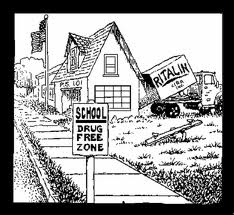
I am no expert and don’t pretend to be one, but I can’t help being quite disturbed by the incredible amount of young children being prescribed medication.  As a teacher and parent, it hurts to know that kids all over the world are being prescribed these drugs in vast numbers.

I realise that there are children that legitimately require medication – but surely we are prescribing these drugs far too easily and haphazardly.  This is not Aspirin!  These are powerful drugs.  Surely, a global body needs to be set up to review the practice of mass prescriptions and to further tighten the regulations.  I am scared for the next generations of children.  I never want to live in a society where prescribing powerful drugs to kids is seen as normal or standard practice.

In the past week alone I have read countless articles on this issue.  The article below from the UK claims drugs are being prescribed for ‘normal’ reasons, such as shyness:

Children are being prescribed mind-altering “chemical cosh” drugs for conditions such as shyness and mild social anxiety, behaviour experts have warned.

Young people are routinely being given medication to treat normal childhood conditions, it was claimed, despite fears over their long-term health.

The disclosure came as it emerged that the number of eight- to 13-year-olds on drugs such as Ritalin has soared seven-fold since 1997.

But Dave Traxson, a senior educational psychologist who works in schools in the West Midlands, warned that children were increasingly prescribed drugs for “normal” conditions.

“I feel very strongly that the time is right to challenge the growing practice of medicating our children for displaying behaviours and thought processes that until recently would have fallen within the normal range,” he said.

There was this article along the same lines from Australia:

THE use of stimulant drugs to treat attention deficit hyperactivity disorder (ADHD) is soaring, with data showing prescriptions for some medications grew by 300 per cent over seven years.

Prescription of the stimulant drugs rose by 87 per cent between 2002 and 2009, Australian researchers have found. Use of one drug commonly sold as Ritalin, methylphenidate, increased by 300 per cent.

Most studies of stimulant medication only tested its effects for between six and 12 weeks, and there was no evidence it improved educational or life outcomes, Associate Professor Jureidini said.

This description from the US site defending the use of Ritalin and other such drugs:

Stimulants are safe and effective for most children, helping them to focus their thoughts and control their behavior. In some children, these medications may cause mild side effects, such as decreased appetite, weight loss, stomachaches, sleep problems, headaches and jitteriness. Rarely, there may be more serious side effects, such as dizziness, stuttering, tics or increased blood pressure.

This article was printed in a Malaysian newspaper:

ALMOST one million children in the United States are potentially misdiagnosed with Attention Deficit-Hyperactivity Disorder (ADHD) because they were the youngest and least mature in their kindergarten classes, a US study found.

And finally, another damning article from the US:

While stimulant drugs have long been known to help children with ADHD alleviate symptoms, new studies have shown the opposite effects.

Many experts recommend prescription of a stimulant drug in severe cases, and often believe ADHD symptoms can be treated by using methods other than medication.

One dangerous possible side-effect of Ritalin is the potential alteration of personality. Some individuals have explained that when medication is stopped, the actions, thoughts, and feelings are vastly different than when taking the medication.

Whilst ADHD no doubt exists, and is often best treated with drugs, I am still of the opinion that we are drastically overprescribing these drugs.  I may not be an expert, but I still feel sufficiently concerned to speak up about it.

As teachers have a part in the decision as to whether or not a child is prescribed medication, I make the following request.  Please don’t take the decision lightly.  Don’t let an easier classroom experience ever taint your objectivity.
Are We Obsessed With Obesity?

December 29, 2010


Sarah McMahon, a specialist on the subject of eating disorders, claims that our obsession with obesity has resulted in increased cases of eating disorders.

“Children are being given maths assignments where they have to count calories,” she said.

“Education is helpful for some people but for some with certain personality characteristics, it can tip them over into a disorder.”

Eating disorder support group Butterfly Foundation chief executive officer Christine Morgan said most anti-obesity messages had a high focus on dieting.

This could lead to disordered eating including binge eating and possibly bulimia or anorexia.

I agree that we may be a little obsessed with the term obesity, but I just don’t see the link between obesity and eating disorders.  I imagine that kids are worried about being larger than their ideal size, sometimes much larger, but I don’t think kids are worried about obesity.  I’m no expert, but I don’t think obesity takes up much of our kids head space.  I think they are worried about not being thin enough to be considered attractive or feel pressured to lose weight to fit in.  But obesity?  I can’t see the link.

Regardless, kids should not be hounded by horror stories on the dangers of obesity or made to count calories.  Instead they should be given the reassurance they need to be comfortable in their own skin, the education they need to make healthy choices and the support they need to be self-assured, confident and happy.

My Take on the “Lunchbox Wars”

December 22, 2010

It is my opinion that schools not only have a right but a duty to look after the welfare of their students.  Schools are well within their rights to impose sanctions on what foods are allowed and not allowed to be included in the children’s lunch boxes.  Yes, there are those who believe that being in a free country should give parents the freedom to do as they please.  I agree with that theory in part.  I think parents should be able to feed their kids whatever they want – in their own home.  At school, there is nothing wrong with imposing restrictions on sugary foods.  On the contrary, it’s commendable.

I am writing this in defense of Clifton Park Primary School, who are embroiled in a “Lunchbox War” with some parents over such a ruling:

A LOCAL school’s decision to monitor the contents of their students’ lunchboxes has sparked heated debate within the Bunbury community.

In last week’s edition of the Bunbury Mail, the mother of a Clifton Park Primary School student was outraged to learn her five-year-old son’s lunchbox snacks were being confiscated due to their sugar content.

The Bunbury Mail office was flooded with letters and Facebook posts from residents voicing their opinion.

Joy Whysall’s letter said it was an example of the world gone crazy.

“What gives others the right to choose what we eat?” she said.

“This is a disgraceful state of affairs when a teacher can go into a child’s lunchbox and take out what they feel is unsuitable for the child.”

I am sorry to disappoint the irate parents of Bunbury, but when they send their kids to a school, they are getting a lot more than a child minding service.  We teachers not only educate your kids, but we care for them and about them.  We educators strive to give your kids a safe, positive learning environment in which they can thrive.  Instead of seeing this as a violation of privacy, see this as a show of care and dedication.

I hope this exhibition of anger does not intimidate other schools from following Clifton Park’s fine example.

Breast-Feeding Benefits Academic Achievement

December 21, 2010

Findings from a recent study in the journal ‘Pediatrics’, show that breast-feeding infants for at least six months appears to give kids’ an advantage in school.

This is not a new finding in itself.  However, what was of particular interest, was that boys appeared to benefit the most.

The researchers, from the University of Western Australia in Perth, have followed 2,868 children since the early ’90s. The study showed that, at age 10, boys who were breast-fed for six months or longer scored higher in math, reading and spelling compared with boys who were breast-fed for less than six months. Girls who were breast-fed for at least six months showed a small improvement in reading. The researchers controlled for other factors that could influence school performance, such as family income and education and how often the child was read to.

There were two reasons given for the link between breast-fed babies and academic performance:

1.  Breast milk is rich in long-chain, polyunsaturated fatty acids that are critical to brain development. It’s not clear why boys showed the largest gains from being breast-fed, but the authors explain that male babies are known to be more vulnerable in infancy than females. They speculate that breast-feeding “accelerates the rate of maturation in boys.
2.  Boys may also benefit more from the mother-child relationship facilitated by breast-feeding. “A number of studies have revealed that male infants are more reliant than female infants on maternal attention and encouragement for the acquisition of cognitive and language skills,” the authors wrote.

A Quarter of 4-5 year-olds Obese!

December 19, 2010

Some very disturbing figures released recently in the UK show that 23.5% of four to five-year-olds are overweight or obese.

Unfortunately it only gets worse in the following years:

One in three (33.4 per cent) of children in their final year of primary school (aged 10 to 11).

In the 2009/10 reception year, 13.3 per cent of children were classed as overweight and 9.8 per cent as obese.

But in Year Six, the final year of primary school, 14.6 per cent were overweight and almost a fifth – 18.7 per cent – obese.

Slightly more boys than girls were either overweight or obese in both age groups.

It is easy to dismiss these figures as an outcome of poor parenting, but schools have the opportunity to become far more proactive.  Schools can intervene by educating both child and parent and offer healthy choices in cafeterias.

No More Asbestos Riddled Classrooms!

November 30, 2010


Enough is enough!  How long does it take for those in charge to take notice and become proactive?  This isn’t the 60’s!  More has to be done to ensure that teachers and students aren’t subjected to asbestos exposure.

Reading about Queensland’s problems with asbestos debris in their classrooms makes me very upset.

Education Queensland has been unable to give a statewide figure for the number of children who have their names on asbestos-related school registers, stating the information is not kept centrally.”

The department has also revealed 98 temporary closures of classrooms, playgrounds and other state school sites were recorded in about six weeks recently  comparable to the rate of closures for all of last year.

If you’re concerned like me, have no fear because Education Queensland’s acting deputy director-general Graham Atkins has come up with the worst attempt at spin one could ever imagine.

“Principals and staff have a heightened awareness about managing asbestos-containing materials,” Mr Atkins said.

“This (awareness) can account for the high number of incident alerts recently, which is always a good thing, as our staff are trained to be extra-cautious,” Mr Atkins said.

Doesn’t that make you feel better?

Whilst you and I might have been indifferent to Mr. Atkins’ s spin, the Queensland Association of State School Principals president Norm Hart obviously thought it was gold.

“… Norm Hart said managing asbestos risk had become a growing part of a principal’s role and recent training would be behind the incident spike.

“It is obviously frustrating that we have buildings that have asbestos in them and that we have to manage it, but we are not prepared to put safety second,” he said.

So if you are a concerned parent, rest assured, your child’s teacher and principal are experts at spotting asbestos.  Forget about teaching literacy or numeracy.  No, our teachers are trained to spot potential carcinogens in the classroom.  Feel better now?

The Courier-Mail earlier revealed Department of Education and Training staff had made more than 400 workers compensation notification claims since 2005 after potentially being exposed to asbestos.

EQ figures show 18 DET staff have had WorkCover asbestos-related claims accepted since 2002. Seven were for asbestos-related illnesses, seven were for psychological injury related to exposure and four were for possible exposure.

But it’s alright.  We have it under control.  We’ve trained our principal’s ….

What Are We Doing to Our Kids?

November 19, 2010

It’s unbelievable how political correctness has infiltrated our schools. The intentions may be noble, but the results are sure to be disastrous. Yesterday, I wrote of the incredibly stupid hugging ban at a Gold Coast primary school. Today, I was informed of another shocking school rule at Mt Martha’s Osbourne Primary School in Victoria.

The primary school principal of Osbourne has banned students from being in groups of more than three while at school in a radical plan to combat anti-social behaviour.

Principal Liz Klein said the ban was a short-term measure to tackle anti-social behaviour around the schoolyard.

But Ms Klein denied the school, with more than 600 students, had a bullying problem.

“This is not about bullying, it’s about silly, annoying behaviour at the hands of a select few,” Ms Klein said.

But that’s not all!  Two months ago a Queensland school principal was under pressure to perform a policy backflip after he banned students from doing cartwheels and hand stands in the playground.

This is just wrong!  School is tough enough as it is.  We should be investing more time and energy into making school a far more friendly and inviting place.  Draconian rules like these are so counter-productive.

What’s next?  Outlawing monkey bars?  Bunsen burners?  Sharp pencils?  Scissors?  Smiling?

Get a grip!  If you want to make schools safe, let go of political correctness and instead change your culture!

Body Image and Our Youth

November 17, 2010

Young Australians are struggling with stress and school related challenges, but body image is by far their biggest concern.

The survey found stress levels had spiked this year. When asked to rank their personal concerns from a list of 15 issues, 27.3 per cent nominated “coping with stress”, putting it in the top three, compared with 18.7 per cent last year.

Anne Hampshire, from Mission Australia, said that body image issues created stress for both genders.

“What came through in the responses was that young people are worried both about their personal body image and about how the media continues to promote a level of physical perfection that is neither healthy nor achievable,” Ms Hampshire said.

Carmen Acosta, also from Mission Australia, says the results show there needs to be more emphasis on education and programs to tackle poor body image.

“The work needs to continue past adolescence and the information and the support to young people should be also included or extended to post-school environments such as tertiary institutions,” she said.

From my experience in the classroom, body image is a huge area of concern among upper-primary school aged kids as well.  The issue is a strong area of interest of mine, and an inspiration for my unpublished novel (which deals extensively with body image).

It is essential that we improve the way we deal with this very real concern.


Downplaying Childhood Obesity

November 7, 2010

Dr Jennifer O’Dea from the University of Sydney claims that Australia’s childhood obesity problem is an “exaggeration”. An exaggeration?

Dr O’Dea also said the scale of this problem for Australian children has become increasingly overblown.  “People have to stop exaggerating the numbers about childhood obesity – that’s not to say that it is not an issue but you know, hysteria, fear campaigns and exaggeration are not very scientific … In children and teenagers, obesity has been stable really since the late 1990s … and around Australia, it is still about six per cent.”

Whilst I don’t subscribe to hysteria or fear campaigns it is my experience that obesity is still an area of deep concern.  Whilst the numbers may have stabilised in recent years it has not sufficiently decreased.  This isn’t about “blaming and shaming and finger pointing and focusing on how the parents have failed,” as Dr. O’Dea asserts, it’s about taking enough of an interest to help tackle the problem rather than sit on our hands.

I agree with Dr O’Dea that a junk food tax is not the answer, but I find that downplaying the problem beacause it isn’t getting worse is simply not responsible.