Posts Tagged ‘Health’

Connection between Bright Children and Premature Death: House

May 17, 2012

Sometimes experts feel they need to make extreme comments to get the exposure they are looking for:

Pupils should not be subjected to full classroom tuition until the age of six to off-set the effects of premature “adultification”, it was claimed.

Dr Richard House, a senior lecturer at Roehampton University’s Research Centre for Therapeutic Education, said gifted pupils from relatively affluent backgrounds suffered the most from being pushed “too far, too fast”.

He quoted a major US study – carried out over eight decades – that showed children’s “run-away intellect” actually benefited from being slowed down in the early years, allowing them to develop naturally.

Many bright children can grow up in an “intellectually unbalanced way”, suffering lifelong negative health effects and even premature death, after being pushed into formal schooling too quickly, he said.

Most British schoolchildren already start classes earlier than their peers in many other European nations. Children are normally expected to be in lessons by five, although most are enrolled in reception classes aged four.

I agree with the main principles of his argument, I just think the premature death theory is a bit of an exaggeration.

ADHD Diagnosis a “Convenient Out For Lazy Teachers”: Dunham

May 1, 2012

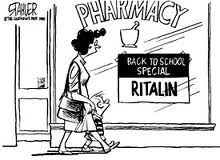
I commend for her courageous piece on the rising rates of ADD and ADHD diagnosis. Ms, Durham refuses to pull punches, raising a view I have been quite vocal about – the dubious role of teachers in the diagnosis process. Deborah suggests that teachers may be taking the lazy approach instead of the responsible one. She also raises strong arguments about the lack of research about the long-term ramifications of taking Ritalin, the contribution of diet to a child’s mental state and the lack of engagement and stimulation in school.

I’m starting to wonder if it’s possible for doctors, teachers and parents to diagnose kids with anything other than  Attention Deficit Disorder? According to a new study, the rate that kids are diagnosed continues to increase by 5.5% each year, but are there really that many more kids with ADD and ADHD? It seems like this has become a convenient “out” for many lazy teachers, doctors and parents who don’t know what to do with kids who don’t fit the “mold”.

The rates of ADHD diagnosis in the developed world increased annually by an average of 3% from 1997 to 2006 and 5.5% from 2003 to 2007 in the U.S. But researchers wanted to know–as did we–how accurate these diagnoses really are.

Led by a team of researchers at the University of Basel’s Katrin Bruchmueller, 473 child and adolescent psychotherapists and psychiatrists across Germany were surveyed on how they diagnose people with ADD or ADHD. In three out of the four cases, the described symptoms and circumstances did not fulfill ADHD diagnostic criteria. In fact, many mental health practitioners were found to base their decisions on unclear standards.

For example, male patients were more readily diagnosed when they displayed symptoms such as impulsiveness, motoric restlessness and lack of concentration–all things that can be perfectly normal when growing up. Boys were more likely to be diagnosed than girls, and on the same note, male doctors tended to diagnose ADHD more frequently than their female counterparts.

In short, what the researchers found what that ADHD is over-diagnosed because doctors rely too much on their intuition and not on a defined set of criteria.

All of this is troubling because it means that kids are the ones who are suffering as a result. Instead of taking the time to accurately diagnose them (if there is even anything at all wrong besides just being a “kid”), they are put on brain-altering drugs which is risky for anyone, especially someone who is still young and developing.

More than three million kids in the U.S. take drugs for their supposed difficulty focusing. In 30 years there has been a twentyfold increase in the consumption of these. And while medications like Ritalin may help increase concentration in the short term, not enough is known about the long-term health consequences–although some say drugs like this can stunt a child’s growth, other speculate that they can cause heart problems and even sudden death.

But is it really possible that three million kids in our country really suffer from ADD or ADHD, or has this just become a catch-all diagnosis by lazy doctors, parents and teachers?

We know that an unhealthy diet, sugar, processed foods, stress and a lack of sleep and exercise can all contribute to someone’s mental state. So, it’s entirely possible that our society has become so unhealthy that we are the ones creating these problems in our kids. And it’s not always synthetic drugs that are the answer.

The other issue that could be a major factor here is that kids are not engaged and stimulated in school enough. Taking millions of kids who all have different learning styles and trying to force them to comply and fit into one method of learning does not work. No one can possibly be expected to sit at a tiny, uncomfortable desk for eight hours a day in a classroom with florescent lights and the blinds drawn on the windows. Yet, when a child doesn’t conform, they are thought to have ADD.

Perhaps instead of jumping to conclusions and forcing our kids to swallow mind-altering drugs in order to fit our ideals of how they should behave, all of us–parents, teachers and doctors–should take more time to fully evaluate the unique learning style and personality that each child has and then alter how we interact with them accordingly. That’s not to say that everyone is lazy (because they aren’t) and there aren’t some legitimate cases of ADD (because there certainly are), but research like this points to the fact that we need to take more time and better understand how to consistently diagnose this disorder.

6 Strategies for Promoting Healthy Food to Kids

April 19, 2012


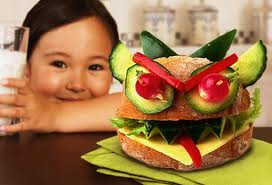
It is very difficult task to ensure that your child is eating the right foods and is not overdosing on unhealthy, preservative ridden rubbish. It can make me feel quite despondent when my daughter’s lunchbox comes back with the chopped up vegetables and apple untouched.

I appreciated reading Casey Seidenberg’s tips for helping kids have a heathy relationship with food:

1 Food, especially unhealthful food, shouldn’t be used as a reward. The common incentive used by parents “Eat your vegetables so you can have dessert” clearly communicates to children that vegetables are to be avoided and desserts are to be desired.

2 Food should not be used as a punishment either. Taking away dessert as discipline teaches kids that dessert is the prize.

3 Labeling a food as “bad” can cause children to feel guilty or bad themselves when they eat it. Instead label unhealthful foods “sometimes foods,” as they really are the foods we should eat only sometimes.

4 Unhealthful foods shouldn’t be labeled “treats” either. Wouldn’t it be great if our kids perceived a delicious ripe peach or a slice of summer watermelon as a treat?

5 A child forced to eat may not learn what it feels like to be hungry or full, or how to listen to his body. Sometimes kids are not hungry. That’s okay. Don’t then force them to eat five more bites.

6 Teaching children that a holiday or celebration is about spending time with friends, participating in a fun activity or being active together, instead of simply consuming a lot of food and drink, is an important message. When our kids are teenagers and win a sports championship, or when they are adults and receive a promotion, we hope they will understand that celebrating does not need to be focused on excessive consumption of food and drink.

So as much as I’d love to tell my children that they should never eat at McDonald’s and always refuse soda and fluorescent food products, that’s not a healthy message. And knowing most kids, it might make them more determined to get their paws on those forbidden fruits!

So what is the right message to our kids?

The right message is that certain foods nourish our bodies, make us strong and help us feel good. We should fill our bodies with those foods when we are hungry at a meal. Other foods don’t do those wonderful things for us, so we should eat them on occasion. All food should be enjoyed.

Then, if you are like me, hide your grimaced face and keep your mouth shut when they dive into those Spider-Man snacks because “sometimes foods” are absolutely okay sometimes.

Seidenberg is the co-founder of Nourish Schools, a D.C.-based nutrition education company.

101 Ways to Misdiagnose ADHD

March 20, 2012

I am not sure if ADHD exists or not. Since I am not a doctor or medical professional, I will decide to err on the side of caution and give ADHD the benefit of the doubt. But whether or not it exists doesn’t seem to be the pressing issue. The issue seems more to do with the poor children misdiagnosed with ADHD in what seems to be a completely haphazard fashion:

A STUDY of almost a million Canadian children has found those born in December, the last month of the school year intake, are more likely to be diagnosed with ADHD and medicated for it than those born in January.

Relative immaturity may result in the inappropriate diagnosis of ADHD, the University of British Columbia researchers suggest.

They raise “concerns about the potential harms of overdiagnosis and overprescribing” for the condition. Children given medication for ADHD may suffer adverse effects on sleep, appetite and growth and face increased risk of cardiovascular events, the paper says.

Inappropriate diagnosis may lead teachers and parents to treat the child differently and change self-perceptions.

The study in this month’s Canadian Medical Association Journal, found boys born in December were 30 per cent more likely to receive a diagnosis of ADHD than boys born in January and 41 per cent more likely to be given medication for ADHD.

The medical fraternity has let themselves down with ADHD. It seems from this untrained eye that too many kids are being diagnosed with this condition and therefore, too many kids are needlessly medicated. What this does is bunch real sufferers of ADHD with kids who have come down with a bout of, for example, immaturity.

The Worrying Trend With Children and Alcohol

March 18, 2012

It really bothers me when there is a real problem facing our children and instead of tackling it head-on we get distracted by minor factors. A disturbing number of kids are turning to alcohol and instead of getting to the crux of the issue, experts are worried about alcohol advertising::

ALCOHOL is fast becoming the No. 1 threat facing Australian children and there is no adequate system in place to stop them being exposed to alcohol advertising, Australia’s foremost child health expert, Fiona Stanley, says.

The former Australian of the Year will chair a new alternative alcohol advertising review body, which health experts say is needed because the industry-based code is failing to protect children.

The Alcohol Advertising Review Board will assess complaints from members of the public about alcohol advertising, and will look at areas not covered by the current code, such as sponsorship or advertisement placement.

My tip: You could ban all advertising of alcohol and it still wouldn’t have a meaningful effect on child consumption. I really respect what Fiona Stanley is doing, I just don’t think much will come of it.

13-Year-Old Girls Given Contraceptive Implants at School Without Consent of Parents

February 8, 2012

There may exist a rule of patient-child confidentiality, but it just doesn’t seem right that such important information would be withheld from the parents. What makes it even tougher to comprehend is that this service is all done at school.

Girls as young as 13 are being given contraceptive implants at school without their parents’ knowledge.

Nurses insert devices into their arms which temporarily prevent pregnancy by releasing hormones into the blood.

Last year 1,700 girls aged 13 and 14 were fitted with implants, while 800 had injections which have the same effect.

The 2010/11 NHS figures also show that 3,200 15-year-old girls were fitted with implants, and 1,700 had injections.

But under strict ‘patient confidentiality’ rules, staff are banned from seeking the permission of parents beforehand – or even informing them afterwards.

Both forms of contraception can bring on unpleasant side-effects including weight gain, depression, acne and irregular periods.

The jabs have also been linked to bone-thinning, although experts say fractures are unlikely if they are used only for a short time.

The implants and injections are being offered to girls in nine secondary schools and three sixth form colleges in Southampton under a scheme run by NHS Solent. The sexual health clinics also offer other forms of contraception, advice and tests for infections.

I think the patient/child confidentiality should have loopholes and shouldn’t include children under the age of 16. As parents, we have the right to be informed and the right to overrule. People might say that this is a very important service against unwanted pregnancies. That may be so. But in my opinion, the best way for 13 year-olds to avoid unwanted pregnancies is to allow the parents to do their job. The best remedy against teenage pregnancy is vigilant parenting.

How to Get Kids to Eat From Their Packed Lunch

January 26, 2012

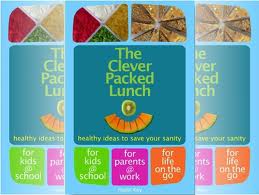
Hazel Keys, the author of The Clever Packed Lunch has come up with a system for getting kids to eat the contents of their lunchbox.

Below is a portion of an interview of Ms. Keys conducted by the Courier Mail:

Q: You’ve run a tuckshop – what’s your take on ensuring kids leave home each day with a properly packed lunchbox?

 A: It’s essential. A healthy nutritious lunch supports learning by allowing children to settle, focus and learn. Processed, refined and sugary foods have been shown to do the opposite.

Q: What motivated you to write The Clever Packed Lunch?
A: My many years of parenting and preparing school lunches resulted a system that I felt could benefit families and I wanted to share that.

Q: What are your three top tips when it comes to creating great packed school lunches?
1. Involve your kids in the preparation; listen to them and try to accommodate their preferences within the guidelines of health and balance.
2. Include plenty of fresh fruit and vegetables, preferably choosing in-season varieties.
3. Choose “whole” foods and ingredients that are as close to their natural state as possible, like seeds and whole grains.

Q: You suggest parents should try to get their children actively involved in making lunchbox choices – what are the benefits?
A: This is a great way to achieve a number of goals, so that:
• children feel empowered
• they’re far more likely to eat their lunch
• they’ll learn how to cook and feed themselves healthily in the process.

Q: Can you give us an example of a delicious and balanced lunchbox that could turn fussy eaters into fans?
A: Kids are attracted to “fast” food, there’s no doubt, and in my experience they love pizza. Pizza can definitely be healthy as long as you use quality ingredients like (some) wholemeal flour, olive oil and organic tomatoes. I serve it with salad, or the mixed potato wedges recipe from the book, which uses sweet potato, a highly nutritious food. And then there’s my healthy chocolate cake recipe!

Q: It’s Sunday night and the fridge is looking bare any lunch items that can be made up from simple pantry staples?
A: Yes! I always keep small tins of prepared salmon in the pantry, along with dried egg (not wheat) noodles, and frozen vegetables like corn and peas. The other items I always have on hand are a wide range of seeds. The noodles, once cooked, can be combined with the salmon, veggies and some sesame seeds, perhaps with a little sesame oil.

Q: Top three sandwich combos?
A: Ooh, yes! For kids I find the following are popular:
– sliced turkey breast, cranberry sauce and sliced green apple
– salmon, chopped gherkin, egg mayonnaise and cucumber
– grated cheddar, creamed corn and diced red capsicum toasted

Q: We automatically think of sandwiches when it comes to packed lunches? Can you suggest three options we could consider instead?
A: Yes, I’ve a recipe in the book I call “Sleeping Dogs”, which is a healthy version of hot dogs or sausage rolls. Home-made dips with wholegrain rice crackers or pappadams are a nutritious gluten-free choice. And my personal favourite, also from the book; the creamed corn puddings, which are rich in eggs and served with sour cream and guacamole. Yummy!

Q: How important is it to include a treat?
A: I think it’s important not to give “treat” foods too much attention, but to demonstrate flexibility by including them now and again, although not in the lunchbox unless the food has a nutritional benefit, like quality dark chocolate. That’s a real win-win treat!

Q: You suggest doubling up lunch box prep with dinner – can you give us a couple of examples to get us thinking on the right lines?
A: When making meatballs I double the quantity and shape some into patties instead. I serve them for dinner in a wholemeal or multi-grain roll with lots of salad. And when I make chicken and corn soup, I add the uncooked chicken to the stock. Chicken cooked this way is both moist and tender and adds flavour to the soup. So I often double the amount of chicken, and once cooked, remove half. Then I freeze it and use it for Asian dishes another day.

Q: What do you think are the main issues facing families in relation to providing healthy lunches for children at school, and what solutions can you offer?
A: It seems to me that families are finding themselves over-stretched, and lacking the time and money to provide really nutritious lunches. I’m convinced that this is contributing to the growing issue of child obesity. My answer is to move away from packaged and processed foods and choose fresh, simple, high quality foods instead. So much of our money goes straight into the bin wasted on fancy packaging and clever marketing, and the ingredients are often inferior. Feeding ourselves properly takes a little effort, but it’s absolutely worth it. Good food, like charity begins at home and offers an opportunity to develop in your children healthy eating habits that will last a lifetime. It’s one of the greatest gifts you can give them. And there are clever systems that can make the process fast and efficient too, such as the one outlined in my book.


The author can be contacted at hazel@lunchideasforschool.com
The Role of Parents in Preventing Innovation in the Classroom

January 17, 2012

Whilst I believe that it’s the right of every parent to decide what is and isn’t appropriate at school, sometimes they go overboard. The parents that pulled their primary aged children from their school’s massage program (a program which gets children to massage each other) on the grounds that it was inappropriate, had every right to do so. What bothers me, is that by making the school’s program a big issue, they are in fact railroading future programs which may benefit their children.

As much as they may have disagreed with the outcome, the intention of the school was clearly commendable. They wanted to provide a more relaxed and harmonious environment for their students.

Parents are up in arms at a primary school where youngsters have been giving each other massages before lessons.

The ten-minute massage sessions were introduced at Sheffield’s Hartley Brook Primary School to help calm down pupils after lunch breaks.

School head Mrs Chris Hobson said the massage sessions have been a big success but some parents have withdrawn their children from the massage programme claiming it is ‘inappropriate’.

The Massage In Schools programme is designed to help pupils relax and concentrate after energetic lunchtime playtimes.

Parent Rachael Beer who has two children at the school said: ‘I just feel it is inappropriate for children touching each other. I do understand that children need calming down after lunch.

I just think there are better relaxation techniques out there that can help with that, such as yoga, that have the same benefits as peer massage that don’t involve them touching each other.

‘I think children like their own personal space. 

‘Many parents do feel the same way as me. If the head had consulted parents better, she would have a clear view of how parents feel about it.

‘Other parents are telling me they didn’t even know peer massage was being rolled out in school and they do feel uncomfortable with it.

‘I have opted my children out of it. They are then sat doing the actions to peer massage. I feel that those 20 minutes could be better spent doing something more academic.’

One of the big challenges educators of primary aged children have, is the ability to get their students to maintain concentration. It is very hard to keep young children engaged. Anxiety is also often prevalent, posing extra challenges on teachers to reduce the tension and keep the proceedings positive. An extra 20 minutes of academic studies is useless if the children are having trouble concentrating.

When parents make a school’s attempts at innovation difficult and take an idea born out of compassion and turn it into controversy, they discourage schools to want to do something new and different.

Innovation is the way forward in education. We all know our education system is flawed and it requires some fixing. That can only come about from thinking different and acting differently. When parents take a worthwhile idea and make it a media circus they are in effect rallying for the status quo.

Take a step back and observe the status quo. Is that what you really want?

The Bid to Make Barbie Bald

January 13, 2012

I am not a big fan of Barbie. However, I think the initiative to get Mattel to include a cancer suffering “Bald Barbie” has plenty of merit:

Most kids in America recognize Barbie immediately.

She’s tall, she’s thin, and she’s…bald?

Rebecca Sypin is one of the people behind this Facebook campaign urging Mattel to create a bald Barbie, one she says children battling cancer and other diseases that cause hair loss can relate to.

“When you go to the supermarket, sometimes you have little kids who’ve never seen it before, staring, and I think it would make it much more mainstream and more normal for kids to see that,” said Sypin.

Sypin knows about children and cancer all too well. Her daughter, Kin Inich, is battling leukemia.

“Everybody else has hair, even a boy has hair and you don’t. So it would make you feel like you’re Barbie, you would be the glamorous girl with the big lifestyle and everything now,” said Kin.

The Beautiful and Bald Barbie Facebook page has been up and running for less than a month, and already has more than 65,000 friends.

But despite that support, Sypin says the bald Barbie idea has gotten a cool reception from Mattel, saying that the company has told her they do not take unsolicited Barbie doll suggestions from outside sources.

A bald Barbie may still be a possibility though. Mattel released a written statement Thursday saying the company is honored that so many people are looking to Barbie as the face of such an important cause.

“We receive hundreds of passionate requests for various dolls to be added to our collection,” the statement reads. “We take all of them seriously and are constantly exploring new and different dolls to be added to our line.”

Let’s face it. The reason that Mattel seem less than enthusiastic about the idea, is that it would almost certainly make a loss. That, and the fact that the Barbie name is synonymous with looks and dimensions that lack realism and are deliberately out of proportion. A doll that humanises the Barbie name and presents her as flawed and vulnerable is not what they are setting out to do.

I will be watching closely to see whether or not Mattel has the conviction to bypass profits for this extremely noteworthy cause. If they don’t, it will only serve to reaffirm my current dislike of the product.

It’s Time to Change the Culture of the Classroom

January 5, 2012

I have a confession to make. As driven as I am to help my students master the curriculum, there is something more important to me than their academic achievement. I would not be even remotely satisfied if my students were at or above the national standard in numeracy and literacy if they also happened to be bullying, bullied or struggling to cope with everyday life. Conversely, if my students were below national standards but were functioning well and getting along with each other, I would be far more satisfied.

That’s not to say that I don’t understand that a vital function of my job is to educate. I know that all too well. It’s just that I wont let that distract me from my mission in setting up a classroom that is caring, friendly and allows each child to express themselves in their own unique way.

I am sick and tired of reading about how bullying is causing kids as young as 7 to diet. It infuriates me that so little is done by teachers to protect young kids from this stigma and prevent bullies from causing distress. I know what I am claiming will be seen as a gross generalisation, but how many teachers are prepared to overlook a hurtful comment about weight or ignore the activity by the “in-crowd?”

No classroom should have an “in-crowd”. In-groups cannot exist without a readily defined “out-group”. It is a teacher’s job to foster a classroom environment without such divisions. It is more important than any equation or scientific experiment.