
Posts Tagged ‘facebook’

Cyber Bullying is Getting Out of Control

January 1, 2012

Cases of cyber bullying are exploding and schools need to wake up about it. Anti-bullying programs are not sufficient. Schools must treat bullying via internet chat and social media sites as every bit as important as bullying in the playground.

Experts say 10 per cent of all children now claim to have been cyber-bullied, The Daily Telegraph reported.

The enraged father of one teenage schoolgirl became so incensed by comments he believed a boy had made about his daughter on a social networking site that he accosted him in the street and threatened to “slit his throat”.

The man approached the Year 8 boy as he walked to a bus stop on the state’s mid-north coast and pushed and threatened him before boarding the bus, where he issued further death threats to the boy and other students.

In another disturbing case, a mum went to a school in western NSW and urged her Year 10 daughter to assault another girl after an exchange on a social networking site.

Both girls were suspended, police were called and the mum was banned from entering the school under the Inclosed Lands Act.

In the Tuggerah Lakes area on the NSW central coast, comments on a social networking site led to a Year 8 female being assaulted by another Year 8 girl.

One of the students, who sustained swelling to her forehead and complained of feeling dizzy and nauseous, was taken to hospital. The other girl injured her hand.

Schools increasingly are asking police to investigate serious student online bullying and have shored up cyber safety programs in a bid to head off more trouble.

The reason why parents get involved (and in some cases overly involved) is simple. When schools refuse to act citing that the offense was made outside of school grounds it limits any possible consequence for the bully. To prove my point, I refer you to the following pathetic quote from this very article.

The Department of Education said Facebook could not be accessed on school computers.

What it really means is cyber bullying happens at home and needs to be sorted out exclusively at home.

This is simply a lazy and unworkable approach. The only way to tackle bullying successfully is with full school involvement.

It must be so hard for the cyber bullying victims parents. Sometimes it must feel like there’s no one to turn to and nobody who will listen. This must stop!

Parents Duct Tape Their Kids and Post it on Facebook

December 31, 2011

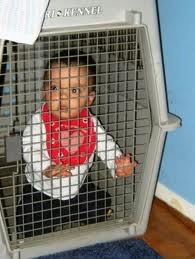
Perhaps there should be a crime against stupidity. If there was, I would hope parents would be intelligent enough to think twice before injecting their disturbing sense of humours on the rest of us. To some, taping your children up and photographing them suspended on a weights machine is hilarious. To me it’s downright sick.

An Arizona couple remained in custody Saturday morning after police said they duct taped the wrists, ankles and mouths of their two children and posted the photos on Facebook.

The children in the photo were a 2-year-old boy and a 10-month old girl, according to a Coconino County Sheriff’s incident report. One showed the boy hanging upside down by his ankles from a weight machine.

A friend who saw the photos called the state child abuse hotline Wednesday, prompting the sheriff’s office to arrest the parents, Frankie Almuina, 20, and Kayla Almuina, 19.

The mother told investigators the photos were “all in fun” and that the children were unharmed and were smiling afterward.

She also showed the reporting officer, Sgt. Michael Curtis, several other photographs on her cell phone that showed the little girl similarly bound.

“They indicated they did this as a joke,” county Sheriff’s Commander Rex Gilliland told CNN affiliate KTVK. “But there was fear on the children’s faces in the pictures.”

“I don’t know how anybody can rationalize taping a child’s mouth and then binding their hands and feet,” he added.

Police would not release the photos, saying they were too disturbing.

In her Facebook page, Kayla Almuina describes herself as a “stay and home mommy and wife” and jokes she studied at “harvard :)! jk.”

She told investigators that the reason the girl was appeared to be crying in the cell phone photos was because she had received some shots that day.

Authorities placed the children in the custody of their grandparents.

The parents, charged with two counts of child abuse each, remain in jail with bond for each set around $25,000.

Last week, a 21-year-old Chicago man was charged with aggravated domestic battery after he posted a picture of his 22-month-old daughter bound with painter’s tape across her mouth, her wrists and ankles.

The caption on the Facebook photo read:

“This is wut happens wen my baby hits me back. ; ).”

No, this is what happens when collecting “likes” and “shares” becomes more important than being responsible parents!

When Will Teachers Ever Learn?

December 24, 2011

Some teachers must live under a rock. The only thing worse than calling your students names is calling your students names on Facebook. Any teacher found to be insulting their students on Facebook deserve what is coming to them.

Two teachers have quit after staff allegedly called pupils “thick” on Facebook.

Headmistress Debbie Johnson and teacher Nyanza Roberts resigned when comments were printed off and stuck up near the school they worked at.

Teacher Stuart Clark sparked the tirade after he declared he was “fed up of bumping into pupils in town”.

Nyanza Roberts replies: “By town, do you mean top end of holderness road? That’s bout as far anyone goes. No wonder everyone is thick..

“Inbreeding must damage brain development.”

Head Debbie Johnson jumps in and says: “You’re really on one today mrs… !! Xx.”

Colleague Jane Johnson posted: “Massive queue of year 5/6 kids in poundland! x”

Parents found out about the conversation by staff at Westcott Primary School in east Hull when copies were attached to fences in the streets surrounding the building.

Mary Wallace, chairwoman of governors at Westcott Primary School in Hull, said the two had “decided to relinquish their posts”.

Hull city council added: “We’re supporting the school and will focus on ensuring children get the best possible standards of ­education.”

There are thick people in this incident, but they are not the students.

How Badly Do Teachers Need Twitter and Facebook?

December 19, 2011

The very worst teachers usually spoil it for the rest of us. A prime example is social media. Social media is designed to aid communication and make interacting much easier. However, it can also be exploited and abused. Never a day passes where there isn’t a story about a teacher that acted innapropriately by saying or doing something on a social media site. These teachers have single handedly prevented other teachers from using these sites to help support their students.

My colleagues and I recieved an email from my boss a few moths ago, warning us not to have any communication with or about our students on Facebook. This is not an issue for me because I don’t have a Facebook page (I have a Twitter account but my students are unaware that I do). But the trend is clear. Schools don’t want their teachers in a position that could cause negative attention to their establishment.

My position on this is unclear. I am slighly leaning towards backing the school, as I am not fully aware of the benefits of Facebook for teachers and students. Whilst I can clearly see the disadvantages of such interactions, I don’t really understand how such a ban would effect the quality of teaching.

Clearly, there are teachers that swear by it:

Faced with scandals and complaints involving teachers who misuse social media, school districts across the country are imposing strict new guidelines that ban private conversations between teachers and their students on cellphones and online platforms like Facebook and Twitter.

The policies come as educators deal with a wide range of new problems. Some teachers have set poor examples by posting lurid comments or photographs involving sex or alcohol on social media sites. Some have had inappropriate contact with students that blur the teacher-student boundary. In extreme cases, teachers and coaches have been jailed on sexual abuse and assault charges after having relationships with students that, law enforcement officials say, began with electronic communication.

But the stricter guidelines are meeting resistance from some teachers because of the increasing importance of technology as a teaching tool and of using social media to engage with students. In Missouri, the state teachers union, citing free speech, persuaded a judge that a new law imposing a statewide ban on electronic communication between teachers and students was unconstitutional. Lawmakers revamped the bill this fall, dropping the ban but directing school boards to develop their own social media policies by March 1.

School administrators acknowledge that the vast majority of teachers use social media appropriately. But they also say they are increasingly finding compelling reasons to limit teacher-student contact. School boards in California, Florida, Georgia, Illinois, Maryland, Michigan, Missouri, New Jersey, Ohio, Pennsylvania, Texas and Virginia have updated or are revising their social media policies this fall.

To those that have used social media with their students – is it really worth the risk?

Parents Revolt Against Teacher Who Removed the Word “Gay” From Christmas Carol

December 8, 2011

The teacher who swapped the word “gay”with “bright” so that her class wouldn’t giggle during their rendition of “Deck the Halls” was always going to draw the ire of at least one parents. As much as she may have made the change with the best of intentions, I am sure if she had her time over, she wouldn’t have fiddled with the lyrics:

A Michigan teacher chose to censor the word ‘gay’ from the festive holiday tune ‘Deck the Halls’ and was met by a frosty response from parents.

Parents thought the Cherry Knoll teacher had been naughty and not so nice when the elementary instructor replaced ‘gay’ with ‘bright’ after her students wouldn’t stop laughing when they sang the word.

They took to the school’s Facebook page ranting about the teacher’s decision to change that word in the traditional holiday carol.

Cherry Knoll principal Chris Parker told 7&4 News in Traverse City that he was disappointed the music teacher decided to change the lyrics, saying she could have used the moment for a learning opportunity on tolerance.

‘This would have been a great opportunity to teach that “gay” has more than one meaning and is not a bad word,’ he said.

Enraged parents took to the school’s Facebook page, which has since been disabled, to voice their complaints over the word-swap.

A teacher’s poor choice is not the real story here. The real story is the way the parents handled the situation. Instead of confronting the school or teacher with their displeasure, they did what many parents are now choosing to do, and turned their disapproval into a large-scale Facebook campaign.

I have no doubt that a few quiet phone calls from concerned parents would have been sufficient to provoke this teacher to revert back to the original lyrics and make a profuse apology to all offended. Instead, this teacher had to contend with a barrage of negative comments on Facebook, and now, worldwide media coverage.

This sends a shocking message. It says that whenever parents are upset over the actions of a classroom teacher they can turn to Facebook for a fully fledged smear campaign. This amounts to bullying of the worse kind.

Teachers make mistakes. Some small, some huge. But no well-meaning teacher deserves to be pillaged on Facebook – ever!

Think Twice Before Branding Thoughless Kids as Paedophiles

November 24, 2011

Last month I wrote the following comment about the lunacy of putting naive children on child pornography charges:

The same laws that seek to protect children are being severely undermined by a total lack of common sense.

Australia has a sexual offender registry which was designed to assist the government authorities to keep track of the residence and activities of sex offenders.  You don’t have to be Einstein to realise that being on that list is detrimental to that person’s ability to get a job, loan, sense of freedom and quality of life.

The registry is a vital tool in dealing with pedophiles.  That is why I was astounded to read that children caught ‘sexting’ photos of themselves or friends have been put on this very list.

Two days ago I spoke against the “Sneaky Hat” craze.  “Sneaky Hat” refers to teenagers posting half-naked pictures of themselves with a hat covering their genitals.  As much I find this fad quite unpleasant and potentially dangerous, I would be very disappointed if the teenage founders of this craze to face child pornography charges:

Police are investigating a Facebook craze that originated in Queensland encouraging teenagers to post pictures of themsleves nude on the internet.

The Queensland teenagers behind the new Facebook craze “Sneaky Hat” and contributors to the website could face child pornography charges, a cyber safety expert says.

The craze involves young people posting naked pictures of themselves with a hat covering their genitals and/or breasts, and has spawned similar social media pages, websites and Youtube videos.

The original page was started by 15-year-old students from Dalby, Queensland “for a laugh” but quickly attracted about 100 photos of their friends in the “Sneaky Hat” pose — and more than 10,000 followers.

“We just thought it was funny, but after a while it started like getting wild, out of control,” the Sneaky Hat website’s founder told ninemsn.

“There were all these people who were posting naked pictures and stuff.”

“My mum saw it, she knew and just thought it was funny.”

Police have now requested the images and Youtube videos created by the students.

Cyber safety expert Susan McLean, formerly of the Victoria Police cyber safety project, said the page was infamous around the world and that “any pedophile worth his salt” would be saving the pictures for their own purposes.

“I would question the brain matter of these parents,” McLean said. “That it is just for fun or between friends is the biggest load of crap I have ever heard.”

“This is a form of child pornography and they need to realise that the law applies to teenagers just as much as anyone else.

Well if that is the case, change the law! It is just plain senseless to ruin the life of silly immature teens by charging them with an offence intended for paedophiles. This isn’t just dumb. By bunching young, stupid teenagers with sick, evil paedophiles, we completely undermine the significance of being on the sex registry.

The Worldwide Revolution Known as “Cyberbaiting”

November 23, 2011

It is no surprise to me that “setting-up” the classroom teacher has become a universal sport. With the introduction of the mobile phone and the high-profile cases of teachers being caught on camera and subsequently fired, it was only a matter of time before something like “cyberbaiting” took off.

A study from Symantec found that 21% of teachers had either been cyberbaited or knew a teacher who had.

Cyberbaiting, according to Symantec’s Internet safety advocate, Marian Merritt, is when students deliberately provoke a teacher into doing something stupid, then video it and post it online.  “This of course has the net effect of embarrassing the teacher, taking a momentary lapse of judgement in a classroom and embedding it onto the web.”

As per that 21%, remember it includes teachers who know someone it happened to. Only 4% said it happened to them. Still, it’s one more thing for teachers to think about.

The study — which included interviews from kids and parents in 24 countries including the United States — also found that 62% of kids reported that they have had a negative experience online.  It also found that 95% of parents know what their kids are looking at online.

A number of key points come to mind:

  1. Mobile phones should be banned from the classroom. Those playing with one in class should expect it to be confiscated and returned only when their parents come to pick it up personally.
  2. Students caught filming, posting or sharing secret tapings of a teacher should be expelled (at least for the more serious cases).
  3. Teachers should be given the appropriate support so that they are able to teach a class without doing or saying things which they would be ashamed of.

Somehow I expect that this nasty practice will continue without a hitch.  Yet another example of the modern-day culture of “teacher bashing” permeating in society.

New Facebook Craze Branded “A Paedophile’s Paradise”

November 22, 2011

Some fads are just harmless fun. Many would argue that the Sneaky Hat craze falls under that category. Sneaky Hat, which refers to the practice of taking a photo of yourself naked with nothing more than a hat to cover your private parts, is not “harmless”. Kids that take part in it are not just stupid and foolish. They are reckless in the extreme:

The Sneaky Hat trend has been branded a ”paedophile’s paradise” and involves mostly young people posing in nothing but a hat covering their genitals.

Countless Facebook pages and other sites, open for anyone to see, have sprung up showing male and female teens in provocative poses after reportedly originating at a Queensland Highschool.

Cyber safety campaigner Susan Mclean said contributors to the fad were not only staining their futures but risking child pornography charges.

”It’s no use saying its just fun, it’s harmless fun, the consequences can be quite severe,” she said.

”It is going to end in tears and those pictures – it’s not like sending it on your phone to your boyfriend who may or may not send it on – this is on www (world wide web).

“They’re on public sites, anyone can see them and people are posting them with their names, they’re proud of the photos,” Ms Mclean, founder of Cyber Safety Solutions said.

A Queensland Police spokesperson said they were monitoring the trend but a Victoria Police spokesperson said there had been no reports they knew of in Victoria.

Parents, please do want you can to make sure your children don’t entertain the idea of sharing their hats with the world.

Sexual Harassment Rampant in Schools

November 7, 2011

Just when you thought that respect for girls and women was on the marked improve comes yet another reminder that things are not what they seem:

During the 2010-11 school year, 48 percent of students in grades 7-12 experienced some form of sexual harassment in person or electronically via texting, email and social media, according to a major national survey being released Monday by the American Association of University Women.

 The harassers often thought they were being funny, but the consequences for their targets can be wrenching, according to the survey. Nearly a third of the victims said the harassment made them feel sick to their stomach, affected their study habits or fueled reluctance to go to school at all.

The survey, conducted in May and June, asked 1,002 girls and 963 boys from public and private schools nationwide whether they had experienced any of various forms of sexual harassment. These included having someone make unwelcome sexual comments about them, being called gay or lesbian in a negative way, being touched in an unwelcome sexual way, being shown sexual pictures they didn’t want to see, and being the subject of unwelcome sexual rumors.

The survey quoted one ninth-grade girl as saying she was called a whore “because I have many friends that are boys.” A 12th-grade boy said schoolmates circulated an image showing his face attached to an animal having sex.

In all, 56 percent of the girls and 40 percent of the boys said they had experienced at least one incident of sexual harassment during the school year.

After being harassed, half of the targeted students did nothing about it. Of the rest, some talked to parents or friends, but only 9 percent reported the incident to a teacher, guidance counselor or other adult at school, according to the survey.

In my view there are two main reasons for this disturbing set of figures:

1.  Schools have become hamstrung when it comes to access to appropriate and effective consequences for infringements such as bullying and harassment.  Call the parents?  No big deal.  They gave up long ago.  Suspensions?  Nowadays you get a suspension for talking out of turn.  Suspensions have lost their impact because they are metered out out too readily.  In the end, no punishment given seems to come close to matching the crime.

2.  Schools have been notorious at turning a blind eye to incidents.  I am not talking about all schools, yet in truth, plenty goes under this category.  Teachers have been taught not to get emotionally involved with their students.  The result being, an emotional distance which inhibits the teachers capacity to pick up on these things,  Teachers must have enough of a connection with their students (within the obvious professional parameters of course), as to notice when things are not right with their them.  They are intrusted to look after their students and must do so by being proactive.  Kids are told from an early age not to dob on a classmate.  If teachers wait around for things to get reported to them, they will miss the opportunity to intervene and change a potentially abusive situation.

We must expect schools to be proactive with harassment.  They must be able to use tough and uncompromising punishments and show enough of an interest in students as to detect a problem before it gets completely out of hand.

Parents Helping Their Children Lie To Get On Facebook

November 2, 2011

To those parents who are contemplating assisting their underage children to get on Facebook, I strongly suggest you reconsider.  The age requirements for Facebook is necessary, as Facebook has a clear downside.  From cybersafety issues to cyberbullying, Facebook is clearly not designed for pre-teens.

Almost all parents of ten-year-olds signing up for the site – 95 percent – were aware of what their children were doing, and 78 percent of those helped them do it.

“Although many sites restrict access to children, our data show that many parents knowingly allow their children to lie about their age — in fact, often help them to do so — in order to gain access to age–restricted sites in violation of those sites’ ToS,” the authors write.

“This is especially true for general–audience social media sites and communication services such as Facebook, Gmail, and Skype, which allow children to connect with peers, classmates, and family members for educational, social, or familial reasons.”

The survey found that 55 percent of 12-year-olds, 32 percent of 11-year-olds and 19 percent of 10-year-olds were active Facebook members.

The authors suggest that the COPPA rules may need re-examination, given that they appear only to be encouraging parents to lie. Universal, rather than age-based, privacy protecitons might make more sense, they say.

The full report is here.