Filtering Software: Install filtering software such as NetNanny or the free Windows Live Family Safety 2011. These programs can help your kids surf the Internet safely – without being exposed to any inappropriate material. You can also consider setting up free filtering at the wireless router level with OpenDNS, which will ensure that all devices that connect to your home Internet are filtered. Maximize Current Programs: Many computers already come with online safety programs. Learn how to accurately use Parental Controls in Windows and Mac Operating Systems, and other programs that aid in monitoring and managing what children view online. Maximize the use of programs you already have installed and at your fingertips. LOL Does Not Mean ‘Learn Online Lingo’: But you should: Among the many networking sites are Facebook and Twitter. Learn how these sites work and the coded language commonly associated with them. We can consider citing this study that says teens are increasingly using Twitter because parents have figured out Facebook, so they think they’ll have more freedom where their parents aren’t. Gaming Parental Controls: Many games have online modes, where your kids can play against others around the globe. It’s important to know who your kids are playing with and what content they can access. Set parental controls on games to protect your kids without affecting their gaming experience. Control Your Kids’ Online Environment: Windows Vista features parental controls that help parents monitor what kids can access on a computer – even when they’re not in the room or at home. Parents can select what games, programs and websites children can access. Time restrictions can even be set to ensure that the kids are following the rules even when mom and dad are not home. This feature is found in the Parental Controls panel and is part of the User Accounts and Family Safety Control Panel applet.
It is a common complaint of our modern age that kids and teens don’t get enough sleep.
Video games, TV, social media, and other trappings of our increasingly tech-centric lives are often blamed, but a new study shows that long before Facebook or PlayStation 3, kids were sleeping less than experts said they should.
When researchers in Australia reviewed sleep recommendations and actual sleep times among children over the past century, they found that kids consistently slept about 37 minutes less than recommended at the time.
Each time, new technological marvels — be it the light bulb in the early 1900s, TV in the 1950s, or computer gaming systems and social networking today — were blamed for declining sleep times.
“The message that children don’t get enough sleep has been the same for over 100 years,” says researcher Tim S. Olds, PhD, of the University of South Australia.
I wonder if children today experience a different form of tiredness. A tiredness as a result of late nights, a lack of physical exercise, a carb dominated diet and excess weight. Perhaps the tiredness is the same as always, but the presentation of the tiredness is more extreme.
Upon hearing about the disgusting cyberbullying of a young rape victim I became very upset. I hope these perpetrators get charged for their insensitive and heartless behaviour.
Not only has this poor girl had to deal with the worst form of torture, but she has had to endure this awful campaign as well:
After being attacked and going to the police, she was then branded ‘a lying little skank’ and worse on internet sites.
She was told her home would be burnt down unless she withdrew her evidence. The sustained threats of violence meant that she had to be accompanied everywhere by her mother, even going to and from school.
Her rapist was jailed this week, so at least some justice has been served, which might bring a little comfort.
Yet isn’t it appalling that her physical ordeal was followed by a form of mental terrorism lasting months, with the police all but powerless to stop it, even though what happened amounted to nothing less than intimidation of both witnesses and victim before a court case?
The schoolgirl’s torment began in January 2011, when she was raped in an alleyway near Clitheroe Football Club. She was found by a dog walker naked from the waist down and covered in mud.
Her parents, who had been trying to locate her, had called the girl on her mobile and heard some of the attack, including their daughter screaming: ‘Stop it’. They, too, were quickly on the scene.
And as a side note, guess what the rapist received for his cowardly crime?
One has to wonder what level of outside supervision schools have if it overlooks a game involving “dry humping”. For this to be stopped only after a complaint from a parent suggests that some teachers should put down their mugs of coffee and actually observe the children during yard duty.
A disturbing playground activity has parents riled over what is going on during recess at an elementary school.
Washington Elementary School in New Ulm, Minnesota, is at the centre of controversy as it was learned fifth grade students had played ‘rape tag’ during recess.
The game is very similar to freeze tag, except to unfreeze someone, a student would have to simulate a sex act on the frozen person.
A parent reported the incident to school officials after finding their child was talking about the game on Facebook.
So what flimsy excuse does the Principal give for something that should have been banned minutes after it was first trialled in the playground?
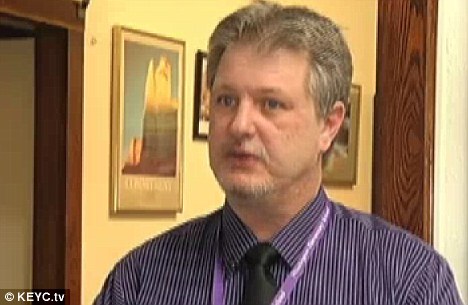
The school’s principal, Bill Sprung, told KEYC-TV: ‘This age level of kids – 10, 11, 12—is a time when kids start to mature; start to experiment.
He added: ‘Part of that experimentation is that they do things we wish they wouldn’t have done.’
There is a great level of trust that parents bestow to teachers and schools. They expect, amongst other things, that respect for women and girls is inherent in all activities both inside and outside of the classroom. These parents have been justifiably let down by a school that overlooked the obvious and acted reactively rather than proactively.
It sickens me to read about teachers misusing their privileges and being accused of engaging in inappropriate dealings with students. Similarly, it upsets me no end that these horrendous people end up making life even harder for well-meaning, caring and decent teachers.
Male teachers will be completely aware with what I am saying. It is hard to be a male teacher (especially Primary teacher) in an age where there are daily stories doing the rounds about teacher sexual abuse. We have to be careful to the point of obsession. Whilst female teachers wouldn’t hesitate to talk to a student alone behind closed doors, a male teacher cannot afford to. Whilst female teachers cuddle and get kids to sit on their laps without the slightest of hesitation, male teachers wouldn’t even extend their hand for a handshake. I am not trying to complain about this. In fact, I am a big advocate of these rules. It’s the fear of being falsely implicated that makes it a struggle.
One in 10 misconduct cases from schools involved teachers using social networking sites like Facebook to start inappropriate relationships with their pupils, it was reported.
n 43 of the 336 cases referred to the General Teaching Council for England last year for “unacceptable professional conduct”, teachers had used online forums, emails and websites like Facebook and Twitter to contact children.
The figures also revealed a wide variation in school policy over social networking websites with some banning teachers from having accounts while others allow staff to be “friends” with pupils.
The GTC registrar, Paul Heathcote, told the Guardian: “Often the use of social media by teachers can be positive and make a valuable contribution to a teacher’s practice, to pupils or to the school.
“Only if the use of social media by a teacher is relevant and serious enough to potentially affect a teacher’s registration is it likely to progress to a hearing.”
I would argue that it has become too risky to use Facebook as an educational tool between teacher and student. And we know exactly who to blame for that.
Last week I wrote a post on the challenges of teaching shy students. I gave an account of my struggles with one particularly shy student and the strategy I used to get him to talk. I have great empathy for the child that is too afraid to speak and understand the frustrations involved when teaching such a student.
The Courier-Mail reports new research from Southern Cross University has found strong benefits for the use of Twitter by students too embarrassed or uncomfortable to ask teachers questions in the time-honoured raised-hand method.
Southern Cross business lecturer Jeremy Novak, along with Central Queensland University’s Dr Michael Cowling, studied the use of Twitter among university students as a method for asking questions and gaining feedback without having to stand the stares and scrutiny of fellow students.
The positive feedback from students, particularly international students, has convinced the research team the use of Twitter technology could also be embraced by classrooms at high school and even primary school level.
In my opinion, shyness is not a genetic disease or impenetrable condition. To me, shyness is a result of a lack of self-esteem. Shy children act that way because they don’t feel valued. Instead, they feel judged, ostracised or labelled.
A teacher can do one of two things. They can either enable the shy student by using Twitter, or they can actually attempt to help that student find their feet and feel good about themselves.
“But who has the time for that? We have the curriculum to cover!”
This line sums up my frustrations with current educational thinking (as perpetuated through teacher training programs). In my opinion, it is every bit as important for a teacher to assist their students in matters of self-confidence as it is for them to teach them the curriculum. In fact, I would suggest that it is more important. Facts are learnt and forgotten. The average person on the street has long forgotten calculus and how many chemical elements make up the periodic table. What they wouldn’t have forgotten is how they were treated and how their experiences at school have changed them for the better or worse.
Why placate a shy person when you can change a shy person? Why play the game when you can show them that they have a voice and it’s special and unique and something to be proud of.
And besides, receiving Tweets in class is so unprofessional.What, am I supposed to stop my class so I can check my phone for a Tweet?
Trust me, as good a feeling as it is to teach children new skills or concepts, helping a child discover that they are important and that their thoughts and opinions matter is so much more rewarding.
I am a big believer in free speech. I consider myself very lucky to be in a country where my thoughts and feelings can be expressed freely without recriminations. But like all other laws and freedoms there are boundaries. I might have free speech, but I am also restricted by sensible limitations to what I can say.
When students use social media to call their Principals names like a “big fag”, “whore”, “hairy sex addict” and “pervert”, and the consequence for their actions is nothing more than a suspension, I think they should count themselves very lucky. To then sue on the grounds of freedom of speech and win says a lot about the judicial system and the difficulties educators face in earning basic respect.
A middle school principal in northeastern Pennsylvania was shocked to see his photo online along with a description of him as a “hairy sex addict” and a “pervert” who liked “hitting on students” in his office.
A high school principal north of Pittsburgh saw a MySpace profile of himself that called him a “big fag,” a “whore” and a drug user. And in West Virginia, a school principal found out that a girl had created an online site to maliciously mock another girl as a “slut” with herpes.
All three students were suspended from school and filed suits against the principal and the school districts. They argued the 1st Amendment protected them from being punished for postings from their home computers. And in the two Pennsylvania cases, they won.
Whilst these awful slurs may technically be classified as “free speech”, verbal bullying of any kind can also be defended under the guise of free speech. Is this what we want? People supported by the courts to demoralise, slur and denigrate others? How are principals supposed to tackle bullying when they can’t even deal with bullies who are attacking them?
The exploitation of free speech will see bullying, especially cyber bullying, continue to gain momentum. These students should never have been suspended. They should have been expelled!
I am not a big fan of Barbie. However, I think the initiative to get Mattel to include a cancer suffering “Bald Barbie” has plenty of merit:
Most kids in America recognize Barbie immediately.
She’s tall, she’s thin, and she’s…bald?
Rebecca Sypin is one of the people behind this Facebook campaign urging Mattel to create a bald Barbie, one she says children battling cancer and other diseases that cause hair loss can relate to.
“When you go to the supermarket, sometimes you have little kids who’ve never seen it before, staring, and I think it would make it much more mainstream and more normal for kids to see that,” said Sypin.
Sypin knows about children and cancer all too well. Her daughter, Kin Inich, is battling leukemia.
“Everybody else has hair, even a boy has hair and you don’t. So it would make you feel like you’re Barbie, you would be the glamorous girl with the big lifestyle and everything now,” said Kin.
The Beautiful and Bald Barbie Facebook page has been up and running for less than a month, and already has more than 65,000 friends.
But despite that support, Sypin says the bald Barbie idea has gotten a cool reception from Mattel, saying that the company has told her they do not take unsolicited Barbie doll suggestions from outside sources.
A bald Barbie may still be a possibility though. Mattel released a written statement Thursday saying the company is honored that so many people are looking to Barbie as the face of such an important cause.
“We receive hundreds of passionate requests for various dolls to be added to our collection,” the statement reads. “We take all of them seriously and are constantly exploring new and different dolls to be added to our line.”
Let’s face it. The reason that Mattel seem less than enthusiastic about the idea, is that it would almost certainly make a loss. That, and the fact that the Barbie name is synonymous with looks and dimensions that lack realism and are deliberately out of proportion. A doll that humanises the Barbie name and presents her as flawed and vulnerable is not what they are setting out to do.
I will be watching closely to see whether or not Mattel has the conviction to bypass profits for this extremely noteworthy cause. If they don’t, it will only serve to reaffirm my current dislike of the product.
People who draw attention the benefits of teacher/student Facebook communication miss the point. There is no doubt that there are some fantastic innovations through social media that would allow teachers to respond to the educational needs of their students. But all benefits go out the window when one considers the dangers.
High school teacher Jennifer Kennedy has a prepared response for students who send her “friend” requests on Facebook.
No. Or, at least not until they graduate.
It’s a rule she said she shares with fellow teachers at Sacramento New Technology High School.
Increasingly, school district officials across the region and throughout the country are coming up with their own guidelines for what kind of online and electronic communication is acceptable between teachers and students.
“We have a generation of kids who communicate this way,” said Kennedy, who teaches sophomores and seniors. “If you say absolutely no Facebook or texting, you are cutting off an important relationship with students.”
In districts with policies against such behavior, officials have said social media sites blur the line between the professional and private lives of teachers. And then there are the rare but widely reported allegations of abuse initiated or intensified through social media.
These allegations of abuse spoil any chance teachers and students have of communicating via social media sites. Perhaps this if for the best.
Excessive video game use and high rates of video game addiction lead to much anguish from concerned parents. Many parents never saw the addictive pull of video games as an issue when they bought consoles for their kids or allowed them to have a computer in their bedrooms. I read a very interesting piece by writer, Scott Steinberg, on the major issues relating to children and video games.
– Amount of Play Time
– Age Appropriateness
– Health and Obesity
– Addiction
– Safety Concerns
– Violence, Aggression and Misbehavior
The issue of particular interest to me was the video game addiction section. Video game addiction is not a term we hear very often, but I’m afraid it will be widely familiar in the next few years.
Addiction– For some kids, there is a real danger of becoming too involved in playing games, or even in living too much of their lives in the virtual world of the Internet. In rare cases, true symptoms of addiction can develop, and such kids can require direct help from their parents, peers, and professionals to have a healthy, balanced life. While a change of environment and routine can sometimes be enough to break kids out of an addictive mindset, the reality is that it’s hard to prohibit kids from using technology on a regular basis, since it’s such an integral part of daily life. Many experts encourage parents to become more engaged in the addictive activity in an effort to better understand the problem and prospective solutions. They also encourage families to seek out professional help should children exhibit warning signs of addiction. Several of these warning signs, according to the Search Institute, an independent non-profit organization dedicated to creating healthy communities, and other sources, include:
Playing for increasing amounts of time
Lying to family and friends about video game usage
Thinking about gaming during other activities
Using video games to escape from real-life problems or bad feelings, as well as anxiety or depression
Becoming restless or irritable when attempting to stop playing video games
Skipping homework in order to play video games
Doing poorly on a school assignment or test because of time spent playing video games
I urge parents to spot the signs before the addiction gets completely out of hand. It may even be worth reading Mr. Steinberg’s book, “The Modern Parent’s Guide to Kids and Video Games,” which will be free to download at www.ParentsGuideBooks.com in February 2012.









 Topical Teaching