Posts Tagged ‘Education’

Teachers in Uniform?

March 6, 2011

I can see why some schools would take a likening to the idea that teachers should wear a uniform just like their students. Ultimately, I think it has the potential to undermine the very reason such an initiative was conceived. Still, it has been trialled in India with some positive results:

There is nothing new in students of Zilla Parishad schools wearing uniforms but in Buldhana district of central Maharashtra, teachers wear them too.

The concept was introduced by S J Koche, Buldhana Zilla parishad Chief Executive Officer, soon after he returned from a training programme for IAS officers, in South Korea last year.

“We were in South Korea for 15 days and in the schools we visited, I saw that even teachers wore uniforms,” said Koche. “The sight was very impressive and I made it a point to implement the same back home,” he said.

“If students can come in uniform, why not teachers, because students imbibe discipline from teachers,” he said.

His novel scheme met with stiff opposition initially, Koche said. However, later on, everything fell in place.

Now, besides 2.30 lakh students, around 8,000 teachers in 1840 zilla parishad schools in the district, wear uniforms. “The idea has been lapped up by families of teachers, Koche said.

The villagers have also appreciated the concept, Koche said. “They say they now know who the teacher is.” The colours for teachers are white shirt and black pant while for students it is blue pant and white shirt, he said.

I personally am against this idea. I have already worn a uniform throughout my own school days, and would not like to revisit the days of itchy woolen jumpers and terrible looking grey trousers. I truly sympathise with the students for what they have to wear. It would be uncomfortable to have to comply to a uniform of my own. I also feel that teachers will not be taken as seriously when forced to wear a uniform. Rather than see it as a case of setting an example, I fear that students will see it as a bit of a joke.

I am all for dressing in a professional manner. But a uniform? I think I’ll pass.

The Heroic Life of a Selfless Teacher

March 4, 2011

If there is something one can get out of the absolutely tragic story of a teacher who drowns in trying to rescue his students, it is the selflessness of teachers, heroically displayed by maths and science teacher Paul Simpson.

A schoolteacher has drowned in an apparent attempt to save his students from a rip at the notorious Bells Beach.

The man, believed to be aged in his 30s, died yesterday while supervising a group of Year 11 and 12 students from Shelford Girls Grammar, in Melbourne’s east.

The girls, aged about 15 years, had been snorkelling at 4.30pm when wild surf and a rip tide turned conditions dangerous.

The group of 19 students and three adults had been walking in knee- to waist-deep water on a reef when a wave knocked them off their feet and into deeper water, Ambulance Victoria spokesman John Mullen said.

Police said it was believed the teacher had been trying to rescue the girls before he drowned.

Paramedics tried unsuccessfully to resuscitate him on the shore of the surf beach near Torquay, 105km southeast of Melbourne.

Several teenagers had to be rescued from the water. One received treatment for an asthma attack. Others had minor injuries.

The distressed students, who were in shock, had to be helped to make their way back up the beach to a car park to be taken back to their camp at Torquay.

The teacher is question works at a school within walking distance of my home.  His bravery and unflinching desperation to rescue his students shows us what sacrifices a brilliant teacher can make for the safety and security of his students.  I extend my condolences to his family, friends, colleagues and students.  May his brief but meaningful life inspire others to strive to make selfless decisions whilst looking out for others.

If you have some time I encourage you to read tributes written by his former students on a special Facebook page dedicated to the memory of this incredible person.

Fighting for Our Kids’ Self-Esteem

March 4, 2011

There’s a reason why kids are suffering from body image related problems in greater numbers than ever before.  We let them.  Society has a responsibility to ensure that the same dreadful affliction that has had diabolical effects on our generation, doesn’t torment the next.  We have made the mistake of valuing people for all the wrong reasons, putting too high a price on weight, shade and form and too little emphasis on character, personality and integrity.  We place celebrities on pedestal so high, we barely notice that we don’t know anything about them.

Our young notice our insecurities and base a world view on them.  They see the pressures their parents feel about appearance and weight and base their own self-worth on precisely these factors.  Before you know it, you’ve got kids as young as five with eating disorders:

Children are suffering from eating disorders at younger and younger ages according to disturbing new research.

Media consumption, peer pressure and negative messages from parents are all contributing to the problem of poor self-image in children, which can trigger eating disorders such as anorexia, bulimia and binge eating. According to the Eating Disorder Resource Centre of Ireland, children as young as five are displaying signs of poor body image – and some seven and eight year olds have developed eating disorders.

Experts are stressing that such disorders are not confined to girls, with little boys also being susceptible. Psychologist and author Deirdre Ryan told TheJournal.ie that parents can unthinkingly pass on negative messages to their children: “I was speaking with a six-year-old boy who said that he wanted to lose weight – when I asked him why he said: ‘I have a wedding coming up’. That message was more than likely passed on by a parent,” she said, “Parents have to be aware of what they are saying, even in front of boys, and not engage in ‘fat talk’. Children of this age are hypersensitive.”

Parents need to be more aware of their relationship with their own bodies as well, Ryan said: “It is starting younger and younger – but it is also affecting people who are older – spreading across the life span. Now, there is an expectation that even if you’re in your 60s you should conform to a certain image. It’s very damaging.”

Our generation has already let ourselves down by buying in to the media driven lie about what a person should aspire to be like.  We have been fooled into believing that life is about striving to beat aging, keeping a toned figure and withstanding lines and wrinkles.  The beauty industry has made a bundle out of us, and all we are left with in return is confusion, pressure, anxiety and in many cases a battered self-image.  Is this what we want for our children?

It’s great to invest in one’s health and appearance, but it is important that these things don’t take over.  Our children need to see that we place more value in perfecting our character than our figure.  That we consider integrity, honesty, empathy and loyalty on a higher level than six packs or breast size.

As a teacher, there is only so much I can do.  As a parent, I have a big job ahead of me.

Standing Up For Our Fellow Teachers

March 3, 2011

Never has it been more important to support our fellow teachers.  Unfortunately, for various reasons, none of them rational, teacher’s have been getting some horrible press lately.  They seem to be the scapegoat for a system that isn’t working well.  Meanwhile administrators and politicians are avoiding the heat and leaving the blame for the teachers.

That’s why letters like this, printed in the Edmonton Journal, are refreshing and important:

Many people say teachers are overpaid and underworked. Others sing their praises and tell the world that teachers have one of the most rewarding and responsible vocations. Those who agree say teachers cannot be paid enough for the work they do with our most precious commodity, our children.

This is why the headline, “Teachers gain, students lose,”caused such an emotional reaction within me. Perhaps The Journal thinks teachers should work for free. Maybe The Journal forgets that teachers accepted a five-year contract they didn’t really want, but it was one of the few reasonable alternatives offered to them.

No matter what, teachers will continue to go forth into the future, doing what they always do: making the best of a system that basically works, in a media climate that negates all the hard work they do.

The one thing teachers do not do is bash other people’s professions. I wonder why so many people feel it is OK to denounce teachers and yet, every day, entrust the care of their children and grandchildren to the same.

Linda Klym, Sherwood Park

Well done Linda!  You are spot on!  Teacher’s don’t criticise other professions, yet for some reason get criticised from all quarters.  It’s good to read such an eloquent and well articulated reply to more anti-teacher media propaganda.

Never Too Young To Learn the Value of a Buck

March 2, 2011

The importance of teaching kids from a young age about the importance of spending money wisely cannot be underestimated:

It’s not easy for us as individuals to do much about financial problems in Washington, but we do have a lot to say about the money that goes through our own bank accounts.

Times of financial stress throw the spotlight on weaknesses in our money management, as many of us are finding out. There’s no time like the present to make the tough decisions that will put us in a better fiscal position in the future.

If we want our children to avoid some of the pitfalls we’ve experienced, we had better start early.

According to a survey by TD Ameritrade, about 45 percent of the people between the ages of 21 and 45 who responded to a survey said they learned about managing money before they were 12.

Only about a third of the older adults who responded to the survey said they learned about money that young.

A TD Ameritrade spokesman speculated that parents may be learning from their financial mistakes, and trying to give their kids a stronger financial foundation.

If that’s the truth, then some good will come from the current tough times.

Kids tend to be very materialistic and cavalier with their money.  In my day, we had very little money at our disposal until we were old enough to earn it ourselves.  Nowadays it’s a different story.  Kids tend to be given a lot of money, without enough interest taken to ensure that it’s used wisely.

I commend any program that teaches kids the value of a dollar and how to  save and spend wisely.

Teacher Assistants Now Come in Human and Dog Variety

March 1, 2011

I love this story!  Like yesterdays post, education is at it’s best when interesting and unorthodox ideas are devised to help improve the standard of learning and teaching.  To get kids to read to dogs is just zany enough of an idea to work.  Who needs teachers when you can employ dogs to do the same job?

A “LISTENING” dog has become Staffordshire’s latest teaching assistant – so he can help children improve their reading skills.

Primary school-age pupils will be reading stories to Danny the greyhound to build their confidence and overcome their fears of reading aloud.

Staffordshire County Council is only the second local authority in England to trial the idea and was due to be enlisting the help of its new four-legged recruit today.

The mild-mannered pooch was going to be working with about 30 youngsters at a library in Tamworth.

If successful, the project could be rolled out to other libraries this autumn to benefit schoolchildren across the county.

Danny and his owner, Tony Nevett, are part of the Reading Education Assistance Dogs (READ) programme, which has already proved a huge hit in the U.S.

Tony said: “He loves being read to and loves people.

“He will just be laying there on the floor while children are reading to him.

“Some children even show him the pictures in the books. Danny doesn’t judge them and he doesn’t criticise.

“For children who don’t like standing up in class, it can be a real help.

“We’ve had some fantastic results.”

Therapy dogs are already used to help people recover from illnesses or to befriend the elderly, which is where the idea to use them to aid literacy skills came from.

“It’s called animal-assisted therapy,” said 50-year-old Tony, who is based in Northamptonshire and has a degree in this line of therapy.

“When people stroke a dog, it’s been proven to lower their blood pressure.

“One of the reasons we use a greyhound is their temperament. They don’t bark.

“They are also the only type of dog with one coat of hair, so they are less likely to trigger allergies.”

The listening dog sessions can work in a variety of ways.

Sixteen-month-old Danny might listen to a child read on a one-to-one basis, or work with youngsters in small groups.

Pupils with special needs, such as autism, can draw particular benefits from working with Danny, although Tony is quick to point out that any child can enjoy working with a dog.

The books can tie in with the reading schemes they are using at school.

Staffordshire is following the lead of Kent County Council, which piloted the READ programme last year.

The approach in Staffordshire is especially innovative, because it involves running the sessions in a library.

Councillor Pat Corfield, cabinet member for culture, communities and customers, said: “This may seem like a shaggy dog story, but it has a serious purpose.

“The idea is that children will lose their fear of reading aloud, because the dog is a non-judgmental, friendly audience.”

Despite only being a young dog himself, Danny already has a wealth of experience working with children.

He has a sideline as a ‘Blue Cross’ dog, where he goes into schools to help teach pupils about responsible pet ownership.

There’s an old joke often attributed to teachers that if you pay peanuts, you get monkeys.  Seems that joke can be altered from peanuts to shank bones now.

This is What Teaching is All About!

February 28, 2011

There is so much anti-teacher propaganda in the news at the moment, it is refreshing to come across a story which gives us an example of teaching at its very best.  We’ve all had students that appear shy and struggle to find a voice in the classroom.  Some teachers ignore the problem and allow the student to fall under the radar, others berate the child for not contributing to classroom discussions and activities.  And then there’s this rather unorthodox method:

A 10-year-old student has shaved off his teacher’s hair after completing a dare to overcome his shyness.

Taewoong Jeong, from Korea, could barely speak in front of his classmates at Gems World Academy. His Grade 5 teacher, William Clark, said his bashful nature was holding him back.

“I thought it was perhaps a lack of English language skills,” said Clark. “But then I found out that wasn’t the case because he is a good writer.

“It later dawned on me that the child had a fear of public speaking.”

His classmates came up with a solution. “It began as a joke,” said Mr Clark. “They said, ‘If Taewoong sings in assembly, you should get your head shaved, Mr C’.”

Mr Clark agreed, and the dare was set. If Taewoong worked up the courage to stand up in front of a school assembly and sing the national anthem, he would be allowed to shave off his teacher’s hair.

The Taewoong Project, as it came to be known, included posters plastered around the school, urging Taewoong to go through with the dare.

Mr Clark recalls: “Every Thursday I would ask him, ‘Is today the day Taewoong?’. We could see that every week he would muster up a little more courage for it.

“His classmates would constantly motivate him too.”

“What he did last week, though, has made him my hero.”

It took three months, but last week Taewoong overcame his fears and got up in front of the school.

“I just did it,” said Taewoong. “I definitely feel more confident and think I can do it again.”

True to his word, Mr Clark brought out the shaver for Taewoong. “I told him, this is a life long deal.  If you cannot do it during your time at school, send me a video of your achievement from wherever you are and even if I am in Antarctica, I will send across a video with my head shaved off.”

For Taewoong this was the fun part: “I felt really happy and weird at the same time.”

Mr Clark believes this experience will help Taewoong get through other difficult situations.

“Noting will be that hard for him anymore,” he said. “Whenever he is faced with an audience and fear grips him, he will have to memory to help him through.”

Taewoong’s father, Simon Jeong, said he appreciates the effort put in by his class teacher: “It was a unique style adopted by Mr Clark where my son was pushed to taking a risk. I think it will make Taewoong a go-getter.”

I just love this story.  It goes to show that the best way to deal with challenges in the classroom is to think outside the box, build your students up, instill a support group feel amongst the group and build a fun and lively atmosphere. Whilst I’m not sure I have it in me to have my hair shaved off, this story inspires me to work even harder to ensure that no child is left out, ignored or unsupported.

Homeschooling is Not the Enemy

February 25, 2011

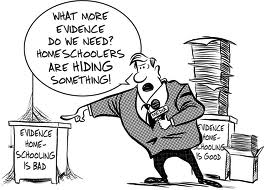
Whilst I am not a proponent of homeschooling and I see the virtues of the traditional school system, I am very frustrated by the lack of tolerance given to parents who decide that homeschooling is their prefered option.  To knock homeschooling is to ignore the many serious flaws inherent in the traditional school system.  Even though I think these flaws can be corrected and better practice can be implemented, until that is the case, parents will always look at their options.

That’s why I was particularly disappointed to read a recent article regarding the 12,000 children, aged 16 or under who are classed as “missing” from school in England.

The figures prompted warnings about the safety of those allowed to slip through the net. Children allowed to drop out of school could be at “serious risk” of physical, sexual or mental harm, charities said.

A Commons Education Select Committee inquiry in October reported that thousands of children as young as 11 who were “lost” to the education system may be turning to lives of crime, drugs and prostitution.

At this pont of the article I was naturally concerned about these kids who are so young, yet are not receiving education.  Then I read the following sentence:

Children may go “missing” due to being forced to wait for a school place or being kept at home by their parents…

How are those scenarios considered “missing?”  What if a child is being homeschooled?  Are they missing then?  Surely children waiting for a school place and being kept home by their parents aren’t necessarily “missing”.

Luckily I read another article which focussed on ending home-school stereotypes:

Despite successes with the ACT, spelling bees and math contests, home-schooled children battle a stereotype that they’re social misfits leading sheltered lives that fail to prepare them for the real world. Or worse yet, home schooling is depicted as brainwashing by parents pursuing a narrow political or religious agenda.

Nebraska law is friendly to home-schoolers, requiring basically that parents submit a form affirming their intent to home-school and provide a copy of their curriculum. The state doesn’t require state testing or home visits by state personnel.

Several parents interviewed said they cope with public misconceptions about home schooling even as the Internet and creative teaching arrangements give parents new ways to broaden their children’s education and further challenge the stereotypes.

Home-schooled students play on Little League teams, join Boy Scouts, perform in public school bands, participate in cooperative academic classes and, when necessary, take classes at local high schools and colleges, parents say. Students participate live in classes via the Internet.

Mike and Tricia Croushorn of Omaha home-schooled their children, Abi, 22, Tyler, 20, and Sam, 16, to give them a well-rounded education that included a religious component.

The Croushorns got interested after getting to know parents who home-schooled.

“We would meet these other children and they were always polite and respectful, and they could carry on a conversation with adults,” Tricia Croushorn said.

Homeschooling is not the enemy of education.  Bad teaching and poorly run schools are the enemy of education.  Until traditional schools really do offer the kind of support, care and safety that they claim to, then loving parents will always explore their options.  Because ultimately it’s not about tradition, it’s about the best needs of our children.  The only people who should be making that call are the parents.

I love being a school teacher and I see great value and potential in traditional school education, but I admire the selflessness and sacrifice that homeschooling parents make and the intentions behind their decision.  Instead of picking on the unconventional, make the conventional much better than it currently is.

Losing the Control of Your Class and Sanity

February 25, 2011

One of the most important qualities of a good teacher is patience.  Teachers, no matter how experienced or adept they may be, struggle at times with behaviour management issues in the classroom.  The loss of control at the hands of cheeky and disobedient students happens to the best of us.  It’s just a matter of how well we deal with it.

The trick is to keep your emotions settled, think calmly and find an appropriate way to address the issue as well as administer a consequence that fits the infringement.  Unfortunately, for some, all clarity and common sense goes out the window when faced with classroom management stresses.  Take this unfortunate case for example:

A TEACHER at a primary school was sacked after ordering pupils to wear a picture of a child with a noose around its neck as a punishment.

Ama Bankah, 31, had been working as a supply teacher in class of children – many with special educational needs – at Shaw Primary School, South Ockendon, Essex, England, when the practice came to light.

The General Teaching Council‘s professional conduct committee heard Ms Bankah claimed the placard was used as a “behaviour management technique”.

Every time she rang a bell, all the children had to sit quietly and those who didn’t would be “caught” by the “hangman” which was the name of the picture on the placard.

The GTC heard the image on the placard was of a child dressed in the colours of the school uniform. When Ms Bankah did this to one of the boys on February 1, 2008 he burst into tears and the matter was brought to the attention of the headteacher Linzi Roberts-Egan.

She then quizzed Ms Bankah, who had been in the post for three months, before asking her leave the school.

“Ms Bankah’s behaviour on 21 February 2008 was demeaning to the pupil concerned, caused him some harm, and had the potential to harm other pupils,” GTC committee chair Sashi Sivaloganathan said.

The committee also heard that some parents were so concerned about what had happened that they considered taking their children out of the school.

Whilst a story like this illustrates a teacher using terribly bad judgement, I can’t help but consider the difficulties she must have been facing to come up with such a desperate and inappropriate response.  Teaching is a difficult profession, and no formal training prepares you for unruly and disrespectful students.

Structures need to be put in place to support the teacher well and truly before they lose their mind and make terrible judgement calls like this one.

Bizarre Ideas in Education

February 24, 2011

I’ve written about this before, but I still can’t believe that this insane idea is gaining momentum.  Yes, it’s true that teachers often get frustrated by what they believe is negligent parenting of their students.  Does that give them the right to formally assess their perceived incompetence?

The idea of giving teachers the responsibility to write report cards about their students’ parents is ridiculous.  Yet, the idea is not going away:

Legislation from a Florida lawmaker has parents pondering how they’d be graded on their involvement in their child’s education: satisfactory, unsatisfactory or needs improvement?

Public school teachers in Florida would be required to grade the parents of students in kindergarten through the third grade, under a bill introduced by Rep. Kelli Stargel, R-Lakeland.

The bill has gotten the married mother of five national attention because there’s been so much emphasis on tying teacher salaries and advancement to student performance.

“We have student accountability, we have teacher accountability, and we have administration accountability,” CNN.com quotes Stargel as saying, “This was the missing link, which was, look at the parent and making sure the parents are held accountable.”

The grading system is based on three criteria that Stargel wrote in the legislation:

• A child should be at school on time, prepared to learn after a good night’s sleep, and have eaten a meal.
• A child should have the homework done and prepared for examinations.
• There should be regular communication between the parent and teacher.

Unbelievable!  Is it not the child’s responsibility to take ownership over their own homework? Did I just read that a child should have eaten a meal?  If a teacher is aware that their student isn’t being fed, the teacher has a responsibility to notify child protection authorities, not mess around with assessment forms!

Sure there are bad parents out there, but what is a report card going to achieve anyway?  How is a report going to change the error of their ways?

“Thanks teacher.  I needed that. I had no idea I was a bad parent.  I feel so much better now!”

I suppose, teachers needn’t worry.  A policy as silly as this will never be seriously contemplated.  Well, at least I hope not ….