Posts Tagged ‘Diet’

Healthy Eating May Help ADHD Kids: Don’t Tell the Doctors

January 10, 2012

I find the ADHD trends highly frustrating. I am not a doctor or medical professional of any kind so it’s not for me to speculate whether or not ADHD exists. What bothers me, is the rapid increases in children being diagnosed (and more importantly, medicated) with the syndrome. To me Ritalin and other types of ADHD medication must be the last resort. It’s side-effects are often quite pronounced and sometimes quite sad to experience. Kids with larger than life personalities and great bursts of creativity can often be left following their own shadows (I have personally witnessed this!)

When I first entered into the profession I was given medical forms to fill out about a particular student. A previous teacher must have recommended that this student be assessed due to the belief that she may have some ADHD symptoms. In my view she was just a child with poor self-esteem who lacked concentration. In my assessment of her I made it clear that I felt that beyond her concentration being poor there was no other reason to suspect that she may have ADHD.

It didn’t help. Unfortunately, within weeks of being presented with this patient, the doctor prescribed her with Ritalin. No suggestions of a change of diet, no therapy to examine if there is any cause for her low self-esteem and no evidence that she was sent to have her language skills tested. Just the “go to” method, the “one pill fits all” strategy – the blasted pill!

I am proud to say that this child is now off the medication. Her parents decided it was not something they wanted her to be on permanently so they eased her off it. Doctors would be shaking their heads right now and accusing the parents of being irresponsible. But the parents were right. She is now a happy, focussed, non-medicated young teenager.

Doctors can be far too quick to diagnose and prescribe. In my view, they do this out of self-interest. If they were more considerate they would seriously look at diet before prescribing Ritalin.

SIMPLY eating healthier may improve the behaviour of children with attention deficit hyperactivity disorder (ADHD) if therapy and medication fail, says a study published in the journal Pediatrics.

Nutritional interventions should therefore be considered an alternative or secondary approach to treating ADHD, not a first-line attack, said the review by doctors at Northwestern University Medical School in Chicago, published on Monday.

What they mean by that is first pop the pills and then consider your sugar intake. This is ridiculous. What is the big deal about investigating diet and other possible causes before, as a last resort, prescribing the medication?

Click on the link to read Who Needs Quality Teaching or Parenting When You Have Medications?

Click on the link to read Get Your Kids on Ritalin Before Their Grades Suffer

Click on the link to read It is Doctors Not Teachers Who Are Helping Children Get Good Grades
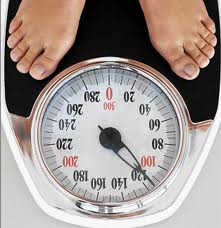
Law Requiring Schools to Weigh Students Must Be Repealed

October 24, 2011

You have got to be kidding me!  How can so-called intelligent adults pass a law so downright cruel?  Sometimes I think adults take advantage of the resilience of children.  They think they can impose great humiliation on poor, naive children, without any long-term cost.

Well I have news for you – children, like adults, don’t like being made to feel ugly, different or unworthy.  So why on earth would you pass a law that mandates schools to weigh children so that their weight can be compared with others?

A state law requiring schools to measure a child’s height and weight to find out how they stack up against their peers has generated plenty of controversy, but not a lot of local participation.

School officials say the law’s aim to combat childhood obesity is a worthy cause, but its approach is questionable.

The law measures body mass index, which is calculated from height and weight and given as a percentile. It’s generally a snapshot of a person’s overall body fat, but many argue it doesn’t take into account individual body types or other health risks.

Schools are required to take those measurements for students in kindergarten, third, fifth and ninth grades, then report that data to the Ohio Department of Health and mail the results to parents.

State education officials say similar health screenings, such as hearing and vision tests, have been done for many years with the results kept private.

What if the law was to include Ohio politicians?  What if they were forced to step on the scale in front of their peers and were measured for all to see?

Yes, privacy might be assured, but children aren’t stupid.  They know why they are being measured, and the humiliation of the procedure will not be lost on the overweight.

This plan is doomed to failure.

My wish, as idealistic as it sounds, is to make our children comfortable with who they are, regardless of their weight.  Whilst I strongly advocate educating children about healthy eating choices and encouraging active lifestyles, I am even more concerned about the inner wellbeing of the child.  To me, the tragedy is not that there are obese children, but that there are children who feel unworthy, ugly and hopeless because of their weight.

It’s time to get rid of the scales and let our children know that their worth is not the sum total of what they weigh, but rather, who they are and how they treat others.

Introducing the Candy Diet!

June 30, 2011

Feeling guilty about the amount of candy you allow your children to eat?  Not anymore.  If anything, you aren’t feeding them enough!

Or, at least that’s what the research seems to suggest ….

Indulging a sweet tooth might not be anyone’s idea of a good weight-loss strategy. But in jaw-dropping new research, scientists say they’ve found something even more likely to be associated with unwanted weight gain in children and adolescents than eating candy:

Not eating candy.

For the study, published in Food & Nutrition Research, researchers at Louisiana State University tracked the health of more than 11,000 youngsters between the ages of two and 18 from 1999 to 2004. They found that children who ate sweets were 22 percent less likely to be overweight or obese than kids who shunned sweets. Adolescents? Those who ate candy were 26 percent less likely to be overweight or obese than their non-candy-eating counterparts.

And that wasn’t the only surprising finding. Researchers also found that the blood of candy-eating kids had lower levels of C-reactive protein. That’s a marker of inflammation in the body and a risk factor for cardiovascular disease and other chronic illnesses.

Who funds this research?  Could somebody please do a study that links the watching of televised sport to greater physical health?  I could do with some scientific evidence to persuade my wife that I’m not wasting my time