Posts Tagged ‘Children’

The Cure for Suicide Isn’t Another Educational Program

March 11, 2011

I think that schools should implement suicide prevention programs and should certainly train teachers in how to deal with students at risk of self harm and suicide.  However, often these programs are nothing more than scapegoats for schools with poor cultures to pretend they are dealing with the problem responsibly when they aren’t.

The program in itself sounds like a good one.

Dr Martin Harris, who is on the board of Suicide Prevention Australia, says a suicide prevention program should be considered as part of the new national curriculum.

“I think it ought not to be the prevail of a particular teacher, but it ought to be a program which is embraced in a robust way by a school when they think they’re ready to do it,” he said.

Mr Harris says mental health experts could prepare teachers on how to broach the subject in schools.

“I think for us to be saying, ‘well, it’s not my problem’, increases the risk of it being isolated and for it to be stigmatised,” he said.

“I think it’s high time the community took off the blinkers and looked more carefully about what they can and can’t do.”

But Dr Michael Carr-Gregg, a child and adolescent psychologist, has dismissed calls for a suicide prevention program in schools.

“We’ve adopted a policy for as long as I can remember, that basically says let’s talk about suicide in terms of what leads up to it, which of course is by and large mental health problems; so suicide is the outcome of what happens when you don’t treat it,” he said.

“My view has been that we’ve been doing that very successfully for the last 15 years or so – the suicide rate’s come down. I see no reason at all why we should change our policy and I would urge schools to stick to their original idea and ignore the advice from Suicide Prevention Australia.”

My worry is that every time there is a glaring problem facing school aged children, somebody develops a school program to counteract it.  The advantage of a problem is that it creates awareness in students and encourages students to talk candidly and openly about important topics.  The disadvantage is that often all it ever amounts to is a lot of talk and very little real substance.

Suicide is indeed an issue facing our students.  Many of the reasons for suicide and suicide attempts relate to problems faced at school such as social pressures, bullying and academic pressures.  Schools claim to be safe, caring environments, but we know that many aren’t.  It can be argued that many schools come across cold, distant and out of touch with the issues facing their students.  Such schools should not be allowed to hide behind programs.  They should be pressured into changing their culture by spending as much time investing in connecting with their students as they do covering themselves legally.

In my view school’s must do a lot more than take on programs.  They must do everything in their powers to support and nurture their students.  They must fight for their students’ self esteem, help them find a sense of self and give them every chance to leave school with a positive attitude and real purpose.

If you think what I’m saying is just “airy fairy”, then you’d probably be in the majority.  Meanwhile programs come and go and problems still remain.

Teaching 150 Students in the One Classroom!

March 11, 2011

pupils

Pupils in an overcrowded classroom at Quarry Heights primary school interact with their teacher.


This story may well stop me from complaining ever again about class size.  I have always been of the opinion that the optimal class size is somewhere between 15 and 25.  Anything less than 15 provides the students with a lack of social opportunities, whilst anything more than 25 prevents the teacher from having sufficient 1-on-1 time with struggling and advanced students.

To think that classrooms exist with up to 150 students is just staggering!

One hundred and fifty Grade 1 pupils crammed into one classroom is the reality of Quarry Heights Primary School near Newlands East in Durban.

The 14 staff members battle to teach the pupils, virtually packed on top of each other, some of whom pass out because of heat exhaustion.

The school – which is made up of seven prefabricated buildings – caters for children mostly from disadvantaged backgrounds. It has only two taps for the 564 pupils, with no electricity, books or stationery.

The school’s governing body secretary and spokesman, Thami Nzama, said that the school lacked basic necessities and received little funding as it was a “no-fee school”, meaning that pupils did not pay school fees.

“The school was built for the poorer people of the community. We have a staff of 14. The Grade 2 class has 78 pupils; the Grade 3, 57; Grade 4, 70 pupils, and we have a joint class of grade six and sevens with 140 children.

“The other pupils are in Grade R. We have one building for a security guard who stays on the property and another that we use as a kitchen, but it does not have running water,” Nzama said.

He added that the staff did not have a staff room in which to meet and organise their work .

“Our staff room will be anywhere we find shade during the day, whether it be under a tree or prefab veranda.”

pupils 1

Teachers at Quarry Heights primary school marking exam scripts outside because they don’t have a staff room.


I can’t imagine teaching 150 six-year olds all day in the one classroom without even having a private staff room to retire to at lunch time.  I love teaching very much, but those conditions would push my level of job satisfaction to the limit. The amazing part of this story is that the teachers involved are loving the experience.

Credit goes out to the dedicated teachers who work in such an environment.  You are a credit to your profession, students and community.  May you continue to inspire us fellow teachers, to make every post a winner and overcome all challenges with a quiet resolve and an ever present smile.

Fighting for Our Kids’ Self-Esteem

March 4, 2011

There’s a reason why kids are suffering from body image related problems in greater numbers than ever before.  We let them.  Society has a responsibility to ensure that the same dreadful affliction that has had diabolical effects on our generation, doesn’t torment the next.  We have made the mistake of valuing people for all the wrong reasons, putting too high a price on weight, shade and form and too little emphasis on character, personality and integrity.  We place celebrities on pedestal so high, we barely notice that we don’t know anything about them.

Our young notice our insecurities and base a world view on them.  They see the pressures their parents feel about appearance and weight and base their own self-worth on precisely these factors.  Before you know it, you’ve got kids as young as five with eating disorders:

Children are suffering from eating disorders at younger and younger ages according to disturbing new research.

Media consumption, peer pressure and negative messages from parents are all contributing to the problem of poor self-image in children, which can trigger eating disorders such as anorexia, bulimia and binge eating. According to the Eating Disorder Resource Centre of Ireland, children as young as five are displaying signs of poor body image – and some seven and eight year olds have developed eating disorders.

Experts are stressing that such disorders are not confined to girls, with little boys also being susceptible. Psychologist and author Deirdre Ryan told TheJournal.ie that parents can unthinkingly pass on negative messages to their children: “I was speaking with a six-year-old boy who said that he wanted to lose weight – when I asked him why he said: ‘I have a wedding coming up’. That message was more than likely passed on by a parent,” she said, “Parents have to be aware of what they are saying, even in front of boys, and not engage in ‘fat talk’. Children of this age are hypersensitive.”

Parents need to be more aware of their relationship with their own bodies as well, Ryan said: “It is starting younger and younger – but it is also affecting people who are older – spreading across the life span. Now, there is an expectation that even if you’re in your 60s you should conform to a certain image. It’s very damaging.”

Our generation has already let ourselves down by buying in to the media driven lie about what a person should aspire to be like.  We have been fooled into believing that life is about striving to beat aging, keeping a toned figure and withstanding lines and wrinkles.  The beauty industry has made a bundle out of us, and all we are left with in return is confusion, pressure, anxiety and in many cases a battered self-image.  Is this what we want for our children?

It’s great to invest in one’s health and appearance, but it is important that these things don’t take over.  Our children need to see that we place more value in perfecting our character than our figure.  That we consider integrity, honesty, empathy and loyalty on a higher level than six packs or breast size.

As a teacher, there is only so much I can do.  As a parent, I have a big job ahead of me.

Standing Up For Our Fellow Teachers

March 3, 2011

Never has it been more important to support our fellow teachers.  Unfortunately, for various reasons, none of them rational, teacher’s have been getting some horrible press lately.  They seem to be the scapegoat for a system that isn’t working well.  Meanwhile administrators and politicians are avoiding the heat and leaving the blame for the teachers.

That’s why letters like this, printed in the Edmonton Journal, are refreshing and important:

Many people say teachers are overpaid and underworked. Others sing their praises and tell the world that teachers have one of the most rewarding and responsible vocations. Those who agree say teachers cannot be paid enough for the work they do with our most precious commodity, our children.

This is why the headline, “Teachers gain, students lose,”caused such an emotional reaction within me. Perhaps The Journal thinks teachers should work for free. Maybe The Journal forgets that teachers accepted a five-year contract they didn’t really want, but it was one of the few reasonable alternatives offered to them.

No matter what, teachers will continue to go forth into the future, doing what they always do: making the best of a system that basically works, in a media climate that negates all the hard work they do.

The one thing teachers do not do is bash other people’s professions. I wonder why so many people feel it is OK to denounce teachers and yet, every day, entrust the care of their children and grandchildren to the same.

Linda Klym, Sherwood Park

Well done Linda!  You are spot on!  Teacher’s don’t criticise other professions, yet for some reason get criticised from all quarters.  It’s good to read such an eloquent and well articulated reply to more anti-teacher media propaganda.

Homeschooling is Not the Enemy

February 25, 2011

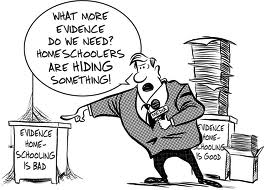
Whilst I am not a proponent of homeschooling and I see the virtues of the traditional school system, I am very frustrated by the lack of tolerance given to parents who decide that homeschooling is their prefered option.  To knock homeschooling is to ignore the many serious flaws inherent in the traditional school system.  Even though I think these flaws can be corrected and better practice can be implemented, until that is the case, parents will always look at their options.

That’s why I was particularly disappointed to read a recent article regarding the 12,000 children, aged 16 or under who are classed as “missing” from school in England.

The figures prompted warnings about the safety of those allowed to slip through the net. Children allowed to drop out of school could be at “serious risk” of physical, sexual or mental harm, charities said.

A Commons Education Select Committee inquiry in October reported that thousands of children as young as 11 who were “lost” to the education system may be turning to lives of crime, drugs and prostitution.

At this pont of the article I was naturally concerned about these kids who are so young, yet are not receiving education.  Then I read the following sentence:

Children may go “missing” due to being forced to wait for a school place or being kept at home by their parents…

How are those scenarios considered “missing?”  What if a child is being homeschooled?  Are they missing then?  Surely children waiting for a school place and being kept home by their parents aren’t necessarily “missing”.

Luckily I read another article which focussed on ending home-school stereotypes:

Despite successes with the ACT, spelling bees and math contests, home-schooled children battle a stereotype that they’re social misfits leading sheltered lives that fail to prepare them for the real world. Or worse yet, home schooling is depicted as brainwashing by parents pursuing a narrow political or religious agenda.

Nebraska law is friendly to home-schoolers, requiring basically that parents submit a form affirming their intent to home-school and provide a copy of their curriculum. The state doesn’t require state testing or home visits by state personnel.

Several parents interviewed said they cope with public misconceptions about home schooling even as the Internet and creative teaching arrangements give parents new ways to broaden their children’s education and further challenge the stereotypes.

Home-schooled students play on Little League teams, join Boy Scouts, perform in public school bands, participate in cooperative academic classes and, when necessary, take classes at local high schools and colleges, parents say. Students participate live in classes via the Internet.

Mike and Tricia Croushorn of Omaha home-schooled their children, Abi, 22, Tyler, 20, and Sam, 16, to give them a well-rounded education that included a religious component.

The Croushorns got interested after getting to know parents who home-schooled.

“We would meet these other children and they were always polite and respectful, and they could carry on a conversation with adults,” Tricia Croushorn said.

Homeschooling is not the enemy of education.  Bad teaching and poorly run schools are the enemy of education.  Until traditional schools really do offer the kind of support, care and safety that they claim to, then loving parents will always explore their options.  Because ultimately it’s not about tradition, it’s about the best needs of our children.  The only people who should be making that call are the parents.

I love being a school teacher and I see great value and potential in traditional school education, but I admire the selflessness and sacrifice that homeschooling parents make and the intentions behind their decision.  Instead of picking on the unconventional, make the conventional much better than it currently is.

The Cost of Sedating Our Boys

February 20, 2011

I recently came across an interesting opinion piece by Elizabeth Farrelly in the Sydney Morning Herald.  Whilst I wouldn’t go as far as to connect the lack of representation of male teachers to the number of boys on Ritalin, some of her points do resonate.  There is no doubt that Ritalin does have a place, but with the numbers of children (boys in particular) taking the drug climbing markedly from year to year, it is more than fair to raise some strong concerns.  Ms. Farrelly certainly does just that:

The Ritalin wars are usually treated as just another tussle between the pharmaceutical companies and the rest, but is there something else going on here as well? Is it part of a more generalised, covert war on boyhood? //

Thirty years ago Australian primary schools employed five male teachers for every four females. By 2006 there was one male teacher for every four females. This overwhelming feminisation of primary education, and of culture generally, has made boy-type behaviour stuff to frown upon. Are we in danger of seeing boyhood itself as a disorder?

When Christopher Lane, author of Shyness: How Normal Behaviour Became a Sickness, quoted a psychoanalyst saying “We used to have a word for sufferers of ADHD; we called them boys”, he probably did not expect it to become the most famous line of his book.

What was once introversion is now “avoidant personality disorder”, nervousness is “social anxiety disorder” (SAD) or dating anxiety disorder (DAD) and so on. It’s not that these disorders don’t exist, says Lane, a Guggenheim fellow studying the ethics of psychopharmacology, but that our definitions are so broad that the entire mysterious subconscious is reduced to chemical balance, and any deviation looks like disease.

Why, he asks, is ADHD so commonly diagnosed in boys? Is it new behaviour? Or just a new attitude to that behaviour?

But why the gender imbalance, and why now? We know that boys tend to be late maturers anyway, but Scott concedes there are also social and perceptual factors at play. Teachers with “less structured” teaching style and “more distracting” classroom environments, he says, yield many more of his clients than their more disciplined (my word) colleagues.

Whereas ADHD girls “sit quietly in a corner”, the boys are more disruptive and more noticed, more referred, more medicated. And although much the same is true of ”normal” boys and girls, the upshot is that ”girl” is a norm to which boys are expected to strive. Scott sees it as “an unintended consequence of how society operates”.

But consequences this important should be either clearly intentional, if girlifying boys is really what we want, or remedied. Personally, I reckon the crazily creative are types we’ll need more of, rather than fewer of, in the future, even if they are male.

The above are just some snippets from this very thought-provoking opinion piece.  It has never sat well with me that such a large proportion of children taking Ritalin are boys.  Whilst I wouldn’t go as far as to blame it on few male teachers, it does make you wonder whether we are getting it right.

It seems like society may be letting boys down very badly.

The Obstacle Course that is Teaching Maths

February 9, 2011

Below is the second maths lesson in a series of original maths lessons I have devised over the years:


Maths Obstacle Course

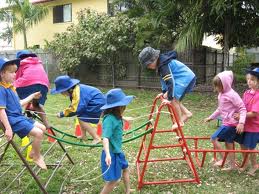
I devise a simple obstacle course using whatever playground equipment the school has.  Slides, monkey bars, polls, ladders and bridges are all useful.  The obstacle course doesn’t need to be intricate, long or complex.  Students should be able to finish it within half a minute maximum.

I take the students out to the playground.  They have no idea what we are doing.  They may ask me, but my reply is “You’ll see.”  The reason why I don’t tell them it’s a maths lesson is because maths has a stigma, and just the mention of it will deflate some students’ expectations.

Usually outdoor lessons require pencils, worksheets and clipboards.  The students are relieved when they find out that none of these implements are required.

With the students congregating around the playground equipment, I tell them that they are going to be doing an obstacle course.  I show them the route they need to take and tell them that each individual will be timed while doing the course.  Each student gets one attempt only, with their personal time written down.  On completion, I order the times privately while the students get a drink of water.

Only the 5 quickest times are read out, so as not to upset or demoralise any of the slower performing students.  Of course, if other students request to know their time, I tell them.  At this point we walk back to the classroom.

On arrival, I write the times in random order on the board.  Using the times, students will take part in some of the activities below, depending on their age and maths proficiency:

Activity 1:  Order the times from quickest to slowest;

Activity 2:   Round the times to the nearest second, tenth of a second etc;

Activity 3:  Work out the total time taken cumulatively over the entire class;

Activity 4:  Work out the average time for the entire class;

Activity 5: Chart the times using Excel and create a chart such as a column graph which presents the data in graphical form; and

Activity 5: Students estimate what time they think they would get should they be given a second attempt.  They will also be asked to give reasons for their answer (e.g. it could be faster the second time around due to a greater awareness of the route, or an improved strategy, yet it could be slower due to fatigue or the pressure to perform).

Even though the main chunk of the lesson is spent doing something that can hardly be called maths, it serves as a basis for engaging the students.  The skills covered in the lesson include measuring time, adding decimals, ordering number, rounding, IT, graphing, averaging and predicting.

It’s a great feeling watching the students get a shock when they find out that the PE lesson they thought they were taking part in, ends up being referred to as a maths lesson.

And ultimately, that’s the point.  Maths is in everything – even the things that give the students pleasure.

An Obsession With Success Leads Tiger Mother to Failure

January 26, 2011

As a teacher, it is my policy not to judge parents on their parenting styles.  I do this for three reasons:

  1. It is rude to judge another person when you haven’t walked in their shoes.
  2. Negative judgements against parents would inevitably cause me to lose focus on my responsibilities to the child; and
  3. Parenting is extremely difficult. I know this because I am a parent.  It is so hard to find the right balance for your child.  Judging others would distract me from improvements I need to make to my own parenting skills.

But every so often you find you have no choice but to make an exception to your rule.  My exception is  Amy Chua, the so-called “Tiger Mother”.

When a person writes a book about parenting they open themselves up to public criticism.  After reading her essay in the Wall Street Journal (I will not be rushing out to buy the entire book) and finding myself cringing all the way through it, I feel that it is the right time to dismiss my “no judgements policy” and respond to her disappointing advice.

The Tiger Mother’s methods are particularly extreme. Swapping one set of extreme methods (The Western methods) for another is unworkable.  Why does everything have to be so extreme these days?  The Education System operates like this.  One day the trend will be all about Teacher Centred Learning, and when that strategy falls flat, the answer then becomes Child Centred Learning.   And back and forward we go between the two very extreme strategies.   The same applies here.  Yes, Western style parenting features some methods which leaves a lot to be desired, but the answer is not its polar opposite.

Why not find “balance?”  That’s right, neither far left or right.  Why not try to focus on what works in different styles of parenting and mould them together?  Surely that’s preferable to going in the extreme opposite direction.  In truth, extremism comes about from insecurity.  The  Tiger Mother’s methods of parenting is both extreme and riddled with insecurity.

By not letting your child go on play dates and taking part in school plays, you are preventing the child from being involved in healthy social activities.  The fact that the stereotypical Asian parents see mingling as a waste of time is very sad indeed.

Pushing a child to not only achieve, but achieve beyond the rest of the class is such a terrible goal for your child.  It forces the child to see their friends as threats and rivals instead of human beings.  It emphasises selfishness and makes it difficult for the child to relate or empathise with others.  Her policy of not letting her kids be anything less that number 1 in their class is quite distressing.

“Chinese parents believe their kids owe them everything.”  This line stunned me.  Why would kids owe their parents everything?  Because their parents sacrificed for them?  Well, what are parents for?  Would it be alright for Amy’s child to approach her and say, ”Mum, how about we make a deal?  I’ll let you enjoy life a bit, and in return, you can let me live a less restrictive existence”?

Amy’s husband is spot on when he said, “Children don’t choose their parents.”  Her response to this more than reasonable point was, “This strikes me as a terrible deal for the Western parent.”  Whilst I think that parents are owed respect and honour, in return, I believe parents owe their children love and support.  I’m not looking for a better deal than that.

Whilst I don’t agree with the Tiger Mother’s approach, I understand that there are people out there looking for strategies that will improve their parenting.  However, when she happily recounted the time she called her daughter “garbage”, I couldn’t help but worry about the effect this book was going to have on others.

Amy’s father once referred to her as “garbage”, and although upset by it, she understood where he was coming from and the point he was trying to make.  That is why she had no qualms with repeating the dose on her poor daughter.   So comfortable was she about referring to her daughter by this term, she goes on to recount how she upset people at a dinner party by frankly discussing how she called her daughter by this name.

Amy, a professor at Yale Law School, should know better.  “Garbage” refers to something that is both useless and worthless.  Calling your child useless and worthless is just not acceptable!  How can a parent be proud of calling their child by such a terrible name?  I don’t care if that type of putdown turns the kid into a Nobel Prize winning scientist, it is not acceptable.

What the Tiger Mother’s  of this world have all wrong is their definition of success.  Success isn’t outdoing people, becoming famous, obtaining wealth or becoming a prodigy.  A successful person in my opinion is somebody who lives with integrity, cares and empathises with others and uses their gifts and qualities to help improve the lives of other people.  Anyone can be successful. Receiving  an A or a C for a maths quiz is not a determining factor.

The Tiger mentality is an extreme one, that combats poor aspects of Western parenting with another equally dismal style of parenting.  What you are left with is a maths whizz that may never enjoy maths, a musical prodigy that never got to enjoy music or properly express themselves through music, a person who thinks parenting is about entitlement rather than love and who is brought up to believe that a friend is anybody that doesn’t dare perform at their level.

It’s time that we preached balance and perspective rather than extremism, we dispensed with “dog eat dog” in favour of “dog support  dog”, and motivate our children without the use of put downs.

Maths and Primary Teachers Don’t Always Go Together

January 25, 2011

A school principal once said something to me which really stuck.  He said that if you look at a primary teacher’s academic background, you see a clear trend.  Most teachers come from a humanities background.  They studied Arts, Literature, Politics, History etc.  He said, only rarely do you find a primary school teacher with a maths background.  The unfortunate truth of the matter, he concluded, is that many primary school teachers are uncomfortable with teaching maths.  Many have limited skills and are simply not adept at effectively explaining maths concepts to their students.

I think there is a lot in what he said.  Whilst spending a year as a substitute teacher, I witnessed many schools and observed many teachers.  It is very rare to find a primary teacher that doesn’t possess an interest in literature and social studies.  It isn’t rare however, to find a teacher who groans at the prospect of teaching fractions or who becomes impatient when a student doesn’t seem to be taking in the method for solving an equation.

Early last year an article was printed in The Australian about the deficiencies of Australia’s education system to deliver acceptable maths outcomes. Even though it was written about Australia, I think it may well apply to many other countries as well.

A groundbreaking review of the mathematics and statistics disciplines at school and university by the Go8 found “the state of the mathematical sciences and related quantitative disciplines in Australia has deteriorated to a dangerous level, and continues to deteriorate.”

The review was compiled by a committee of the nation’s senior mathematicians headed by former University of Sydney vice-chancellor Gavin Brown.

It found that in 2003 the percentage of Australian students graduating with a major in mathematics or statistics was 0.4 per cent, compared with an OECD average of 1 per cent.

Between 2001-2007 the number of mathematics major enrolments in Australian universities fell by approximately 15 per cent.

I also came from a humanities background.  Before completing my degree in teaching, I studies Arts, majoring in English Literature and History.  I, like other teachers was terrible at maths during school.  Our school used to give high pressured maths tests all throughout the year.  I studied for them long and hard, yet managed to fail just about every single one of them.  One day I was so distraught at not being able to work out the answers, I secretly threw my test in the rubbish bin.  A week later my teacher approached me apologetically to tell me she somehow misplaced my test.

The interesting part of it was I actually liked maths.  Whilst it never came easy to me and was taught in a pressurised and negative way, I still managed to enjoy the subject.  In Year 12, I decided I wanted to do maths as one of my final year subjects.  The teacher, Principal and Vice-Principal thought I was crazy and tried to talk me out of it.  They were worried that my inevitably poor results on the three major assessment tasks would drag the class’ score down and tried to persuade me to take up economics instead.  I stubbornly refused.

As it turns out, I did quite well in the end, including earning an A on one of the assessments.  The same Maths teacher that didn’t want me in her class later told me I was her favourite student.  Not because I was the best behaved or the smartest, but because I was determined.  She was impressed that I chose to fight my maths demons rather than take the better grades on offer from doing economics.

Now as a maths teacher (I teach all general subjects), I can relate to the student that doesn’t get it.  I enjoy teaching maths in a style that I would have profited from as a child.  The creative scope for teaching elementary maths is almost limitless.  I like to set up maths role-plays in my class.  In teaching place value I set up a situation where the students are spies trying to break codes in order to thwart an evil plan.  For measurement I get the students to build towers and design tracksuits for Australia’s National sporting teams.

It’s always going to be hard for primary teachers to excel in teaching something they may have never excelled at when they were students.  But that can be a blessing in disguise.  Sometimes a rustiness in the subject helps you relate to the struggles of some of your students and encourages you to be more creative in the way you teach.

Don’t Dismiss the Effect of Divorce on a Child

January 24, 2011

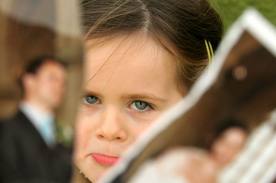
Unfortunately, divorce is a fact of life. Teachers often have multiple students from broken homes in their classrooms.  It is absolutely imperative that these students get the support they need.

Because it’s so common it may be easy to overlook a child whose parents just became separated or divorced.  The teacher may be of the opinion that the child in today’s age should adjust, and with time, move on from the initial shock and uncertainty.  They may rationalise that since others in the class have been through the same situation, there is a peer support system there for the child, and no further intervention is required.

Whilst I understand that rationale, I do not agree with it.

Firstly, I need to make 2 things clear:

1.  It is not a teachers place to pry, make judgements and involve themselves in the personal decisions of their students’ parents.

2.  The support that I am talking about is one of keeping the child in a positive frame of mind, not asking personal questions or initiating dialogue about sensitive issues.

It is my opinion that while divorce is a fact of life and that in most cases there is nobody to blame, it is quite distressful for the child.  The fact that it is common and has also effected other classmates provides next to no comfort for the child.  I believe that when a child’s parents separate the teacher must refer the matter to the school councillor (if the school has one), and spend more time with child building their confidence and displaying patience when the child plays up or has difficulty completing a task.  It is not sufficient to wait until the child shows signs of anxiety or rebellion.  The time to initiate support is straight away.

There are a number of school-related changes that the child may undergo that is worth considering.  Below are just a few:

  • The child will have 2 homes.  Meaning he/she may have to bring an overnight bag to school.  It is best to have a discreet place to put the bag.  The bag, I have found becomes a sort of symbol of the separation, and the child is often bashful about it.  A special spot for the bag often reduces some of the anxiety of bringing it.
  • The child often receives 2 newsletters, notices and reports.  For the first few months (if not indefinitely), discretely handing out these notices is the best policy.
  • It is best to have both parents at the Parent/Teacher meeting, if possible, at the same time.  This can be a tense session and involve the former partners engaging in point scoring and blaming. It is in these sessions however, that the teacher has an opportunity to address the importance of co-operation and inclusion when it comes to matters concerning the child.
  • Homework, books and uniforms are often left at mum’s or dad’s.
  • When the child fails to bring money for school photos, camps or excursions it is often because one parent refuses to pay half the cost and the other refuses to pay for the entire cost.  In this event, for the child’s sake, I have paid the cost out of my own pocket (without telling anyone) and have on occasion approached my boss in a bid to get the school to wave the cost.

I read an article which discussed the link with children of divorce to higher levels of suicidal thoughts. I suppose this is not surprising at all, but it does back up what I have been discussing.  Some interesting findings from the Canadian survey that inspired the article include:

Researchers from the University of Toronto said Wednesday that they had studied 6,647 adults, including almost 700 who had been under the age of 18 when their parents divorced and found men from divorced families were three times more likely to have seriously considered suicide than adult males whose parents had not divorced.

Women whose parents had divorced were twice as likely to have thought about taking their own lives, according to the research published in the journal Psychiatry Research.

I recently completed a children’s novel about a boy struggling with the separation of his parents.  As a guide to see if the manuscript was good enough to engage an audience, I used to read it to my students (without mentioning that I wrote it).  I was always worried that the passages describing the separation may be too confronting for children who have experienced separation and divorce in real life.  I was staggered to find that the opposite was true.  They were the ones that connected most strongly to the story.

It provided them with a voice.  A voice that is buried somewhere beneath the surface.  A voice that shouldn’t be dismissed, ignored or taken for granted.