Posts Tagged ‘Children’

Parents Overdosing Their Kids on Paracetamol

June 7, 2011

It’s crucial for preserving the health of your child’s liver that you take care when administering painkillers with paracetamol:

Regulators are updating the information displayed on the labels of the medicines in order to make them clearer and better tailored to babies and young children.

The new guidance follows research published last month that showed one in four young patients is given too much of the pain reliever, putting them at risk of liver damage.

The study also found that parents often give their children Calpol or similar medicines containing paracetamol at home before going to the GP who then prescribes yet another painkiller.

At the moment, there is one age band for those aged six to 12 years-old, but this will now be split into three bands.

The guidance currently says children aged six to 12 should have 5ml to 10ml of medicine, up to four times in 24 hours.

Breakfast Club a Huge Hit!

June 7, 2011

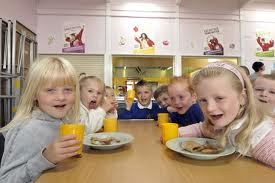
Breakfast is such a crucial meal.  I am a big supporter of the Breakfast Club program, and am delighted to here it is working well.

YEARS of public campaigns to persuade children to eat breakfast are paying off, with the number of children consuming a morning meal rising in the past decade. A national study by the University of Sydney has found primary and secondary school students are more likely to eat breakfast. Thousands of schoolchildren from years 2 to 12 were surveyed in 2000 and 2006. A follow-up study is planned for next year.

Researchers found high school students in particular were now more likely to eat breakfast.

University of Sydney nutritionist Jennifer O’Dea credited public campaigns and school ”breakfast clubs” for the improvement.

”It’s such a simple thing but it feeds the child’s brain, it improves their behaviour and reduces their risk of overweight and obesity,” she said.

The number of high school boys missing breakfast fell from 19.9 per cent to 12.1 per cent and the number of high school girls fell from 27.7 per cent to 18.7 per cent.

In primary school, the number of boys who did not eat breakfast fell from 9.4 per cent to 6 per cent, while the number of girls fell from 9.6 per cent to 6 per cent.

Dr O’Dea expects to see greater improvements when surveys are conducted again next year.

The nutritional quality of breakfast affects a child’s concentration and learning ability, Dr O’Dea found in separate research in 2008.

Congratulations to all schools that have invested their time and energy into Breakfast Club.  May it continue to assist students in desperate need of a nutritious meal.

Kids Adapt to Technology While Adults Watch in Amazement

June 2, 2011

At a time when parents are often criticised for being over-protective and not exposing their kids to taking on challenges, it is amazing to see how quickly young children adapt to new technologies.  The apprehension and indecision that adults have is non-existent.   These kids often make the remarkable transition from inhibited and anxious to confident risk takers as soon as the i-Pad comes out.

Take this revealing clip as a two-and-a-half  year old is presented with an i-Pad for the very first time.  Watch how confidently she navigates the product and how quickly she learns to use its programs and features.

This shows us what kids are capable of, not only when it comes to technology, but in other spheres at all.  When engaged and stimulated, when they enjoy what they are doing, their behaviour becomes more positive and more inclined to take responsible risks.

The challenge of educators is to spend less time protecting students from making mistakes and disappointment, and more time investigating ways to educate through fun and engaging activities.  Confidence does not come about from someone protecting you or holding your hand through a challenge.

Confidence comes about when the challenge is enticing and the outcome is genuinely fulfilling.

The Result of Sleep Deprivation for Kids

May 29, 2011

A new study suggests that there is a clear correlation between kids with limited sleep time and weight gain:

Preschoolers who do not get enough sleep are at higher risk of becoming overweight, researchers in New Zealand have concluded.

Getting less sleep seems to be related to increased body weight in children but doctors aren’t sure how.

Prof. Rachael Taylor of the human nutrition department at the University of Otago in Dunedin and her colleagues followed 244 children between the ages of three and seven. Young children who don’t get enough sleep risk becoming overweight. 

The children had their weight, height, body mass index and body composition measured every six months. Parents filled in questionnaires about the sleep and diet habits of their sons and daughters at three, four and five years of age. At those ages, the children also wore accelerometers to monitor their movements.

The boys and girls averaged 11 hours of sleep per day at all three ages.


Each extra hour of sleep per night at age three to five was associated with a reduction in BMI of 0.49 times and a 0.61 times reduction in the risk of being overweight or obese at age seven, the team found.

The researchers said the differences in BMI were from fat mass, which points to how poor sleep harms body composition in children.

The link remained after taking factors such as gender and physical activity into account.

As for why, the researchers proposed that having more time to eat and changes in hormones in the brain could affect appetite.

“The study is a valuable contribution to the understanding of the causal pathway whereby reduced sleep duration may directly contribute to overweight and obesity in children,” Professor Francesco Cappuccio and Associate Professor Michelle Miller from the University of Warwick said in a journal editorial accompanying the study.

Strengths of the study included use of accelerometers and sleep diaries, which offered reliable, direct and repeated measurements of time in bed and time asleep, the editorial said.

“It would do no harm to advise people that a sustained curtailment of sleeping time might contribute to long-term ill-health in adults and children,” the pair concluded.

What the article didn’t say is how many hours of sleep is ideal for a child?  Does it depend on the child? Surely, some children can make do with fewer hours than others?

Injecting Botox into Children Should Be a Crminal Offence

May 15, 2011

This is no joke.  This should not be treated like a one-off case by an unstable parent.  These awful child beauty pageants, which contribute not even an ounce of worth or purpose to this world, are responsible for the flagrant abuse of children.  They must be shut down!  They are horrendous excuses for entertainment and the practices they espouse from parents borders on the criminal.

Take the case of the mother that readily admits to injecting her poor child with  Botox to eliminate any possibility of a wrinkle:

How sick is that?  How do we allow these pageants to continue when they provide us with nothing and instead encourage parents to treat their kids like circus animals!  I totally agree with John Kass:

… when I think of little-girl beauty pageants — after the story last week about Kerry Campbell, the idiotic mom injecting Botox into the face of her 8-year-old daughter Britney — all I can think of are three little words:

Shut them down.

Shut all those kiddie pageants down.

It’s easy for us to slam one ignorant parent who lives vicariously through her daughter, or slam a few parents who treat their children as if they’re painted dolls. We pronounce such parents fools and think we’ve won a great victory.

But this really isn’t about isolated cases, or even the entire, weird little-girl pageant scene. The larger story is how we Americans feel about ourselves, how we define beauty in the age of facial injections and lip shots and tummy tucks and liposuction and breast implants and hair transplants.

And as millions endure all that poking and prodding and tying and cutting, can’t you hear America groaning, begging: Desire Me, Want Me, Please Want Me Forever.

We put all that pressure on women to be young and cute into their old age, until even an 8-year-old isn’t young enough or cute enough, if her name is Britney, getting Botoxed.

It all starts with those little girls painted with lipstick, sprayed with tanning powder, with big hair and heels. They strut down those runways with that JonBenet Ramsey pout, training to become princess victims.

And the parents cheer as their young are sexualized.

In today’s age. how do we let these blasted things continue?

When Do Kids Begin Forming Memories?

May 13, 2011

I stumbled across a fascinating article about when children begin forming memories:

New research challenges the notion that very young children do not form memories, finding that they do but that the memories often fade over time.

Most adults remember little before their third or fourth birthdays, and the thinking has been that prior to this age children do not have the cognitive or language skills to process and store events as memories.

But psychology professor Carole Peterson, PhD, and colleagues from Canada’s Memorial University of Newfoundland confirmed in earlier research that this is not the case and that even very young children can recall past events.

Now they report that young children’s earliest memories tend to change over time, being replaced with “newer” earliest memories until around age 10. As this happens, memories occurring in the preschool years tend to be lost.

“As young children get older their first memories tend to get later and later, but around age 10 their memories crystallize,” Peterson tells WebMD.

Checking Children’s Memories

In an effort to better understand how children form memories, the researchers asked 140 kids between the ages of 4 and 13 to describe their earliest memories and then asked them to do the same thing two years later.

On both occasions, the children were also asked to estimate their age at the time of each memory, and parents were questioned to confirm that the events happened.

The researchers found that children between the ages of 4 and 7 during the first interview showed very little overlap between the memories they recalled as “first memories” during the first question session and those they remembered two years later.

“Even when we repeated what they had told us two years before, many of the younger children would tell us that it didn’t happen to them,” Peterson says.

Conversely, a third of the children who were age 10 to 13 during the first interview described the same earliest memory during the second interview. More than half of the memories they recalled were the same at both interviews.

The researchers are now studying why children remember certain events and not others.

Peterson says traumatic or highly stressful events made up only a small percentage of the earliest memories reported by children in the study.

Cultural Differences Influence Early Memory

Earlier research suggests that culture plays a big part in early memory.

When Peterson and colleagues compared early memories in groups of Canadian and Chinese children, they found that the Chinese children’s earliest memories tended to be a year or more later than the earliest memories of Canadian children.

Emory University child memory researcher Robyn Fivush, PhD, found the same thing in a study comparing Chinese and American children.

Fivush tells WebMD that Western children tend to have stronger early memories because their dialog with parents and other adults tends to be more autobiographical.

The first lasting memory I have is from when I was 4 years-old, which seems to be consistent with these findings. When was your first lasting memory?

Click on the link to read Experts Push for Kids to Start Driving at 12

Click on the link to read Study Reveals Children Aren’t Selfish After All

Click on the link to read Catering for Four-Year Old Transgendered Children

Click on the link to read What Happened to Honesty and Integrity?

Click on the link to read Kids Need Meaningful Relationships More than Mobile Phones


Children’s Books Deemed Sexist

May 6, 2011

It turn out the classic children’s books I have grown up reading have “enforced gender equality.”  Books I appreciated as a child have been among those labeled sexist for featuring a male hero instead of a female one, according to a recent study:

A large-scale study of children’s books published between 1900 and 2000 revealed that they were almost twice as likely to feature a male central character than a female one.

The gender bias was even worse when it came to books with animal characters – often favoured by publishers as ‘gender neutral’ with male animal heroes featuring in three times more books than female animal heroines.

And female characters were even overlooked when it came to star billing – kids’ books were twice as likely to include a male character’s name in their title as a female name.

Researchers from Florida State University, USA, also discovered that while books printed during the 1990s came close to equal representation of male and female human characters, animal characters were twice as likely to be male as female.

In a conclusion that will baffle fans of Alice’s Adventures in Wonderland, Anne of Green Gables and The Wonderful Wizard of Oz, researchers said their findings indicated a ‘symbolic annihilation of women’.

They warned that the role of kids’ fiction as a ‘dominant blueprint of shared cultural values, meanings and expectations’ could send a message that ‘women and girls occupy a less important role in society than men or boys.’

Evidence of this inequality was noted in how readers ‘interpret even gender neutral characters as male’ and in the way mums ‘frequently label gender-neutral animal characters as male when reading with their children.’

And in books where the characters are animals – such as The Tale of Peter Rabbit, Fantastic Mr Fox and Winnie-the-Pooh – leading and positive female roles are scarcer.

The likes of Jemima Puddle-Duck and Mrs Tiggy-Winkle had key roles in just 7.5 per cent of children’s books. Male rabbits, bears, owls, dogs, foxes and toads were more prevalent – they were the lead characters in 23 per cent of books.

The study, results of which are published in Gender and Society journal, looked at almost 6,000 children’s books published between 1900 and 2000.

Books were chosen from three different sources, including those which had won the prestigious Caldecott Medal, awarded annually to American kids’ fiction.

Study author Professor Janice McCabe, professor of sociology at Florida State University said: “We looked at a full century of books.

“One thing that surprised us is that females’ representations did not consistently improve from 1900 to 2000; in the mid part of the century it was actually more unequal. Books became more male dominated.”

And on the problem of animal characters, Prof McCabe added: “Together with research on reader interpretations, our findings regarding imbalanced representations among animal characters suggests that these characters could be particularly powerful, and potentially overlooked, conduits for gendered messages.

“The persistent pattern of disparity among animal characters may even reveal a subtle kind of symbolic annihilation of women disguised through animal imagery.”

The study found that the imbalance has worsened since the turn of the 20th century, when the split was even.

In the early 1900s there was a move away from books about fairytales based on heroines such as Cinderella. But there were numerous strong female characters. Nancy was the captain of the Amazon in Swallows and Amazons, and What Katy Did was a major series. Male characters such as Harry Potter and Alex Rider now dominate.

I have no issue with the general findings, and I fon;t think too many would be suprised that there is a disparity between central male and female characters in children’s story.  What I do have a problem is with two statements:
As a huge fan of The Wizard of Oz in all forms, I find it absolutely mind-boggling that the researchers have called it a ‘symbolic annihilation of women’.  Talk about over analysis!  I find this label deeply offensive.

And then there’s this bold statement“The persistent pattern of disparity among animal characters may even reveal a subtle kind of symbolic annihilation of women disguised through animal imagery.”

Annihilation?  Is that the best word they could come up with for books that didn’t pass the gender test, but surely passed the good intentions test?  Is it not possible that while these classic books are a sign of the times when it comes to gender disparity, they are also largely brilliantly written and conceived stories that were written to entertain and engross children rather than to symbolically annihilate women?

The Benefits of Educational Apps

April 22, 2011

Last week I discussed how technology can be a good thing when the balance is right.  Unfortunately, technology addiction is very common among young children.  The trick is to have firm guidelines for how much time can be dedicated to technology use.  I certainly wouldn’t ban it altogether.

Technology has such a legitimate upside which cannot be dismissed:

Pupils at primary schools who use educational apps on smart-phones and tablets are performing better in their lessons, a new report showed has revealed.

The study reveals that forty per cent of parents who download educational apps say their child’s academic performance has improved as a result.

But the research shows that not only are they helping to raise academic attainment, educational apps are also helping children aged between 5 and 11 every day, inside the classroom. 

The study, commissioned by Encyclopaedia Britannica, shows the vast majority of parents who have downloaded an app claim they have helped their child with school work and projects, while more than half of parents with smart devices actively encourage their child to download apps for exam revision, homework and learning about new topics.

The report also reveals that families with access to mobile devices are fully engaged with educational apps as learning aids, with the average smartphone-owning family downloading more than four since purchasing their device.

The findings comes as two thirds of parents with smart devices are calling for more educational apps to be developed, saying they encourage independent learning and that children prefer to use them compared to other learning aids.

Ian Grant, Managing Director of Encyclopaedia Britannica UK, said: ‘It’s great that families are fully embracing new technologies when it comes to their childrens education and that they’re starting to see tangible benefits to academic attainment, both in and out of the classroom.’

Sue Atkins, Author of Raising Happy Children for Dummies and parenting blogger, said: ‘In a busy, hectic, stress-filled world of trying to get children interested in learning and being curious about the world, we need to engage them in new ways, and what better way than to download smartphone apps.

‘As a parent myself, I welcome this brilliant new way to help my daughter with her revision.’

Research was carried out online by PCP among 510 UK parents of children aged 5 – 11 with access to at least one smart device, in March 2011.

Exposing children to technology is good when properly supervised. Like with everything in Education, and therefore in life – balance is integral.

The Horrendous Over-Prescribing of ADHD Drugs

April 21, 2011

America is running our of Ritalin!  Parents are frantically running around trying to find pharmacies that still have some in stock.  You might think that what I have just written is the making of good fiction, perhaps a Hollywood satire, but I’m afraid that it’s a true story, with potentially huge ramifications.

Nationwide shortages of popular drugs used to treat ADD and ADHD are sending parents scrambling, with some combing multiple pharmacies for the Adderall and Ritalin that keep their kids calm.

Molly Taylor, 46, of Worcester, Mass., was turned away empty-handed this week when she went to pick up prescriptions of Adderall XR for herself and her 16-year-old son, Luke.

“They don’t have them,” an incredulous Taylor told msnbc.com. “You could be waiting several days, which would have a HUGE impact. If you can’t get it that day, it’s very, very difficult.”

In the past two weeks, federal Food and Drug Administration officials added the drugs methylphenidate hydrochloride and amphetamine mixed salts, the generic names for Ritalin and Adderall, to an expanding list of national drug shortages. Some distributors cite manufacturing delays and increased demand as the reasons; others offer no explanation for the shortages.

But the American Society of Health-System Pharmacists, which tracks drug supply issues, has listed the products in short supply for nearly a month, and there have been regional reports of spotty shortages even before that.

5.4 million children have ADHD

In the United States, an estimated 5.4 million children ages 4 to 17 have ever been diagnosed with ADHD, or attention-deficit/hyperactivity disorder, and 66 percent of those with current ADHD take medication to control the condition, according to the Centers for Disease Control and Prevention.

Last year, that amounted to 152 million units sold of Adderall and Adderall XR, the extended-release version of the pill, 35 million units of Ritalin and nearly 702 million units of generic ADHD drugs, with sales totaling more than $1.2 billion, according to data from Wolters Kluwer Pharma Solutions.

For millions of children — and adults — the stimulant medications ease the symptoms of ADHD, allowing them to control distracted thoughts and behavior well enough to participate in school, work and social life.

The drugs are taken daily, but when patients miss even one dose, the consequences can be swift, said Ruth Hughes, interim chief executive of the organization CHADD, Children and Adults with Attention-Deficit/Hyperactivity Disorder.

“The symptoms come back very quickly,” said Hughes, who is the mother of an adult son with ADHD. “If you start that spiral, within 24 hours you begin to get in the loop of negative feedback. It doesn’t take very long until it has a truly negative impact.”

The current shortages affect various doses of the medications supplied by several manufacturers of brand-name and generic drugs. That means patients who find they can’t get their usual prescriptions might be able to find a similar drug in a different strength, made by a different manufacturer.

However, because the drugs are tightly controlled by the U.S. Drug Enforcement Administration, prescriptions are doled out only a month at a time, and patients have to visit their doctors in order to authorize new drugs, which could be more expensive than the old ones.

“Tightly controlled”? You have got to be kidding me!  This is sickening!  How can we sit and watch our kids being prescribed these drugs in the millions and not wonder whether or not these kids really have ADD and ADHD?  How can you get to the point where demand for a drug for children is so readily prescribed that demand exceeds supply?

It seems like pharmaceutical companies are winning, and we are sitting there silently letting them.  It is time for a parliamentary inquiry on this issue.  Doctors and teachers in particular need to be accountable for their role in this situation.

Surely when a drug becomes so rampantly prescribed that drug companies struggle to meet demand, there is something not quite right going on?  Or am I the only one that thinks this is the case?

The Phonics Debate

April 18, 2011

It is far too simplistic to be blaming a whole language approach instead of a phonics approach for the poor results in our children’s reading.  If it was only as easy as reinstalling a national phonics program, we would have done it ages ago.  The issue here is not about phonics like some are professing:

 
OLD-school ways of teaching children to read should be re-introduced in Victoria, experts say, urging a return to phonics.

Academics and primary education specialists say Victorian children are paying the price for the Education Department’s failure to heed a federal literacy taskforce’s calls for a return to structured phonics-based teaching.

RMIT childhood psychology expert Kerry Hempenstall said the current approach – where children are taught to recognise whole words instead of learning to sound them out – had failed.

“Whole language has been around for 30 years and since then the Government has spent billions on literacy programs and reducing class sizes and, despite that investment, literacy has not improved,” Dr Hempenstall said.

The Education Department told the Sunday Herald Sun it had no way of knowing whether the reading standard had improved under the whole language “experiment” because it could not compare the two different approaches.

Spokeswoman Megan McNaught said figures showed there were more grade 3 students meeting minimum reading standards today than 10 years ago.

The National Inquiry into Teaching of Literacy recommended in 2005 that educators should provide “systematic, direct and explicit phonics instruction” to help children master “alphabetic code-breaking skills” needed for reading.

But Dr Hempenstall said Victoria had ignored the advice to the detriment of its little learners.

“Teachers today have not been taught to teach phonics in a systematic way,” Dr Hempenstall said.

“They don’t receive that training in their teacher education, so it doesn’t matter whether or not people are saying, ‘We do teach phonics’, they need to have that training for it to have an impact.”

Anyone that thinks that reverting to a phonics program will fix the problem is in fantasy land.  The problem concerning poor reading rests with two major factors.

1.  People are reading less.  We live in a modern world where people are getting their entertainment and news from the digital media.  Children are not being exposed to literature at home like they used to.  Adults are not modelling good reading habits in the same way that they used to.  There is something quite powerful about reading around your kids. 

2.  Both systems of teaching literacy are deeply flawed because they don’t easily convey the joys of reading.  Both systems can be taught well, but often come across in  a turgid and uninspiring way.  Whatever system teachers are instructed to take on must be engaging and relay the joys of reading to our kids.

When something isn’t working, there is always a call top go back in history.  Only trouble is, things change for a reason.  If it was working so well back then, it never would have been overhauled in the first place.