Posts Tagged ‘Children’

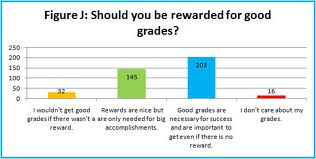
Is There Anything Wrong With Rewarding Children for Good Grades?

December 25, 2011

I love the way this commonly asked question is answered.

Q:  Should we be rewarding our six year-old for getting high marks on her weekly spelling test? I know better. But I can’t seem to get her to believe in self-satisfaction for doing a good job. Help.

K.B.


A: I have seen this all too often in my career in education. Parents are very well intentioned and want to support their children’s learning. Rewards or bribes to perform well at school or elsewhere may work temporarily, but there is a big price to pay.

It teaches the child that learning is not worthwhile in its own right. These external rewards take away the joy of learning for learning’s sake, stifling curiosity, inquiry and creativity.

It teaches the child that a parent’s love is conditional. “If my parents want to pay me for doing well at school, what if I do not do well – will they love me then?”

In my experience, reflecting the child’s day at school back on them is a great way to go. When they tell you they got 100 per cent on a spelling test, you might say, “I bet that made you feel good!”

Similarly, when they achieve an unfortunate result, you might ask, “How did that make you feel?” This could provoke a supportive and warm conversation with your child about being frustrated that she wasn’t able to learn the words and that next time, she might do things differently.

Above all, the child needs to know you are there for them regardless of marks, behaviour, talent and ability. It is only when love is unconditional that children feel supported and can grow and mature.

Children have a very precious internal motivation to be good, and external rewards show the child that we do not trust their desire to be good or do the right thing. In short, the end result will be that the child will lose that natural internal motivation and external rewards will assume the default position. You will teach your child that nothing is worth doing unless they get something for it. I am certain this is not the lesson you want to teach.

Jean Bigelow Parent Educator/ School Principal

Time To Shut Down Teacher Bullying Websites

December 22, 2011


I commend head teacher Andre Sohatski for not only standing up for himself and his reputation, but also for representing the downtrodden teachers and students victimised by scandalous bullying websites proliferating across the web.

Web sites like RateMyTeacher.com allow students to post salacious accusations and damaging insults. These sites, together with sites that allow students to slander other students such as Little Gossip  have been allowed to remain unhindered under the guise of freedom of speech.

Until now …

Andre Sohatski, headteacher of Priory School in Dorking, Surrey, took action after being told by his pupils that children were being targeted on the website Little Gossip with homophobic, racist and sexist abuse.

The site contains abusive and explicit messages written by schoolchildren that can be rated “true” or “false” by their peers. It allows them to name their “targets” but the user remains anonymous.

Mr Sohatski called for the site to be shut down and said it could cause “really big problems,” for children.

“I think it’s irresponsible. It is a form of internet bullying. Any kind of comment posted anonymously about somebody is basically unfair and sometimes cruel,” he said.

Police said they would investigate the US-based website, which has previously faced heavy criticism, and said the consequences of online bullying were “worrying”.

I am a big believer in the freedom of speech. I can accept that people have the right to vent about any professional within certain boundaries. When a student slanders another student or a teacher with homophobic, racist, sexist or defamatory insults it is fair to say those boundaries have been well and truly crossed.

Parents’ Stress Damaging the Development of Their Children

December 22, 2011

Author David Code goes beyond warning parents about the effect their stress has on the lives of his children. He even blames their stress for “damaging their development and altering their DNA, because of crushing worry and anxiety.”

“Stress is highly contagious,” says David Code, an Episcopal minister and author of Kids Pick Up on Everything: How Parental Stress is Toxic to Kids. “Parental stress can weaken the development of a child’s brain or immune system, increasing the risk of allergies, obesity, or mental disorders.”

So calm down and socialize more. Resolve to start the new year with peace on hearth – it’s not only good for your health but your children’s physical and mental health too.

If you really want to make your kids happier, forgo the Xbox or iPad and invite friends over. The greatest gift you can give your children is your own, healthy relationships with other adults, Code says.

“That Xbox or iPad will placate the kids for a while, but soon they’ll demand even more. Far better to take the kids over to your friend’s house – you and your friend can relax with a drink while both sets of kids entertain each other. That means better social skills for your children, and lower stress levels for you as you ‘scratch that primal itch’ to bond, which reduces your stress,” he adds.

According to Code, research shows children can catch their parents’ stress just like they catch a virus. “Children are like little sponges, soaking up the free-floating stress in today’s anxious households until their developing nervous systems hit overload, at which point they act out, or develop symptoms of mental or physical illness.”

The mind-body connection strongly factors into almost every child’s behaviour –the parent’s mind affects their child’s body “through a kind of emotional pipeline,” Code says. The more stress a kid picks up from the parent, the more ill health – even if the parent is unaware of his or her own anxiety.

Personally I think Code goes over the top with the prognostications of DNA damage but I agree with his main contention. There is no doubt that stress from parents has effects on their offspring.

Code offers the following advice:

Steps to raise healthier kids, according to author David Code:

• Set up a no-screens-after-5 p.m. night: Turn off all screens, big and small and socialize.

• Socialize more with other parents while your kids play together. “If I could wave my magic wand and reduce the stress of today’s parents, I would give them a glass of wine, a friend, and an Italian village square to go socialize in every evening.”

• Bring on the potluck: Once a week dine with friends. “Since you have to make dinner anyway, a weekly potluck doesn’t suck that much time away from your current schedule.”

• Exercise with your spouse. Build muscle and your marriage too. “It’s easier to discuss tough topics and get emotional when you’re side by side on the treadmill or jogging down the street. It’s easier to be emotional in motion.” Even a short evening stroll together is great marital maintenance.

• Take a vacation every three months for a complete change of pace and a healthier family.

• Practice the daily vacation – lunch hour. “Instead of building stress over eight hours, you’ll start over again after lunch and not get so wound up by quitting time.”

• Establish the one-minute instant intimacy builder with your spouse. “When you both get home from work, while changing or preparing dinner, share your highlight and ‘lowlight’ of the day. Try to focus on one moment in time,” he says, adding that sharing one specific lowlight each day builds bonds because we won’t feel so alone in our suffering.

Research Suggests That There’s no Such Thing as a Good Divorce

December 19, 2011

I feel very sorry for children of divorced parents who find themelves the center of a tug-of-war act between duelling parents on Christmas Day.

At Christmas time, like no other, family relationships are put to the test.

This time of year seems to bring not only a rise in domestic violence, but family tension and relationship breakdown.

So much for the season of peace and goodwill.

Fights over who will get the kids on Christmas Day are common, and children are often forced to spend Christmas traipsing across town to keep both parents happy.

Many argue that since divorce is so rampant, children are able to adapt with the change extremely well. This is simply not the case.

Research suggests that there’s no such thing as a good divorce: All you can do is have a breakup that is not as bad as it might be.

A US study of 994 families identified three types of post-divorce parents: Those who were co-operatively continuing to parent together, those who were parallel parenting with little communication, and those who were effectively single parents.

Children from the first group – the good divorce group – had the smallest number of behavioural problems and the closest ties to their fathers.

However, the differences were only minor, and the children in this group didn’t score any better than others on 10 additional measures, such as self-esteem, school grades, early sexual activity and closeness to their mothers.


Five Signs it is the End of the School Year

December 16, 2011

Teachers find the last weeks of a school year absolutely exhausting. Many of us crawl towards the finishing line amazed that the deadlines have been reached and the seemingly insurmountable boxes have somehow been ticked.

Now that I am both a teacher and a parent of a school aged child, I can see that the end of year poses challenges for parents too.

That’s why I loved this piece by Nancy Davis Kho, whose article about the five telltale signs that the end of the school year has been reached (from a parents perspective) is very insightful and humorous:

1.) You’re Broke. Between the gift for the classroom teacher, the teacher’s aides, the piano teacher, the math tutor, the babysitter graduating high school who wasn’t much for cleanup but at least she could walk home, and the niece graduating college after the five year plan, you are clean out of $20 dollar bills. (Apologies if you are more of $100 dollar bill gifter, I didn’t mean to insult you. Can I please be your babysitter?) It gets so bad that you could almost use a second job. But you can’t do that, because…


2.) Your Productive Workday Has Been Shot to Hell. You have to be up at school to see the end-of-year talent show, of course, and your child would never forgive you for missing out on the end-of-year class picnic. Then the school districts get in on the act, fulfilling some budgetary or union contract obligation by cutting a bunch of June school days in half. Your to-do list becomes an archive, saved in its non-checked-off state for future generations to admire. It’s enough to make you run for comfort to the cookie jar which is full because…

3.) You Have Baker’s Elbow. Brownies for the ballet recital, pound cake for the Little League team party, chocolate chip cookies for the celebration of a completed Social Studies group project; you’re churning them out like your middle name is Poppin’ Fresh. You would like to buy stock in King Arthur Flour and Betty Crocker, but can’t get out of the kitchen long enough to log onto E*trade. And if you’re going anywhere past the stove it’s going to be to the laundry room because….

4.) The Lunch Bags Look Like They’ve Been Beaten. Bruised, torn, bearing tiny flecks of unidentifiable foreign substances that may or may not be mold, the insulated lunchboxes that started off the year in bright primary colors have been reduced, through constant improvised use as seats, soccer balls, and weapons, to an indistinguishable grayish brown.  You weigh running them through the washer one last time. But would it be the cycle that finally separates the strap from the rest of the bag? That would probably make you cry, because…

5.) You Burst Out Crying At Inopportune Times. It’s the inevitable result of being handed concrete evidence, in the form of a graduation certificate or a class council election, that Your Children Are Growing Up. The ultimate example was when the Kindergarten teacher rewrote Eric Carle’s “A Very Hungry Caterpillar” to describe all the knowledge that our children had hungrily gobbled up throughout the year. Then she had them hold up wobbly, colorful pictures they’d drawn of butterflies and said, “And now you are beautiful butterflies who will fly off to First Grade!” Twenty-three moms, 15 dads, and one kindergarten teacher hit the deck sobbing, delaying the children’s American Sign Language performance of “Somewhere Over the Rainbow” until we’d (temporarily) recovered our composure.

Is Bribing a Worthwhile Teaching Method?

December 15, 2011

I am not a fan of bribing. Even though such a practice usually has some positive effects, I think the students can see right through it. It paints the teacher as desperate and devalues skills that should be developed without the incentive offered.

In 1995, the classroom drama Dangerous Minds became a box-office hit. It depicted a former marine played by Michelle Pfeiffer struggling to control a class full of stereotypical lower class misfits. Her plan, neither ingenious nor responsible was to bribe them. Some may have left the cinema hailing her as a genius. I thought it was lazy scriptwriting and left us with no realistic answers for our own classroom management issues.

A recent study seems to come to a different conclusion on the bribing issue:

If your preschoolers turn up their noses at carrots or celery, a small reward like a sticker for taking even a taste may help get them to eat previously shunned foods, a UK study said.

Though it might seem obvious that a reward could tempt young children to eat their vegetables, the idea is actually controversial, researchers wrote in the American Journal of Clinical Nutrition.

That’s because some studies have shown that rewards can backfire and cause children to lose interest in foods they already liked, said Jane Wardle, a researcher at University College London who worked on the study.

Verbal praise, such as “Brilliant! You’re a great vegetable taster,” did not work as well.

“We would recommend that parents consider using small non-food rewards, given daily for tasting tiny pieces of the food — smaller than half a little finger nail,” Wardle said in an email.

The study found that when parents gave their three- and four-year-olds a sticker each time they took a “tiny taste” of a disliked vegetable, it gradually changed the children’s attitudes.

Over a couple of weeks, children rewarded this way were giving higher ratings to vegetables, with the foods moving up the scale from between 1 and 2 — somewhere between “yucky” and “just okay” — to between 2 and 3, or “just okay” and “yummy.”

The children were also willing to eat more of the vegetables — either carrots, celery, cucumber, red pepper, cabbage or sugar snap peas — in laboratory taste tests, the study said.

Surely such bribes can’t work in the long-term. Stickers become boring, star charts get tired, lollies are hardly responsible rewards and prizes are expensive.

If the only way to get a child to do what they should be doing anyway is to bribe them, have you really done your job properly?

Experts Call For Homework to Be Abolished

December 12, 2011

I was once strongly opposed to homework, but I have since softened my approach. It’s not that I believe homework is a good thing, it’s just that I have observed what children do withn the extra time and I can’t say it’s productive. Quite apart from playing in the backyard or walking the dog, kids are more likely to spend their waking hours on the computer or watching television.

Whilst experts believe abolishing homework will free up time for healthy activities, the truth is that it will only result in more time in front of a screen.

CHILDREN are spending too much time “sitting around”, looking at screens and doing homework, when they should be outside playing.

New Deakin University research suggests parents should encourage children to play the old-fashioned way outside with mates rather than nagging them to complete homework or allowing them to watch TV or use computers, the Geelong Advertiser reports.

Associate head of research at Deakin’s School of Exercise and Nutrition Sciences, Professor Jo Salmon, yesterday said pushing kids outdoors to play would help improve the health and happiness of children.

Parents needed to set rules around the amount of screen time children were allowed every day, and enforce a limit of two hours in total, Professor Salmon said.

They should also try not to place too much academic pressure on their kids and recognise that playing outside and being active was probably better for children than sitting inside practising spelling or sums.

While previous generations of children would come home from school, have a quick snack and then head straight outside to play until dinner time, most children now came home from school and propped on the couch, their bed or at a desk, she said.

Recently named one Australia’s top child health researchers by the National Health and Medical Research Council, Professor Salmon said while she was an optimist by nature, she was concerned for the future health of Australian children.

I was once an optimist too. I hoped that instead of homework, my students could help wash dishes or take on some other household duties. I hoped they could go to the library and borrow books. But that is not what happens in reality.

So I am now faced with a choice. Do I prescribe homework that serves as revision for skills taught during the week in class or do I just let them use the extra time for more television and video games?

Encouraging a Nation of Cheats

December 11, 2011

I am very much opposed to cheating in every form. Teachers are entrusted with the responsibility of imparting the lessons of integrity and honesty. It is absolutely vital that they are practising what they preach.

is right when she argues that the current narrow, test dominated view of education is bringing about dishonest behaviour. This further encourages students to continue the trend of dishonesty. This also prevents students from developing skills in persistence and motivation:

This week, the heads of the four main examination boards and officials from Ofqual, the exam regulator, are in for a testing time. They will be required to explain to MPs why some of their profession have indulged in behaviour that prompted Michael Gove, the education secretary, to call the examination system “discredited”.

The revelations of the past week have only reinforced a profound unease on the part of many that while we may be educating our children, are they actually learning anything useful (except, perhaps, that cheating definitely does not come cheap)? Useful, that is, not just for their future employment prospects, but also to equip them to become rounded human beings who desist from giving up the first time they taste failure or hit a hump on the bumpy road to maturity ?

As Mick Waters, a former director of the government’s exam regulator says: “We need to strip back to the bone and decide what education is for. There are children who learn paragraphs all day, every day, in year 11, just so they can write them one day in June.”

Sadly, stagnant teaching methods anchored in the 19th century are not in the dock this week. Instead, MPs want to learn more about examiners’ “tip offs” to teachers on which questions might or might not figure in exams; the perennial issue of dumbing down of standards and grade inflation and the extent to which the pressure of league tables on headmasters is causing them to bend the rules in ways that Mr Chips could never have envisioned.

Qualifications matter, but our neglect of other facets of learning makes us look moribund for a modern society. Better than obsessing about teaching to the test, why aren’t we probing what stokes motivation? Ask any teacher and he or she will tell you a dozen stories of bright pupils who can’t or won’t stick at it; stymied by their own lack of grit. Given that we have thousands of disengaged young people mouldering in school, why are we not more curious about the positive deviants? Those boys and girls, some with low IQs, and against all the odds, who power ahead of their brighter peers for the simple reason that they refuse to give up?

Why aren’t we telling teenagers, captive in the classroom, an alternative story? Why isn’t there a stronger challenge to a child’s belief that they have been labelled “thick” – by implication, at an early age by a well-intentioned graduate teacher, often from a distinctly different background? And to make them realise that judgment may be far from true and certainly shouldn’t mould a lifetime’s choices?

The rest of her article is well worth reading. She has nailed a major issue which our dysfunctional system has to take more seriously. After all, a system that revolves around a test can be exploited.

A system that revolves around quality education outcomes, engaging lessons, a focus on questions, inquiry and everyday, real life experiences can not be exploited so readily.


Students Should be Treated Like People Not Numbers

December 6, 2011

I just read a piece too good to cut into excerpts. It’s written by Sheila French and is about the way she has learnt to approach parent-teacher conferences. She discusses the need to put grades and data to a side and instead, concentrate on talking about the child.

Below is the entire article. It is absolutely worth reading:

In elementary school Parent-Teacher Conferences come and go every year. This year I tried something new with the parents of my third graders at De Laveaga Elementary School. Rather than discussing test scores, grades and assessments I told the families I would like to talk about their child as a PERSON.

There’s no doubt about it, instruction in the kindergarten through high school is data driven. Our students have ID numbers, are assessed at least three times a year, and all of their data is kept on line. Our students are ranked anywhere from far below basic, basic, proficient to advanced.

But how are they as people? 

Are they able to work well with others?

Do they have the skills to make friends and create lasting relationships that will be needed throughout life?

Or our these children little turning into little robots who have “apps” for everything from studying their times tables to practicing for the SAT’s? Do these children of today need to memorize anything when they can run to their laptop and “Google” something?

I say there’s way too much emphasis put on test scores and grades. Let us step back and take a closer look at what our goals are as educators and parents. I don’t think I stand alone when I say that we would like to educate and parent children who have work-ethics, life skills and are well-rounded.

If you go to talk to your child’s teacher, go prepared to talk about your WHOLE child.  Go with a list (just like you’d go to the doctor), ready to ask questions about your child’s social behavior inside the classroom as well as outside on the playground. 

Before your parent-teacher conference, I suggest that you take the time to sit down and talk to your children. Ask them about their favorite classes. Where do they struggle? Do they have friends? Who are they? What do they do at recess? Of course these questions are not limited to pre-conference discussions. They are good conversations to have with your children on an on-going basis.

The playground is just as important as the classroom.

Chances are, the teacher will be more than happy to share some insight about your child as a whole person, not just another test score. Parents, take this opportunity to learn about your child from someone who cares about your child’s social, emotional and education development. This will ensure that our students become GOOD people even in this crazy data-driven world.

Ms. French has echoed many of the points I have made on this blog (although she writes more eloquently). She is absolutely right to point out that the playground is as important as the classroom.

I hope you enjoy reading this as much as I have.

4 Million Children in the UK Don’t Own a Single Book

December 5, 2011

If we continue to sit there passively watching whilst reading and literature dies a slow death, we will be all the worse for it. To read that books are extinct from up to 4 million British homes is quite distressing.

Almost 4 million UK children do not own a book, research suggests.

The latest report by the National Literacy Trust discloses that one in three does not have a book of their own.

The number has increased from seven years ago, the last time the poll was conducted, when it stood at one in 10 youngsters, meaning the number of children without books has tripled.

The latest survey, which was based on a survey of 18,000 children aged between eight and 16, shows that boys are more likely to be without books than girls.

Why parents buy the latest phone for their young children before something they really do need like a library of books is something I’ll never understand.