Posts Tagged ‘Children’

The Importance of a Healthy Parent-Teacher Relationship

January 22, 2012

One of the most important skills of a successful teacher is the ability to harness positive interactions with parents. I believe that a teacher must consider themselves part of a team. After all, the parents and teacher form the three major stakeholders in a child’s education.

Such a notion is supported by expert Karen Campbell.

A GOOD parent-teacher relationship is important to every child’s learning journey and helps develop a memorable school experience.

That’s the opinion of Sunshine Coast education expert Karen Campbell.

And like any relationship, she says these need nurturing and constant attention to be of benefit to the child.

With the new school year only a week away, many parents may be meeting their child’s teacher for the first time.

“Parents have to realise that a teacher is such an important part of their child’s life,” Mrs Campbell, a tuition facilitator and former teacher, said.

“They need to introduce themselves to the teacher, and tell the teacher any special things about their child.

“Open communication is essential, so it’s important for parents to inform the teacher if there’s a problem at home such as a death, break-up or business failure.

“This allows teachers to develop an understanding and appreciate why a child may be behaving a certain way.”

Not all parents are easy to get along with and some employ methods that are not exactly to my liking, but I realise that a disconnect between myself and the childs’ parents is potentially destructive to the academic progress of the child.

It is important to work past any differences one may have and find common ground in the best interests of the child.

Tips for healthy parent-teacher relationships:

  • Re-introduce yourself to your child’s teacher by appointment
  • Inform your child’s teacher of any home-related problems
  • Volunteer to help with school activities
  • Make sure you adopt the same learning style at home as at school
  • Notify the teacher of any special talents or gifts your child may have
  • Open the lines of communication through casual conversations outside the classroom, for example, when dropping off your child or picking them up

The Role of Parents in Preventing Innovation in the Classroom

January 17, 2012

Whilst I believe that it’s the right of every parent to decide what is and isn’t appropriate at school, sometimes they go overboard. The parents that pulled their primary aged children from their school’s massage program (a program which gets children to massage each other) on the grounds that it was inappropriate, had every right to do so. What bothers me, is that by making the school’s program a big issue, they are in fact railroading future programs which may benefit their children.

As much as they may have disagreed with the outcome, the intention of the school was clearly commendable. They wanted to provide a more relaxed and harmonious environment for their students.

Parents are up in arms at a primary school where youngsters have been giving each other massages before lessons.

The ten-minute massage sessions were introduced at Sheffield’s Hartley Brook Primary School to help calm down pupils after lunch breaks.

School head Mrs Chris Hobson said the massage sessions have been a big success but some parents have withdrawn their children from the massage programme claiming it is ‘inappropriate’.

The Massage In Schools programme is designed to help pupils relax and concentrate after energetic lunchtime playtimes.

Parent Rachael Beer who has two children at the school said: ‘I just feel it is inappropriate for children touching each other. I do understand that children need calming down after lunch.

I just think there are better relaxation techniques out there that can help with that, such as yoga, that have the same benefits as peer massage that don’t involve them touching each other.

‘I think children like their own personal space. 

‘Many parents do feel the same way as me. If the head had consulted parents better, she would have a clear view of how parents feel about it.

‘Other parents are telling me they didn’t even know peer massage was being rolled out in school and they do feel uncomfortable with it.

‘I have opted my children out of it. They are then sat doing the actions to peer massage. I feel that those 20 minutes could be better spent doing something more academic.’

One of the big challenges educators of primary aged children have, is the ability to get their students to maintain concentration. It is very hard to keep young children engaged. Anxiety is also often prevalent, posing extra challenges on teachers to reduce the tension and keep the proceedings positive. An extra 20 minutes of academic studies is useless if the children are having trouble concentrating.

When parents make a school’s attempts at innovation difficult and take an idea born out of compassion and turn it into controversy, they discourage schools to want to do something new and different.

Innovation is the way forward in education. We all know our education system is flawed and it requires some fixing. That can only come about from thinking different and acting differently. When parents take a worthwhile idea and make it a media circus they are in effect rallying for the status quo.

Take a step back and observe the status quo. Is that what you really want?

Shy Students Should Be Allowed to Tweet Their Teacher in Class: Study

January 17, 2012

Last week I wrote a post on the challenges of teaching shy students. I gave an account of my struggles with one particularly shy student and the strategy I used to get him to talk. I have great empathy for the child that is too afraid to speak and understand the frustrations involved when teaching such a student.

However, I feel a bit uneasy about a recent study that promotes conversation via Twitter between shy student and their teacher.

The Courier-Mail reports new research from Southern Cross University has found strong benefits for the use of Twitter by students too embarrassed or uncomfortable to ask teachers questions in the time-honoured raised-hand method.

Southern Cross business lecturer Jeremy Novak, along with Central Queensland University’s Dr Michael Cowling, studied the use of Twitter among university students as a method for asking questions and gaining feedback without having to stand the stares and scrutiny of fellow students.

The positive feedback from students, particularly international students, has convinced the research team the use of Twitter technology could also be embraced by classrooms at high school and even primary school level.

In my opinion, shyness is not a genetic disease or impenetrable condition. To me, shyness is a result of a lack of self-esteem. Shy children act that way because they don’t feel valued. Instead, they feel judged, ostracised or labelled.

A teacher can do one of two things. They can either enable the shy student by using Twitter, or they can actually attempt to help that student find their feet and feel good about themselves.

“But who has the time for that? We have the curriculum to cover!”

This line sums up my frustrations with current educational thinking (as perpetuated through teacher training programs). In my opinion, it is every bit as important for a teacher to assist their students in matters of self-confidence as it is for them to teach them the curriculum. In fact, I would suggest that it is more important. Facts are learnt and forgotten. The average person on the street has long forgotten calculus and how many chemical elements make up the periodic table. What they wouldn’t have forgotten is how they were treated and how their experiences at school have changed them for the better or worse.

Why placate a shy person when you can change a shy person? Why play the game when you can show them that they have a voice and it’s special and unique and something to be proud of.

And besides, receiving Tweets in class is so unprofessional.What, am I supposed to stop my class so I can check my phone for a Tweet?

Trust me, as good a feeling as it is to teach children new skills or concepts, helping a child discover that they are important and that their thoughts and opinions matter is so much more rewarding.

The Practice of Sending Troubled Kids to the “Scream” Room

January 12, 2012

The “scream” room could be quite useful if used differently. At present, some schools are using “scream” rooms as a way to provide disobedient students with a place to vent their anger.

I have an alternate use for them.

I believe the “scream” room should instead be reserved for teachers who have no control over their class.

And for teachers who have outgrown this room and who are so devoid of answers that they are at their wit’s end, I suggest using a “panic room.”

In all seriousness, the problem that I have with a “timeout” area is that students are often sent there without a proper understanding of what they did wrong and without the skills to manage further impulses. It becomes a very temporary band-aid solution to an often far greater problem.

In this case, the problem is further compounded by a seeming lack of supervision. Children should never be sent out of the classroom unsupervised. That is just poor management.

Parents, many of whom have children at Farm Hill Elementary School in Middletown, Conn., are outraged about the way the school is dealing with misbehaving students.

Teachers and staff put the children, including those with special needs, in what parents call “scream rooms.”

“My 1st grader is there and is not learning because there are so many behavioral problems at that school,” Tricia Belin said.

One parent described the rooms as, “scream closets, where kids bang their heads off of concrete walls.”

“The building custodians had to go in and clean blood off the walls and clean urination off the floors,” the parent said.

At a Board of Education meeting on Tuesday night, many parents questioned the use of the rooms that the district calls “timeout rooms.”

“I learned last year from my daughter that she was put in a closet that had holes in the walls and no windows and (was) locked in there,” one mother said.

My advise to the students currently sent to a “scream room”, is to please evacuate and give us poor teachers a chance to scream and  head bang.

Healthy Eating May Help ADHD Kids: Don’t Tell the Doctors

January 10, 2012

I find the ADHD trends highly frustrating. I am not a doctor or medical professional of any kind so it’s not for me to speculate whether or not ADHD exists. What bothers me, is the rapid increases in children being diagnosed (and more importantly, medicated) with the syndrome. To me Ritalin and other types of ADHD medication must be the last resort. It’s side-effects are often quite pronounced and sometimes quite sad to experience. Kids with larger than life personalities and great bursts of creativity can often be left following their own shadows (I have personally witnessed this!)

When I first entered into the profession I was given medical forms to fill out about a particular student. A previous teacher must have recommended that this student be assessed due to the belief that she may have some ADHD symptoms. In my view she was just a child with poor self-esteem who lacked concentration. In my assessment of her I made it clear that I felt that beyond her concentration being poor there was no other reason to suspect that she may have ADHD.

It didn’t help. Unfortunately, within weeks of being presented with this patient, the doctor prescribed her with Ritalin. No suggestions of a change of diet, no therapy to examine if there is any cause for her low self-esteem and no evidence that she was sent to have her language skills tested. Just the “go to” method, the “one pill fits all” strategy – the blasted pill!

I am proud to say that this child is now off the medication. Her parents decided it was not something they wanted her to be on permanently so they eased her off it. Doctors would be shaking their heads right now and accusing the parents of being irresponsible. But the parents were right. She is now a happy, focussed, non-medicated young teenager.

Doctors can be far too quick to diagnose and prescribe. In my view, they do this out of self-interest. If they were more considerate they would seriously look at diet before prescribing Ritalin.

SIMPLY eating healthier may improve the behaviour of children with attention deficit hyperactivity disorder (ADHD) if therapy and medication fail, says a study published in the journal Pediatrics.

Nutritional interventions should therefore be considered an alternative or secondary approach to treating ADHD, not a first-line attack, said the review by doctors at Northwestern University Medical School in Chicago, published on Monday.

What they mean by that is first pop the pills and then consider your sugar intake. This is ridiculous. What is the big deal about investigating diet and other possible causes before, as a last resort, prescribing the medication?

Click on the link to read Who Needs Quality Teaching or Parenting When You Have Medications?

Click on the link to read Get Your Kids on Ritalin Before Their Grades Suffer

Click on the link to read It is Doctors Not Teachers Who Are Helping Children Get Good Grades

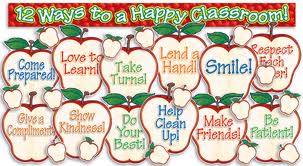
Six Tips For a Happy Classroom

January 6, 2012

These valuable tips come from Professor Dylan William, the inspiration behind the BBC2 series ‘The Classroom Experiment’.

* Stop students putting their hands up to ask questions – it’s the same ones doing it all the time. Instead introduce a random method of choosing which pupil answers the question, such as lollipop sticks, and thus engage the whole class.

* Use traffic-light cups in order to assess quickly and easily how much your students understand your lesson. If several desks are displaying a red cup, gather all those students around to help them at the same time.

* Mini-whiteboards, on which the whole class simultaneously writes down the answer to a question, are a quick way of gauging whether the class as a whole is getting your lesson. This method also satisfies the high-achievers who would normally stick their hands up.

* A short burst of physical exercise at the start of the school day will do wonders for students’ alertness and motivation. As any gym addict or jogger will tell you, it’s all about the chemicals released into the brain.

* Ditch the obsession with grades, so that pupils can concentrate instead on the comments that the teacher has written on written classwork.

* Allow students to assess the teachers’ teaching – they are the ones at the sharp end, after all. Letting pupils have a say is empowering and, if handled constructively, is highly enlightening.

I particularly like tip 5. We have become far too obsessed with grades. Comments from the teacher are a much better way of helping children achieve.

What ideas have you put into place that have improved the atmosphere of your classroom?

It’s Time to Change the Culture of the Classroom

January 5, 2012

I have a confession to make. As driven as I am to help my students master the curriculum, there is something more important to me than their academic achievement. I would not be even remotely satisfied if my students were at or above the national standard in numeracy and literacy if they also happened to be bullying, bullied or struggling to cope with everyday life. Conversely, if my students were below national standards but were functioning well and getting along with each other, I would be far more satisfied.

That’s not to say that I don’t understand that a vital function of my job is to educate. I know that all too well. It’s just that I wont let that distract me from my mission in setting up a classroom that is caring, friendly and allows each child to express themselves in their own unique way.

I am sick and tired of reading about how bullying is causing kids as young as 7 to diet. It infuriates me that so little is done by teachers to protect young kids from this stigma and prevent bullies from causing distress. I know what I am claiming will be seen as a gross generalisation, but how many teachers are prepared to overlook a hurtful comment about weight or ignore the activity by the “in-crowd?”

No classroom should have an “in-crowd”. In-groups cannot exist without a readily defined “out-group”. It is a teacher’s job to foster a classroom environment without such divisions. It is more important than any equation or scientific experiment.

Cyber Bullying is Getting Out of Control

January 1, 2012

Cases of cyber bullying are exploding and schools need to wake up about it. Anti-bullying programs are not sufficient. Schools must treat bullying via internet chat and social media sites as every bit as important as bullying in the playground.

Experts say 10 per cent of all children now claim to have been cyber-bullied, The Daily Telegraph reported.

The enraged father of one teenage schoolgirl became so incensed by comments he believed a boy had made about his daughter on a social networking site that he accosted him in the street and threatened to “slit his throat”.

The man approached the Year 8 boy as he walked to a bus stop on the state’s mid-north coast and pushed and threatened him before boarding the bus, where he issued further death threats to the boy and other students.

In another disturbing case, a mum went to a school in western NSW and urged her Year 10 daughter to assault another girl after an exchange on a social networking site.

Both girls were suspended, police were called and the mum was banned from entering the school under the Inclosed Lands Act.

In the Tuggerah Lakes area on the NSW central coast, comments on a social networking site led to a Year 8 female being assaulted by another Year 8 girl.

One of the students, who sustained swelling to her forehead and complained of feeling dizzy and nauseous, was taken to hospital. The other girl injured her hand.

Schools increasingly are asking police to investigate serious student online bullying and have shored up cyber safety programs in a bid to head off more trouble.

The reason why parents get involved (and in some cases overly involved) is simple. When schools refuse to act citing that the offense was made outside of school grounds it limits any possible consequence for the bully. To prove my point, I refer you to the following pathetic quote from this very article.

The Department of Education said Facebook could not be accessed on school computers.

What it really means is cyber bullying happens at home and needs to be sorted out exclusively at home.

This is simply a lazy and unworkable approach. The only way to tackle bullying successfully is with full school involvement.

It must be so hard for the cyber bullying victims parents. Sometimes it must feel like there’s no one to turn to and nobody who will listen. This must stop!

Parents Duct Tape Their Kids and Post it on Facebook

December 31, 2011

Perhaps there should be a crime against stupidity. If there was, I would hope parents would be intelligent enough to think twice before injecting their disturbing sense of humours on the rest of us. To some, taping your children up and photographing them suspended on a weights machine is hilarious. To me it’s downright sick.

An Arizona couple remained in custody Saturday morning after police said they duct taped the wrists, ankles and mouths of their two children and posted the photos on Facebook.

The children in the photo were a 2-year-old boy and a 10-month old girl, according to a Coconino County Sheriff’s incident report. One showed the boy hanging upside down by his ankles from a weight machine.

A friend who saw the photos called the state child abuse hotline Wednesday, prompting the sheriff’s office to arrest the parents, Frankie Almuina, 20, and Kayla Almuina, 19.

The mother told investigators the photos were “all in fun” and that the children were unharmed and were smiling afterward.

She also showed the reporting officer, Sgt. Michael Curtis, several other photographs on her cell phone that showed the little girl similarly bound.

“They indicated they did this as a joke,” county Sheriff’s Commander Rex Gilliland told CNN affiliate KTVK. “But there was fear on the children’s faces in the pictures.”

“I don’t know how anybody can rationalize taping a child’s mouth and then binding their hands and feet,” he added.

Police would not release the photos, saying they were too disturbing.

In her Facebook page, Kayla Almuina describes herself as a “stay and home mommy and wife” and jokes she studied at “harvard :)! jk.”

She told investigators that the reason the girl was appeared to be crying in the cell phone photos was because she had received some shots that day.

Authorities placed the children in the custody of their grandparents.

The parents, charged with two counts of child abuse each, remain in jail with bond for each set around $25,000.

Last week, a 21-year-old Chicago man was charged with aggravated domestic battery after he posted a picture of his 22-month-old daughter bound with painter’s tape across her mouth, her wrists and ankles.

The caption on the Facebook photo read:

“This is wut happens wen my baby hits me back. ; ).”

No, this is what happens when collecting “likes” and “shares” becomes more important than being responsible parents!

Teaching Kids To Be Grateful

December 28, 2011

I have noticed that kids these days take things for granted on a far greater scale than when I was a child. It is much harder to please children and equally as hard to get a voluntary “Thank You.”

I imagine that Christmas is when this trend comes to the fore. As children are expecting gifts, there is a visible feeling of entitlement. The occasion mandates a good gift so what is there to be thankful for? If the gift isn’t up to their expectation, they feel that a public show of disappointment is appropriate because the gift bearer should had a better sense of occasion and made a better purchase.

What many young children may not be aware of is the stress involved with buying presents. Parents and family members go to great trouble and expense to buy quality gifts. All the child has to do is rip open the gift wrapping.

I like this piece by Stacey Schantz, about the importance of writing a thank you note:

I don’t know about you, but I’m still recovering from a fun-filled holiday. I have thoroughly enjoyed the look on my kid’s faces when they saw their presents Christmas morning, all the food, and most importantly, the quality family time.

But now that the presents are finished—and we’re putting our house back together—it’s important to me that my kids appreciate all the kindness and generosity that has been shown to them.

When I was growing up, my mother had a rule about presents: you couldn’t use the gift until you had properly said thank you. Many times, this meant a phone call to say thank you for the present. But as I got older, my mom instilled in me the importance of a thank you note.

I have been trying to instill that same gratitude for gifts in my children. We usually make a phone call or draw a picture, but now my 5-year-old is learning how to properly write a thank you note. In fact, I know the significance is getting through, because after receipt of one gift, my son whispered to me that he needed to write a thank you note because that was exactly what he had been hoping for—my heart melted.

This week, I’m determined to have my boys write notes to their grandparents, family and even Santa, to thank them for the wonderful gifts they received. We’re even going to include some drawings to sweeten the package.

Here are some tips to help your kids write thank you notes:

  1. Babies and young toddlers: Take a piece of construction paper and using finger paints, dip your child’s hand in the paint. Then make hand prints on the paper. Then you can write a thank you for the gift on the side. Trust me when I tell you that grandparents love this!
  2. Older toddlers: Have them color a picture, and then take a marker and then write in the thank you.
  3. Preschoolers: Take a piece of handwriting paper, have them draw a picture on the top half and then on the bottom half, pre-write the letter for your child using dotted-line letters that your child can trace and then sign their name.
  4. Elementary school: Give your child a head start by making them a template to follow. Sometimes the hardest part of a thank you note is knowing what to write. Elementary school kids can write the letters, but will feel less intimidated if you help them with the basic framework.  
  5. Middle/high school: Give your child a deadline. Tell them they have to have the notes completed by a certain date.

Believe it or not, your child will actually appreciate the present more because he or she took the time to do this. I know I always appreciate when people take the time to say thank you to me as well.