Posts Tagged ‘Bullying’

The Disappointing Response to the Schoolgirl Fight Saga

June 22, 2011

Yesterday, Australians were horrified when footage surfaced of a fight between Melbourne schoolgirls.  The clip was a reminder at just how ugly bullying can be, from the violent actions of the perpetrators to the feeble and gutless innaction of the bystanders.

To watch the clip please follow this link.

To add salt to the wounds, the response by professionals, ministers and educators have been extremely disappointing.  Take this uninspiring comment from State Education Minister, Martin Dixon:

He said the department also has a zero-tolerance approach to bullying.

All schools are required to have anti-bullying and cyber bullying policies in place that students are made aware of and expected to adhere to.

This extends to appropriate mobile phone use, he said.

Government ministers often coin the expression “zero-tolerance” because it sounds good.  But what does it really mean?  I looked up the department’s so-called “zero tolerance” approach on their website.  This is what it said:

All Victorian government schools are required to include anti-bullying strategies in their Student Engagement Policy (or their Student Code of Conduct).

Schools have a duty of care to take reasonable measures to prevent foreseeable risks of injury to their students.

Does that sound like “zero-tolerance” to you?

And the standard line of schools requiring anti-bullying policies is predictable, but ultimately, it’s just pure spin.  An anti-bullying policy, as I’ve argued here countless times, is just a piece of paper designed to ward off lawsuits.  It’s to show that schools have a plan.  The plan is usually quite vague, so as to avoid instances where they might be caught out not following their plan.  It is also useless in cases where teachers and principals are unaware that bullying is taking place.  Recent incidents have shown how blind schools have been to the bullying that pervades within its walls.

And if that’s not bad enough, psychologists and the media have decided to blame Facebook for this incident. But Facebook doesn’t pull a girls hair or drag them on the ground.  Bullies create bullying behaviours, not social media.  The medium is not the real issue here.  The real issue is that bullying exists, it is absolutely unnaceptable and must be seriously dealt with.  Not by programs or policies, but by a change of mindset and culture.

The very worst response we could have garnered from this awful exhibition of bullying is, “Oh, that’s just because of Facebook.”, or “That’s as a result of an ineffective anti-bullying policy.”

How many more incidents do we need to watch before we dispense with the spin and blame game and start to see this for what it is – a complex and delicate problem that requires much more attention.

 

Sickening Schoolgirl Fight Caught on Video

June 22, 2011


A terrible fight which erupted between two schoolgirls was caught on camera.  The video headlined tonight’s Channel 9 news broadcast and shows gutless bystanders just watching passively.

To watch this video follow this link.

Unfortunately we are in the age of simplistic answers to major problems.  In this case, it is not a culture of bullying that is blamed, but instead, Facebook:

BULLYING on Facebook has been blamed for a violent confrontation between two Melbourne schoolgirls caught on film by classmates unwilling to intervene.

A 14-year-old, who has remained anonymous, has told Channel 9 she was too afraid to go to school after repeated attacks by a 16-year-old girl from another school.

In the footage, recorded in February, the victim can be seen being dragged by her hair while she refuses to fight. She is then kicked in the head.

Students can be seen doing nothing to help her.

The older girl can be heard taunting her younger victim. When the victim goes to ground, the older girl says: “Just get up.”

The victim was dazed and coughing up blood.

The girl and her mother spoke out after five similar incidents in six months. The girl was terrified and unwilling to go to school or leave her family home in southeast Melbourne.

“When I leave school, if my bus isn’t there then I get petrified because my school is 30 seconds away from the station and she’s always there,” the girl said.

But she isn’t willing to give up hope that life will return to normal.

“Look, there’s always someone out there that loves you – you don’t have to feel like it’s just you – that’s how I felt for a long, long, long time,” she said.

The online jibes began in January, when it is alleged the bully posted insults on her Facebook page.

It escalated to the point where the girl claims bottles were thrown at her and threats were made towards her family.

The police became involved on Monday, but the mother of the alleged bully said there was more to the story. She blamed Facebook culture for an outbreak in bullying.

State Education Minister Martin Dixon said the department would be told to act once the police finished its inquiry.

“I was deeply appalled. … The type of behaviour shown should in no way be tolerated,” he said.

He said the department also has a zero-tolerance approach to bullying.

All schools are required to have anti-bullying and cyber bullying policies in place that students are made aware of and expected to adhere to.

This extends to appropriate mobile phone use, he said.

Facebook doesn’t create bullying incidents, bullies create bullying incidents.  This footage is horrible and the very worst conclusion we can reach is to shift the blame from bullies and passive bystanders to Facebook.  It’s almost as if people expect that if you take Facebook away bullies will stop bullying and start becoming friendly.  Hmmm …

Too Many Struggling Students Lack Support

June 20, 2011

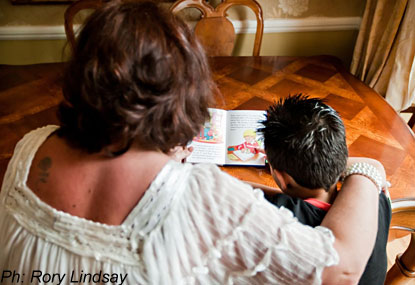
I read a disturbing article about a young boy who struggles with dyslexia, and the trauma his mother has gone through as his school makes little to no effort to assist him.  It is a difficult article for a teacher to read, but a very important one.  There are too many students that fall between the cracks.  Too many that don’t get the attention and support that they so desperately need.  As teachers, we must fight for the social, emotional and academic wellbeing of all our students, whilst ensuring that they are all, without exception, getting the care and attention they need.

Below is an excerpt of the article.  I truly recommend that you read the whole story,

David is an artistically gifted boy with a photographic memory. The 10-year-old’s dining-room table is full of intricately designed Lego battleships, his art displays such originality that his teacher calls him “the next Picasso”, and he has an extraordinary ability to recall facts from the History Channel documentaries he watches on TV.

“The other day,” his 41-year-old mother Margaret recalled, “we were driving along and he said, ‘mummy, you were born in the year the first man landed on the moon’.”

But there is one big problem with David that overshadows his life. He cannot read. He has been assessed as “severely dyslexic” and “having the reading age of a child aged four years and four months”. His schooling has been a disaster and according to educational psychologist reports seen by the Standard, he has progressed “just one month in five years”.

You might assume that David attends a failing, inner-city school, but you would be wrong. His south London state primary is rated “good” by Ofsted, attended almost exclusively by white British-born pupils, and is located in a street of £3million houses. He is also well behaved.

Yet David, his mother said, has been “catastrophically let down by everyone: by his teachers, by the school and by the council”, all of whom failed to give him the specialised help he needs.

Margaret said: “At school the other kids call him ‘odd’ and ‘weirdo’ and he often comes home crying. He is still reading flashcards and has not progressed beyond words like ‘cat’ and ‘dog’. He has no real friends – how can he? He doesn’t get their jokes or their games. To the other kids, he is a misfit who doesn’t understand anything that’s going on because he can’t read.”

“My son was nine and he still couldn’t read a word,” said Margaret. “What were they waiting for? Why didn’t they do something?” 

Finally the school arranged for David to have some specialist teaching – three hours a week at a nearby literacy centre at a cost to the school of £1,000 a term – as well as 15 hours a week one-on-one with the teacher assistant. For the first time he made a glimmer of progress, improving by “one month in a year”. Margaret says the teacher assistant and the literacy centre are not experts in teaching severely dyslexic children.

There is a growing tendency to allow students to pass the year, regardless of their level of skill or maturity.  The reason for this is quite sensible.  Holding a child back can have strong emotional repercussions.  But because such a system exists, not enough questions are asked of students who are languishing.

I am not suggesting for a second that young David should have been kept down.  I am simply suggesting that since teachers no longer have to explain why a child is ready to be promoted, there is less incentive to put the time and energy into children like David.

It is time that we looked into the issue of students being promoted without the basic skills, and ensure that teachers are made accountable for the progress of their students.  David was allowed to fall into the gaps and starved of the support he needed because there isn’t enough pressure on teachers to reach benchmarks.

The story of David breaks my heart because he is a victim to poor teaching, an inept education system and a misnomer that dyslexia renders one academically incapable.


Tackling Bullying Shouldn’t Lead to Stupidity

June 14, 2011

The purpose of clamping down on bullying is to allow all students the right to feel safe and secure in their school environment.  But steps taken to negate bullying shouldn’t need to be radical or expensive.  For example, the rule that students should not socialise in groups larger than 3 may be well-intentioned, but in reality it reinforces what a sad and sorry place a badly run school can be.

That’s why I am saddened to hear of the latest over the top anti-bullying measure – Unisex toilets!

Tasmania’s Education Department is calling for calm over unisex toilets in some new primary schools.

The individual, self-contained toilets have been installed at two Burnie schools in efforts to reduce bullying in toilet blocks.

Parents have raised concerns about the shared toilets, and say they weren’t consulted.

It baffles me that this idea has received so much attention.  The idea may make the toilets a less attractive meeting place for bullies, but it won’t make bullying less attractive.  Tackling bullying isn’t about toilets it’s about the culture of the school.  Instead of designing toilet blocks to tackle bullying, how about keeping the message simple and clear?

1.  Our school does not tolerate bullying of any kind.

2.  Consequences will be metered out to those found bullying as well as any passive bystanders who could have alerted a teacher or diffused the situation.

3.  We will fight for the rights of all our students, and do our best to ensure that our children leave school with their self-esteems’ elevated rather than diminished.

Is that so hard?

Newsflash: Bullying Was Around Before Facebook

June 5, 2011

I’ve maintained frequently on this blog that cyber bullying is a major concern.  The rise of social networking sites like Facebook has meant that bullying is more rampant and invasive now than it’s ever been. But let’s not forget that cyber bullying is a manifestation of conventional bullying – and that cannot be blamed on Facebook.

That’s why I find then following article troubling:

CHILDREN as young as eight are being treated for anxiety problems triggered by social-networking sites.

Psychologists say modern technology is producing a growing number of children needing therapy to deal with distress arising from posts on Facebook and other sites.

Darryl Cross, a clinical psychologist from Crossways Consulting, said anxiety caused by technology was a growing concern.

“Modern-day technologies and social-networking sites are contributing significantly to child and adolescent anxiety,” he said.

“It is an international phenomenon.”

Although anxiety was an established disorder, more modern triggers were lead to more distressed teenagers, Dr Cross said.

“But also, it’s the ability to be in contact 24/7.”

“In previous generations, you had the telephone and if you were lucky, mum and dad let you make a call after you got home from school. But now, primary school children, not to mention adolescents, have mobiles, which means they are constantly in touch via text messages and Facebook.”

Dr Cross said children used networking sites to determine their identity and form a view of what society thought of them.

Clinical psychologist at The Children’s Psychology Clinic, Dr Elizabeth Seeley-Wait, said she was seeing kids suffering anxiety about “being out of touch or out of the loop” if they had their mobile phone taken away.

Adults are also falling victim to insecurities.

Equilibrium Psychology’s Gemma Cribb said Facebook came up in couples’ therapy. “Someone will check their partner’s Facebook and questions will come up such as ‘Where did you meet this friend?’ ” she said.

Whilst I am very weary of children having a Facebook page, especially under the age of 13, I think it’s important to note that the bullying itself is more important than the medium.  Whilst mediums change, what doesn’t seem to change are the bullies.

What is being done about it?

Sure school’s will give you their standard assortment of “P” words, like ‘policies’, ‘programs’ and ‘procedures’, to reassure you that they are taking decisive action, but these provisions are just there to avoid lawsuits.  The effect of policies and programs are minimal at best, and if there really was stringent consequences handed out, would there be such a huge problem?

Here’s some “P” words of my own – we need a more solid partnership between Principals, Parents and Practitioners.  We need schools to be as concerned about their culture and as passionate about the safety of their students as they are about their numbers, finances and academic reputation.  We need parents to be aware of how their children treat others and raise them to respect others rather than undermine, bully or belittle them.  And we need teachers to continue to fight for their students.

We have a choice, we can blame it all on the juggernaut that is Facebook, or we can fight bullying at its source whilst standing up for the rights of those who are victimised and powerless.

Facebook is a Haven for Bullies

May 27, 2011

When you put the responsibility of having a Facebook page in the hands of young children, you will find that most will use it in the right way.  Unfortunately, it’s those that don’t who spoil it for the rest of them.

MELBOURNE schools and police are battling to remove a Facebook page that allows teenagers to post vile gossip about their peers.

Teachers feel powerless to stop the site, which has resurfaced in various forms over the past month and left students at schools in Ivanhoe and Heidelberg needing counselling.

Parents have been shocked by postings on the page, which include allegations of sex between teachers and students, girls who trade sex for drugs and boys who have been caught wearing their mothers’ clothing.

Most parents were unaware their children had been vilified until notified by their school.

The ”Ivanhoe Goss” page is filled with comments sent by members to the group’s creator, who reposts them anonymously. One page seen by The Age had more than 2300 members.

Schools including Ivanhoe Grammar School, Ivanhoe Girls Grammar School and Marcellin College are implicated in the gossip, but it is believed students from other parts of Melbourne are also members.

And similar Facebook pages have been set up for students in Essendon, Dandenong, Glenferrie and Caulfield.

Ivanhoe Grammar principal Rod Fraser said public and private schools in the region had banded together when the site was discovered on April 13 to raise the alarm with parents and students. The site is believed to have been created as a public page on April 10, but was re-created as a private page about a week later after schools warned students about being involved in cyber-bullying.

Mr Fraser said police and Facebook had been contacted about the page and were investigating those responsible. Three students and their families had been given support after gossip was posted about them on the page, and the school had developed a website to provide information on cyber safety.

”This great thing that we have, technology, can also be insidious,” he said.

Ivanhoe Girls Grammar School principal Heather Schnagl said ”less than five” students had been disciplined for being involved on the site. But no student had been suspended or expelled.

Two students had been counselled after being bullied.

”We deeply regret the poor judgment shown by any student who visits or posts a comment on a site like that one,” Dr Schnagl said.

”One of the biggest challenges … is many parents don’t understand the digital landscape today and … they trust their children rather than maintaining the role of the parent.

”We want to empower our parents to work with us to help students … They are shocked when they are shown what their daughter has posted.”

And some want to alter the age requirement  and allow kids less than 13 to get a Facebook page?

Tips For Dealing With Cyber Bullies

May 24, 2011

Cyberbullying has never been more prevalent.  It is extremely important that parents, teachers and children are well versed with the symptoms and responses to cyberbullying:

Once relegated to schoolyard fist fights or cafeteria name-calling, bullying has taken on a new form in the digital age — it’s as simple as a hitting a few keyboard strokes or sending touch-screen texts.

But cyberbullying can have far more negative consequences than the schoolyard variety because it can be done anywhere and the damage can be widespread, said Merve Lapus, education program manager for Common Sense Media. The nonprofit is dedicated to providing information to families and schools for dealing with media and technology.

“On the schoolyard, when you’re being bullied to your face, you can leave and you can go home and be away from it,” he told a crowd of parents at Amador Valley High School on Thursday night. “When you have it on your mobile phone or online, it’s there all the time.”

The informational session was hosted by Rep. Jerry McNerney, D-Pleasanton, the Pleasanton school district and the Pleasanton PTA Council.

McNerney, who said he was hoping to provide parents with tools and techniques as well as to learn more himself, has fielded concerns from constituents about the subject.

“There certainly has been a lot of interest,” he said.

Many parents have also requested help from their parent-teacher associations about how to deal with cyberbullying and ensure their kids are safe online, said Jodie Vashistha.

“The kids know a lot more about this than we do,” she said.

“There’s a need for more parent (education).”

Cyberbullying occurs when an offender sends or posts harmful materials or engages in other forms of social cruelty by using the Internet or other technology, Lapus said .

He said cyberbullies often feel some anonymity because the person they are harassing is not in front of them. And others can easily make it more harmful by forwarding on messages.

“A lot of kids that are being bullied are being bullied by bystanders that don’t necessarily know what’s going on. They’re just jumping on the bandwagon,” he said.

The main thing parents can do is empower students to make better decisions and educate them on how to properly use sites like Facebook to make them “upstanders,” Lapus said.

In Pleasanton, the majority of cyberbullying cases occur between fifth through ninth grades, said Kevin Johnson, the district’s senior director of pupil services.

That comes as no surprise to parent Paul Faris, a dean at Fallon Middle School in Dublin, whose children attend Pleasanton schools.

“They have the ability to put the gas on, but they’re not able to apply the brake,” he said.

Like several of those present, Faris said responsibility ultimately lies with parents to ensure their children use technology appropriately.

School district staff members are currently addressing the issue by developing a social media policy that will be brought to the school board for adoption.

  • Give kids a code of conduct. Tell them if they wouldn’t say something to someone’s face, they shouldn’t text it, instant message it or post it.
  • Ask if they know someone who has been cyberbullied. Sometimes they will open up about other’s pain before admitting their own
  • Establish consequences for bullying behavior.
  • Monitor their media use.
  • Tell kids not to share passwords with friends.
  • Use privacy settings.
  • Remind them all private information can be made public.
  • Tell kids what to do if they’re harassed: Block bullies and inform parents or trusted adults. Save evidence in case it is needed for reporting.

Another Sickening Case of Bullying

May 20, 2011

No school should ever congratulate itself on any achievement until they have adequately tackled bullying.  I am sick of reading about horrific cases of bullying.  I hope those involved in the alleged incident below get a fair hearing.  But if they are found guilty of bullying, I advise the school to make an example out of them:

DALLAS – A 12-year-old special needs student in Dallas says he doesn’t want to finish the school year after he was allegedly wrapped in tape and beaten by a group of students.

The district is investigating the incident that apparently happened Monday at Bowde-Storey Middle School during Martin Mitchell’s science class. A substitute teacher was in the classroom.

“I went in the science room and people were in there acting crazy and stuff and throwing paper around and listening to stuff on the computer that they weren’t supposed to be listening to,” Mitchell said. “And the teacher, he was just sitting there watching them.”

With his mother and grandmother present, he described how he said four boys taped him up and beat him.

“They put me in a headlock and they had wrapped tape around my body and stuff where I couldn’t breathe at all,” he said. “They had hit me then I fell to the other side and they start kicking me and stuff. That’s when I start crying and one little girl she helped me get out of the tape.”

District officials said the students were allegedy involved in the incident will be disciplined according to the student code of conduct. The substitute teacher has been placed on the “do not call” list.

Police were at the school on Thursday interviewing students.

“I just didn’t realize what my child was going through at school everyday,” said Keneshia Robinson.

She said her son had complained about students taunting him because he has special learning needs.

“He was already getting beat up at school and I wish I had of listened and I wish them teachers had of listened,” Robinson said.

The boy said doesn’t want to go back to school.

“’Cause that school be out of control and stuff,” he said.

A video of the story is available by clicking on this link.

I hope the substitute teacher never teaches in the classroom again.  Additionally, I hope that girl who stripped away the tape and came to the boy’s aid gets commended for her actions.  I would love it if the media could giver her 15 minutes of fame.  She sounds like the perfect role model for young impressionable kids.


Cyberbullying Even More Prevalent Among Girls

May 18, 2011

A recent survey found that girls are especially affected by cyberbullying:

Tweens and teens are both flocking to social networking sites like Twitter and Facebook to stay connected with each other. While used correctly this can be a positive thing the sites are also being used as weapons to facilitate cyberbullying.

Norton Canada recently completed a study called The Norton Cyberbullying Survey asking Canadian parents about their children’s online experiences. A quarter of the parents said that their child had been involved in a cyberbullying incident. Of those children 66 percent of the parents said their child was a victim and 16 percent admitted that their child was the bully.
More shocking is that 32 percent of parents are unsure of their children’s online behaviours but 44 percent fear that their child’s online behaviour could involve coming in contact with an online predator.

While on the schoolyard the victims of bullies often are male when it comes to the cyberspace playground girls are the ones being bullied. Parents revealed that 86 percent of those bullied were their daughters compared to a rate of 55 percent when it came to their sons.

Computers are not the only tools being used as a weapon for cyberbullying. Cyberbullies turn to cell phones with middle schoolers using this tool more often.

Even though it’s not legal for children under the age of 13 to access social networking sites 43 percent of parents are comfortable when their children aged 8-12 have an account as long as the parents can supervise them. While almost half of parents claim they have an open dialogue with their children about their online behaviour 32 percent feel that they can’t control all the environments where their children have access to social networking. This access includes what their children are doing in school.

One wonders how parents can be comfortable with their underage children on Facebook considering these damning statistics.  Firstly, aiding your children in breaking a law is not a good example to set, and secondly, supervising your child’s internet and social media use is easier said than done.  Why does an 8-year old need a Facebook page anyway?

Should a Teacher Intervene When a Fight Erupts?

May 12, 2011

What is a teacher to do when a fight erupts in their classroom?  That is the question doing the rounds at the moment, thanks to the case of a Dallas teacher who responded to a fist fight in his classroom by doing absolutely nothing.

Video of a student punching another student in a local classroom has sparked a debate about student safety. More precisely, should teachers get involved to break up fights?

The Dallas Independent School District said it is still investigating a fight that apparently happened this past Thursday at Seagoville High School. The district believes YouTube video of the incident likely tells only part of the story.

The video shows 17-year-old Michael Milczanowksi getting punched over and over during geometry class. His teacher stands by watching as he appears to take several blows to the head.

While it may seem the teacher could have intervened, a teacher’s union president said that is not what teachers are told to do.

“In today’s society which is a violent society, you do not touch the student. That should be left up to the administration,” said Rena Honea of Alliance-AFT. “I believe that that is for the safety of number one the students, but for the individual teacher as well.”

The district said it has no policy on how teachers should handle student fights because every situation is different.

“The altercation on the video shot at Seagoville High School is clearly inappropriate. The district has zero tolerance for violence in the classroom and has responded accordingly,” DISD said in a statement.

DISD said the student who threw the punches in the video has faced disciplinary action and could face assault charges. But the district would not comment on if the teacher was disciplined because “it’s a personnel matter.”

The video of the fight can be viewed by following this link.

The teacher has been supported by both school and union based on the fact that teachers are not covered for injuries incurred from breaking up a fight.  Why not?  Why can’t a teacher in today’s age have insurance cover for injuries, both incidental and reckless, at the hands of students?

And just because he may have the right to refrain from breaking up a fight, how is it excusable for him to sit back and watch as his student is being punched by a classmate?  Why wasn’t the teacher instructing someone to call for help?  Where is the urgency?  Why doesn’t he react in any way?

What is the point of calling yourself a safe and secure environment for children if you are not compelled to actively and decisively do everything in your power to ensure that your students are safe?

It’s time for insurance companies to remove the stumbling block that deters teachers from breaking up fights.  It’s time for schools to improve their culture and hand out severe consequences for bullies and bullying behaviour.  And it’s time for teachers to do what they can to curb bullying and protect victims.