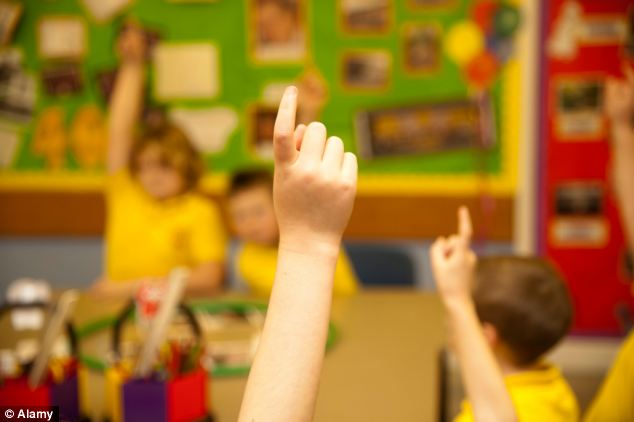
Some say that competition is good. It is character building, it prepares the child for the competitiveness of the real world and motivates the child. I am skeptical when it comes to competition in the classroom. My experience tells me that many teachers resort to grades and levels in elementary level when the content of what they are teaching isn’t particularly interesting and requires a bit of superficial stimulus. I also feel that whilst some thrive in such an environment, many more flounder due to the negative and pressure charged vibe:
Parents who have agonised over getting their children into the best school may have been wasting their time and effort.
Surrounding a child with brighter peers could actually damage his or her education, researchers warn.
They said constantly being outshone in the classroom by brainboxes could shatter their confidence so much that they end up doing worse academically.
So weaker students – both boys and girls – might be better off at a less competitive school as they have the psychological advantage of being a ‘bigger fish in a smaller pond’.
Being a competent pupil in such a setting can help ‘motivate’ children and lead to ‘confidence, resilience and perseverance’, according to the findings.
Bright children, however, tend to thrive as they move through their school careers because they are already filled with self-confidence.
This positive side of the phenomenon affects both sexes although it is far more pronounced in boys, according to the paper from the London School of Economics.
The gain was said to be similar to a child who is the best in their street at football and ‘becomes more confident and spends more time playing and so further improves’.
Dr Felix Weinhardt, a post-doctoral research fellow in economics, said: ‘Our findings go against the common assumption that having better peers is always the best for children. Previously we thought there were no negative effects.
‘But just making it into a better school and being at the bottom end of the ranks can have a negative effect.’
The research looked at almost 2.3million English pupils taking National Curriculum tests in maths, English and science.
Assessments for those aged 11 (Key Stage 2) were used as a benchmark of ability while those for 14-year-olds (Key Stage 3) were used to rate how well they did at secondary school.
The project also used a survey on confidence taken by 15,000 pupils.
The data revealed those near the top of their class in primary school continued to improve while those who struggled often did worse.
The upward trend was stronger for boys but the same for both genders in pupils from deprived backgrounds. The ratings for both boys and girls in the bottom quarter of performance at primary dropped at secondary level.
Click on the link to read Two High School Athletes Brawl During Race (Video)
Click on the link to read Tips for Teaching Your Children How to Lose
Click on the link to read Preparing Students for the Real World
Click on the link to read Is Competition in the Classroom a Good Thing?




 Topical Teaching