Posts Tagged ‘ADHD’

Evidence that Daydreaming Helps Children Perform Better in Tests

July 3, 2012

I love this research. I am a proud daydreamer – always has been, always will be.

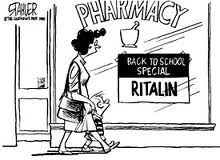
Daydreaming has the capacity to drive teachers insane. In my day it lead to bad reports and vicious lectures. Nowadays it often leads to recommendations for an ADHD diagnosis and the resultant daily dosages of Ritalin.

Well, throw those blasted tablets in the rubbish bin. Daydreaming is here to stay:

Daydreaming could help children concentrate – and even perform better in tests, researchers claim.

The children also feel less anxious and more motivated to perform, according to a review of studies on the value of time to reflect.

Education should focus more on giving children time to think, claim researchers at the University of Southern California.

Research indicates that when children are given the time and skills necessary for reflecting, they often become more motivated, less anxious, perform better on tests, and plan more effectively for the future.

It is also important in helping us make sense of the world at large … and contributes to moral thinking and well being.

Get Your Kids on Ritalin Before Their Grades Suffer

June 26, 2012

I am sickened by the forces that are trying to get impressionable parents to see ADHD drugs as if they were multivitamins. There are many factors that result in a loss of concentration in the classroom. They include diet, sleep deprivation and uninspiring, non engaging teaching styles.

Why then, is Ritalin seen as the only solution for this problem:

Kids with attention deficit hyperactivity disorder, or ADHD, struggle in school. Their wandering concentration makes it tough to follow directions, absorb lessons, and finish homework. Now, new research may offer a partial solution.

The large new study funded by the government of Iceland suggests that stimulant medications like Ritalin may help to prevent some of those academic declines.

The study, published in the journal Pediatrics, found that the earlier kids get started on drug treatment, the less their academic performance was likely to suffer between fourth and seventh grades, especially in math. And girls saw a bigger benefit than boys did from early drug treatment.

Why is a lack of concentration viewed with such negativity?

Who Needs Quality Teaching or Parenting When You Have Medications?

June 19, 2012

Wake up America!  Your preparedness to prescribe powerful stimulants to children for reasons as slight as a lack of concentration is lamentable. It is a trend that threatens to effect a whole generation. Teachers have got to take a far more passive approach on this issue. Instead of recommending that students take these drugs they should instead concentrate on their own performance. Too many teachers take the selfish choice of trying to restrain a wayward or naughty child rather than focus on their own weaknesses as a teacher. Instead of picking on a childs’ lack of focus, they should be concerned about how engaging their lessons are.

To hear the medical fraternity boast about a reduction in antibiotics subscriptions when the real issue is Ritalin and others of its kind is very disappointing:

The new report also found an uptick in the use of some drugs in children, with stimulants for attention deficit hyperactivity disorder, or ADHD, leading the pack.

From 2002 to 2010, the use of ADHD drugs grew by 46 percent — or some 800,000 prescriptions a year. The top drug dispensed to adolescents was the stimulant methylphenidate, also known as Ritalin, with more than four million prescriptions filled in 2010.

“What the article is suggesting is that the number of children that we are treating for attention deficit disorder has gone up,” said Dr. Scott Benson, a child and adolescent psychiatrist and a spokesperson for the American Psychiatric Association.

“For the most part I think the overall increase reflects a reduction in the stigma,” he told Reuters Health. “It used to be, ‘You’re a bad parent if you can’t get your child to behave, and you’re a doubly bad parent if you put them on medicine.'”

Dr. Lawrence Diller, a behavioral pediatrician who has written extensively about ADHD, was more critical of the rise in stimulant prescriptions, noting that the U.S. is far ahead of other countries in its use of the drugs.

“You have to look at how our society handles school children’s problems. It’s clear that we rely much, much more on a pharmacological answer than other societies do,” Diller said. “The medicine is overprescribed primarily, but under-prescribed for certain inner-city groups of children.”

A report in the New York Times last Sunday said stimulant use is becoming a commonly used study drug even among high schoolers, with healthy students easily fooling their doctors into prescribing the coveted drugs.

“There is no objective test, so obtaining the medications is relatively easy,” said Diller.

It is Doctors Not Teachers Who Are Helping Children Get Good Grades

June 12, 2012

A big thank you must go out for all overprescribing doctors who are doing their bit to have children improve their grades. Thanks to your desire to see children succeed and your devotion to health, you have made amphetamine readily available to all those in need (and even for those not in need).

He steered into the high school parking lot, clicked off the ignition and scanned the scraps of his recent weeks. Crinkled chip bags on the dashboard. Soda cups at his feet. And on the passenger seat, a rumpled SAT practice book whose owner had been told since fourth grade he was headed to the Ivy League. Pencils up in 20 minutes.

“No one seems to think that it’s a real thing — adults on the outside looking in. The other kids in rehab thought we weren’t addicts because Adderall wasn’t a real drug. It’s so underestimated,” said a recent graduate of McLean High School in Virginia, who was given a diagnosis of A.D.H.D. and was prescribed Adderall.

Adderall and similar drugs are not hard to obtain at high school, many students say. They can also be found online.

The boy exhaled. Before opening the car door, he recalled recently, he twisted open a capsule of orange powder and arranged it in a neat line on the armrest. He leaned over, closed one nostril and snorted it.

Throughout the parking lot, he said, eight of his friends did the same thing.

The drug was not cocaine or heroin, but Adderall, an amphetamine prescribed for attention deficit hyperactivity disorder that the boy said he and his friends routinely shared to study late into the night, focus during tests and ultimately get the grades worthy of their prestigious high school in an affluent suburb of New York City. The drug did more than just jolt them awake for the 8 a.m. SAT; it gave them a tunnel focus tailor-made for the marathon of tests long known to make or break college applications.

“Everyone in school either has a prescription or has a friend who does,” the boy said.

At high schools across the United States, pressure over grades and competition for college admissions are encouraging students to abuse prescription stimulants, according to interviews with students, parents and doctors. Pills that have been a staple in some college and graduate school circles are going from rare to routine in many academically competitive high schools, where teenagers say they get them from friends, buy them from student dealers or fake symptoms to their parents and doctors to get prescriptions.

Of the more than 200 students, school officials, parents and others contacted for this article, about 40 agreed to share their experiences. Most students spoke on the condition that they be identified by only a first or middle name, or not at all, out of concern for their college prospects or their school systems’ reputations — and their own.

“It’s throughout all the private schools here,” said DeAnsin Parker, a New York psychologist who treats many adolescents from affluent neighborhoods like the Upper East Side. “It’s not as if there is one school where this is the culture. This is the culture.”

Thank you doctors! What would the educational fraternity do without you?

Doctors Create a New Normal by Over-Prescribing Drugs

June 10, 2012

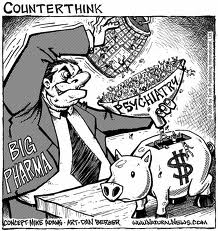
Some doctors seem to relish the opportunity to prescribe psychiatric drugs. After all, from the perspective of a passive observer, prescriptions of such medication are becoming all too frequent. I wonder if it will get to the stage when those not on drugs will feel left out and marginalised because of it:

PRESCRIPTIONS of antipsychotic drugs given to children have doubled in only five years, data obtained under freedom of information laws shows.

Antidepressant prescriptions have also risen, bucking international trends to reduce the use of the drugs after they were linked to children developing suicidal thoughts.

A psychiatry professor at the University of Adelaide, Jon Jureidini, said he was concerned antidepressant medication use was increasing despite warnings about suicide risks.

He said antidepressants should almost never be used in children.

After the US drug regulator issued a warning about the risk of suicide in children and teenagers taking antidepressants, there was a 58 per cent drop in the use of the drugs.

Yet between 2007 and 2011 in Australia antidepressant prescriptions increased from nearly 22 prescriptions per 1000 children aged below 16 to nearly 27, data provided to the Herald by the Department of Human Services under freedom of information laws shows.

Last year there were about 14 antipsychotic prescriptions for every 1000 children, compared with seven in 2007.

Professor Jureidini said it was likely the increase in the prescription of antipsychotics could be explained by doctors prescribing the drugs for behavioural problems, or by conditions such as personality disorder being reclassified as bipolar disorder and then treated with antipsychotics.

”There has been a very significant increase in the prescription of antipsychotic drugs and we can be pretty confident there has not been an increase in psychosis,” he said.

Antipsychotics are recommended for the treatment of children with conditions such as bipolar disorder, in some cases. National Health and Medical Research Council guidelines say doctors can consider prescribing an antidepressant for childhood depression in the short term, where psychological therapy has not been effective or has been refused.

Professor Jureidini said more monitoring of the drugs and their side effects was needed, along with training for GPs on non-pharmacological treatments.

A clinical adviser to the National Prescribing Service, Philippa Binns, said those who were prescribing antipsychotics and antidepressants to children should be specialists in children’s psychiatric problems.

I plead to doctors worldwide to please resist from writing a prescription for drugs unless you have tried all  other options which have turned out to be unsuccessful.

ADHD Diagnosis a “Convenient Out For Lazy Teachers”: Dunham

May 1, 2012

I commend for her courageous piece on the rising rates of ADD and ADHD diagnosis. Ms, Durham refuses to pull punches, raising a view I have been quite vocal about – the dubious role of teachers in the diagnosis process. Deborah suggests that teachers may be taking the lazy approach instead of the responsible one. She also raises strong arguments about the lack of research about the long-term ramifications of taking Ritalin, the contribution of diet to a child’s mental state and the lack of engagement and stimulation in school.

I’m starting to wonder if it’s possible for doctors, teachers and parents to diagnose kids with anything other than  Attention Deficit Disorder? According to a new study, the rate that kids are diagnosed continues to increase by 5.5% each year, but are there really that many more kids with ADD and ADHD? It seems like this has become a convenient “out” for many lazy teachers, doctors and parents who don’t know what to do with kids who don’t fit the “mold”.

The rates of ADHD diagnosis in the developed world increased annually by an average of 3% from 1997 to 2006 and 5.5% from 2003 to 2007 in the U.S. But researchers wanted to know–as did we–how accurate these diagnoses really are.

Led by a team of researchers at the University of Basel’s Katrin Bruchmueller, 473 child and adolescent psychotherapists and psychiatrists across Germany were surveyed on how they diagnose people with ADD or ADHD. In three out of the four cases, the described symptoms and circumstances did not fulfill ADHD diagnostic criteria. In fact, many mental health practitioners were found to base their decisions on unclear standards.

For example, male patients were more readily diagnosed when they displayed symptoms such as impulsiveness, motoric restlessness and lack of concentration–all things that can be perfectly normal when growing up. Boys were more likely to be diagnosed than girls, and on the same note, male doctors tended to diagnose ADHD more frequently than their female counterparts.

In short, what the researchers found what that ADHD is over-diagnosed because doctors rely too much on their intuition and not on a defined set of criteria.

All of this is troubling because it means that kids are the ones who are suffering as a result. Instead of taking the time to accurately diagnose them (if there is even anything at all wrong besides just being a “kid”), they are put on brain-altering drugs which is risky for anyone, especially someone who is still young and developing.

More than three million kids in the U.S. take drugs for their supposed difficulty focusing. In 30 years there has been a twentyfold increase in the consumption of these. And while medications like Ritalin may help increase concentration in the short term, not enough is known about the long-term health consequences–although some say drugs like this can stunt a child’s growth, other speculate that they can cause heart problems and even sudden death.

But is it really possible that three million kids in our country really suffer from ADD or ADHD, or has this just become a catch-all diagnosis by lazy doctors, parents and teachers?

We know that an unhealthy diet, sugar, processed foods, stress and a lack of sleep and exercise can all contribute to someone’s mental state. So, it’s entirely possible that our society has become so unhealthy that we are the ones creating these problems in our kids. And it’s not always synthetic drugs that are the answer.

The other issue that could be a major factor here is that kids are not engaged and stimulated in school enough. Taking millions of kids who all have different learning styles and trying to force them to comply and fit into one method of learning does not work. No one can possibly be expected to sit at a tiny, uncomfortable desk for eight hours a day in a classroom with florescent lights and the blinds drawn on the windows. Yet, when a child doesn’t conform, they are thought to have ADD.

Perhaps instead of jumping to conclusions and forcing our kids to swallow mind-altering drugs in order to fit our ideals of how they should behave, all of us–parents, teachers and doctors–should take more time to fully evaluate the unique learning style and personality that each child has and then alter how we interact with them accordingly. That’s not to say that everyone is lazy (because they aren’t) and there aren’t some legitimate cases of ADD (because there certainly are), but research like this points to the fact that we need to take more time and better understand how to consistently diagnose this disorder.

101 Ways to Misdiagnose ADHD

March 20, 2012

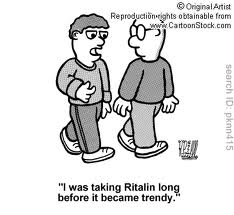
I am not sure if ADHD exists or not. Since I am not a doctor or medical professional, I will decide to err on the side of caution and give ADHD the benefit of the doubt. But whether or not it exists doesn’t seem to be the pressing issue. The issue seems more to do with the poor children misdiagnosed with ADHD in what seems to be a completely haphazard fashion:

A STUDY of almost a million Canadian children has found those born in December, the last month of the school year intake, are more likely to be diagnosed with ADHD and medicated for it than those born in January.

Relative immaturity may result in the inappropriate diagnosis of ADHD, the University of British Columbia researchers suggest.

They raise “concerns about the potential harms of overdiagnosis and overprescribing” for the condition. Children given medication for ADHD may suffer adverse effects on sleep, appetite and growth and face increased risk of cardiovascular events, the paper says.

Inappropriate diagnosis may lead teachers and parents to treat the child differently and change self-perceptions.

The study in this month’s Canadian Medical Association Journal, found boys born in December were 30 per cent more likely to receive a diagnosis of ADHD than boys born in January and 41 per cent more likely to be given medication for ADHD.

The medical fraternity has let themselves down with ADHD. It seems from this untrained eye that too many kids are being diagnosed with this condition and therefore, too many kids are needlessly medicated. What this does is bunch real sufferers of ADHD with kids who have come down with a bout of, for example, immaturity.

Children are Misdiagnosed with ADHD: What’s the Surprise?

March 6, 2012

Whilst I am not medically trained, and my opinion is based on experience rather than any medical credentials, I can’t help but wonder if ADHD even exists. If it does, then surely the seemingly rampant overdiagnosing of ADHD together with the overprescribing of Ritalin-type drugs, isn’t doing the legitimacy of the condition any favours.

I have written extensively about this issue and recounted my frustrations watching students prescribed drugs for conditions I was positive they didn’t suffer from. It seems that there are a multitude of factors that don’t get enough attention before the drugs are administered such as: diet, home life, self-esteem and social life.

Should I really be surprised when I read that some children are misdiagnosed?

Children who were born late in the school year and so are almost 12 months younger than their oldest classmates are more likely to be diagnosed and given medication like Ritalin for attention deficit hyperactivity disorder, it was found.

They are being ‘inappropriately labelled and treated’ the authors said.

Greater caution should be given to making the diagnosis in order to prevent children from being given potentially harmful medicines without justification, they said.

There are thought to be around 1.7m people with attention deficit problems in Britain with between three and seven per cent of school age children affected.

There is no data collected on how many children in Britain are on drugs for the problem but in 2010 there were over 850,000 prescriptions dispensed for medicines to treat the condition in England and Wales at a cost of almost £44m.

The study was conducted on children in British Columbia in Canada where the school year coincides with the calender year.

It was found that children born in December, so the youngest in their school year, were 40 per cent more likely to be diagnosed and almost 50 per cent more likely to be treated for ADHD than children born in January, the start of the school year.

It;s time doctors were open to more scrutiny about their ADHD diagnosis.

Schools Have to Wake Up to Confidence Issues Amongst Students

February 27, 2012

I’m not a medical expert, so excuse me if I show my ignorance, but I am constantly amazed by what looks like a overdiagnosing of kids. From ADHD to autism, from dyslexia to language disorders, our students are being bombarded with medically based names for sometimes seemingly everyday based problems.

Sometimes these diagnoses prove spot on, and ultimately guide the teacher to better understanding their students. At other times however, I feel the diagnosis seems rushed, lazy and counter productive. Not only do such students receive the stigma of their newfound disability, but they also tend to lose more confidence because of it, rather than letting the revelation give them a new lease on life.

What bothers me is that in making these diagnoses, GP’s, occupational therapists and speech pathologists often see a child’s low confidence levels as a sign of a condition that is impeding their learning. Why can’t a child’s learning challenges be caused plainly and simply by their confidence issues? Why does it always have to be a condition? Why don’t they try to improve a child’s self-esteem before prescribing and labelling?

I can’t tell you how many students I have seen over the years that have been diagnosed with some learning disorder that have responded not to the recommended regime, but to a devoted teacher that spends just as much time trying to raise the child’s self-esteem as they do trying to improve the child’s academic skills.

Sometimes I think we fool ourselves into believing that school life is easy and that all children should be able to cope fairly well. School is tough for children. It can potentially damage a child’s sense of self and can be quite detrimental to their feeling of worth.

I’m not surprised kids are reluctant to go to school. I am surprised however, that our psychologists think that only 1-2% of children fall in that category:

… suffering from school refusal, an anxiety condition that affects 1 to 2 per cent of children.

”A certain degree of anxiety or reluctance to go to school is normal,” psychologist Amanda Dudley says.

”But for some, they experience excessive anxiety and it can result in persistent refusal to go to school.”

Children who experience school refusal often complain of stomach aches, headaches, nausea and other physical symptoms and are often extremely distressed when it is time to go to school.

”It can be all of a sudden that the child refuses to attend; it can be after something upsetting at school or after legitimate absence from school,” she says.

School refusal isn’t a condition. It is a natural response to the challenges that children face at school. It is also a sign that educators are blind to the real needs of their students. By overlooking self-esteem issues and instead concentrating on placing seemingly normal children on an ever-growing spectrum, we are labelling children instead of responding to them. We are diagnosing instead of truly connecting with them.

I accept that there are children with special learning needs who require targeted programs and individual support, but I also believe that there are many children who would be better served if their school helped them to adjust to school life instead of bracket them with a condition or disorder.


Disruptive Children Learn Better By Shouting Answers in Class

February 2, 2012

A recent study indicates that ADHD students would greatly benefit from shouting their answers in class.

Durham University experts who analysed test results across more than 500 English schools found that, among children with Attention Deficit Hyperactivity Disorder (ADHD), those who shouted out answers scored better results than their peers who remained quiet.

Louder youngsters were about nine months ahead of quieter classmates in reading and maths, researchers from Durham’s Centre for Evaluation and Monitoring discovered. The experts say their findings raise questions about how best to teach youngsters with ADHD.

Professor Peter Tymms, a renowned education expert and the report’s lead author, said: “Managing and responding to pupils’ different needs and abilities within a class is a challenge for teachers.

“We’re not suggesting that classrooms become free-for-all shouting matches but if this positive learning relationship can be harnessed, it could help teachers and learners.”

I really don’t know what to do with these findings. Whilst it is important to accommodate all students according to their learning styles, allowing some to shout could completely alter the tone and civil nature of one’s classroom. Although classrooms should never be treated like libraries, shouting students do have an effect on the way the rest of the class act.

There are times when studies recommend something and teachers are forced to either dismiss them, or in this case, try to find ways where it may work. For example, I wouldn’t be surprised if a study looking into whether or not an ADHD child learns better if they stand on a table, finds that there is a clear improvement when they do. But would a teacher ever consider allowing a student to stand on a table during the lesson? I think not.

As much as I am determined to cater for all children, there are some recommendations that are not easy to integrate into a classroom setting. This one is worth considering, but I’m not sure how I would go about implementing it without disrupting the rest of the class.