Only Closed-Minded Schools Block YouTube

July 17, 2012

I have been on the record before in stating that I believe YouTube is one of the most valuable teaching and learning tools of the modern age. I have turned to YouTube to solve many a problem; such as learning new tie knots, working out which phone represents best value for money and to assist me in developing some of the features in this blog.

YouTube is brilliant for research, following procedures, guiding students and developing problem solving skills. Yet, because some of the content is unsuitable for kids, many schools choose to block YouTube. I think this is a gross overreaction. Whilst schools have the responsibility to supervise the online activity of its students, they would be best advised to allow access to YouTube with a teacher present.

Added to the benefits I have already touched on, YouTube has become a major source of where people get their news:

A new study has found that YouTube has become a major platform for news, one where viewers are turning for eyewitness videos in times of major events and natural disasters.

The Pew Research Center’s Project for Excellence in Journalism on Monday released their examination of 15 months of the most popular news videos on the Google Inc.-owned site. It found that while viewership for TV news still easily outpaces those consuming news on YouTube, the video-sharing site is a growing digital environment where professional journalism mingles with citizen content.

“There’s a new form of video journalism on this platform,” said Amy Mitchell, deputy director of the Pew Research Center’s Project for Excellence in Journalism. “It’s a form in which the relationship between news organizations and citizens is more dynamic and more multiverse than we’ve seen in most other platforms before.”

More than a third of the most-watched videos came from citizens. Than more half came from news organizations, but footage in those videos sometimes incorporated footage shot by YouTube users.

Click here to read, ‘Schools Should Not Block YouTube’.

Top 10 Educational iPad Apps

July 17, 2012

An impressive lineup of education apps as selected by gameclassroom.com:

1. BrainPOP Featured Movie, FREE
Made with the iPad in mind, this app delivers fresh, animated movies every day on topics including earth awareness, financial literacy and more. Kids take interactive quizzes to show what they know.

2. SUPER WHY!, $2.99
Rhyme, spell, write and read with PBS characters Alpha Pig, Princess Presto, Wonder Red, and yes, Super Why for an entirely entertaining educational experience. Kids won’t even realize they’re learning.

3. Dr. Seuss’s ABC and The Cat in the Hat, $2.99 each
What happens when you combine classic children’s books with cutting-edge technology? Storytelling magic! USA Today, Huffington Post and mommy bloggers count themselves among iPad/Seuss fans.

4. ABC Phonics Animals Free Lite, FREE
A group of parents created these talking and spelling flashcards. On the iPad, ye olde arte of learning becomes animated, interactive, lively and fun.

5. Star Walk, $2.99
This guide to the night sky shines brightly among iPad’s constellation of educational apps. It’s a window into more than 9,000 stars, planets, constellations and other celestial bodies.

6. RedFish, FREE ($9.99 upgrade for all 50 activities)
Teaching kids ages 3-7 to count, read, spell and even compose music has never been quite as much fun as it is on the iPad. What would Beethoven have done with an app such as this?

7. 123 Color HD Talking Coloring Book, $0.99
Fans of this iPhone app will want to check out the iPad version, with all-new high-resolution drawings that are five times larger than the originals.

8. World Book – This Day in History, $0.99
Thanks to the encyclopedia giant’s interactive calendar that includes pictures, sounds, music and features, history may not seem so ancient to kids.

9. iLiveMath Animals of Africa, $1.99
Stampeding toward an iPad near you, this app combines math with zoology for a hair-raising learning experience (which is currently being enhanced for Apple’s latest and greatest).

10. History: Maps of the World, FREE
Travel back in time with historical maps of all kinds. High-resolution maps on the iPad just might be the next best thing to being there.

Click here to read about The Meteoric Rise of the Educational App.

What is the Punishment for Beating up a Teacher?

July 17, 2012

The only thing worse than the statistic that more than 5 teachers are being assulted by students in public schools every day, is that nothing seems to be done about it.

Putting the obvious pain factor of being assulted aside, can you imagine how humiliating it would be to be kicked and punched by a child in front of your own students? Can you imagine what that does the teacher’s authority and self-respect?

ALARMING new figures show there were 1062 assaults on teachers in the state’s public system last year – an average of more than five every school day.

Education Department figures, obtained through a Freedom of Information request, also show 144 were classed as “critical” incidents.

In 2011, teachers lodged 46 compensation claims for assaults by students aged between 5 and 15 – an increase on 38 claims in 2010, and 40 in 2009.

Education leaders say teachers are at greater risk of being assaulted because students have “much more complex problems”.

I’ve been hit by students before (albeit very young students) and I’ve had objects thrown at me. There is nothing much I can do about it. I would rather get a black eye from a student than jeopardise my career by restraining him (if restraining him required force). But should I even have to ponder such a scenario?

This frightening statistic is due to 2 factors. Firstly, there is a lack of respect for teachers among all quarters of society. This lack of respect filters down to impressionable students who see how badly their own parents treat their teachers and think that tormenting the teacher is fair game. And secondly, there is a complete lack of deterrence to send the message that assaulting a teacher is unacceptable.

This whole excuse of students having more ‘complex problems’ is garbage. The truth is, schools have become soft on this sort of behaviour. They tend to be  more interested in keeping the parent body happy than keeping teachers safe.

Click here to read, ‘Teachers Stripped of the Ability to Give Punishments That Work’.

Who Said Grammar Isn’t Important?

July 17, 2012

I found this particular sign very amusing:


Click here to read The 15 Most Commonly Misspelled Words in the English Language

Teaching Young Kids to Throw Away Their Money

July 16, 2012

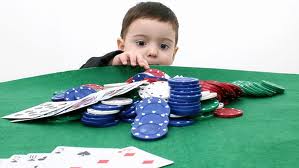
Facebook offers its users “free” gambling games,which they of course claim is restricted to children over 13 (but we all know how well Facebook police their own age requirement laws):

Members of Facebook, who must be aged 13 or over, can play a wide range of games traditionally associated with betting, including roulette, slot machines and card games.

Addiction experts have now claimed the games could lead children to becoming habitual gamers or even “problem” gamblers.

They believe the free games could lead youngsters to believe they are just harmless fun, setting them on a path towards betting with real currency.

A spokeswoman for charity GamCare added they would like the Gambling Commission to research social gaming and investigate it further.

Mandy Barrie, policy and development director, told the newspaper: “This is a really rapidly-moving area. We need to think through very carefully any risks that it presents particularly for young people.

“There is a link between early exposure to gambling and developing a problem in adulthood.”

These games are designed to get kids into gambling as quickly as possible. Facebook knows it, parents unfortunately don’t.

Click here to read my post ‘Facebook Doesn’t Seem to Care About Kids’.

Using Spam Emails in Your Literacy Lessons

July 16, 2012

What a brilliant way to teach critical thinking and persuasive language!

I gave a class of 12-year-olds a selection of genuine spam emails and asked them to write down what their replies to these would be.

It mostly purported to be from a distressed Nigerian monarch living in exile looking for a friendly Briton to share a fortune with. Some of the kids quickly twigged and wrote sarcastic, tongue-in-cheek responses.

But a few of them seemed genuinely intrigued and happy to enter into correspondence; others tried to negotiate the terms to make more money.

It was this naivety and innocence that I wanted to address in students. They had to become aware of the dastardly tricks people may try to make them fall for.

As an English teacher, it was important to zoom in on the persuasive language techniques used in spam emails. By the end of the unit pupils could tell you that spam emails use terms of endearment to hook in the recipient, include hyperlinks to news articles to make their stories more plausible, describe accidents or impending threats to generate sympathy, and specify tight deadlines to make the deal seem juicier.

Click here to read my post, ‘The 15 Most Commonly Misspelled Words in the English Language’.

Why Our Schools are in Crisis

July 16, 2012

Xavier Symons wrote a compelling examination of our failing education system. He pinpoints three areas where things are going awry:

The first is student-oriented learning. Traditional teaching in which teachers provide a succinct overview of topics is an endangered species. Student orientated, interactive learning has almost completely displaced it.

Certainly, there are benefits: creativity, enthusiasm, research skills. But why not pour a bit of expert knowledge from the well into the bucket? My friends and I loved having a teacher who had just graduated from education school. Student-centred learning for us meant student rule. It was great fun. We just didn’t learn much.

The second problem is the obsession with IT literacy. Students know heaps more than most teachers about IT. X-Box and circumventing internet filters and downloading movies is child’s play for this generation.

IT literacy is like learning to ride a bike: you don’t need school. But essay writing skills? We did need a teacher for that. In the worst cases, students end up pooling ignorance in meandering discussions, and scratching their heads in bewilderment.

As a high school student, I built and produced pictorial essays using film software. Some of my friends made mind maps on smart boards and podcast radio plays. The latest fad is educational games on iPads.

I certainly became IT literate. But it was at the expense of English proficiency and knowledge of history. I had a lot of fun doing a pictorial essay about the Vietnam War – but I I never learned why the French were there in the first place.

While IT literacy is very important in the digital age, the bread and butter of the humanities remains grasping and describing human experience and human history.

The third problem is uniformed teachers. Too many leave uni knowing the bare minimum, and never try to delve deeper. Many of my peers have found that their history teacher knows no more than the textbook. Alarmingly many teachers of English literature don’t actually read. And science teachers may be able to entertain a classroom by emphasising the practical aspects of biology, but students will be seriously underprepared come exams.

I have given my opinion on each of his three points:

Click here to read my opinion of ‘child centered learning’ vs ‘teacher centered learning’.

Click here to read my opinion on the problem with IT in the classroom.

Click here to read my opinion on the standard of teacher training.

5 Tips for Stressed Teachers

July 16, 2012

Beth Morrow has provided 5 useful tips for stressed teachers. I particularly agree with number 4:

Take a walk.
Sounds too easy and too good to be true, right? But give walking a try and you may find that with fresh air often comes a fresh perspective. Walking releases endorphins, the body’s natural stress-relieving hormones, which have been proven to increase energy, focus and positive mental processes. In the long run, research shows walking lowers the risk of heart disease and other health-related issues. Best of all, it’s free!

Get Up 15 Minutes Earlier
Or, if you’re a night owl, stay up 15 minutes later. Use this time to plan tomorrow’s activities, read a book, have a cup of tea, meditate, treat yourself to a piece of chocolate and just enjoy the peace that comes with a quiet household. Do NOT use this time to clean house, pay bills, grade assignments or anything which already causes stress during the regular day. You’ll have plenty of time for that once the day kicks into gear.

Seek Out Positive People
Often this is easier said than done. We all have colleagues, family, friends and parents who drag us down, regardless of the issue. You know who they are–they leave you feeling empty, alone, bitter, angry and defeated the instant you see them. Managing stress requires that you limit or eliminate the sources of negative energy around you and focus on the positive. It can be difficult if you discover a longtime friend or teacher next door drags you down, but by limiting your interaction with that person you’ll open up opportunities for interacting with people who inspire, excite and share your enthusiasm for teaching and life.

Just Say No
As teachers, we’re innately programmed to volunteer when others do not. Our guiding mantra–do it for the kids–at times puts more on our plate than we can realistically handle. But being overwhelmed and overscheduled can be detrimental to both you and your students. Make a list of the two or three programs or volunteer opportunities you truly enjoy or believe your students benefit most from and limit your participation to those. Resist the urge to raise your hand when something pops up at staff meetings, even if others claim dire consequences if you don’t help. Be flattered, be pleased your involvement was noticed, then say you’d like someone else to enjoy organizing or participating. If you feel pressured, ask for time to think about it (knowing you’ll just turn them down in private the next day!).

Create Your Own Oasis
The key to making this a successful stress reliever is choose something you love and allow nothing to intrude on that time you’ve created. Maybe Wednesday evenings you can plan dinner at your favorite restaurant. Or go to the newest movie every Saturday afternoon. Money isn’t necessary, however. Lock the bathroom door on Friday nights and treat yourself to a hot bubble bath. Do thirty minutes of yoga every day after school. Lose yourself in your favorite mindless television show. Plan in advance and honor that time no matter what threatens to intrude. After all, if you don’t treat yourself as if you’re worth the time, you can’t expect others to, either.


Click here to read my post, ‘Ten Useful Tips for Improving Classroom Management’.

Sleep Disorders Often Mistaken for ADHD

July 15, 2012

Whilst the diagnosis of ADHD is reaching epidemic proportions, yet another possible explanation is being uncovered:

“Sleep disorders may contribute to behaviors that resemble ADHD during the day,” says Kevin Smith, a pediatric psychologist at Children’s Mercy Hospitals and Clinics in Kansas City, Mo. A study published in March in Pediatrics analyzed more than 11,000 children over a period of six years, beginning at 6 months of age, and revealed that children suffering from sleep-disordered breathing—including snoring, breathing through the mouth, and apnea, where the child seems to stop breathing for several seconds at a time—had a higher incidence of behavioral and emotional issues such as hyperactivity, aggressiveness, depression, and anxiety. In fact, they were 50 to 90 percent more likely to develop ADHD-like symptoms than were normal breathers. And those children who suffered most severely from all three sleep-disordered breathing behaviors at around age 2 and a half had the highest risk for hyperactivity.

A lack of sleep can damage brain neurons, particularly in the prefrontal cortex region, says Karen Bonuck, lead author and professor of family and social medicine at the Albert Einstein College of Medicine in New York. This may be due to a decrease in oxygen and an increase in carbon dioxide levels; interference with sleep’s restorative processes; and a disruption in the balance of cellular and chemical systems. What can result is inattentiveness, hyperactivity, and impulsivity—the classic trademarks of ADHD. When the disorder is suspected in a child, “nighttime sleep patterns should be reviewed with the primary care doctor,” says Bonuck. “Parents may even wish to video or audio tape the problematic behavior as a first step.”

Now it is up to doctors to do their due diligence and ensure that what may seem like ADHD isn’t a raft of other minor possibilities such as sleep or diet issues.

Click here to read my post, ‘Are Children Getting Enough Sleep?’

Click here to read my post, ‘Sleep Deprived Children in the Classroom’.

Dealing With Teenagers: 10 Dos and Dont’s

July 15, 2012

Interesting list written by Kim Haskins:

Do show respect for your teenager: Show it and you’ll receive it in return. For example, respect their privacy by expressing an interest in their personal lives without trying to log into their Facebook account. Also, let them know that their opinions and feelings matter to you, and be constructive in your explanation if you don’t agree with them (‘Just because’ just won’t do). Overall, be positive, not punitive: admit and apologise when you’ve been in the wrong, and praise them when they’ve done something good. A little humility goes a long way.

Do listen: ‘Nobody understands me’ may be the familiar adage of adolescence, but we can empathise by both taking the time to listen and remember what it was like for us as teenagers. Listening (while resisting the urge to interrupt) not only shows you care but also develops a sense of mutual trust. What’s more, it will help you to gain a better understanding of certain situations without jumping to conclusions.

Do let them know you’re there: You know you’ll be there for them no matter what, but do they? Create an open environment wherein all family members can feel free to discuss what’s on their mind without fear of being judged. We can’t guide our children through all aspects of life, but we can be on-call for support. Let your teen learn from their own mistakes and make sure you’re there to talk about whatever’s gone wrong when they’re ready.

Do keep calm and consistent: Teenagers’ behaviour can be notoriously bad-tempered and unpredictable, but the last thing to help is you fanning the flames with similar behaviour. However frustrating it seems, it’s worth biting your tongue when things get heated. Keeping calm will help them to do the same and eventually encourage more open and level-headed communication. If you do say anything in anger to them, take steps to clear the storm by apologising and explaining why you were upset.

Do have fun together: Time-wise, we’re talking about quality over quantity. Even if other commitments only leave you with the odd half an hour here and there, then so be it — just make the most of what you’ve got. It can be as simple as going out for a meal or watching a film together. Ask them what they’d like to do and, importantly, make sure you enjoy it too.

Don’t nag: In a recent survey*, around half the number of teenagers questioned advised parents not to nag their teens. It can be tempting to nag, especially when we feel frustrated. However, the bottom line is that at whatever age we all resent a nagger. Avoid focusing on the bad stuff and try to use more positive language to offer encouragement instead. So, rather than moaning at them to stop watching TV and do their homework, change tack and suggest recording programmes so they can be watched after an hour’s worth of studying. And perhaps bring them a cuppa and a biscuit to help them along. A bit of friendly bribery might just do the trick!

Don’t try to change them: Your teenager is a unique individual at an advanced stage of personal development. It can be a confusing enough period of self-discovery without having parents trying to push you into corners where you just don’t fit. Accept your teen as they are, and celebrate their personalities and interests rather than overlooking or being ashamed of them.

Don’t take things personally: Teens tend to say things in the heat of the moment. At a time when their hormones are running riot, it’s easy for a normal conversation to flare up over something that might seem trivial to you. In many ways, teens have to blow a fuse a few times to learn how to control their feelings and express themselves more constructively. So stay calm at all times and lead by example.

Don’t shout: Your voice may be louder, but this doesn’t mean they will listen to you any better or indeed respect you any more. Any show of aggression is likely to be counter-productive; it can push them away further or even make them display aggressive behaviour themselves.

Don’t preach: You might have the wisdom of age and experience, but don’t forget that an essential process along the journey to adulthood is choosing your own paths and learning to overcome mistakes. Be there to guide them through any difficult life choices, but resist any assumption that you ‘know best’. In particular, avoid using patronising language, such as saying anything along the lines of ‘When I was your age…’ If you do this you’ll sound like an annoying old fart; in which case, how will your advice sound relevant to them?

Click on the link to read my post, ’10 Things Parents Don’t Understand About Their Teenage Children’.