Archive for the ‘Teaching Methods’ Category

I’m Glad I’m a Teacher and Not a Parking Inspector

October 31, 2011

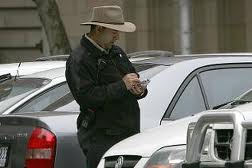
Today I was fined by a parking officer for parking in a permit zone. I had only left my car for a few minutes, and clearly that’s all it takes.

On my way back from the shops I noticed a parking inspector processing a ticket by my car. I asked him what I did wrong. I pointed out the 1 hour parking sign. He pointed to another small sign among others that notified those with good eyesight that the spot was a permit zone on weekends but fine during the week.

I told him that I was only gone for a second and that I had made an innocent mistake. He didn’t pay attention. My daughter cried sensing something was wrong and becoming unsettled by the man’s presence. The man ignored her and kept on typing.

$75 – that’s what the tiny mistake cost me!

I realise that the man was doing his job. He probably has a wife and family to take care of and bills to pay. I don’t blame him for his actions or diminish his right to take on this job.

But ultimately, I’m so glad that I am a teacher and not a parking officer.

Parking officers serve no real value to the community. They are employed by council workers who should have enough revenue to waste through our overpriced rates. But no, through parking infringements, they have another steam of revenue they can waste in good measure.

Nobody is glad to see a parking inspector walking around. Nobody goes to lengths to welcome them or engage in small talk. Their job is to prey on people’s mistake and slug for an inordinate amount of money.

Teaching can be so much more than that. We can represent all that’s positive about this world. We can be mentors and role models. We can help children grow to reach their potential.

Unfortunately, we can also do a lot of damage. If we are not good at our job or our heart isn’t in it, we can be the manifestation of what is wrong with this world.

That’s the great challenge for teachers. To be the polar opposite of a parking inspector.

Education vs Self-Expression

September 21, 2011

Last week, my colleague and I taught the most wonderful creative writing lesson.  My colleague wrote the beggining of a sentence on the board  – “As the ball bounced higher and higher …” and we told the students that they had 10 minutes to write a story of their choosing starting with the words on the board.  We told them that we weren’t going to correct spelling, grammar, paragraphing etc.  We just wanted them to have a go and let their imaginations steer them in the right direction.

Everly child bar none wrote frantically.  Those that lack certainty, didn’t.  Those that struggle with composing letters and information reports lapped up the lack of protocols and structure that this activity offered.  Why was this simple lesson such a success?  Because it allowed the students to express themselves.

Curriculums and educational trends have made it harder for teachers to help students find themselves.  It has continued to downplay the importance of The Arts in favour of skills and concepts that many of our children will never use.  The Fibonacci Sequence might be fascinating, but who decides that this is more important than a clay modelling session?  Since when did single-celled organisms have a greater importance in a child’s life than the chance to perform to an audience?

Nowadays the emphasis is on memorising facts, studying for standardised tests and rote learning.  Even when the system purports to be encouraging self-expression it’s often a sham.  The system dictates what literature the students study, how they should think and what they should be feeling.

I remember telling my teacher when I was a student that I was bored by Robinson Crusoe.  You should have seen the look on his face!  He asked me how I could be bored with such a classic.  I told him that I wasn’t interested in reading page after page about details.  I wanted tangible feelings I could connect with.  My teacher was astounded.  He reminded me that Robinson Crusoe was one of the most popular books of all time.  I wanted to reply that Jurassic Park was one of the most popular films of all time, but thought better of it.

There are a multitude of kids who are simply not adjusting to the style of education offered.  So what do we do?  We tell them to smarten up and pull their finger out.  We remind them that if they don’t adjust their potential will be wasted and their career prospects will be hampered.  What if it isn’t the “spoilt” children’s fault they are not thriving at school?  What if it’s actually the narrow-mindedness of the system?

The fact that the writing session was 10 minutes and no longer was key to the success of the lesson.  According to my colleague when they are given more time their work suffers.  It reminded me of a great scene from the film Six Degrees of Separation.  Donald Sutherland recounts how whilst the Grade 1 and Grade 3 teachers at his childs’ school weren’t able to extract great artwork from the students, the Grade 2 teacher was responsible for a classroom of art geniuses.  He confronted the teacher to ask her what her secret is, and she replied that she knows when to take the brushes out of their hands.

The reason why we need to take the pencils out of their hands after only 10 minutes, is that up until that point they haven’t had the time to think beyond their natural instincts.  If we let them continue they would slowly stop writing out of instinct and start writing to please their teacher.  They would consider the structure that teachers have been duty bound to impart to their students (such as containing a problem, resolution and foci).  This very structure leads to boring, formulaic writing.

Our students are crying out for some structure and routine in their lives, but by the same token, they are also crying out for an opportunity to express themselves.  We are all different and sometimes society doesn’t give us the freedom to express it.

It’s time to take the brushes out of our students’ hands and let them show us what they’re really about!

The Classroom of the Future

September 11, 2011

The Australian has an interesting examination on a method of teaching that is starting to become quite popular.  It is known by several names such as “agile learning” and “personal learning”, and it is the polar opposite from the orthodox “chalk and talk” method of teaching.

Below is an excerpt of the article:

None of that happens at Our Lady of Lourdes, in Seven Hills, in part because the number of children flowing into the room hasn’t stopped at 30, or 35, or even at 50. On the contrary, the average “class size” is 120. The children here aren’t even required to sit in a certain seat or face the front of the room, in part because there isn’t really a “front” of the room. In fact, the school doesn’t have any four-walled classrooms. It has large, well-designed “learning spaces” with bits of wall here and there. There are no desks as such; there are round tables with tub chairs, an L-shaped lounge with scatter cushions, a tall table with hydraulic bar stools and a comfy, carpeted area designed for children who want to sprawl on the floor. “It probably looks nothing like the classrooms you knew as a child,” says principal Steven Jones.

That’s for sure. What lesson could these students – some of whom are tapping away at Apple Macs, some of whom are lying on their stomachs with their heads in books, some of whom are actually headed outside – possibly be taking? “I believe it’s ‘maths’,” he says, wiggling two fingers from each hand near his ears to signal that he doesn’t mean “maths” like you and I do. “But we don’t really have ‘lessons’. We teach the curriculum, but not in the way you would remember. The days where the teacher would stand there saying, ‘Everyone sit down and listen to me’, they’re gone.”

To be clear: the curriculum stays the same – all Australian schools are required to teach certain things – it’s how the children go about learning that is changing. Teachers work in groups, not to pour information into their students but to guide them as they set about finding things out for themselves. The rules for student behaviour in these spaces differ between schools. In some cases, children are free to get a snack from their bags; in others, they can roam from one part of the space to another or take their work outside.

Whilst I enjoy witnessing change in educational methods (as anything broken requires fixing), I worry about replacing one philosophy with its polar opposite.  In my view, every child is different and needs to be catered for according to the skills, learning styles and qualities they posses.  Some will thrive in a self-directed environment, some will need rigid routines, some will enjoy having freedoms and some will need imposed discipline.

I find myself tinkering my style to suit different classes and different students.  That’s my duty.  If I teach all classes and students in the same style, I will get nowhere.  But from my experience, it isn’t about revolutionary change but rather minor, incremental change.

My gut feeling with this new innovation is that when we have some real data about its effectiveness we will find that it works brilliantly for some students whilst failing to ignite others.

Which was basically the problem this method sought to address.