Archive for the ‘Teaching Methods’ Category

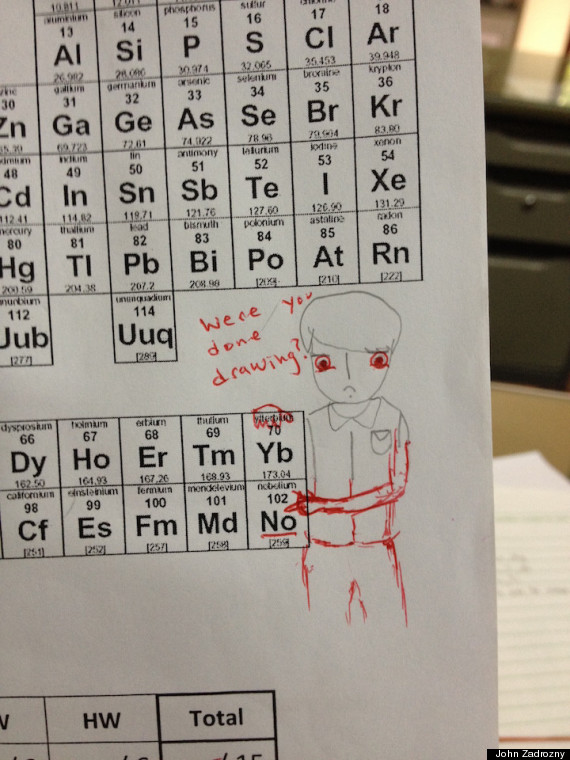
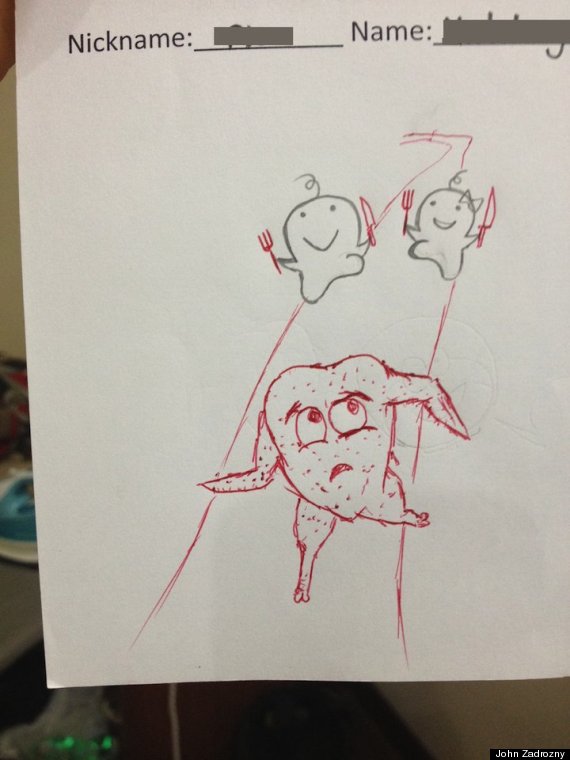
Look What This Teacher Did To His Students’ Doodles

January 6, 2015


doodle1

He will probably encourage his students to doodle even more but I just adore a teacher with a sense of humor. Watch how he improves on his students’ doodles:


doodle2


doodle3


doodle4


doodle5


Click on the link to read 5 Ways to Change the Face of Education

Click on the link to read Some Teachers Never Change … Literally!

Click on the link to read The Ultimate Bad Teaching Checklist

Click here to read my opinion of ‘child centered learning’ vs ‘teacher centered learning’.

5 Ways to Change the Face of Education

November 26, 2014

game changer

Courtesy of the brilliant Mark Barnes:


1-Stop worrying about losing your job

For tenured teachers, this isn’t much of a problem, although there is a growing movement against tenure. Whether you have tenure or not, if you want to be a game changer, you must stop thinking about losing your job. I’ve never heard of a teacher being fired for doing what’s best for kids. Susan B. Anthony risked her life to vote. The least teachers can do is risk temporary unemployment to change children’s lives.

2-Break free from the norm

When the world hears you saying over and over again that you are going to do what is best for children, your voice becomes remarkably powerful.

Steve Jobs never said, “We have to do what everyone else is doing.” Jobs believed in being first, in creating what others couldn’t see. When people said something couldn’t be done, it was usually because no one else was doing it. Jobs saw what established techies didn’t see, and he created it. When people say, “We can’t do that,” jump to a new fishbowl. Those who aspire to greatness will follow.

3-Start all thoughts with “What if. . .”

Hundreds of years ago when teachers were writing directions and examples on individual student slates, James Pillans wondered, What if we built one large slate board, big enough for all students in the room to see? The blackboard was born and classroom instruction worldwide changed. What if you stopped assigning traditional homework? What if you used mobile devices in class? What if you never grade another activity, project or test? Would you be a game changer? Would your students change?

4-Say “No!”

Teachers constantly tell me that their principal says they have to give weekly tests or they have to assign nightly homework or they have to log a grade into an online grade book. How should this be handled, they ask. Simple. Say No! Tell education stakeholders that you intend to do what is in the best interest of every student in your classroom. If they push back, stand your ground. Be persistent and be loud. When the world hears you saying over and over again that you are going to do what is best for children, your voice becomes remarkably powerful. You become a game changer.

5-Never stop fighting

It’s possible that you won’t live to see victory. Susan B. Anthony died decades before women won the right to vote. Without her, though, woman might still be relegated to ankle-length dresses and a life in the kitchen. Someone recently said that a no grades classroom is unrealistic; when I brought up the suffragettes, he said, “look how long that took.” Game changers never think about winning the battle; they fight until it’s won or until they die, knowing someone else will carry the torch when they’re gone.


Click on the link to read Some Teachers Never Change … Literally!

Click on the link to read The Ultimate Bad Teaching Checklist

Click here to read my opinion of ‘child centered learning’ vs ‘teacher centered learning’.

Click here to read my opinion on the problem with IT in the classroom.

Click here to read my opinion on the standard of teacher training.
Some Teachers Never Change … Literally!

July 3, 2013


year

As a teacher who once accidentally posed for an official school photo with some ketchup parading on my top lip, I love the story of the gym teacher who wore the same clothes for 40 consecutive yearbook photos:

A gym teacher is retiring after a 40-year career – and taking his trademark yearbook outfit with him.

Dale Irby, 63, accidentally wore the same clothes – a brown v-neck sweater and groovy white patterned shirt- for the school yearbook photo in both 1973 and 1974.

When his wife Cathy, also a teacher, dared him to wear the outfit for the third-year running at Prestonwood Elementary in Texas, Mr Irby accepted the challenge – and ran with it.

Each time his picture was taken during his 40-year career, he reached for his old favorite threads.

He told the Dallas Morning News: ‘I was so embarrassed when I got the school pictures back that second year and realized I had worn the very same thing as the first year… After five pictures, it was like: ”Why stop?”’

He said that he wore the outfit because he had been instructed to smarten up instead of wearing his usual gym shorts for the school picture.


Click on the link to read The Ultimate Bad Teaching Checklist

Click here to read my opinion of ‘child centered learning’ vs ‘teacher centered learning’.

Click here to read my opinion on the problem with IT in the classroom.

Click here to read my opinion on the standard of teacher training.

The Ultimate Bad Teaching Checklist

February 11, 2013


teachin

A brilliant list of habits that define poor teaching courtesy of Cool Cat Teacher Blog:

10- The teacher is always on their cell phone.
I have a new iPhone – today I’m locking it in my desk during class. Sure, I’m usually checking off my list or responding to a question for IT support at my school but my students don’t know that. A cell phone in my hand, whatever I’m doing, says that someone out of the room is more important than the people who are in my room. That is a lie. When I’m teaching, they are the most important thing in the room. Nothing should be between me and them.

9 – The teacher is always on the computer or not paying attention.
Multitasking is a lie. You shouldn’t be Facebooking, Tweeting, emailing, surfing, reading your PLN or anything during class – even during a test. You should be up and around in your classroom helping and TEACHING. They are paying you to teach, not hang out in a virtual teacher’s lounge. Teaching is work. You need to be part of  your class. When you sit down at your desk and disengage with your students, you suck the energy out of your classroom.

I knew a teacher who used to sew on her sewing machine during class. As soon as she started sewing, the class knew they were “free.” You are shocked at sewing but I see teachers doing this now with electronic devices. You are paid to be WITH and engaged with your students not doing something else.

8- The teacher is always losing his/her temper or is predictably dramatic.
I lose my temper 2-3 times a year – last year it was twice. Everyone knows it because it is rare. If you’re losing your temper a lot you need to figure out why and get help. You might be tired or under a  lot of stress, but you are the adult. There is no reason for you to have to raise your voice or constantly lose your temper. It isn’t good for you and it isn’t good for the students. Teachers who are bullies should be ashamed of themselves.

The predictably dramatic could be when you get soooooooo mad you jump on your desk. The kids are shocked the first time and get quiet. But then, they start plotting. You have sealed your doom.

7- The Teacher shares private student information publicly
NEVER call grades out loud – even for the top students. It is embarrassing. Don’t do it. It is a horrible thing when teachers do this. It is also horrible when you berate them in front of the class for ANYTHING. If you want to lose the respect of your class let them see you treat a classmate – even one they don’t like- with disrespect. This isn’t a contest and it isn’t a reality show. Handle private things privately. Period.

6 – The teacher talks without stopping for more than 10 minutes (especially if monotone.)
Do you realize that after 20 minutes they are asleep? Imagine the principal from Ferris Bueller’s day off. This sort of thing will kill the love of learning. Learn to listen for cues and watch for them. When quite a few kids start going to sleep DO SOMETHING. Vary your voice. Have them read. Ask a question. Extended lecture should be viewed as going through the motions of teaching for most students. Sleeping is not an option. I have made an exception when a child is getting over a loss or has something going on in their family but typically this is a no no for me.

5 – The Teacher only teaches with one method
Worksheets are so hard for many children. I have one child who really doesn’t learn a thing from them. When a teacher sticks to only one modality he/she will teach the children who learn through that modality and everyone else will be “bad students.” We can differentiate and we can use multiple modalities. Wanda the One Note Worksheet Wonder will kill the love of learning in a class of students who are auditory learners. Likewise if you only assess learning with tests, you’re missing the point and you’re probably also missing the learning that could happen.

4 – The teacher who only teaches “good” students and lets the “bad” students do their own thing.

Let me tell you something. A “good” student can learn alone in a room with a book and doesn’t need a teacher. A good teacher can make a good student into a great one. But a good teacher also works to reach every child.

I know of a child with a significant LD who is now one of the most successful thoracic surgeons I know. I now an incredibly gifted graphic designers who has some of the leading Fortune 100 companies knocking on her door but was made to feel like an idiot because she couldn’t diagram sentences in middle school. Good teachers work to reach and teach all children. If you only want to work with “good” students then I’m happy that you have such a great teaching environment but the reality of most of our classrooms is that we have some kids who could go either way. I teach only good students because I believe all of my students are great. I get what I believe and expect.

3 – The teacher who teaches the same every year without changing.
I know a math teacher who fought getting a new book because it would mean making out new tests and this person had been using the same tests for over 15 years. Some students don’t get a subject and need some extra help and assessment and others don’t. When I teach binary numbers, some years I can cover it in 2 days and others it takes 7. It depends on the students.

2- The Teacher whose words mean nothing.

Imagine the traffic policeman who just stood by the road, wagging his finger, and yelling at cars for speeding.

“Slow down …. now… now..”
“I said slow down.”

This officer would become a joke because there is no teeth in his actions. Say what you mean and mean what you say. Be consistent. But don’t lie to them. Don’t threaten with no follow through but if you’re threatening a lot, then why? Why should you count? Your word should be enough.

1- Hate your students
Why are you teaching if this is you? When you talk poorly about a student it does get back to your student eventually. I don’t respect teachers who I think have a vendetta against a particular student. I admit I’ve had 3 in my teaching career who were especially hard for me to love. But I had to adjust my own attitude and know that even if that child’s goal was to get me, that I was above it. I am an adult doing an important job and I will behave nobly. No one can take away my nobility but me.


Click here to read my opinion of ‘child centered learning’ vs ‘teacher centered learning’.

Click here to read my opinion on the problem with IT in the classroom.

Click here to read my opinion on the standard of teacher training.

Why Our Schools are in Crisis

July 16, 2012

Xavier Symons wrote a compelling examination of our failing education system. He pinpoints three areas where things are going awry:

The first is student-oriented learning. Traditional teaching in which teachers provide a succinct overview of topics is an endangered species. Student orientated, interactive learning has almost completely displaced it.

Certainly, there are benefits: creativity, enthusiasm, research skills. But why not pour a bit of expert knowledge from the well into the bucket? My friends and I loved having a teacher who had just graduated from education school. Student-centred learning for us meant student rule. It was great fun. We just didn’t learn much.

The second problem is the obsession with IT literacy. Students know heaps more than most teachers about IT. X-Box and circumventing internet filters and downloading movies is child’s play for this generation.

IT literacy is like learning to ride a bike: you don’t need school. But essay writing skills? We did need a teacher for that. In the worst cases, students end up pooling ignorance in meandering discussions, and scratching their heads in bewilderment.

As a high school student, I built and produced pictorial essays using film software. Some of my friends made mind maps on smart boards and podcast radio plays. The latest fad is educational games on iPads.

I certainly became IT literate. But it was at the expense of English proficiency and knowledge of history. I had a lot of fun doing a pictorial essay about the Vietnam War – but I I never learned why the French were there in the first place.

While IT literacy is very important in the digital age, the bread and butter of the humanities remains grasping and describing human experience and human history.

The third problem is uniformed teachers. Too many leave uni knowing the bare minimum, and never try to delve deeper. Many of my peers have found that their history teacher knows no more than the textbook. Alarmingly many teachers of English literature don’t actually read. And science teachers may be able to entertain a classroom by emphasising the practical aspects of biology, but students will be seriously underprepared come exams.

I have given my opinion on each of his three points:

Click here to read my opinion of ‘child centered learning’ vs ‘teacher centered learning’.

Click here to read my opinion on the problem with IT in the classroom.

Click here to read my opinion on the standard of teacher training.
Students Encouraged to Question … sometimes

May 21, 2012

I am a big advocate for encouraging children to think for themselves. I have no desire to brainwash my students or have them align their thinking to my own worldview. On the contrary, little gives me more pleasure than watching my students reach their own conclusions and engage in a robust exchange of ideas. On the flip side, it can be a bit disappointing that many children are so used to being spoonfed and mollycoddled , that it is becoming quite rare for a young child to form their own ideas.

That’s why I was deeply disturbed to read about the teacher who publicly chastised her student for daring to criticise President Obama:

A North Carolina high school teacher was captured on video shouting at a student who questioned President Obama and suggesting he could be arrested for criticizing a sitting president. 

The Salisbury Post, which first reported on the YouTube video, did not identify the teacher in question, who is reportedly on staff at North Rowan High School. The video does not show faces, but the heated argument in the classroom can clearly be heard. 

“Do you realize that people were arrested for saying things bad about Bush?” the teacher said toward the end of the argument, telling the student, “you are not supposed to slander the president.” 

The student told the teacher that one can’t be arrested “unless you threaten the president.” 

The argument started when the classroom began discussing news reports that Mitt Romney bullied a fellow student when he was in high school. 

“Didn’t Obama bully somebody though?” a student in the classroom asked, referring to an incident Obama described in his memoir “Dreams From My Father.” 

The teacher said she didn’t know — and the argument quickly escalated, as the teacher yelled at the student, telling him “there is no comparison.” 

“He’s running for president,” she said of Romney. “Obama is the president.”

 The student argued that both candidates are “just men,” but the teacher said: “Let me tell you something … you will not disrespect the president of the United States in this classroom.” 

According to the Salisbury Post, the teacher is still employed and has not been suspended. 

“The Rowan-Salisbury School System expects all students and employees to be respectful in the school environment and for all teachers to maintain their professionalism in the classroom. This incident should serve as an education for all teachers to stop and reflect on their interaction with students,” the school said in a statement, published by the Post. “Due to personnel and student confidentiality, we cannot discuss the matter publicly.”

Kids Don’t Need Gold Stars

May 11, 2012

In my opinion, the look that children give when they receive a gold star is misleading. Sure, they look excited, but that excitement is sometimes relative. In truth, kids don’t need gold stars and essentially, that is not what they are after when they produce good work.

What they really want is something – anything. They want a compliment, a smile, a gesture that will make them feel better about themselves. School can be such an overwhelming place. Teachers are so good at being critical. Critical of the way students dress, sit, answer back, talk, the speed in which they work, the neatness of their handwriting etc. The gold star doesn’t just signify an achievement of sorts, it breaks the cycle of criticism and balances the ledger somewhat.

As teachers, we need to be aware that our students crave our acceptance and approval. They may superficially be doing this by trying to earn a gold star, but essentially, all they really want is a confidence boost.

I enjoyed the tips for showing recognition to students by bestselling author and confessed ‘gold star junkie’, Gretchen Rubin:

1. Be specific. Vague praise doesn’t make much of an impression.

2. Find a way to praise sincerely. It’s a rare situation where you can’t identify something that you honestly find praiseworthy. “Striking” is one of my favorite fudge adjectives.

3. Never offer praise and ask for a favor in the same conversation. It makes the praise seem like a set-up.

4. Praise process, not outcome.This particularly relevant with children. It’s more helpful to praise effort, diligence, persistence, and imagination than a grade or milestone.

5. Look for something less obvious to praise – a more obscure accomplishment or quality that a person hasn’t heard praised many times before; help people identify strengths they didn’t realize they had. Or praise a person for something that he or she does day after day, without recognition. Show that you appreciate the fact that the coffee’s always made, that the report is never late. It’s a sad fact of human nature: those who are the most reliable are the most easily taken for granted.

6. Don’t hesitate to praise people who get a lot of praise already. Perhaps counter-intuitively, even people who get constant praise – or perhaps especially people who get constant praise – crave praise. Is this because praiseworthy people are often insecure? Does getting praise lead to an addiction to more praise? Or – and this is my current hypothesis – does constant praise indicate constant evaluation, and constant evaluation leads to a craving for praise?

7. Praise people behind their backs. The praised person usually hears about the praise, and behind-the-back praise seems more sincere than face-to-face praise. Also, always pass along the behind-the-back praise that you hear. This is one of my favorite things to do!

5 Tips to Better Connect with Students

February 16, 2012

I stumbled upon an extremely useful guide for improving the teacher/student relationship. The following are 5 tips for assisting teachers in reaching out to their students more effectively:

 
1- Pay attention to your students’ interests
Now that I’ve been teaching 10 years and I’ve mastered my subject area and the pedagogy of how to teach and reach every child’s learning style, I’m able to focus on the interpersonal things that make a big difference.

Administrators, school boards, and districts may see numbers, but numbers are not children. No child is a number. Children have names and hobbies and interests and family lives. Children are individuals and it is my job as a teacher to help them find their unique talents. I want to be the one that helped them on their journey of self-discovery.

2- Tell your students what they need to hear not what they want to hear.
I’m not here to be popular, I am here to teach. I am here to love these kids and to do what is right by their future selves. I believe I have succeeded when my students come back in 10 years and thank me. Sometimes they think I’m tough now and they groan, but I know that I’m doing right by them.

3- Take time to think about individual students
.
One of my heroes is the director of our learning lab here at Westwood, Grace Adkins. Every weekend she carries home a folder with the learning profiles, test results, and current work of 3 children who she works with in the lab, and she has been doing this for 60 years. She studies her students like a college student studies a textbook. She has doctors, lawyers, and bankers who credit her with helping them learn how to learn.

4- Learn to teach using many modalities.
Lecture may be ok some of the time, but it is never ok to do this all the time. Good teachers learn about pedagogy, the methods used to teach. Yesterday, I had a student dress up in a chef’s outfit with a mixing bowl and a recipe book with labels on everything to teach how microprocessors work. When I finished, my students said, “that is easy to understand.” A good teacher can demystify a complex topic and make it simple to understand.

5 – Let your passion come through.
If you love your topic, it will come through in your voice, your body language, and everything you do. There are times I’ve loved one subject more than another, but I can always get excited about teaching a child something for the first time that I know is valuable. I think it is important to let your own personality come through in your teaching.

The greatest challenge of teaching is reaching as many children as possible. Touching every student is an impossible task — but every moment in our lives as educators brings new opportunities.

I absolutely love this list. I think they have nailed some of the most essential methods for maintaining a strong connection between teacher and student.


The Importance of a Healthy Parent-Teacher Relationship

January 22, 2012

One of the most important skills of a successful teacher is the ability to harness positive interactions with parents. I believe that a teacher must consider themselves part of a team. After all, the parents and teacher form the three major stakeholders in a child’s education.

Such a notion is supported by expert Karen Campbell.

A GOOD parent-teacher relationship is important to every child’s learning journey and helps develop a memorable school experience.

That’s the opinion of Sunshine Coast education expert Karen Campbell.

And like any relationship, she says these need nurturing and constant attention to be of benefit to the child.

With the new school year only a week away, many parents may be meeting their child’s teacher for the first time.

“Parents have to realise that a teacher is such an important part of their child’s life,” Mrs Campbell, a tuition facilitator and former teacher, said.

“They need to introduce themselves to the teacher, and tell the teacher any special things about their child.

“Open communication is essential, so it’s important for parents to inform the teacher if there’s a problem at home such as a death, break-up or business failure.

“This allows teachers to develop an understanding and appreciate why a child may be behaving a certain way.”

Not all parents are easy to get along with and some employ methods that are not exactly to my liking, but I realise that a disconnect between myself and the childs’ parents is potentially destructive to the academic progress of the child.

It is important to work past any differences one may have and find common ground in the best interests of the child.

Tips for healthy parent-teacher relationships:

  • Re-introduce yourself to your child’s teacher by appointment
  • Inform your child’s teacher of any home-related problems
  • Volunteer to help with school activities
  • Make sure you adopt the same learning style at home as at school
  • Notify the teacher of any special talents or gifts your child may have
  • Open the lines of communication through casual conversations outside the classroom, for example, when dropping off your child or picking them up

Which Goose Organised a Class Field Trip to Watch Duck Shooting?

December 1, 2011

I don’t know what is more insane – the idea of taking 6th graders on a “cultural” field trip to watch ducks being shot or the temerity to try to defend such a stupid and irresponsible idea.

Either way this story stands up as one of the craziest decisions a school could possibly make.

A father has complained that his 10-year-old daughter was left traumatised after what she thought was a school birdwatching trip turned out to be a shooting demonstration.

Ray Poolman, 49, said that he was shocked when his daughter, Danielle, came home in tears after the “harrowing” experience of seeing ducks being shot.

He has accused the village primary school in Ramsey St Mary’s, Cambridgeshire, of leaving parents in the dark about the excursion to watch an “evening flight” at a local wetlands area popular with wildfowl.

The school has defended the trip, part of a series of initiatives to teach the children about fenland traditions, and suggested that Mr Poolman may have misunderstood the meaning of the word “wildfowling”.

Parents of year six pupils from Ashbeach School in the village received a letter earlier this month inviting their children to come on a visit to Welney Marshes in Norfolk organised by the Ely and District Wildfowlers Association.

It said that children would be “finding out about different species of wildfowl” in the marshes and “conservation of the landscape”.

It made no direct reference to shooting or guns but went on to refer to seeing dogs and “equipment used for the sport” and reassured parents that the children would be safely out of the way during the “wildfowling demonstration”.

Shirley Stapleton, the head teacher, said that the school had never intended to upset children or mislead parents but that there appeared to have been a misunderstanding.

It’s very good of the school to reassure parents that their child wont be shot at during their excursion.  Because let’s face it, we wouldn’t want any hiccup preventing these children from viewing the spectacle that is the senseless killing of birds.

Seriously, who could ever defend such a crazy initiative?