Archive for the ‘Teacher Training’ Category
July 8, 2012

I was stunned how poorly I was trained at University. I completed a Bachelor of Teaching at a major Melbourne university, but experience has shown that my degree was not worth more than a roll of toilet paper.
My training did not prepare me for how to teach and what to do in certain highly pressurised situations. This is because my course was high on theory and propaganda and low on practical teaching opportunities. It was those fleeting teaching round experiences at other schools that I was able to observe other teachers and begin to form my own teaching style.
In a recent article, Christopher Bantick blames poor training on our teacher’s lack of subject knowledge:
For a generation there has been a significant decline in scholarship in the nation’s classrooms. Education degrees do not prepare undergraduates adequately in subject knowledge. The result is that many teachers entering Australian classrooms clutching their bachelor of education scrolls simply do not have enough academic depth to teach with any scholastic authority.
I personally felt like I was drowning in “academic depth”. I wanted more practical experience … far more!
Tags:1975 Black Papers on school education, Brian Cox and Rhodes Boyson, Christopher Bantick, Education, Frank Furedi, Oxbridge entry interviews, Peter Wilson, Poor Teacher Quality, Teacher Training, Teachers lack of subject knowledge, The Dawkins reforms, Universities not preparing teachers, Wasted: Why Education Isn't Educating?
Posted in Teacher Training | 7 Comments »
July 2, 2012

If we trained doctors nearly as badly as we trained teachers we would all refuse to get a check-up.
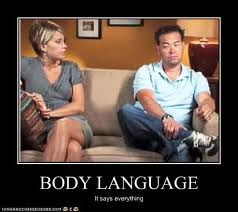
The latest experiment is to get trainee teachers to undertake body language classes in order to deal with disruptive students:
Trainee teachers are to be coached to use their voices and body language to control disruptive pupils.
The Government’s school behaviour tsar is concerned that troublemakers scent weakness and start playing up when teachers lack an authoritative presence in the classroom.
Charlie Taylor, who advises ministers on tackling indiscipline, says that teachers’ voices often become high-pitched when they are tense and agitated, giving away their nerves.
Many also underestimate the importance of body language and posture and instead hunch their shoulders or fidget.
I can just hear them boast now:
“If it wasn’t for my improved posture I wouldn’t have been able to handle children who throw objects and make threats. Thank you so much for the body language lessons!”
Then again, even if the skill isn’t useful in the classroom, they may improve your poker game.
Tags:Charlie Taylor, Classroom Management, Disruptive Students, Education, Government’s school behaviour tsar, lack an authoritative presence in the classroom, Teacher Training, teachers’ voices often become high-pitched when they are tense, Trainee teachers, Trainee teachers are to be coached to use their voices and body language
Posted in Classroom Management, Teacher Training | Leave a Comment »
May 21, 2012
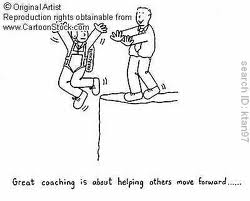
Although I have not had this experience myself, I have heard many young teacher talk with exasperation about their experienced colleagues. These teachers, looking for mentorship, problem solving methods and simple direction and assurance from their older and more confident co-workers, have complained that they are often left to their own devices. They claim that experienced teachers tend to find a comfortable groove and are reluctant to do any more than absolutely necessary.
Whilst I realise that this characterisation of experienced teachers doesn’t reflect all who fall into that category, I wonder whether teacher burnout as well as the fact that experienced teachers have reached the peak both in status and salary, are contributing factors to this likely scenario. Since these teachers have devoted decades to what is a challenging and physically taxing profession, the job of mentoring a new teacher can often be too much of burden.
If this is correct, it is quite unfortunate. Our young teachers, in my opinion, are poorly trained. Our teacher training courses are high on useless theory and low on practical instruction. I have never met a teacher who considered Vygotsky’s theory of proximal development of greater use to their day-to-day teaching than the precious but fleeting weeks spent visiting schools as a pre-service teacher.
There clearly needs to be a greater incentive for experienced teachers to help new teachers settle into their role and adjust to the dramatic change from student-teacher to actual teacher.
Last year I formulated a two-tiered approach to making best use of experienced teachers:
1. Experienced teachers who are deemed to be excelling at a certain standard are offered a mentoring role for higher wages. If accepted to take on that role, these teachers would offer new teachers the chance to spend a few days in their classroom, let them observe their lessons, give them access to the their planning material and be someone out of that teacher’s school environment who can deliver advice and guidance via email and phone. This challenges the mentor teacher to strive in their new position as well as their underling.
2. For the second category of teacher, I recommend that newly retired teachers, who have left the profession with a wealth of knowledge and an eagerness to maintain links with the profession, be paid to mentor and assist teachers who have not been performing at the required benchmarks. Instead of firing teachers in the first instance, I propose that these teachers get the opportunity to improve with a greater deal of support and collaboration.
WHAT THIS SOLUTION ACHIEVES
• Provides the opportunity for excellent teachers to be better paid;
• Allows retired teachers to maintain links with their profession and share their wealth of experience;
• Gives new teachers greater confidence and a non-judgemental mentor who they can approach; and
• Allows teachers currently not working at their premium a second chance that may reinvigorate and refresh them.
Tags:Education, Experience, Mentoring, Salery, Schools, Teacher, Teacher Training, Teachers, Teaching, University, Vygotsky, Zone of Proximal Development
Posted in Teacher Training | 2 Comments »
March 20, 2012

Another year, another impending strike. I know I am a lone voice on this one, but I find the notion of teachers striking very distasteful and selfish. The job of a teacher is to support and nurture their students. When a teacher decides not to front up to work, they are robbing children of a day of school.
I have never met a teacher that went into the caper for the money. It is a well-known fact that teachers don’t get paid vast sums of money. Partly, this is due to tradition and partly it is due to the fact that Governments simply cannot afford to offer large pay increases across the board.
Am I suggesting that teachers should not be paid more? Absolutely not. I think I work hard enough to justify an increase of salary (currently 3% less than a public school teacher). There is enough wasted money spent on education, I think it would be quite appropriate for some of that misspent money to be allocated to teachers.
What I don’t agree with is the argument that teachers should be given a marked increase. If that was to happen before I started my teacher training, I never would have become a teacher. A large wage increase would have led to a greater popularity in teacher enrolments. The flow on from this would have been that to get into a teaching course, the tertiary rank (based on Year 12 results) would have been much harder. I simply would not have had the grades to get a place.
Some would see that as a positive. Teachers should, according to many, posses outstanding academic credentials. After all, the smarter the teacher, the better the teacher, right?
Not necessarily. I was a late bloomer. I struggled throughout school. My teachers found me very frustrating. No matter how much I applied myself, simply passing was a huge challenge for me. And yet, it is this struggle that has made me become a decent teacher. It has provided me with patience and it allows me to understand the struggles of students with learning difficulties and confidence issues. I try to be the very teacher I felt I needed, but never had.
Whilst I believe that teachers do a wonderful job and they deserve to be paid accordingly, I would like to reach that point without strikes and without Education Unions (they shouldn’t be allowed to be called the Education Union – they aren’t representing what is best for education). I would like potential teachers to join this wonderful profession more for the passion and dedication they have for the job than the money.
I expect that I will be critcised roundly for my stance. I look forward to reading your take on this.
Tags:AEU State Counci, Education, Education Union, Government Funding, Industrial Relations, Mary Bluett, Parenting, Striking, Teacher Training, Teachers, Teachers Salary, Teaching
Posted in Education Union, Government Funding, Teacher Training, Teachers Salary | 4 Comments »
November 20, 2011

I have never cried in front of my students. However, in my first years of teaching, there were times when I felt completely out of my element and had to keep my resolve and try by best to pull through.
I’ve just read a brilliant piece by Caitlin Hannon, a first year teacher, whose introduction to teaching reduced her to tears. And who can blame her?
I broke a cardinal rule of teaching several times last year: I cried in front of my students.
Sometimes it happened out of frustration. Just as often, I was overcome during very honest conversations about the struggles my students face within and beyond the school building. At least twice the tears were brought on by uncontrollable laughter at a student’s joke.
As a first-year teacher, I figured tears (of some kind) were inevitable.
I knew I wanted to make a difference, and I thought that difference needed to start in the classroom — not in an office as a policymaker, with little or no connection to, and understanding of, what happens inside schools.
This desire, and my nontraditional education background, led me to Teach For America, a program that trains recent college graduates from various backgrounds to teach in public schools. I spent my first year teaching English at Tech High School, which served a predominantly low-income, minority population. This year, I am teaching seventh-grade language arts at Emma Donnan Middle School.
By the end of that first year, I realized that the life I’d changed the most was my own.
Who is prepared to read a child’s disclosure of abuse in a journal entry?
Who is an expert at helping a student handle the loss of several close family members in a bout of gang violence over the weekend?
I experienced both of these scenarios and more during my first year, and it’s hard to imagine a traditional route to the classroom making it any easier to deal with such heartbreak.
Above is just an excerpt of the article. I encourage you to read the entire piece. It strengthens my long-held position, that teachers are not fully prepared for the rigours of a classroom due to the failings of the teacher training programs. I also feel that new teachers are left to their own devices when they really need a non-judgemental mentor to help show them the ropes and counsel them through the tough times.
Ms. Hannon may not have had her last cry at school, but her passion and teaching philosophy suggests that she is going to have a great future. Her students are going to be the great beneficiaries of her blood, sweat and, yes, tears …
Tags:Caitlin Hannon, Education, Emma Donnan Middle School, life, Students, Teach for America, Teacher, Teacher Training, Teacher Welfare, Tech High School, TFA
Posted in Teacher Training, Teacher Welfare | 6 Comments »
October 31, 2011

Ofsted is wrong. Teacher training doesn’t need to be tougher, it needs to be smarter. The reason why our new teachers find it so hard is not because they cruised through their training but because their training didn’t prepare them for the classroom.
Tougher teacher training is not going to achieve anything:
Tougher training should be given to teachers in a bid to raise standards in the classroom, an education watchdog has proposed.
The guidelines, drawn up by Ofsted and published on Monday, would see a greater emphasis on teachers’ behavioural management and ability to teach pupils to read, including those with special educational needs.
The ways in which trainee teachers are currently assessed would also change; inspectors will rate trainees’ effectiveness in few categories but according to a tougher criteria. The inspection will include an increased focus on trainees’ subject knowledge and the quality of training.
My University course was as tough as they come, but it was too steeped in the theoretical. I needed far more exposure to classrooms than 5 weeks in year one and 9 in the second and final year of my degree. I needed to see how different teachers and different schools operated. I needed to be in touch with resources that was shown to work and methods that I could employ later on.
Instead, I was treated to mindless theory and useless advice. It was an extremely tough course, but one that offered me precious little in terms of real experience and practical insight.
Tags:Classroom Management, Education, Lucy Sherriff, Miriam Rosen, Ofsted, School Standards, Special Educational Needs, Teacher, Teacher Training, Teachers
Posted in Teacher Training | 1 Comment »
October 28, 2011

It seems to be more fashionable than ever to knock teachers. Teachers are being dubbed as lazy and inept.
In truth it is easy to criticise teachers but very hard to be one.
We need more articles like this one by Patricia McGuire to defend teachers and set the record straight.
Yes, teachers should certainly be held accountable for excellence in teaching and for measurable results in the progress their students make each day. Teachers are on the front line of student learning assessment, since they really do know better than anyone else what makes a child successful or lackadaisical, engaged or detached in class. Standardized tests rarely measure the real progress that teachers make with some of the most challenging pupils whose learning styles are far off the normed curves.
The current fashion in education reform treats teachers as lazy slugs who care little about whether their students are learning anything. The assumption behind using standardized testing for teacher evaluation is that the only way to make teachers care about learning is to embarrass them publicly when their students do not perform according to someone else’s idea of norms. This assumption is what is truly preposterous!
For teachers who choose to devote their life’s work to some of the most difficult classrooms in America, such as here in the District of Columbia, the testing imperative becomes a monumental disincentive to stay in the classroom for any length of time, since the opportunities for sustained superior results on standardized tests are rare, while the risks of frequent subpar results are very high. It’s no secret that the widely-hailed Teach for America program has ingrained two-year turnover in its teaching corps. TFA teachers rarely stay to wrestle through the down years, which are frequent among students in marginalized communities.
Governments are so busy trying to find a negatively geared incentive for teachers and a scale that compares their effectiveness that they have lost sight of the most important pieces of the Education reform puzzle:
1. Revolutionise teacher training programs to focus on the practical instead of the theoretical.
2. Have measures in place that allow all teachers (especially new teachers) the support they need.
3. Spend more time critiquing schools with questionable cultures of bullying and harrasment. Give these school’s the support they need to better handle their affairs.
Tags:Arne Duncan, Education, Education Reform, Lazy, life, Parenting, Patricia McGuire, Standardized Tests, Teach for America, Teacher Assessment, Teacher Evaluation System, Teacher Evaluations, Teacher Training, Teacher Welfare, Teachers, Teaching, Value Added Teacher Evaluation
Posted in Teacher Training, Teacher Welfare | 2 Comments »
October 22, 2011

Notionally, I have no problem with being evaluated. I suppose it is a good way for me to get objective advice from an impartial other. This could then potentially have a positive effect on my future teaching.
But I have been evaluated before. All Australian student-teachers are put through a series of evaluations before qualifying for their teaching degrees. My evaluations proved a heart-rendering, confidence sapping, irritating, period of despair. The feedback I got was that “the students liked me too much”, that they “behaved for me rather than because of me”, that I “teach too much like a male teacher” (what does that even mean?) and that I “need to be more emotionally distant” ….
One of the main reasons that I decided to become a teacher was so that I could offer my students an alternative from the garbage I got dished up when I was a child. The sad thing is, if I get evaluated, there is a great chance it will be by the very type of educator I am trying not to be.
Bill and Melinda Gates touch on it in their brilliant piece in The Wall Street Journal:
It may surprise you—it was certainly surprising to us—but the field of education doesn’t know very much at all about effective teaching. We have all known terrific teachers. You watch them at work for 10 minutes and you can tell how thoroughly they’ve mastered the craft. But nobody has been able to identify what, precisely, makes them so outstanding.
This ignorance has serious ramifications. We can’t give teachers the right kind of support because there’s no way to distinguish the right kind from the wrong kind. We can’t evaluate teaching because we are not consistent in what we’re looking for. We can’t spread best practices because we can’t capture them in the first place.
Our Education System is so flawed at the moment that I am not sure effective teaching can be properly measured. There are plenty of teachers like me (most are far better) that want to buck the trend because we want something different for our students. We want to try new things, we want to engage our students, and against the advice of some we do not want to practice ’emotional distance’ from our students. If we were evaluated we may be judged poorly, but our students love our classes and their parents are satisfied with our performance and that should be all that matters.
And why just evaluate the teachers? Who is evaluating the Principals? What about the school culture?
It’s like evaluating the pasta in a pasta dish. Sure the pasta is the most important ingredient, but if the sauce and other ingredients tastes bad, no matter how good the quality of pasta is, the dish will be a failure.
Until we have a better measure for judging good teaching and until we evaluate all stakeholders and elements of education together, the results will be tainted and ‘unique’ teachers will be forced to follow the herd.
Tags:American Federation of Teachers, Bill and Melinda Gates Foundation., Bill Gates, Education, Mahalia Davis, Melinda Gates, MET, Microsoft, Parenting, Randi Weingarten, Ridgeway Middle School, Scholastic, Teacher Evaluations, Teacher Training, Teachers, Teaching
Posted in Teacher Training | Leave a Comment »
October 5, 2011

People who don’t know me well assume that I fell into teaching because it pays my bills. They look at a male primary teacher and think that I must have been low on choices to pick a profession that the average man wouldn’t opt for in a million years.
Their impressions are all wrong. In fact, I did have choices, but all I wanted to do was to teach. It’s hard to explain to those who associate teaching with low pay, long hours, high stress, immense pressure and classroom management headaches.
I read a brilliant piece by student teacher Stephanie Vincent, entitled ‘Why I Really Shouldn’t Be a Teacher‘. She lists 3 reasons why she shouldn’t go down the path she is going – the workload, lack of recognition and the challenges stemming from difficult parents.
Yet, with all those detracting factors, she is very happy with her choice:
By becoming a teacher I will be lucky enough to spend every day doing something that I’m passionate about. From the first day of my teaching practicum I felt as though I had entered a sacred world, and I can confidently say that I want to spend my future there. Quite simply, I love teaching and children.
Luckily, I don’t seek recognition or a prestigious job. I want a job that excites me. Every day students remind teachers why they teach. This was made clear to me throughout my practicum experience. When I was able to connect with students or when I saw students’ eyes light up when they finally understood a difficult concept, I felt deeply rewarded. Students are why teachers teach.
But what about those difficult parents I mentioned? Although I have not yet had to deal with upset parents, I did deal with an upsetting experience. I worked with one student in particular in a one-on-one setting, and we developed a close bond. During my practicum her entire life was essentially flipped upside down, and she reached out to me. It was devastating to know what she was going through. I was helpless and questioned my ability to deal with it. I discussed my fears with my teaching associate, and as always, she was amazing. She reminded me that, as a teacher, I could help this student. Teachers are in a unique position in that they can provide every child in their class with a positive environment, for at least part of their day, and show them that someone cares.
Suddenly those three reasons I talked about above for not becoming a teacher seem far away. I cannot think of anything that I would rather do. I want to learn how to teach so that I can spend every day with students and so that we can learn from each other. Each and every student brims with energy and unrealized possibility. I want to help them release that energy and realize their potential. In the end, teaching is the most rewarding and enjoyable job anyone can do.
This was just a pleasure to read. There is so much negativity surrounding this great profession, it is a joy to read from a passionate and driven teacher. I wish Stephanie all the best during her training and beyond. She presents as the type of teacher you’d want looking after your child. She reminds disillusioned teachers that if they don’t feel the same way as she does, they should perhaps consider a change of career.
Tags:Education, Inspirational Teachers, life, Parenting, Stephanie Vincent, Teacher, Teacher Training, Teacher Welfare, Teachers, Teachers Salary, Teaching, University of Lethbridge
Posted in Inspirational Teachers, Teacher Training, Teacher Welfare, Teachers Salary, Teachers Stress | 2 Comments »
September 28, 2011

It’s just bewildering how unprepared our system seems to be in dealing with students who turn up to school without basic language skill.
When a person fronts up to a doctor with an ailment that came about from unhealthy eating habits and reckless behaviour, the doctor doesn’t throw his/her hands up in the air and tell them that they can’t properly help them because of their inability to look after themselves.
When a plumber gets called to a house to inspect a toilet that has been clogged due to the owners stupidity and laziness the plumber doesn’t refuse to take the job citing that they can’t fix a problem that wouldn’t have existed had the owner stuck to flushing toilet paper only.
There are professionals that are prepared to take on all kinds of cases regardless of the negligence or challenges involved. And then there’s teachers …
Traditionally, teachers seem to crumble when presented with students who haven’t acquired basic skills at home. I am glad to hear that our wonderful profession is taking more positive steps in dealing with this problem:
In socially deprived areas more than 50% of children begin school without the ability to speak in long sentences, which experts say can lead to problems in later life. Schools across England are taking part in a day without pens to tackle this speech deficit.
It took the whole class of five and six-year-olds six attempts to reassemble these jumbled words into a coherent sentence: “Past the walked we shops.”
Partly it was the noise in the classroom which made listening difficult.
Partly it was the distracting presence of a man from the BBC with a microphone.
But mostly it was unfamiliarity with the basic rules of English, their first language, which made the exercise so long winded.
The children, from Baguley Hall Primary School in Wythenshawe, south Manchester, are bright and normal children.
But they have had few opportunities to develop conversation skills.
It is a poor area with high unemployment and a large proportion of children living in lone parent households.
Family discussions do not happen very often.
Of course I am making a generalisation (and I am not comparing a child with a clogged toilet!). There are plenty of teachers fully equipped at dealing with this issue. But there are too many that aren’t.
For me this has little to do with effective teaching and more to do with effective teacher training. Teachers are not fully prepared for the child that doesn’t know how to carry a conversation because practical skills aren’t properly covered in a Teaching degree.
Whilst it would be nice for parents to ensure their children turn up to school with basic language skills this just can’t be relied upon. Teachers need to be prepared for all types of scenarios.
Unfortunately, they are not prepared at all!
Tags:Andrea Taylor, Baguley Hall Primary Schoo, Child Development, Communication, Communication Trust, Education, England, English, Jean Gross, Jenny Midgeley, Language, life, Newall Green High School, Parenting, Teacher Training, Wendy Lee
Posted in Child Development, Teacher Training | 1 Comment »



 Topical Teaching