Archive for the ‘Parenting’ Category

Keeping Kids Safe Online

February 5, 2012

I agree with Adam Turner. Cybersafety is something parents need to address. They have the primary duty to ensure that their children are following safe online practices.

As far as I’m concerned cybersafety is primarily a parent’s responsibility, just like teaching about stranger danger or how to cross the road safely. The fundamentals of cybersafety are no different to the real world; don’t wander off, don’t talk to strangers, don’t reveal too much about yourself and call a parent if you’re unsure of something.

Some parents might complain that it’s all too complicated, but it’s not if you take an interest in your children’s activities and take the time to learn the basics. Talk to them about computers and the internet. Ask them what they’re learning at school and what they’re doing at home. Take an interest, just as you should in their other activities. 

Turner suggests ways in which parents can better supervise their children:

A common cybersafety rule is that the computer stays in the living area, positioned in such a way that anyone who walks into the room can see what’s on the screen. If notebooks are permitted in the bedrooms for studying, perhaps it’s on the condition that they recharge on the kitchen bench at night. The same rule can apply for mobile phones, which can also help combat cyberbullying.

You can split cybersafety into two key areas. The first is protecting young children from accidentally stumbling across inappropriate content. This isn’t hard if you can set up a list of appropriate bookmarks and trust your kids not to wander. Installing an ad and pop-up blocker offers an extra layer of protection. If children can’t be trusted not to wander, even by accident, you might consider a whitelist plug-in for your browser, which lets you limit access to a specific list of sites.

The second area of cybersafety is hindering older children who are deliberately seeking inappropriate content. This area is much harder to deal with, as smart and determined kids will find a workaround to just about any security measure (remember, help is only a Google search away).

There’s a big market for desktop filtering software, but don’t walk away and trust it to do a parent’s job. In my experience it tends to cripple your computer, but your mileage may vary. If you do want to restrict internet access, look at services that are independent of your end device – particularly useful if your house contains a variety of internet-enabled gadgets.

It’s worth investigating the filtering options built into wireless routers. Some let you create blacklist and whitelists, or switch off the internet at specific times. You could even run a separate wireless network for the children, making it easier to control their access without affecting your own. Another filtering option is DNS-level services such as OpenDNS. 

Whilst teachers should also take an interest in cybersafety issues, it’s up to the parents to take the lead.

5th Graders Caught Playing “Rape Tag”

February 3, 2012

One has to wonder what level of  outside supervision schools have if it overlooks a game involving “dry humping”. For this to be stopped only after a complaint from a parent suggests that some teachers should put down their mugs of coffee and actually observe the children during yard duty.

A disturbing playground activity has parents riled over what is going on during recess at an elementary school.

Washington Elementary School in New Ulm, Minnesota, is at the centre of controversy as it was learned fifth grade students had played ‘rape tag’ during recess.

The game is very similar to freeze tag, except to unfreeze someone, a student would have to simulate a sex act on the frozen person.

A parent reported the incident to school officials after finding their child was talking about the game on Facebook.

So what flimsy excuse does the Principal give for something that should have been banned minutes after it was first trialled in the playground?
The school’s principal, Bill Sprung, told KEYC-TV: ‘This age level of kids – 10, 11, 12—is a time when kids start to mature; start to experiment. 

He added: ‘Part of that experimentation is that they do things we wish they wouldn’t have done.’

There is a great level of trust that parents bestow to teachers and schools. They expect, amongst other things, that respect for women and girls is inherent in all activities both inside and outside of the classroom. These parents have been justifiably let down by a school that overlooked the obvious and acted reactively rather than proactively.

Should Parents Be Allowed to Smack Their Children?

January 29, 2012

Parenting is a difficult job, and as much as I am not in favour of smacking, I think it inappropriate for me as a loving yet imperfect parent to impose restrictions on other parents. How they choose to discipline their children should not be up to me or our politicians.

I believe that smacking does little good in the long-term and can potentially do a disservice to the child. Yet, I was smacked by my parents and have nothing but respect for the way they reared me. They clearly disciplined me out of love and an unwavering determination to enforce healthy routines and boundaries, not out of frustration.

I realise that smacking can escalate into worse cases of abuse, and I naturally abhor the abuse of children. I must say, that I also dislike the spoiling of children and the indifference of some parents in setting boundaries and enforcing consequences for their childs’ unruly behaviour.

Advocate good parenting skills and practices by all means, but don’t stop parents from doing what they feel is right for their own children.

The Importance of a Healthy Parent-Teacher Relationship

January 22, 2012

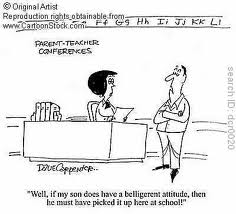
One of the most important skills of a successful teacher is the ability to harness positive interactions with parents. I believe that a teacher must consider themselves part of a team. After all, the parents and teacher form the three major stakeholders in a child’s education.

Such a notion is supported by expert Karen Campbell.

A GOOD parent-teacher relationship is important to every child’s learning journey and helps develop a memorable school experience.

That’s the opinion of Sunshine Coast education expert Karen Campbell.

And like any relationship, she says these need nurturing and constant attention to be of benefit to the child.

With the new school year only a week away, many parents may be meeting their child’s teacher for the first time.

“Parents have to realise that a teacher is such an important part of their child’s life,” Mrs Campbell, a tuition facilitator and former teacher, said.

“They need to introduce themselves to the teacher, and tell the teacher any special things about their child.

“Open communication is essential, so it’s important for parents to inform the teacher if there’s a problem at home such as a death, break-up or business failure.

“This allows teachers to develop an understanding and appreciate why a child may be behaving a certain way.”

Not all parents are easy to get along with and some employ methods that are not exactly to my liking, but I realise that a disconnect between myself and the childs’ parents is potentially destructive to the academic progress of the child.

It is important to work past any differences one may have and find common ground in the best interests of the child.

Tips for healthy parent-teacher relationships:

  • Re-introduce yourself to your child’s teacher by appointment
  • Inform your child’s teacher of any home-related problems
  • Volunteer to help with school activities
  • Make sure you adopt the same learning style at home as at school
  • Notify the teacher of any special talents or gifts your child may have
  • Open the lines of communication through casual conversations outside the classroom, for example, when dropping off your child or picking them up

The Role of Parents in Preventing Innovation in the Classroom

January 17, 2012

Whilst I believe that it’s the right of every parent to decide what is and isn’t appropriate at school, sometimes they go overboard. The parents that pulled their primary aged children from their school’s massage program (a program which gets children to massage each other) on the grounds that it was inappropriate, had every right to do so. What bothers me, is that by making the school’s program a big issue, they are in fact railroading future programs which may benefit their children.

As much as they may have disagreed with the outcome, the intention of the school was clearly commendable. They wanted to provide a more relaxed and harmonious environment for their students.

Parents are up in arms at a primary school where youngsters have been giving each other massages before lessons.

The ten-minute massage sessions were introduced at Sheffield’s Hartley Brook Primary School to help calm down pupils after lunch breaks.

School head Mrs Chris Hobson said the massage sessions have been a big success but some parents have withdrawn their children from the massage programme claiming it is ‘inappropriate’.

The Massage In Schools programme is designed to help pupils relax and concentrate after energetic lunchtime playtimes.

Parent Rachael Beer who has two children at the school said: ‘I just feel it is inappropriate for children touching each other. I do understand that children need calming down after lunch.

I just think there are better relaxation techniques out there that can help with that, such as yoga, that have the same benefits as peer massage that don’t involve them touching each other.

‘I think children like their own personal space. 

‘Many parents do feel the same way as me. If the head had consulted parents better, she would have a clear view of how parents feel about it.

‘Other parents are telling me they didn’t even know peer massage was being rolled out in school and they do feel uncomfortable with it.

‘I have opted my children out of it. They are then sat doing the actions to peer massage. I feel that those 20 minutes could be better spent doing something more academic.’

One of the big challenges educators of primary aged children have, is the ability to get their students to maintain concentration. It is very hard to keep young children engaged. Anxiety is also often prevalent, posing extra challenges on teachers to reduce the tension and keep the proceedings positive. An extra 20 minutes of academic studies is useless if the children are having trouble concentrating.

When parents make a school’s attempts at innovation difficult and take an idea born out of compassion and turn it into controversy, they discourage schools to want to do something new and different.

Innovation is the way forward in education. We all know our education system is flawed and it requires some fixing. That can only come about from thinking different and acting differently. When parents take a worthwhile idea and make it a media circus they are in effect rallying for the status quo.

Take a step back and observe the status quo. Is that what you really want?

Issues Relating to Kids and Video Games

January 3, 2012


Excessive video game use and high rates of video game addiction lead to much anguish from concerned parents. Many parents never saw the addictive pull of video games as an issue when they bought consoles for their kids or allowed them to have a computer in their bedrooms. I read a very interesting piece by writer, Scott Steinberg, on the major issues relating to children and video games.

He examines some of the most common concerns parents have about video games:

– Amount of Play Time
– Age Appropriateness
– Health and Obesity
– Addiction
– Safety Concerns
– Violence, Aggression and Misbehavior

The issue of particular interest to me was the video game addiction section. Video game addiction is not a term we hear very often, but I’m afraid it will be widely familiar in the next few years.

  • Addiction– For some kids, there is a real danger of becoming too involved in playing games, or even in living too much of their lives in the virtual world of the Internet. In rare cases, true symptoms of addiction can develop, and such kids can require direct help from their parents, peers, and professionals to have a healthy, balanced life. While a change of environment and routine can sometimes be enough to break kids out of an addictive mindset, the reality is that it’s hard to prohibit kids from using technology on a regular basis, since it’s such an integral part of daily life. Many experts encourage parents to become more engaged in the addictive activity in an effort to better understand the problem and prospective solutions. They also encourage families to seek out professional help should children exhibit warning signs of addiction. Several of these warning signs, according to the Search Institute, an independent non-profit organization dedicated to creating healthy communities, and other sources, include:
  • Playing for increasing amounts of time
  • Lying to family and friends about video game usage
  • Thinking about gaming during other activities
  • Using video games to escape from real-life problems or bad feelings, as well as anxiety or depression
  • Becoming restless or irritable when attempting to stop playing video games
  • Skipping homework in order to play video games
  • Doing poorly on a school assignment or test because of time spent playing video games

I urge parents to spot the signs before the addiction gets completely out of hand. It may even be worth reading Mr. Steinberg’s book, “The Modern Parent’s Guide to Kids and Video Games,” which will be free to download at www.ParentsGuideBooks.com in February 2012.

Parents Duct Tape Their Kids and Post it on Facebook

December 31, 2011

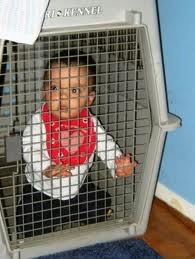
Perhaps there should be a crime against stupidity. If there was, I would hope parents would be intelligent enough to think twice before injecting their disturbing sense of humours on the rest of us. To some, taping your children up and photographing them suspended on a weights machine is hilarious. To me it’s downright sick.

An Arizona couple remained in custody Saturday morning after police said they duct taped the wrists, ankles and mouths of their two children and posted the photos on Facebook.

The children in the photo were a 2-year-old boy and a 10-month old girl, according to a Coconino County Sheriff’s incident report. One showed the boy hanging upside down by his ankles from a weight machine.

A friend who saw the photos called the state child abuse hotline Wednesday, prompting the sheriff’s office to arrest the parents, Frankie Almuina, 20, and Kayla Almuina, 19.

The mother told investigators the photos were “all in fun” and that the children were unharmed and were smiling afterward.

She also showed the reporting officer, Sgt. Michael Curtis, several other photographs on her cell phone that showed the little girl similarly bound.

“They indicated they did this as a joke,” county Sheriff’s Commander Rex Gilliland told CNN affiliate KTVK. “But there was fear on the children’s faces in the pictures.”

“I don’t know how anybody can rationalize taping a child’s mouth and then binding their hands and feet,” he added.

Police would not release the photos, saying they were too disturbing.

In her Facebook page, Kayla Almuina describes herself as a “stay and home mommy and wife” and jokes she studied at “harvard :)! jk.”

She told investigators that the reason the girl was appeared to be crying in the cell phone photos was because she had received some shots that day.

Authorities placed the children in the custody of their grandparents.

The parents, charged with two counts of child abuse each, remain in jail with bond for each set around $25,000.

Last week, a 21-year-old Chicago man was charged with aggravated domestic battery after he posted a picture of his 22-month-old daughter bound with painter’s tape across her mouth, her wrists and ankles.

The caption on the Facebook photo read:

“This is wut happens wen my baby hits me back. ; ).”

No, this is what happens when collecting “likes” and “shares” becomes more important than being responsible parents!

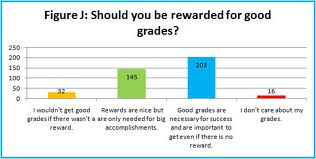
Is There Anything Wrong With Rewarding Children for Good Grades?

December 25, 2011

I love the way this commonly asked question is answered.

Q:  Should we be rewarding our six year-old for getting high marks on her weekly spelling test? I know better. But I can’t seem to get her to believe in self-satisfaction for doing a good job. Help.

K.B.


A: I have seen this all too often in my career in education. Parents are very well intentioned and want to support their children’s learning. Rewards or bribes to perform well at school or elsewhere may work temporarily, but there is a big price to pay.

It teaches the child that learning is not worthwhile in its own right. These external rewards take away the joy of learning for learning’s sake, stifling curiosity, inquiry and creativity.

It teaches the child that a parent’s love is conditional. “If my parents want to pay me for doing well at school, what if I do not do well – will they love me then?”

In my experience, reflecting the child’s day at school back on them is a great way to go. When they tell you they got 100 per cent on a spelling test, you might say, “I bet that made you feel good!”

Similarly, when they achieve an unfortunate result, you might ask, “How did that make you feel?” This could provoke a supportive and warm conversation with your child about being frustrated that she wasn’t able to learn the words and that next time, she might do things differently.

Above all, the child needs to know you are there for them regardless of marks, behaviour, talent and ability. It is only when love is unconditional that children feel supported and can grow and mature.

Children have a very precious internal motivation to be good, and external rewards show the child that we do not trust their desire to be good or do the right thing. In short, the end result will be that the child will lose that natural internal motivation and external rewards will assume the default position. You will teach your child that nothing is worth doing unless they get something for it. I am certain this is not the lesson you want to teach.

Jean Bigelow Parent Educator/ School Principal

Parents’ Stress Damaging the Development of Their Children

December 22, 2011

Author David Code goes beyond warning parents about the effect their stress has on the lives of his children. He even blames their stress for “damaging their development and altering their DNA, because of crushing worry and anxiety.”

“Stress is highly contagious,” says David Code, an Episcopal minister and author of Kids Pick Up on Everything: How Parental Stress is Toxic to Kids. “Parental stress can weaken the development of a child’s brain or immune system, increasing the risk of allergies, obesity, or mental disorders.”

So calm down and socialize more. Resolve to start the new year with peace on hearth – it’s not only good for your health but your children’s physical and mental health too.

If you really want to make your kids happier, forgo the Xbox or iPad and invite friends over. The greatest gift you can give your children is your own, healthy relationships with other adults, Code says.

“That Xbox or iPad will placate the kids for a while, but soon they’ll demand even more. Far better to take the kids over to your friend’s house – you and your friend can relax with a drink while both sets of kids entertain each other. That means better social skills for your children, and lower stress levels for you as you ‘scratch that primal itch’ to bond, which reduces your stress,” he adds.

According to Code, research shows children can catch their parents’ stress just like they catch a virus. “Children are like little sponges, soaking up the free-floating stress in today’s anxious households until their developing nervous systems hit overload, at which point they act out, or develop symptoms of mental or physical illness.”

The mind-body connection strongly factors into almost every child’s behaviour –the parent’s mind affects their child’s body “through a kind of emotional pipeline,” Code says. The more stress a kid picks up from the parent, the more ill health – even if the parent is unaware of his or her own anxiety.

Personally I think Code goes over the top with the prognostications of DNA damage but I agree with his main contention. There is no doubt that stress from parents has effects on their offspring.

Code offers the following advice:

Steps to raise healthier kids, according to author David Code:

• Set up a no-screens-after-5 p.m. night: Turn off all screens, big and small and socialize.

• Socialize more with other parents while your kids play together. “If I could wave my magic wand and reduce the stress of today’s parents, I would give them a glass of wine, a friend, and an Italian village square to go socialize in every evening.”

• Bring on the potluck: Once a week dine with friends. “Since you have to make dinner anyway, a weekly potluck doesn’t suck that much time away from your current schedule.”

• Exercise with your spouse. Build muscle and your marriage too. “It’s easier to discuss tough topics and get emotional when you’re side by side on the treadmill or jogging down the street. It’s easier to be emotional in motion.” Even a short evening stroll together is great marital maintenance.

• Take a vacation every three months for a complete change of pace and a healthier family.

• Practice the daily vacation – lunch hour. “Instead of building stress over eight hours, you’ll start over again after lunch and not get so wound up by quitting time.”

• Establish the one-minute instant intimacy builder with your spouse. “When you both get home from work, while changing or preparing dinner, share your highlight and ‘lowlight’ of the day. Try to focus on one moment in time,” he says, adding that sharing one specific lowlight each day builds bonds because we won’t feel so alone in our suffering.

Five Signs it is the End of the School Year

December 16, 2011

Teachers find the last weeks of a school year absolutely exhausting. Many of us crawl towards the finishing line amazed that the deadlines have been reached and the seemingly insurmountable boxes have somehow been ticked.

Now that I am both a teacher and a parent of a school aged child, I can see that the end of year poses challenges for parents too.

That’s why I loved this piece by Nancy Davis Kho, whose article about the five telltale signs that the end of the school year has been reached (from a parents perspective) is very insightful and humorous:

1.) You’re Broke. Between the gift for the classroom teacher, the teacher’s aides, the piano teacher, the math tutor, the babysitter graduating high school who wasn’t much for cleanup but at least she could walk home, and the niece graduating college after the five year plan, you are clean out of $20 dollar bills. (Apologies if you are more of $100 dollar bill gifter, I didn’t mean to insult you. Can I please be your babysitter?) It gets so bad that you could almost use a second job. But you can’t do that, because…


2.) Your Productive Workday Has Been Shot to Hell. You have to be up at school to see the end-of-year talent show, of course, and your child would never forgive you for missing out on the end-of-year class picnic. Then the school districts get in on the act, fulfilling some budgetary or union contract obligation by cutting a bunch of June school days in half. Your to-do list becomes an archive, saved in its non-checked-off state for future generations to admire. It’s enough to make you run for comfort to the cookie jar which is full because…

3.) You Have Baker’s Elbow. Brownies for the ballet recital, pound cake for the Little League team party, chocolate chip cookies for the celebration of a completed Social Studies group project; you’re churning them out like your middle name is Poppin’ Fresh. You would like to buy stock in King Arthur Flour and Betty Crocker, but can’t get out of the kitchen long enough to log onto E*trade. And if you’re going anywhere past the stove it’s going to be to the laundry room because….

4.) The Lunch Bags Look Like They’ve Been Beaten. Bruised, torn, bearing tiny flecks of unidentifiable foreign substances that may or may not be mold, the insulated lunchboxes that started off the year in bright primary colors have been reduced, through constant improvised use as seats, soccer balls, and weapons, to an indistinguishable grayish brown.  You weigh running them through the washer one last time. But would it be the cycle that finally separates the strap from the rest of the bag? That would probably make you cry, because…

5.) You Burst Out Crying At Inopportune Times. It’s the inevitable result of being handed concrete evidence, in the form of a graduation certificate or a class council election, that Your Children Are Growing Up. The ultimate example was when the Kindergarten teacher rewrote Eric Carle’s “A Very Hungry Caterpillar” to describe all the knowledge that our children had hungrily gobbled up throughout the year. Then she had them hold up wobbly, colorful pictures they’d drawn of butterflies and said, “And now you are beautiful butterflies who will fly off to First Grade!” Twenty-three moms, 15 dads, and one kindergarten teacher hit the deck sobbing, delaying the children’s American Sign Language performance of “Somewhere Over the Rainbow” until we’d (temporarily) recovered our composure.