
Archive for the ‘Engaging Students’ Category

Tips for Engaging the Struggling Learner

September 12, 2012

Courtesy of Andrew Marcinek comes this fabulous list:

1. Have fun

I hope that this project will make writing a paper a more engaging process. Many times, students go through the motions in pursuit of the grade while missing out on the learning. This is where I hope this project will take us in a different direction. Too many times in higher education grades are obtained and learning is left behind. This is where that routine changes. I want you to become an expert on the issue you are covering and enjoy the process of research and writing.

2. Learn beyond the walls

Every week we enter our classroom and shut the door. There are no windows, one computer, and eight outlets. However, most of you possess devices that connect you to the outside world and to numerous contacts. Some of you are probably reading this on a mobile device. What is wrong with this picture? It is a skewed vision of what learning should be. Therefore, this project will take our class beyond the walls and windowless concrete and carry us into a world that is constantly connected and moving.

3. Expand your audience

I read your paper. I edit your paper. I grade your paper. Yawn. While I am an objective, worthy audience, I am simply one person. Today’s student has the ability to reach out to millions on a daily basis and simply ask, “Is this good?” This project will present many windows to your work and engage you in a learning community beyond the walls of the Science Center. Learning should be transparent and open. Please allow others to collaborate with you as we engage in a new learning community.

4. Collaborate

One of our best resources as learners is our ability to connect. We can connect like never before and have the opportunity to engage with others from around the world on a daily basis. If we can learn anything from the web 2.0 generation it is that the ability to share and learn from each other is limitless.

5. Deconstruct an issue transparently

This project will open up your research and allow others to see how you are progressing. This project will model an environment of constructive criticism and intellectual discourse. There is no room for bullying or inappropriate criticism. This environment will employ transparency so that we can share and learn from each other.

6. Make many mistakes along the way

Unlike traditional assignments where mistakes are marked wrong, this project will mark your mistakes as learning steps. I encourage you to take risks and seek out information beyond what you think may or may not be right. In this forum, being right is hardly the end goal. Rather, the pursuit of greater understanding while exercising all of your options within a moral and ethical framework.

7. Share

What happens when you take notes within a notebook? You eventually close that notebook and put it into a bag, or drawer. Only you possess that information. This is hardly the way our world works today and hardly the way we will conduct our research for this project. By conducting research that is transparent, it will allow us to use a variety of sources and learn from each other.

8. Provide Constructive Criticism

One of the benefits of transparent learning is the ability to not only receive feedback from the instructor but to seek feedback from a much larger audience. This community we are creating will allow us to bounce ideas and critique work as we progress. While I will also take part in this critique, I urge you to consult your classmates for feedback and suggestions.

9. Eat a sandwich

A sandwich is like a well-constructed argumentative essay. It contains many layers but is constructed in a central…Ok, I can’t continue with this nonsense. Just make a sandwich and enjoy it.

10. Engage Others

This type of work will require you to engage an audience and be a participatory learner. It is hard to sit back and coast in this format and will require each student to be an active participant in the learning process. I look forward to learning from each of you and creating a community of resources.

Click on the link to read The Ultimate Classroom Resource for Teaching About Comics

Click on the link to read Why Spelling is Important

Click on the link to read Captain Phonics to the Rescue!

Click on the link to read the Phonics debate.
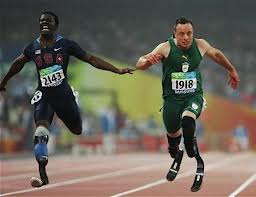
Teaching Children about the Paralympics

September 2, 2012


Courtesy of The Guardian:

Paralympic interactive guide
Click on the coloured buttons to find out what’s going on where. Also find this day by day guide.

Paralympic news as it happens
Find the latest coverage of the Paralympics here including live blogs, the day in pictures, videos and comment.

Paralympic sport graphics
One of the main mysteries about the Paralympics is just what is Boccia? Find out what and how using this really useful graphics explaining the format and rules of Boccia and other Paralympic sports including Goalball and Wheelchair Rugby.

Paralympic datablog
Data and charts to explore in class on who is competing in the Paralympics including lots of useful charts and a full list of every athlete competing at the Paralympic Games and the disciplines in which they are taking part.

Paralympics opening ceremony
Last week’s dazzling opening ceremony with fireworks, giant umbrellas and, of course, Stephen Hawkins was in essence an upscaled science lesson – so great stuff to review with your class. Here is a selection of the most spectacular images from a memorable night in east London.

Paralympic opening ceremony media coverage
How the newspapers covered the launch of the London Games. The Daily Express and the Daily Star were the only ones to feature another story as their main headline.

The history of the Paralympics
Fascinating tale of how the Paralympics grew from a sports day for veterans to a global event, from the Guardian archives.

10 Paralympics stars to watch
From China’s blind goalball hero Chen Liangliang to Oscar Pistorius, 10 of the 4,200 competitors to keep a special eye on.

Brick-by-brick Olympics
If you are reviewing the Olympics in class don’t miss the incredible Lego animations reconstructing the best moments of the global sports event in Lego. Here’s a montage of the best bits with links to all the Brick by brick recreations.

Virtual tour of the Olympic Games
This immersive 360 degree virtual tour of the Olympics is great for a whiteboard show and tell.

Ability v ability: British Paralympic Education Pack
Useful education pack with plenty of ideas on how to include the Paralympics in your lessons or assemblies.

Dr Ludwig Guttman – founder of the Paralympic games
A Holocaust Memorial Day resource about Dr Ludwig Guttman, Holocaust survivor and founder of the Paralympic games. The resource is an opportunity to teach students about the link between the Paralympic games and the Holocaust.

Using the Paralympics in class
ICT teacher Chris Leach’s useful blog on bringing real world events to life in class using a range of technology.

Importance of failure
Teacher and psychologist Marc Smith looks at how we embrace failure as a springboard to success.

Meet the Paralympians
Inspiring video of Paralympians including Ellie Simonds and Jon-Allen Butterworth.

Paralympic classification of elite athletes with intellectual disabilities
The inspiring story of how athletes with intellectual disabilities have rejoined the Paralympics in London 2012

ParalympicsGB
The official paralympics site with news and athletes’ case studies

And David Beckham
Sainsbury’s is the official sponsor of the Paralympics and its useful site includes an invitation from David Beckham calling you to play an online game of blind football.


Click on the link to read Lessons Children Can Learn from the London Olympics

Click on the link to read Who Would Want This Athlete Representing Their Country?

Click on the link to read Sometimes the Parents are More Exhausted than their Athlete Children

Click on the link to read Teaching Children to Deal with Embarrassment


The Ultimate Classroom Resource for Teaching About Comics

August 27, 2012

The popularity of comics is at an all-time high due to recent blockbuster movies. The Guardian have put together a list of resources that will no doubt excite young children:

Resources from Guardian Teacher Network

Creating comic books with Photoshop: workshop
A KS4 workshop, also suitable for KS3, using Photoshop versions 5 and 6 to create comic. Great resources and lesson ideas from Culture Street.

How I make comics by Sarah McIntyre
Children’s illustrator and writer Sarah McIntyre shares her creative process, breaking it down step by step so that your students can create their own mini comic. Perfect for printing out too.

How to draw Vern and Lettuce by Sarah McIntyre
Here, Sarah breaks down the steps and shapes she uses to draw her comic characters.

How to draw Vern and Lettuce (again) by Sarah McIntyre
This time Sarah share a step-by-step, shape-by-shape guide to drawing Vern the sheep. Plenty of scope for students to add their own stamp too.

How comics have transformed the image of science and scientists
This is a printable handout of an Education Guardian article exploring the cultural impact of comics.

Creating evil characters in stories
All superheroes have a nemesis. This lesson explores how to bring baddies to life in stories. It can be used as a one-off lesson or as part of a scheme on creative writing/reading skills.

Which books could teachers use to encourage reluctant readers?
From Spiderman comics to the classics, what was the book that fired your love for reading? Our readers share their favourites in our open thread.

Best of the web

Comics in the classroom: 100 tips, tools, and resources for teachers
I stumbled this indispensable library of links and resources on one of my new favourite education technology blogs – ICT for Teaching & Learning in Falkirk Primary Schools – in a post called Comics in the classroom – online tools.

Make your own comics
Step-by-step guide and range of layouts.

Making comics with your own photos
This online tutorial explains how to use the Pages application to turn your own photography into comic books.

Buzz! Whiz! Bang! Using comic books to teach onomatopoeia

Teaching philosophy with Spider-Man
Fascinating feature exploring the place of pop culture in the curriculum. Has a higher education focus, but there are some transferrable ideas.

Using student generated comic books in the classroom
For more theory on the how and why to use comics in class, take a look at this 2002 paper from the Journal of Adolescent & Adult Literacy.

I also found lots of blogs dedicated to role of comics and graphic novels in learning – give me a shout in the comments if I’ve missed your site or a personal favourite.

Flummery.com
Loads of ‘how to draw’ pdfs – ranging from characters and animals to backgrounds – that you could print for use in arts lessons. Also includes a brilliant activity on analysing and comparing comic texts.

Teaching with Comics
This blogger is “interested in exploring the use of cartoons, comics, and graphic novels to promote literacy”. Recent posts include Learning vocabulary visually and a piece that answers the question Why comics?

The Graphic Classroom
A really long list of suggested reads, categorised for age group and suitability. Handy.

Comics in the Classroom
Features reviews of new texts and interviews from students and children about the comics they love.

Click on the link to read Who Said Grammar Isn’t Important?

Click on the link to read Why Spelling is Important

Click on the link to read Captain Phonics to the Rescue!

Click on the link to read the Phonics debate.

The Perfect Way to Start off a School Year

August 15, 2012

There is nothing better than a teacher flash mob to ease the apprehensions and anxieties of a first day at school. I love it when teachers stop playing the authority card and instead invest in connecting with their students through fun and positivity:

Teachers at Hancock High School in Mississippi went into the first day of the 2012-13 school year with what can only be described as an unconventional lesson plan.

Instead of the usual icebreaker sessions and syllabus distribution, the faculty gathered students in the gymnasium, where they performed a flash mob to Carly Rae Jepsen’s “Call Me Maybe.”

Click on the link to read Brilliant Clip of a Head Teacher Dancing

Click on the link to read Who Said Grammar Isn’t Important?

Click on the link to read Misplaced Lego is Often Found in the Strangest Places

Teaching Children about the Curiosity Mars Landing

August 7, 2012

Courtesy of The Guardian is a list of teacher resources for teaching children about the Curiosity landing on Mars:

Landing on the Curiosity rover on Mars
This brilliant interactive tells us what’s going to happen on Monday (everything crossed for that landing) and beyond if all goes well. An innovative “sky crane” will lower the Curiosity Mars rover on the surface of the red planet. Explore the exact stages of the landing sequence and the what’s next when the Curiosity reaches its destination at the foot of a mountain inside Gale Crater. One of the hypothesis Curiosity is due to investigate is how a bunch of light-toned rock in this area could have got this colour – was it by interacting with flowing water perhaps billions of years ago? If all goes well Curiosity will be able to give us some answers.

Essential guide to Mars rover Curiosity
More information on the timings and the project as a whole, which is part of the Mars Science Laboratory mission.


Curiosity rover’s seven minutes of terror

Oooh this stuff is exciting… the Nasa ship carrying the space agency’s Curiosity will bear down on the red planet at more than 8,000 miles per hour (Wiggo eat your heart out) and attempt to land the rover. This article explains how the manoeuvres the spacecraft must execute are so complex that the slightest mistake could notch up just another grim statistic in the history of failed missions to Mars. Mission scientists are instead hoping Curiosity will follow in the footsteps of Spirit and Opportunity which touched down in 2004 (Opportunity is still operational eight years later!).

Animated preview of the landing
You can also check out this computer-animated preview of the planned landing.

Free downloadable game from Nasa
More info on Nasa’ s free game to simulate the descent of Curiosity through the red planet’s atmosphere on the journey that has been dubbed the “seven minutes of terror”.

Nasa’s Curiosity Mars rover the stakes couldn’t be higher
If this summer’s landing fails America’s and possibly the whole world’s exploration of the surface of Mars could stop for a decade or more.

Alien life on Enceladus?
If you and your students need an alternative to fantasizing about a trip to Mars, why not find out a bit more about Enceladus? It’s an icy moon of Saturn, which many scientists believe is a much better bet for finding alien lifeforms in our solar system

A “Goldilocks” planet
Another potential target for life is Kepler 22-b, a newly discovered new planet in the “Goldilocks zone” of its own solar system. It’s about 2.4 times the size of Earth with a temperature of a comfy 22C (72F). Only downside is it’s a bit of a trek at 600 light years away from Earth and experts aren’t sure if it is made mostly of rock, gas or liquid!

Habitable alien worlds
The Habitable Exoplanets Catalogue ranks alien worlds suitable for life. So far they’ve found only 15 planets and 30 moons that are potentially habitable.

Space images
This month’s pick of the best space-related images includes the likeness on a distant planet of Disney’s most famous creations.

Women hold up half the sky
China’s first female astronaut Liu Yang – part of the Shenzhou 9 crew taking China one step closer towards building a space station.

Gagarin and the space race
A Powerpoint aimed at key stage two illustrating Gagarin’s incredible voyage and other major milestones in the stages of space exploration and an associated lesson plan to go with it.

The Earth is space
An online science lesson on the position of the planets in the solar system and the concept of gravitational pull.

Human adaptation to extreme environments
How would our bodies cope with an extreme environment change? This lesson investigates

The solar system
An online lesson for key stage three.

Planets
Some lovely graphics for primary aged children exploring the position of the planets in our solar system, the phases of the moon and how the moon orbits the Earth.

Nasa’s Mars Science Laboratory Mission
Everything you need to know about Curiosity and Nasa’s mission to Mars. The site explains how determining past habitability on Mars gives scientists a better understanding on whether life could have existed on the red planet and, if it could have existed, as idea of where to look for it in the future.

Spirit and Opportunity
Nasa’s Mars rovers Spirit and Opportunity were a huge success, let’s hope Curiosity can build on that! Opportunity is still sending in info and Spirit only gave up the ghost in 2010.

Online catalogue of habitable exoplanets
A cosmic directory listing the planets and moons most likely to harbour alien life pulled together by the Planetary Habitability Lab at the University of Puerto Rico at Arecibo – so far 15 planets and 30 moons have been labelled potentially ripe for life.

Science Museum space galleries
The next best thing to going to space is a visit to London’s Science museum.

Kepler
Nasa’s Kepler space telescope is working to spot more exoplanets.

Enceladus images
Awesome pictures of the Enceladus flumes captured by Cassini during its close flyby in November 2009 posted up with commentary by Emily Lakdawalla, planetary geologist from the Planetary Society.

Solar Dynamics Observatory
Stunning pictures from Nasa.

Hubble
Hubble is constantly sending us fascinating images and news – just last month astronomers using the NASA/ESA telescope found a fifth moon found orbiting icy dwarf planet Pluto. Here’s some guidance on using the Hubble images specifically in schools and also a series of astronomical exercises for secondary school aged students.

ARGOS
If we are going to go to Mars – or anywhere else in space – we are going to need some serious training, so check out ARGOS, no not that Argos, we’re talking about the Active Response Gravity Offload System designed to simulate gravity reduced environments such as Lunar, Martian or microgravity.

Click on the link to read Teaching Fractions: The Musical

Click on the link to read Six Tips For a Happy Classroom

Click on the link to read  Proposal to Adopt Shooting as Part of the Curriculum

Adults Look Like Fools When they Take a Kids Survey Seriously

July 10, 2012

Never, ever take a kids survey on face value!

According to a recent survey millions of children are complaining that school is too easy.

My students often boast about the lesson content being very easy. Then I assess them. It often turns out it wasn’t as easy as they first thought.

Why on earth would we believe a kids survey that claims school is too easy when it isn’t backed up by assessment results?

Millions of kids simply don’t find school very challenging, a new analysis of federal survey data suggests. The report could spark a debate about whether new academic standards being piloted nationwide might make a difference.

The findings, out today from the Center for American Progress, a Washington think tank that champions “progressive ideas,” analyze three years of questionnaires from the Department of Education’s National Assessment of Educational Progress, a national test given each year.

Among the findings:

•37% of fourth-graders say their math work is “often” or “always” too easy;

•57% of eighth-graders say their history work is “often” or “always” too easy;

•39% of 12th-graders say they rarely write about what they read in class.

If I was from the Center of American Progress I would be embarrassed to admit to spending so long on a survey that is clearly misleading. Talk about a waste of three years!

Rule 1: Never ask students whether class work is easy when you can get a better picture by gauging their assessment results (I’m not referring to standardised tests).

Rule 2: Never ask students whether their homework was easy. Instead, ask their parents as they are the ones that do it.

Rule 3: If you are trying to make education more “progressive”, don’t waste three years on a survey.

Click here for a more in-depth analysis of this survey.

Teaching Fractions: The Musical

March 22, 2012

As it is very difficult to convey the skills of fractions,  I am keen to see how a new programme that helps students learn fractions to music actually works. Fractions is often the skill that teachers dread to cover. I have heard of teachers that have demanded to teach lower grades just to avoid it.

That is why I am sure that this programme will generate plenty of interest:

For tapping out a beat may help children learn difficult fraction concepts, according to new findings due to be published in the journal Educational Studies in Mathematics.

An innovative curriculum uses rhythm to teach fractions at a California school where students in a music-based programme scored significantly higher on math tests than their peers who received regular instruction.

“Academic Music” is a hands-on curriculum that uses music notation, clapping, drumming and chanting to introduce third-grade students to fractions.

The programme, co-designed by San Francisco State University researchers, addresses one of the most difficult – and important – topics in the elementary mathematics curriculum.

“If students don’t understand fractions early on, they often struggle with algebra and mathematical reasoning later in their schooling,” said Susan Courey, assistant professor of special education at San Francisco State University.

“We have designed a method that uses gestures and symbols to help children understand parts of a whole and learn the academic language of math.”

It will be interesting to see if this programme becomes a success.

Six Tips For a Happy Classroom

January 6, 2012

These valuable tips come from Professor Dylan William, the inspiration behind the BBC2 series ‘The Classroom Experiment’.

* Stop students putting their hands up to ask questions – it’s the same ones doing it all the time. Instead introduce a random method of choosing which pupil answers the question, such as lollipop sticks, and thus engage the whole class.

* Use traffic-light cups in order to assess quickly and easily how much your students understand your lesson. If several desks are displaying a red cup, gather all those students around to help them at the same time.

* Mini-whiteboards, on which the whole class simultaneously writes down the answer to a question, are a quick way of gauging whether the class as a whole is getting your lesson. This method also satisfies the high-achievers who would normally stick their hands up.

* A short burst of physical exercise at the start of the school day will do wonders for students’ alertness and motivation. As any gym addict or jogger will tell you, it’s all about the chemicals released into the brain.

* Ditch the obsession with grades, so that pupils can concentrate instead on the comments that the teacher has written on written classwork.

* Allow students to assess the teachers’ teaching – they are the ones at the sharp end, after all. Letting pupils have a say is empowering and, if handled constructively, is highly enlightening.

I particularly like tip 5. We have become far too obsessed with grades. Comments from the teacher are a much better way of helping children achieve.

What ideas have you put into place that have improved the atmosphere of your classroom?

Birbalsingh: Children Think Winston Chruchill is a TV Dog

October 7, 2011

Whilst I don’t agree with everything Katherine Birbalsingh preaches, I think it would be irresponsible not to listen and absorb her frustrations with what is a failing Education system.

She is right that you cannot have students busy doing activities all day without giving them some background knowledge.  But I think she is wrong to dismiss the issues raised from the traditional style of teaching which she espouses.  The “Boredom Factor” is a huge stumbling block when teaching kids.  One may have gotten away with endless rote learning and long mat sessions in my day, but the kids wont let you get away with it today.

Below are some of the views she raised in a recent speech:

In a major speech on Wednesday evening, she told of children who failed to understand that Paris was the capital of France and other pupils who believe Winston Churchill is “that dog off the insurance advert”.

“Teaching historical facts or lists of vocab which rely on memory skills is considered old-fashioned,” she said.

“Instead, we think it better to inspire children to be creative through group discussion and project work. But background knowledge is absolutely essential to enable children to absorb new ideas.”

“Teachers are not meant to stand in front of the class, but instead move amongst children who are all busy doing something. The idea here is that ‘doing’ is more interesting than ‘listening’.

“That might very well be true. But the problem comes when we think that ‘doing’ needs to happen most of the time.

“This means that the teacher, traditionally a source of knowledge, almost becomes redundant as a fountain of knowledge and instead, becomes something of a referee.”

“Ordinary people don’t realise just how little some of our kids know. What we also forget is that the very thing that got us to where we are now, was the kind of education that we had – our teachers teaching us knowledge, so that we know the difference between Paris and France, even if it sometimes meant being bored in lessons and learning the discipline to struggle through.

“How many people in business clinch a deal because they know the soft skills of being polite, or know how to sit through a boring lecture, and concentrate enough to still pick up what is necessary to impress the client?

“Soft skills cannot be taught in a vacuum, independent of content or knowledge.”

I don’t take in much at all from a boring lecture.  Why is it always a choice between two extreme philosophies (this time, the progressive and the traditional)?  Why can’t a teacher borrow from both approaches and teach in a way that suits the needs and learning styles of their class?  Why take on a boring style of teaching which may command basic concentration when you can take on a more engaging style and shoot much higher?

The problem with our system is more complicated than the shortcomings of a progressive style.  In part, the problem is a result of rigid and extreme philosophies, instead of a more flexible approach that can be tinkered with to suit the makeup of the teacher’s class.

That’s right – not all students are the same!  Therefore a teacher cannot afford to be a one-trick pony.  They have to adopt a style that can be tinkered with and amended all the time.

Proposal to Adopt Shooting as Part of the Curriculum

October 4, 2011

“Where did you learn to shoot like that?”

“I learnt it at school.”

I have long said that there is rampant extremism in our educational system.  Educational thinking lacks balance and is certainly devoid of common sense.  Too often good intentions become crazy ideas because they are taken too far.

To read that the New South Wales Education Department would even consider for a brief moment a proposal to bring target shooting into schools just made me shake my head in disbelief.  Of all the stupid, irresponsible, insane ideas (and there’s too many of them to count), this one surely takes the cake:

High school students could be allowed to shoot guns during school hours under a plan by the NSW Education Department.

An internal department submission has revealed an advanced plan to allow target shooting into extra-curricular programs at the state’s 650 high schools, The Daily Telegraph reported on Tuesday.

It comes after the department consulted the NSW Shooters and Fishers Party and shooters associations about how to roll out target shooting into schools.

Deputy director-general schools Gregory Prior said the department was yet to make a decision about the issue.

Readers in the US might not flinch at such a program, but we in Australia do not have the right to bear arms in our constitution.  As a matter of fact, being in possession of a firearm is illegal.  Why on earth would we want to encourage in any way, shape or form the use of guns?

Sure it would engage disillusioned students.  It would be an absolute hit, I have no doubt about that.  But what kind of message would you be sendin?  Ask the kind folks of Columbine whether they think this initiative has merit.

Why can’t they think of responsible and productive ways to engage students?  Why does educational thinking continue to lean towards the radical instead of the sensible?