Archive for the ‘Education Matters’ Category

Nine-Year-Old Writes a Stunning Letter to Teacher After He Reveals He is Gay

December 16, 2014

gay

No one can exemplify acceptance like a child can!


Click on the link to read What’s in a Name?

Click on the link to read 10 Ways to Move Forward in Teaching as Well as Life in General

Click on the link to read 5 Ways the System Could Better Recognise Teachers

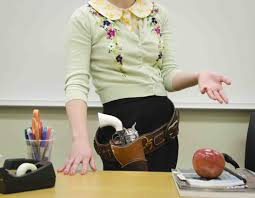
Click on the link to read Teachers, Lay Down Your Guns

What’s in a Name?

November 25, 2014

james


I wonder if kids with the name Michael are more likely to stare out the window and think about their lunch:

It has long been claimed that names can influence your chances of doing well in life and now it seems that monikers can impact on behaviour at school as well.

According to a new study, children named Jacob, Daniel, Amy and Emma are the most likely to display impeccable behaviour while those named Ella, William, Olivia and Joshua are most often to be found on the naughty step.

The findings come from a survey that looked at the names of more than 63,000 school children who logged good behaviour or achievement awards in online sticker books.

Those with the most good behaviour awards were named Jacob and Amy, closely followed by Georgia and Daniel.

By contrast, girls named Ella and Bethany and boys named Joseph and Cameron proved to be the naughtiest.

Other naughty names for boys included William, Jake, Joshua and Jamie while recalcitrant girls were also called Eleanor, Olivia, Laura and Holly.

Well-behaved names included Emma, Grace, Charlotte and Sophie for girls and Thomas, James, Adam and Harry for boys.  

Baby names – and their impact on life chances – have been studied for more than 70 years, with the earliest studies finding that men with unusual first names were more likely to drop out of school.

More recent studies have found more correlation between names and social backgrounds, with the parenting skills of mothers and fathers having a more critical impact on future development.

Gregory Clark, the economist behind The Son Also Rises: Surnames and the History of Social Mobility, found that girls named Eleanor were 100 times more likely to go to Oxford University than girls named Jade.

Although there are proportionally more Jades in the general population than Eleanors, the former was rarely seen at top universities, while the latter was relatively common.

Other common names for Oxford students included Peter, Anna, Elizabeth, Richard and John, while among rarely seen monikers were Stacey, Connor, Bradley, Kayleigh, Shannon and Shane.

The latest round of research into names was commissioned by School Stickers, which creates online stickers for teachers to award to pupils. 

Click on the link to read 10 Ways to Move Forward in Teaching as Well as Life in General

Click on the link to read 5 Ways the System Could Better Recognise Teachers

Click on the link to read Teachers, Lay Down Your Guns

Click on the link to read 4 Ways to Identify a Great Teacher

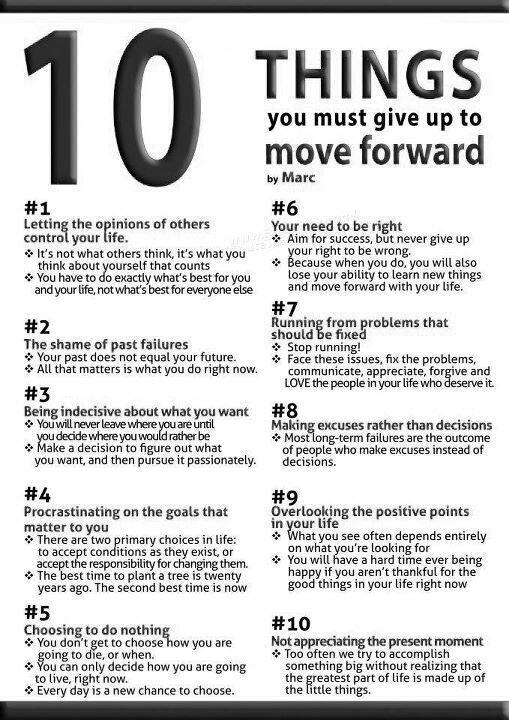
10 Ways to Move Forward in Teaching as Well as Life in General

October 7, 2014

forward

Courtesy of


Click on the link to read 5 Ways the System Could Better Recognise Teachers

Click on the link to read Teachers, Lay Down Your Guns

Click on the link to read 4 Ways to Identify a Great Teacher

Click on the link to read 3 Examples Why Robin Williams Would Have Made a Great Teacher

Click on the link to read Failure is Part of Success

5 Ways the System Could Better Recognise Teachers

October 5, 2014

world teachers day

It’s World Teacher Day! It’s great having a day totally devoted to teaching but imagine if it came with a gesture … or maybe 5:


1. From now on we are limiting your paperwork to manageable levels – Yearly planners, term planners, weekly planners, daily planners, Integrated planners – I go planner mad! I spend more time working on planners in a week than sleeping. And do the planners make me a better teacher? No way! If anything it makes it harder for me to find time to develop and prepare for the kind of engaging lessons my students need.

2. From now on you don’t have to halt your everyday teaching for every little new cause – Whenever something disturbing happens in society the reaction always seems to be , “All we need to do is educate our children about it”. The result being, lessons on nutrition, resilience, anti-bullying,  anti-gambling, anti-drugs, anti-smoking, responsible alcohol consumption, treatment of women, road safety, bike safety, cybersafety, stranger danger, first aid, body image, sex ed … and the list goes on and on. It’s not that these areas are not important. Far from it. It’s just that if you want me to cover these areas you should be excusing me for all the maths and science I haven’t been able to fit in.

3. From now on just the one staff meeting will suffice – One weekly staff meeting before school meeting and 2 after school weekly meetings is just too excessive. Don’t get me wrong, I love talking shop (this blog proves that), but I have a family. The best workplaces recognise that the home work balance is essential to being a good employee. Extra staff meetings are great for building stress among teachers, not results.

4. From now on we have decided to stop caring how colourful your classroom looks like – As I have admitted before, I would make a terrible interior decorator.  For some reason some bosses are fixated with grand noticeboards and classy themed classroom designs that do little to showcase the childrens’ work and do more to showcase a teacher’s ego. What results is a competitiveness among the teachers to have the glitziest classroom, whilst hacks like me must settle for a rather large dose of ‘classroom envy’.

5. From now on we are scrapping kitchen clean-up duty – Can you imagine instructing one or two of your students to clean up the mess left by the entire class? Why on earth are we teaching our children to clean up after themselves but refuse to live by that philosophy ourselves? Here’s a novel idea. When a teacher decides to make a cup of coffee, that teacher and that teacher alone is responsible for making sure that he/she cleans up any mess made and washes the dirty mug once finished. It makes sense, doesn’t it?


Click on the link to read Teachers, Lay Down Your Guns

Click on the link to read 4 Ways to Identify a Great Teacher

Click on the link to read 3 Examples Why Robin Williams Would Have Made a Great Teacher

Click on the link to read Failure is Part of Success

Click on the link to read Apparently Cool Kids Really Do Finish Last

Teachers, Lay Down Your Guns

October 5, 2014

gun

Teachers were never designed to be gunslingers. We are not meant for guns, meter rules yes, throwing blackboard dusters maybe, but not real guns. In the short time some schools have allowed their teachers to carry firearms we have heard of a few occasions when they have been put to use. Not on school shooters but accidentally whilst one teacher was on the toilet and another was doing some filing or something of that nature:

Why would a teacher feel the need to bring a gun to school? This afternoon the Technology Center of

Dupage sent out an automated recorded call that said an instructor at the school had “accidently” discharged a firearm during class today. The call said that the instructor was a retired FBI agent and that the bullet had traveled through a filing cabinet and wall before stopping.

As the parent of a child who attends TCD, I found this to be horrifying. Retired FBI or not, why would a teacher feel the need to bring a gun into a classroom full of high school kids? And not just a gun, but a loaded gun, at that. This is the type of phone call that makes your heart stop. Although my child is safe, you can’t help but keep thinking, “What if?”

The call did explain that guns are not allowed on the campus and it looks like the incident was an accident, but I just don’t understand what was going through this teacher’s head when he decided to bring a loaded weapon into a classroom. I really feel bad for the kids who were in the teachers class, I can only imagine how they must feel being inches away from something tragically bad happening to them.

I just can’t stop shaking my head at the actions of this teacher. Thankfully no one is hurt, but this could have easily been much, much worse.

Click on the link to read 4 Ways to Identify a Great Teacher

Click on the link to read 3 Examples Why Robin Williams Would Have Made a Great Teacher

Click on the link to read Failure is Part of Success

Click on the link to read Apparently Cool Kids Really Do Finish Last

Click on the link to read Is there Any Better Feeling than Graduating? (Video)

4 Ways to Identify a Great Teacher

September 8, 2014

poetAuthor Dana Goldstein has compiled 4 characteristics of a great teacher. I don’t agree with them. My four would be patience, caring, engaging and self-motivated.

Perhaps you agree with Ms. Goldstein’s 4:

• Have active intellectual lives outside their classrooms.
Economists have discovered that teachers with high SAT scores or perfect college GPAs are generally no better for their students than teachers with less impressive credentials. But teachers with large vocabularies are better at their jobs because this trait is associated with being intelligent, well-read and curious.

In 1903, W.E.B. Du Bois, who once taught in a one-room schoolhouse in rural Tennessee, wrote that teachers must “be broad-minded, cultured men and women” able to “scatter civilization” among the next generation. The best teachers often love to travel, have fascinating hobbies or speak passionately about their favorite philosopher or poet.

• Believe intelligence is achievable, not inborn.
Effective educators reject the idea that smarts are something that only some students have; they expect all children to perform at high levels, even those who are unruly, learning disabled or struggling with English.

How can you tell if a teacher has high expectations? Ask your child if he or she has learned anything new today. Research suggests that most students already know almost half of what is taught in most classes. Lame teachers—like one I watched spend a full 10 minutes explaining to a class in a Colorado Springs middle school that “denominator” refers to the bottom half of a fraction—spend too much time reviewing basic facts and too little time introducing deeper concepts.

• Are data-driven.
Effective teachers assess students at the beginning of new units to identify their strengths and weaknesses, then quiz students again when units end to determine whether concepts and skills have sunk in. Research from the cognitive psychologists Andrew Butler and Henry Roediger confirms that students score higher on end-of-year exams when they have been quizzed by their teacher along the way.

• Ask great questions.
According to the scholar John Hattie, when teachers focus lessons on concepts that are broader than those on multiple-choice tests, children’s scores on higher-level assessments—like those that require writing—increase. How can you identify a high-quality question in your child’s schoolwork? It tests for conceptual, not factual, understanding—not “When did the Great Depression occur?” but “What economic, social and political factors led to the Great Depression?”

Parents shouldn’t be the only ones looking for these four traits. Principals and policy makers should focus less on standardized test scores than on these more sophisticated measures of excellence. Together, we can create a groundswell of demand for great teaching in every classroom.


Click on the link to read 3 Examples Why Robin Williams Would Have Made a Great Teacher

Click on the link to read Failure is Part of Success

Click on the link to read Apparently Cool Kids Really Do Finish Last

Click on the link to read Is there Any Better Feeling than Graduating? (Video)

Click on the link to read Stunning Homeless Experiment Revealed (Video)

3 Examples Why Robin Williams Would Have Made a Great Teacher

August 12, 2014

dead poets

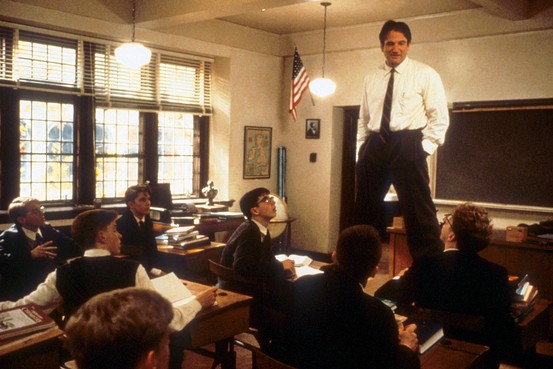
Robin Williams was an incredibly talented man. He could make us laugh one second and cry the next. I will miss him and his genius dearly.

I always thought that Robin would have made a great teacher. Whilst some so-called experts argue that teachers should refrain from using humor in the classroom, I can think of few more powerful tools for engaging students, developing relationships and cultivating an enthusiastic environment.

I give three film examples to prove my point:


1. Dead Poets Society:

This film is a favourite among teachers, and while I enjoyed it, I had some reservations about the overall message. One scene I absolutely adored however, was the scene where he encouraged his students to rip a mindless, pompous, introduction from their poetry text books. A good teacher has to be able to buck trends and allow their students to make their own assessments and form their own opinions.


2. Patch Adams:

Patch Adams is a good movies for teachers to watch, because the same inhibiting rules that are confronted by doctors apply also to teachers. Both doctors and teachers are taught not to get emotionally involved with their subjects. But, this is what can happen when they do:


3. Good Morning Vietnam

One of the most overlooked areas of teaching is the importance of teaching in an engaging manner. Worksheets, mindless activities and classroom tasks abound. Students really appreciate it when a teacher takes the time and energy to make lessons exciting. I apologise for the swearing in this clip, and of course I would never teach my students curse words, but the technique is still valid. Avoid the text book and make your lessons real, alive and relevant:


Rest in peace Robin!


Click on the link to read Failure is Part of Success

Click on the link to read Apparently Cool Kids Really Do Finish Last

Click on the link to read Is there Any Better Feeling than Graduating? (Video)

Click on the link to read Stunning Homeless Experiment Revealed (Video)

Click on the link to read Teachers Need to Have High Expectations for all of Their Students

Failure is Part of Success

July 14, 2014


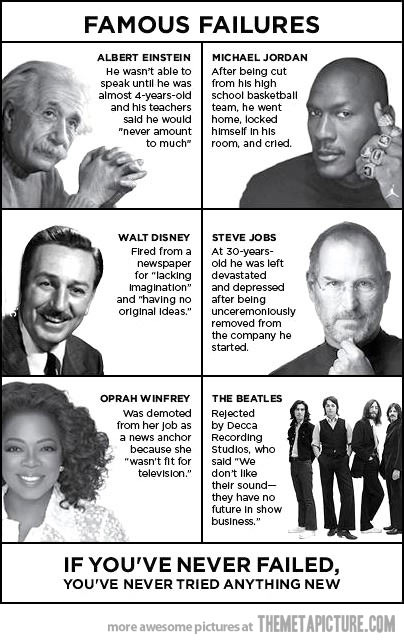
Courtesy of educatorstechnology.com and :


failure

Click on the link to read Apparently Cool Kids Really Do Finish Last

Click on the link to read Is there Any Better Feeling than Graduating? (Video)

Click on the link to read Stunning Homeless Experiment Revealed (Video)
Click on the link to read Teachers Need to Have High Expectations for all of Their Students

Click on the link to read The Most Common Questions Teachers Are Asked at Job Interviews

Apparently Cool Kids Really Do Finish Last

July 8, 2014

popular

I know this is supposed to vindicate all the so-called “uncool” kids (a group to which I had a gold membership), but I don’t rejoice at any groups lack of success:


A recently-published study from the University of Virginia has confirmed what your mum told you all along – cool kids are not all that they’re cracked up to be. Much like the numerous tragedies that befell The Harbor School’s former Social Chair Marissa Cooper, popular kids are far more likely to experience difficulty with relationships and drugs than their more socially awkward peers.

The ABC report that, in a far-reaching study, academics from the university followed 184 adolescents, tracking their development from the ages of 13 to 23, and found that those who were perceived as “cool” and “popular” by their younger peers struggled in various key areas by the time they reached adulthood.

For instance, that dreamy bad boy who used to pash off with various girls behind the basketball courts, inscribe his name on stuff in permanent market and treat himself to five-finger discounts from City Beach is probably not looking so good through a more sober, grown-up lens.

By the time they hit the age of 23, many of those who were one perceived as “cool” found it difficult to form new friendships and romantic relationships, and had a 45% higher rate of issues relating to alcohol and marijuana use. The kinds of behaviors that make one popular as an early adolescent will get one shunned as a fully-grown adult.

There are various other reasons why cool kids struggle. For one, popular kids thrive within the rigid social structures of school, but once they’ve left that behind, they find it harder to adapt to less structured world of adulthood. For another, popular kids may be driven by the insecurity of needing to stay popular, which can breed various anxieties and insecurities.

Perhaps the most obvious one is that the unpopular kids, who spend most of high school banding together while trying to avoid getting the shit kicked out of them, develop better coping mechanisms and closer friendship bonds, equipping them to deal with the world outside of school far more effectively.

Keep in mind, however, that this study was written by academics, who are the least cool of the least cool, and somewhere in the Behavioral Sciences Department of the University of Virginia, a professor may be rubbing his or her hands together with glee at how nicely this plan to smear the popular kids is coming together.


Click on the link to read Is there Any Better Feeling than Graduating? (Video)

Click on the link to read Stunning Homeless Experiment Revealed (Video)

Click on the link to read Teachers Need to Have High Expectations for all of Their Students

Click on the link to read The Most Common Questions Teachers Are Asked at Job Interviews

Click on the link to read The Profession You Choose When You Don’t Want to Get Fired

Click on the link to read The School They Dub the “Worst Primary School in the World”


Is there Any Better Feeling than Graduating? (Video)

April 30, 2014


I’ve had the pleasure of graduating on 3 occasions. First from high school and then subsequent university degrees in Arts and then Teaching. On all 3 occasions I felt like backflipping on stage out of joy, but would have ended up falling on my face.

Just like the student in the video above.


Click on the link to read Stunning Homeless Experiment Revealed (Video)
Click on the link to read Teachers Need to Have High Expectations for all of Their Students

Click on the link to read The Most Common Questions Teachers Are Asked at Job Interviews

Click on the link to read The Profession You Choose When You Don’t Want to Get Fired

Click on the link to read The School They Dub the “Worst Primary School in the World”